




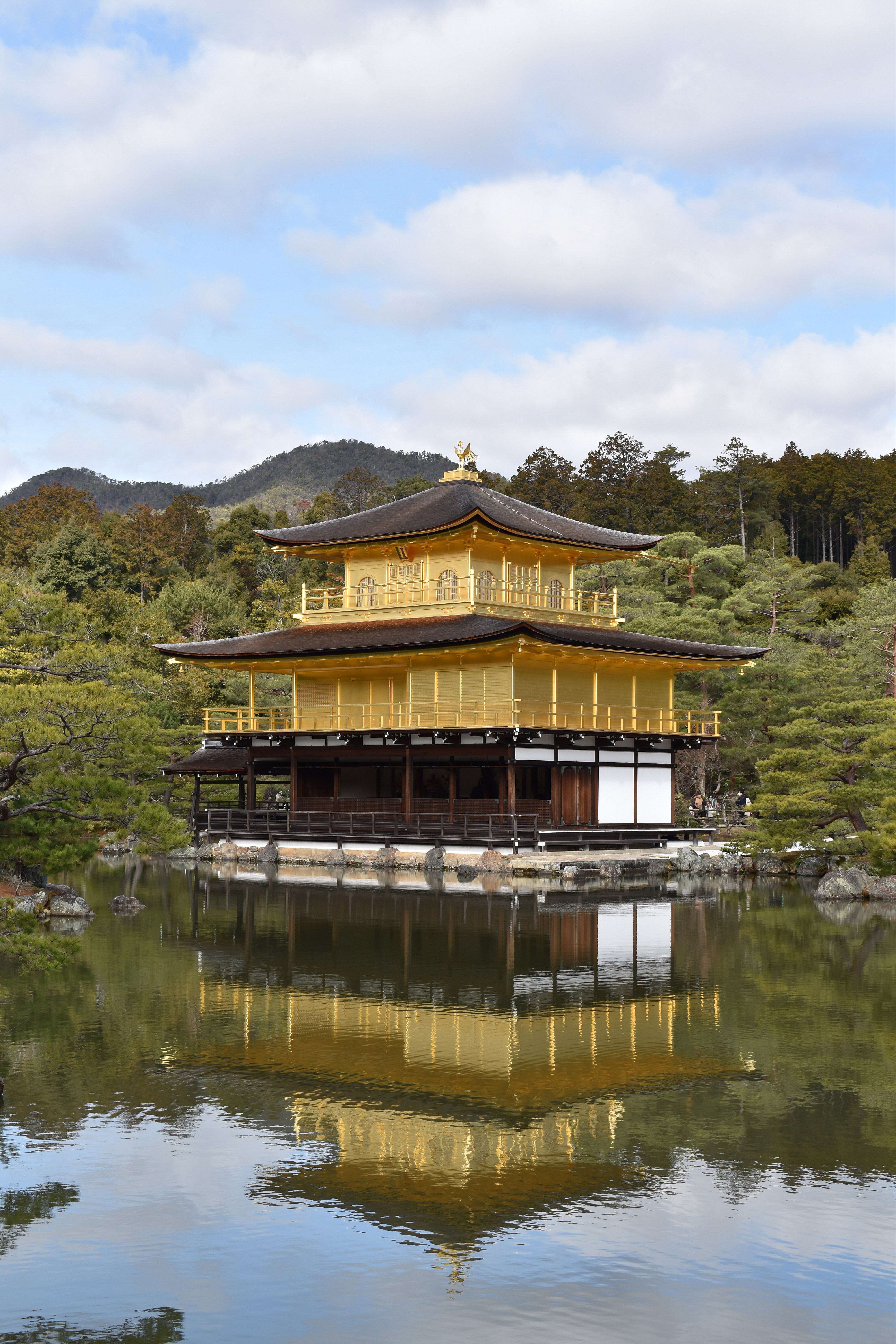
Kinkaku-ji
SUMMARY: Kinkaku-ji, officially named Rokuon-ji, is a breathtaking Zen Buddhist temple in Kyoto, Japan, renowned for its stunning Golden Pavilion and rich cultural significance.
Overview
Perched on the serene shores of Kinkaku-ji Pond, the Kinkaku-ji temple is a masterpiece of Japanese architecture and a testament to the country's deep-rooted spiritual heritage. The temple's tranquil atmosphere, surrounded by lush gardens and majestic trees, invites visitors to escape the chaos of modern life and connect with the essence of Zen Buddhism. As one of Japan's most iconic landmarks, Kinkaku-ji has captivated the hearts of millions, inspiring countless works of art, literature, and photography.
The temple's nickname, Golden Pavilion, refers to the stunning shariden (reliquary) that houses a sacred Buddhist relic. The pavilion's top two floors are meticulously coated with 0.5 μm gold leaf, creating a dazzling spectacle that seems almost otherworldly. The current pavilion was rebuilt in 1955 after being destroyed in a devastating arson attack, but its beauty and significance remain unchanged.
History/Background
Kinkaku-ji's history dates back to the 14th century, when it was founded by Shogun Ashikaga Yoshimitsu in 1397. Initially named Rokuon-ji, the temple was built as a retirement villa for the shogun, who was a devout Buddhist. Over time, the temple evolved into a full-fledged Zen Buddhist monastery, attracting numerous monks and pilgrims from across Japan. In 1408, the temple was officially renamed Kinkaku-ji, which translates to Golden Pavilion.
Throughout its history, Kinkaku-ji has undergone numerous transformations, with various renovations and expansions taking place over the centuries. The temple's most significant reconstruction occurred in 1955, after the devastating arson attack that destroyed the original pavilion. The current pavilion was designed by Tatsuzo Kawahara, a renowned Japanese architect, who carefully preserved the temple's original spirit while incorporating modern elements.
Key Information
- Name: Rokuon-ji (officially) / Kinkaku-ji (commonly)
- Type: Zen Buddhist temple
- Date: Founded in 1397, rebuilt in 1955
- Location: Kyoto, Japan
- Known For: Stunning Golden Pavilion, rich cultural significance, World Heritage Site
Significance
Kinkaku-ji's significance extends far beyond its breathtaking architecture and stunning gardens. As a World Heritage Site, the temple represents Japan's rich cultural heritage and its contributions to the development of Buddhism. The temple's tranquil atmosphere and serene surroundings have inspired countless artists, writers, and photographers, making it a beloved subject in Japanese art and literature.
Kinkaku-ji also holds great spiritual significance, serving as a symbol of the impermanence of life and the fleeting nature of material wealth. The temple's golden pavilion, with its delicate gold leaf coating, represents the transience of human existence, reminding visitors of the importance of spiritual growth and self-reflection.
INFOBOX:
- Name: Rokuon-ji (officially) / Kinkaku-ji (commonly)
- Type: Zen Buddhist temple
- Date: Founded in 1397, rebuilt in 1955
- Location: Kyoto, Japan
- Known For: Stunning Golden Pavilion, rich cultural significance, World Heritage Site
TAGS: Zen Buddhism, Japanese Architecture, World Heritage Site, Golden Pavilion, Kyoto, Japan, Buddhist Temple, Spiritual Significance, Cultural Heritage


