Overview
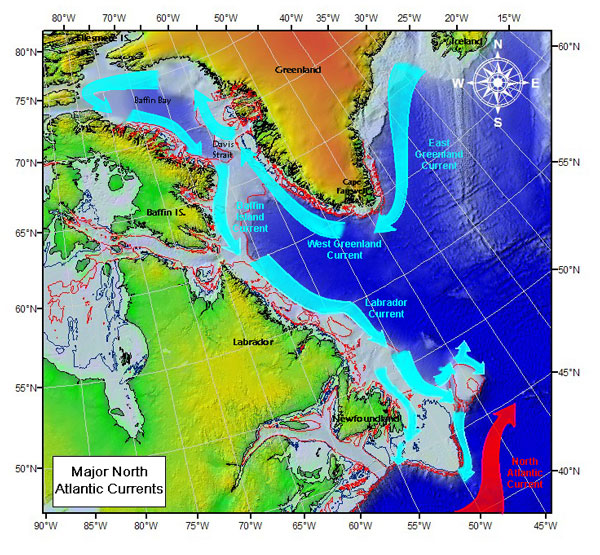
The Labrador Current is a cold current that originates in the Arctic Ocean and flows south along the coast of Labrador, passing around Newfoundland, and continuing south along the east coast of Canada near Nova Scotia. This current is a vital component of the North Atlantic Ocean's circulation system, influencing the regional climate, marine life, and human activities such as fishing and shipping. The Labrador Current is characterized by its cold temperatures, typically ranging from -1°C to 10°C, and its high salinity levels, which are influenced by the melting of sea ice and the influx of freshwater from the Arctic.
The Labrador Current is also notable for its interaction with the warm Gulf Stream, which originates in the Gulf of Mexico and flows northward along the eastern coast of the United States and Canada. The meeting of these two currents near Nova Scotia creates a unique and dynamic marine environment, with significant implications for the regional ecosystem and climate. The combination of cold and warm waters leads to the formation of heavy fogs, which can be a challenge for navigation and other human activities. However, this mixture of waters also supports an incredibly rich and diverse marine ecosystem, making the region one of the most productive fishing grounds in the world.
The Labrador Current's impact on the regional climate is also significant, as it helps to moderate the temperature and precipitation patterns in the area. The cold waters of the Labrador Current cool the air above, leading to the formation of fog and precipitation, which in turn support the growth of lush forests and other vegetation in the region. Additionally, the Labrador Current plays a crucial role in the global ocean circulation system, helping to transport heat and nutrients across the North Atlantic Ocean.
History/Background
The Labrador Current has been an important feature of the North Atlantic Ocean for thousands of years, with indigenous communities and early European settlers relying on its rich marine resources for food and livelihood. The current's existence was first documented by European explorers in the 16th century, who noted the presence of cold waters and icebergs in the region. Over time, the Labrador Current has played a significant role in the development of the fishing industry in the region, with the current's rich marine resources supporting the growth of major fishing ports and communities.
Key Information
The Labrador Current is characterized by several key features, including its cold temperatures, high salinity levels, and unique interaction with the Gulf Stream. The current's flow rate and temperature vary throughout the year, with the coldest temperatures typically occurring in the winter months. The Labrador Current is also home to a diverse range of marine life, including fish, whales, and seabirds, which are supported by the current's rich nutrient levels and productive ecosystem. Some of the most important species found in the Labrador Current include cod, salmon, and shrimp, which are all significant commercial fisheries in the region.
Significance
The Labrador Current is a vital component of the North Atlantic Ocean's ecosystem and plays a significant role in the regional economy and climate. The current's rich marine resources support a major fishing industry, which provides employment and income for thousands of people in the region. The Labrador Current also helps to moderate the regional climate, influencing temperature and precipitation patterns and supporting the growth of lush forests and other vegetation. Additionally, the current's unique interaction with the Gulf Stream creates a dynamic and diverse marine ecosystem, which is home to a wide range of marine life and supports a variety of scientific research and conservation efforts.