




Overview
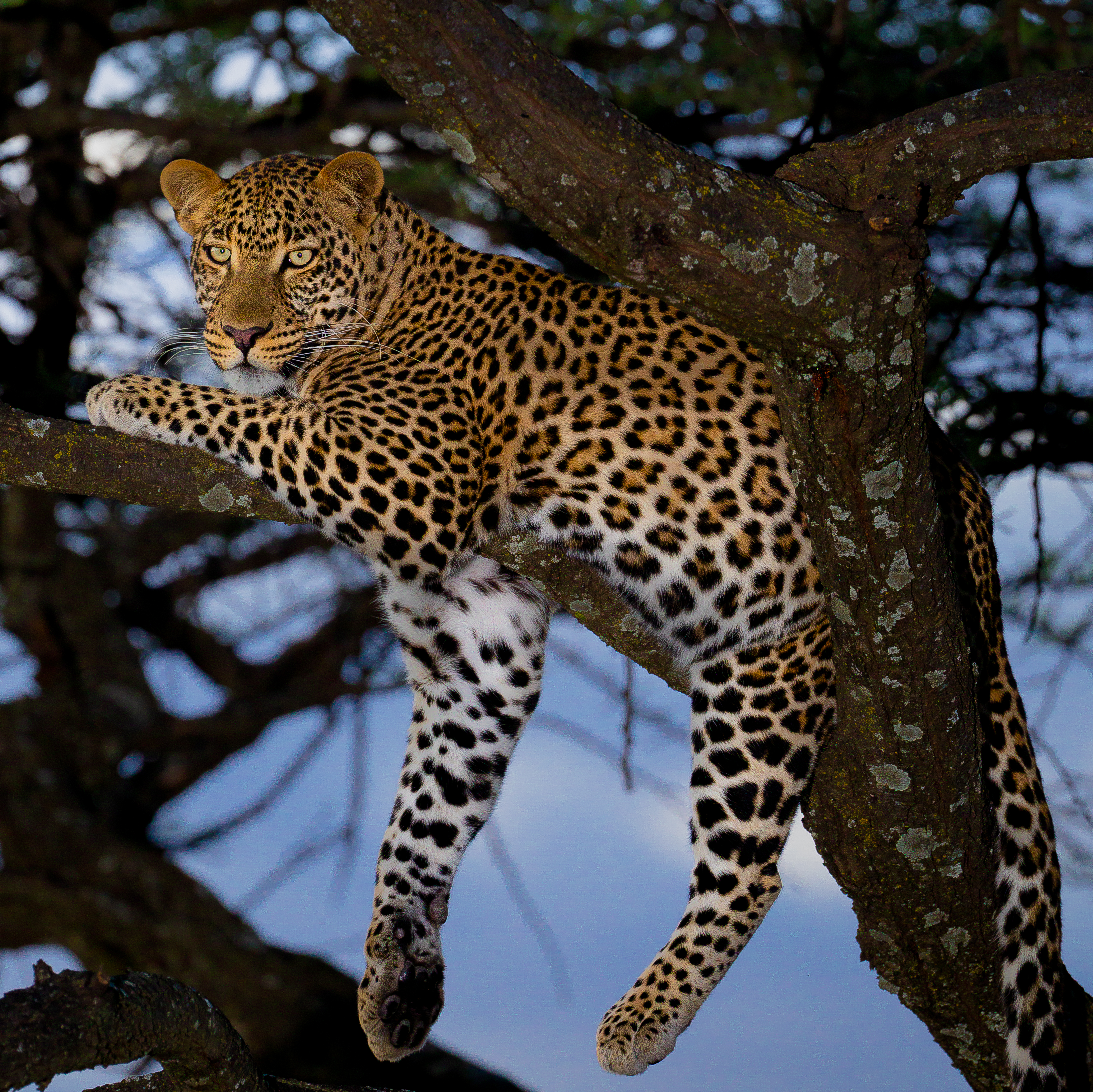
The leopard stands among the five extant members of the genus Panthera, sharing its lineage with the lion, tiger, jaguar, and snow leopard. Its coat ranges from pale yellowish‑gold to deep, rich gold, each individual marked with dark spots that coalesce into rosettes—circular patterns that conceal the animal’s outline among dappled sunlight and shadow. This camouflage, combined with a slender yet muscular physique, makes the leopard an unrivaled ambush predator. Adults measure 92–183 cm (36–72 in) from nose to tail base, with a tail adding another 66–102 cm (26–40 in) for balance during arboreal pursuits. Shoulder height sits between 60–70 cm (24–28 in), giving the species a low, crouched profile that aids stealth.Leopards exhibit pronounced sexual dimorphism in size. Males typically weigh 30.9–72 kg (68–159 lb), while females are lighter, ranging from 20.5–43 kg (45–95 lb). This size flexibility underpins their ability to thrive in a spectrum of habitats—from dense tropical rainforests and savannas to arid deserts and rugged mountains. Their powerful forelimbs, retractable claws, and keen senses enable them to stalk prey silently, leap great distances, and even haul kills up the trunks of trees—an iconic behavior that protects meals from scavengers such as hyenas and lions.
Beyond sheer physical prowess, leopards are solitary and highly territorial. Home ranges can span dozens of square kilometers, with individuals marking boundaries using scent glands, scratch marks, and vocalizations. Their diet is opportunistic, encompassing ungulates, primates, rodents, birds, and occasionally fish. This dietary breadth, coupled with an ability to survive on relatively small prey when larger game is scarce, has cemented the leopard’s reputation as one of the most adaptable large carnivores on the planet.
History/Background
The scientific name Panthera pardus was first formalized by Carl Linnaeus in 1758, placing the leopard firmly within the modern taxonomic framework of big cats. Fossil evidence indicates that the lineage of Panthera emerged in the late Miocene, roughly 10–12 million years ago, with the leopard’s ancestors spreading across the Old World as continents shifted and climates fluctuated. Over millennia, leopards diversified into several subspecies, each adapted to local conditions—from the snow‑capped Amur leopard (P. p. orientalis) of the Russian Far East to the desert‑dwelling Arabian leopard (P. p. nimr).Human interactions with leopards date back to prehistoric cave paintings, where their sleek silhouettes were rendered alongside other apex predators, suggesting early cultural reverence. In many African and Asian societies, leopards have been symbols of stealth, royalty, and spiritual power, appearing in folklore, heraldry, and traditional medicine. However, the expansion of agriculture, hunting for skins, and retaliatory killings have driven many subspecies toward the brink of extinction, prompting a surge of conservation initiatives throughout the 20th and 21st centuries.
Key Information
- Scientific classification: Panthera pardus; family Felidae, order Carnivora. - Physical dimensions: Body length 92–183 cm; tail 66–102 cm; shoulder height 60–70 cm. - Weight: Males 30.9–72 kg; females 20.5–43 kg. - Distribution: Sub‑Saharan Africa, North Africa, the Middle East, Central and South Asia, and parts of Southeast Asia. - Habitat range: Tropical rainforests, savannas, montane forests, arid scrublands, and even temperate woodlands. - Diet: Highly opportunistic carnivore; prey size varies from small rodents to antelopes weighing over 150 kg. - Reproduction: Gestation lasts ~90–105 days; litters of 2–4 cubs are born blind and dependent for several months. - Conservation status: Listed as “Vulnerable” by the IUCN, with certain subspecies (e.g., Amur and Arabian leopards) classified as “Critically Endangered.” - Behavioral traits: Solitary, nocturnal to crepuscular; exceptional climbers; use of tree‑caching to protect kills.Significance
The leopard’s ecological role as an apex predator is pivotal for maintaining healthy ecosystems. By regulating herbivore populations, leopards help prevent overgrazing, which in turn sustains plant diversity and soil stability. Their presence often indicates a robust, functioning habitat, making them valuable bio‑indicators for conservationists assessing ecosystem integrity.Culturally, leopards have inspired art, mythology, and literature across continents, embodying qualities of agility, mystery, and resilience. Their iconic rosette pattern has become a global symbol of wilderness, featured on everything from national emblems to fashion. In contemporary conservation, leopards serve as flagship species, rallying public support and funding for broader habitat protection efforts that benefit countless other organisms sharing their range.
The challenges facing leopards—habitat fragmentation, poaching for skins and body parts, human‑wildlife conflict—mirror the broader crises confronting large carnivores worldwide. Protecting leopards therefore advances the larger agenda of biodiversity preservation, climate resilience, and sustainable coexistence between humans and wildlife. Ongoing initiatives, such as community‑based anti‑poaching patrols, corridor restoration, and captive breeding programs, aim to secure a future where leopards continue to roam the wilds they have inhabited for millions of years.


