




Overview
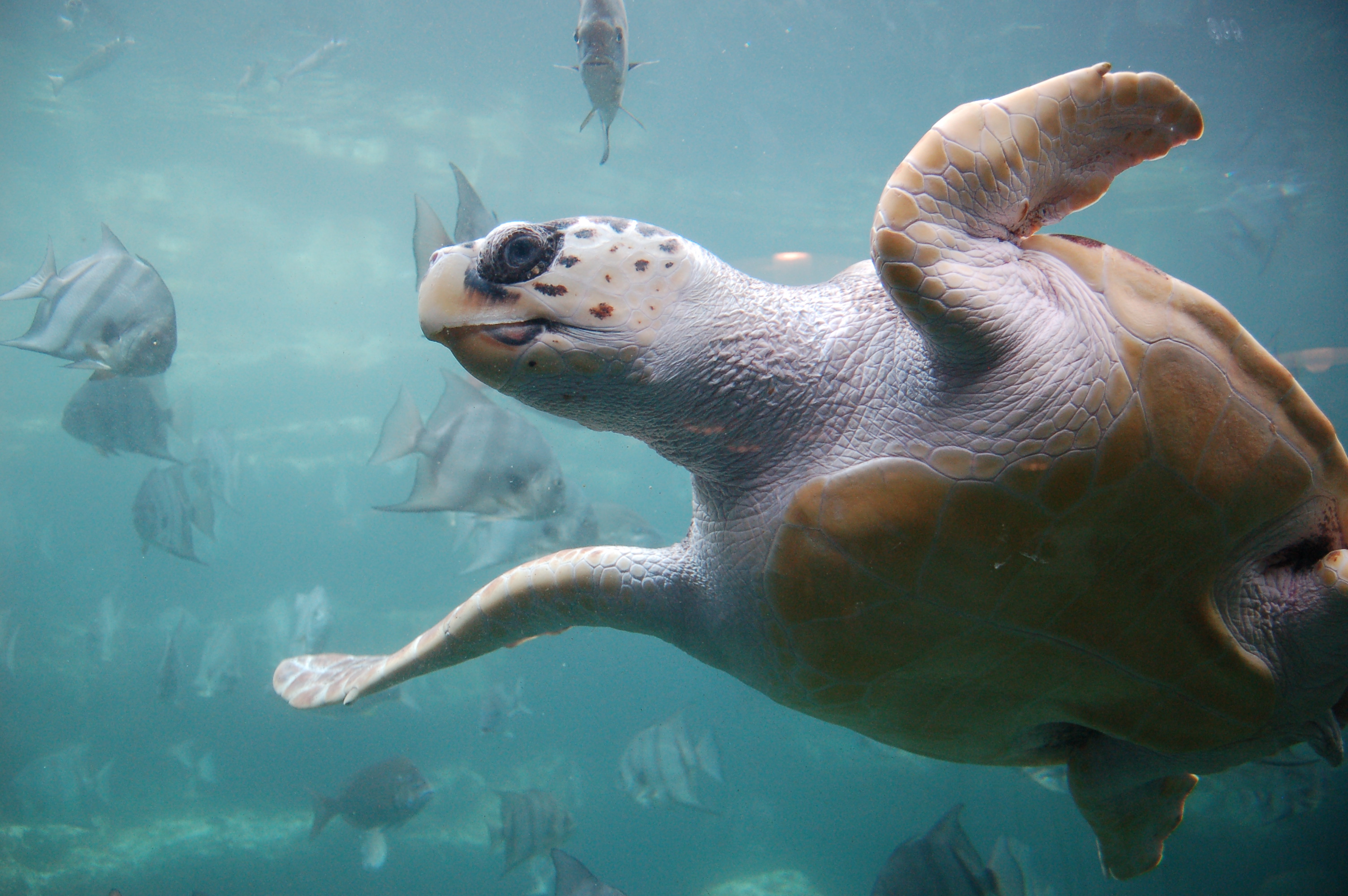
The loggerhead sea turtle, commonly called the loggerhead, is a marine reptile belonging to the family Cheloniidae. Measuring an average of 90 cm (35 in) in carapace length, adult individuals typically weigh around 135 kg (298 lb), though the largest specimens can reach 200 kg (440 lb). Their skin ranges from yellow to brown, while the shell—often a striking reddish‑brown—provides both camouflage among sea grasses and protection from predators. Unlike many vertebrates, loggerheads exhibit no external sexual dimorphism until maturity; adult males can be distinguished by a thicker tail and a shorter plastron compared with females.Loggerheads are highly migratory, traversing thousands of kilometers between feeding grounds and nesting beaches. They favor temperate and subtropical waters, feeding primarily on carnivorous prey such as jellyfish, conchs, and crustaceans, which they crush with their powerful jaws. Their foraging habits help regulate prey populations and maintain the health of marine ecosystems. Nesting occurs on sandy beaches where females return, often decades later, to the very sites where they hatched—a remarkable example of philopatry.
Conservation status for the species is Vulnerable according to the IUCN Red List, with threats ranging from bycatch in fisheries, coastal development, plastic ingestion, and climate‑induced changes to nesting habitats. International agreements such as CITES and regional protection programs aim to mitigate these pressures, underscoring the loggerhead’s importance as a flagship species for marine conservation.
History/Background
The loggerhead’s evolutionary lineage traces back to the Late Cretaceous, roughly 70–80 million years ago, when early cheloniid turtles first adapted to fully marine lifestyles. The species was formally described by Carl Linnaeus in 1758, under the name Testudo caretta, later reassigned to the genus Caretta. Historical records from the 19th century show that loggerheads were harvested for their meat, shells, and oil, contributing to population declines in the Atlantic and Mediterranean. By the mid‑20th century, awareness of overexploitation prompted the first protective legislation, such as the U.S. Marine Mammal Protection Act (1972), which later expanded to include sea turtles.Key milestones in loggerhead conservation include the 1979 International Convention for the Protection of Marine Turtles, the establishment of Nesting Beach Protection Programs in the 1980s, and the 2000s’ adoption of satellite telemetry, which revolutionized our understanding of their migratory routes. These efforts have led to modest population rebounds in some regions, though many colonies remain precariously low.
Key Information
- Scientific name: Caretta caretta - Family: Cheloniidae - Average size: 90 cm (carapace length); 135 kg weight - Maximum size: up to 200 kg (440 lb) - Lifespan: 50 + years, with some individuals exceeding 80 years - Habitat: Open ocean, coastal bays, and estuaries; nesting on sandy beaches - Diet: Primarily carnivorous—jellyfish, crustaceans, mollusks, and occasional fish - Reproduction: Females lay 2–5 clutches per season, each containing 80–120 eggs; incubation temperature determines sex (temperature‑dependent sex determination) - Threats: Bycatch, marine debris, coastal development, climate change, illegal poaching - Conservation status: Vulnerable (IUCN); protected under CITES Appendix ISignificance
The loggerhead turtle serves as an indicator species for ocean health; declines often signal broader ecological disturbances such as overfishing or pollution. Their predation on jellyfish helps curb blooms that can deplete oxygen levels and disrupt fisheries. Moreover, loggerhead nesting beaches support a suite of other wildlife, from shorebirds to dune vegetation, creating biodiversity hotspots.Culturally, loggerheads have inspired folklore and art across coastal societies, symbolizing endurance and the cyclical nature of life. Their charismatic presence fuels ecotourism, providing economic incentives for local communities to protect marine habitats. Scientific research on loggerheads—particularly satellite tracking and genetic studies—has advanced our understanding of marine connectivity, informing management of transboundary marine resources.
Protecting loggerheads aligns with broader goals of sustainable ocean stewardship, climate resilience, and the preservation of marine heritage for future generations. Their survival hinges on coordinated global action, from reducing plastic waste to implementing turtle‑friendly fishing gear, illustrating how a single species can galvanize worldwide conservation momentum.


