




**
Overview
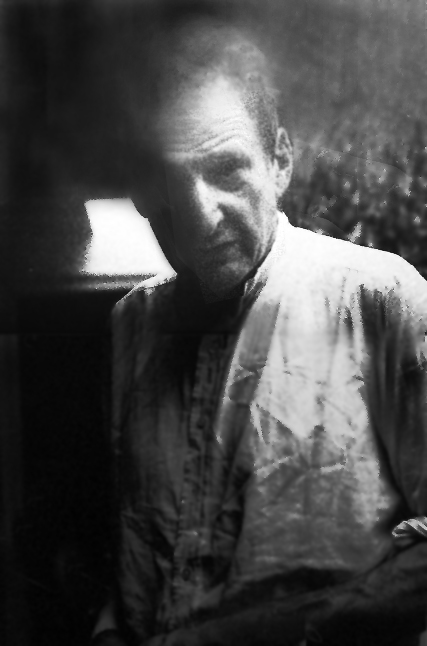
Lucian Freud emerged in post‑war Britain as a singular voice in figurative art, rejecting the prevailing currents of abstraction and pop culture. His canvases—often large‑scale, thickly impastoed, and rendered in a muted palette of ochres, umbers, and flesh tones—capture the raw physicality and inner tension of his subjects. Whether depicting friends, lovers, or anonymous models, Freud’s paintings are celebrated for their brutal honesty, meticulous observation, and a palpable sense of presence that makes the viewer feel as though they are sharing the same intimate space.Freud’s reputation grew steadily from the 1950s onward, culminating in a series of landmark exhibitions at the Tate Gallery, the Royal Academy, and major international venues. By the 1990s he was recognized not only as a master portraitist but also as a cultural icon whose work interrogated themes of mortality, vulnerability, and the human condition. His influence extends beyond the canvas, inspiring contemporary photographers, filmmakers, and performance artists who seek to explore the same unvarnished truth.
History/Background
Born on 8 December 1922 in Berlin to the eminent psychoanalyst Ernst Freud (a nephew of Sigmund Freud), Lucian’s early life was marked by displacement. The family fled Nazi Germany in 1933, settling in London where Lucian attended the St Martin’s School of Art (1942‑1945). His formal training was interrupted by service in the Royal Navy during World War II, after which he returned to study under David Bomberg at the East Anglia School of Art. Bomberg’s emphasis on direct observation and vigorous brushwork left an indelible imprint on Freud’s developing style.The 1950s saw Freud experimenting with surrealist and expressionist motifs, but by the early 1960s he had honed a distinctive approach: close‑up, almost forensic, studies of the human body. A pivotal moment arrived in 1960 with the portrait of John Miller, a fellow artist, which garnered critical attention for its stark realism. Throughout the 1970s and 1980s Freud’s studio—first in Southampton Row, later in Fitzrovia—became a crucible for intense, often lengthy sittings, during which subjects were stripped of artifice and confronted with their own physicality.
Key dates include:
- 1945 – First solo exhibition at the Redfern Gallery.
- 1972 – Major retrospective at the Tate Gallery, cementing his status.
- 1995 – Awarded the CBE (Commander of the Order of the British Empire).
- 2002 – Retrospective at the Royal Academy of Arts, drawing record attendance.
Key Information
- Medium: Primarily oil on canvas; also prolific in charcoal and pastel drawings. - Style: Uncompromising figurative realism, characterized by thick impasto, chiaroscuro modeling, and a focus on flesh as a landscape. - Subjects: Family members, fellow artists, models (often nude), and occasional public figures such as Sir David Attenborough and Prince Charles. - Notable Works: Benefits Supervisor Resting (1994), Girl with a White Dog (1950‑51), Naked Portrait of a Woman (1975), Study of a Nude (Mick) (1990). - Awards & Honors: CBE (1995), Prince of Wales Award for Visual Arts (1999), multiple honorary doctorates. - Market Impact: Works have fetched record prices at auction, with Benefits Supervisor Resting selling for £17.2 million in 2015, underscoring his commercial as well as artistic significance. - Teaching & Influence: Though never a formal professor, Freud mentored younger artists through informal studio visits, emphasizing patience, observation, and the ethical responsibility of representing another’s body.Significance
Lucian Freud reshaped the language of portraiture by insisting that the canvas become a site of psychological excavation rather than mere likeness. His relentless focus on the human form—warts, scars, and all—challenged Victorian ideals of beauty and opened a dialogue about the body as a site of truth and vulnerability. In doing so, he bridged the gap between modernist concerns for formal rigor and post‑modern preoccupations with identity and the gaze.Freud’s legacy endures in the work of contemporary painters such as Jenny Saville, Marlene Dumas, and John Currin, who cite his uncompromising approach as a touchstone. Moreover, his paintings have become cultural reference points in film and literature, symbolizing the raw, often uncomfortable, confrontation with self. By foregrounding the corporeal in an era increasingly dominated by digital abstraction, Freud reaffirmed the power of the painted surface to convey depth, emotion, and the inexorable passage of time.
INFOBOX:
- Name: Lucian Michael Freud
- Type: Painter & Draughtsman (Figurative Artist)
- Date: 8 December 1922 – 20 July 2011
- Location: London, United Kingdom (primary studio locations: Southampton Row, Fitzrovia)
- Known For: Groundbreaking, psychologically intense portraiture and nudes; redefining 20th‑century British figurative painting
TAGS: Lucian Freud, British painting, figurative art, portraiture, 20th‑century art, modernism, contemporary art, art history


