



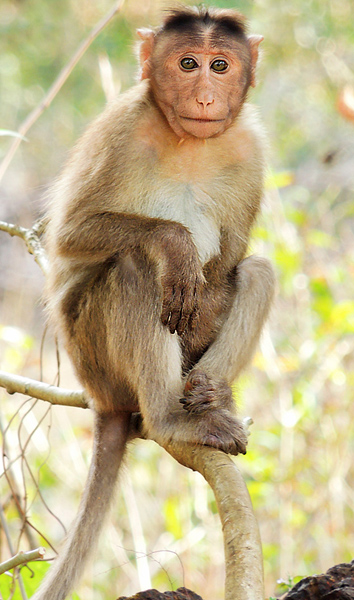

Overview
The genus Macaca represents one of the most adaptable lineages of Old World monkeys, occupying habitats that range from tropical rainforests and mangroves to temperate mountains and urban parks. With 23 recognized species, macaques are found from the snow‑capped peaks of the Japanese macaque (Macaca fuscata) to the sun‑baked savannas of the Barbary macaque (M. sylvanus) in North Africa and Gibraltar. Their success stems from a blend of social intelligence, flexible foraging strategies, and a tolerance for human‑altered landscapes.Macaques are principally frugivorous, but their menus are anything but narrow. Seeds, young leaves, flowers, and bark supplement fruit intake, while opportunistic species such as the long‑tailed macaque (M. fascicularis) add shellfish, insects, and small vertebrates to the diet. A striking example of this opportunism is the southern pig‑tailed macaque (M. nemestrina) in Malaysian lowland forests, which consumes roughly 70 large rats each year—a testament to their capacity to exploit protein sources when fruit is scarce. All macaque troops are organized around dominant matriarchs, a social structure that underpins group cohesion, conflict resolution, and the transmission of cultural behaviors across generations.
History/Background
The evolutionary roots of macaques trace back to the Miocene epoch, when early cercopithecines diverged from other primate lineages in Africa. Fossil evidence suggests that the Macaca lineage migrated out of Africa into Eurasia around 5–6 million years ago, a movement facilitated by the formation of land bridges and changing climate patterns. The genus was formally described by the French naturalist Georges Cuvier in 1817, and subsequent taxonomic work throughout the 19th and 20th centuries refined the species list to its current count of 23.Key historical milestones include the 1920s discovery of the Japanese macaque’s winter bathing behavior, which sparked early interest in primate culture, and the 1970s–80s surge in field studies on rhesus macaques (M. mulatta) that laid the groundwork for modern biomedical research. More recently, the rapid urban expansion of Southeast Asia has placed several macaque populations in close contact with humans, prompting both conflict and collaborative conservation initiatives.
Key Information
- Species diversity: 23 extant species, ranging from the tiny M. sylvanus (≈5 kg) to the robust M. nemestrina (≈12 kg). - Geographic range: Broad distribution across Asia, North Africa, and Europe, including islands such as Japan, Borneo, and the Philippines. - Social organization: Troops of 10–100 individuals centered on a dominant matriarch; females remain natal, while males disperse at sexual maturity. - Dietary breadth: Primarily fruit, supplemented by seeds, leaves, bark, insects, shellfish, and small mammals; seasonal shifts are common. - Reproduction: Seasonal breeders in temperate zones; year‑round in tropical regions, with a gestation of ~5.5 months and typically a single offspring. - Human interactions: Rhesus macaques are the most widely used non‑human primate in biomedical research; several species are listed as Vulnerable or Endangered due to habitat loss, hunting, and conflict with humans. - Cultural transmission: Documented tool use (e.g., stone‑flaking by long‑tailed macaques) and learned foraging techniques passed across generations.Significance
Macaques serve as a keystone for understanding primate evolution, social cognition, and human‑wildlife coexistence. Their matriarchal societies provide a natural laboratory for studying female leadership, kinship dynamics, and conflict mitigation—insights that inform both primatology and broader social science. Ecologically, macaques act as seed dispersers, facilitating forest regeneration across their ranges, while their omnivorous habits help regulate insect and small vertebrate populations.From a conservation perspective, macaques embody the challenges of wildlife living alongside expanding human populations. Species such as the Barbary macaque survive only in fragmented habitats and protected reserves, making them emblematic of the urgent need for transboundary conservation strategies. Meanwhile, urban‑adapted macaques highlight the potential for co‑management approaches that reduce conflict, protect public health, and preserve cultural heritage—particularly in regions where macaques hold religious or touristic significance.


