Overview
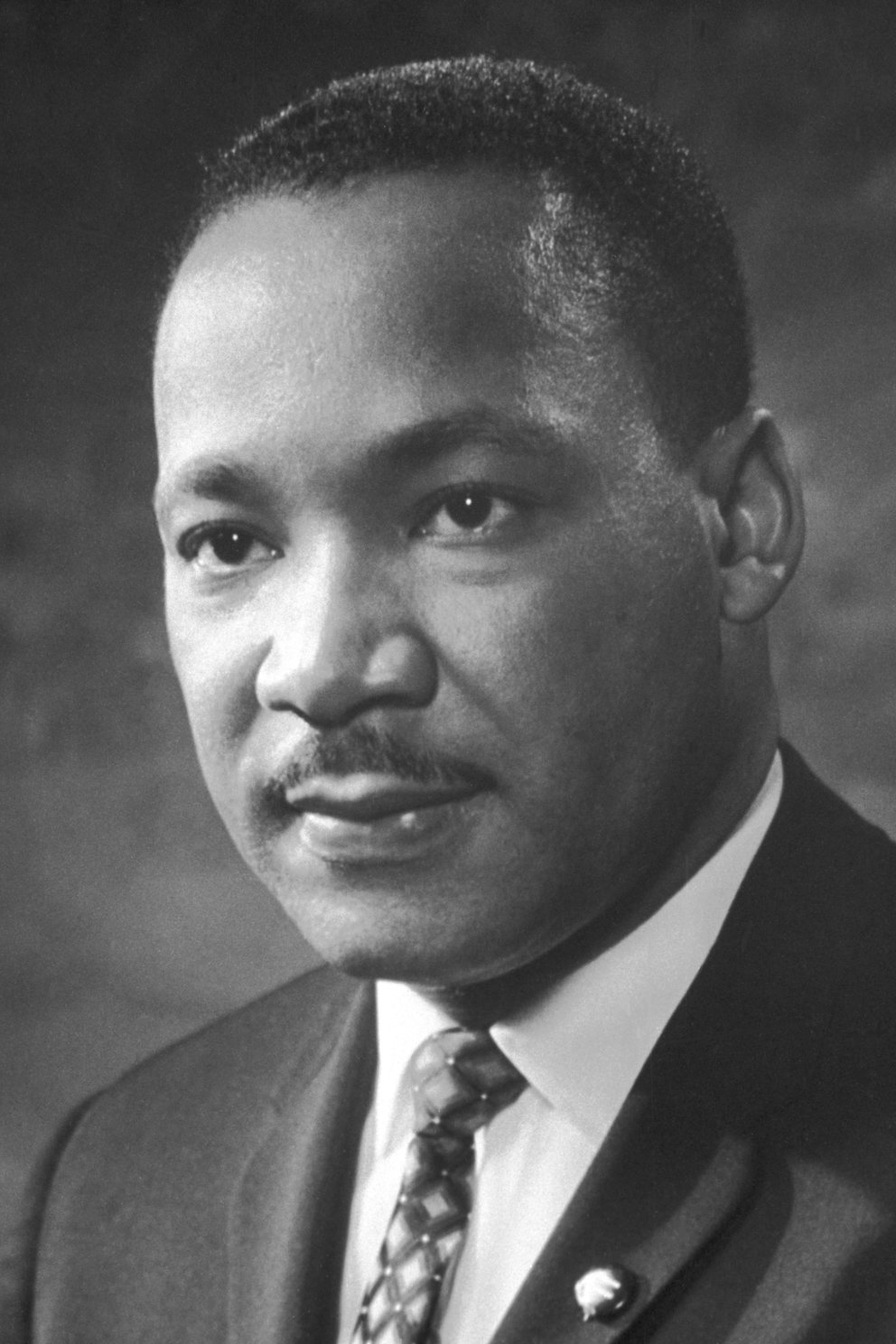
Martin Luther King Jr. (1929-1968) transformed the United States from a Jim Crow republic into a nation constitutionally committed to racial equality. Through disciplined non-violent campaigns—most famously the 1955-56 Montgomery Bus Boycott, the 1963 Birmingham protests, and the 1965 Selma-to-Montgomery marches—he forced the federal government to enforce Reconstruction-era amendments that had lain dormant for nearly a century. King’s fusion of Black prophetic Christianity, Thoreauvian civil disobedience, and Gandhian satyagraha created a moral vocabulary that appealed to northern liberals while exposing the brutality of southern segregation to a global television audience. By the time of his assassination in Memphis on 4 April 1968, Congress had passed the Civil Rights Act (1964), the Voting Rights Act (1965), and the Fair Housing Act (1968), collectively dismantling the legal scaffolding of American apartheid.
Yet King’s vision always exceeded civil rights alone. In later years he denounced the Vietnam War as “a demonic destructive suction tube” draining resources from anti-poverty programs, and launched the inter-racial Poor People’s Campaign to secure an “Economic Bill of Rights.” His 1967 book Where Do We Go From Here: Chaos or Community? called for a guaranteed annual income, full-employment policies, and an end to militarism—positions that alienated former allies and earned him surveillance by the FBI. The radicalization of King’s final twelve months helps explain why his birthday, first observed as a federal holiday in 1986, is now commemorated as a day of service rather than simply a celebration of integrationist triumph.
Background
Born 15 January 1929 in the segregated middle-class Sweet Auburn district of Atlanta, Michael King Jr. grew up in Ebenezer Baptist Church, where both his father and maternal grandfather preached. The elder King, inspired by a 1934 trip to the Holy Land and Nazi Germany, changed his name and that of his son to Martin Luther King in honor of the Protestant reformer. Young King entered Morehouse College at fifteen, studied sociology and then divinity at Crozer Seminary (Pennsylvania), and earned a Ph.D. in systematic theology from Boston University in 1955. Coretta Scott, the Alabama-born contralto he married in 1953, introduced him to pacifist circles and later served as co-architect of his public image. When Rosa Parks refused to surrender her bus seat on 1 December 1955, the twenty-six-year-old pastor of Dexter Avenue Baptist Church was chosen to head the Montgomery Improvement Association precisely because he was new to town, well-educated, and without entrenched political debts—qualities that allowed him to articulate a mass movement rather than merely manage one.
Key Facts
- 1955-56: Montgomery Bus Boycott lasts 381 days; Supreme Court rules bus segregation unconstitutional 20 December 1956
- 1957: Helps found Southern Christian Leadership Conference (SCLC)
- 1963: Arrested in Birmingham; writes “Letter from Birmingham Jail” on margins of newspapers; delivers “I Have a Dream” to 250,000 at March on Washington for Jobs and Freedom 28 August
- 1964: Publishes
Why We Can’t Wait; becomes youngest Nobel Peace Prize laureate (age 35)
- 1965: Selma marches prompt President Johnson to demand Voting Rights Act; Watts riots in Los Angeles push King toward economic-justice agenda
- 1966: Moves into Chicago tenement to campaign against northern segregation; coins phrase “The arc of the moral universe is long, but it bends toward justice”
- 1967: Delivers “Beyond Vietnam” at Riverside Church, New York, calling U.S. government “the greatest purveyor of violence in the world today”
- 1968: Supports striking sanitation workers in Memphis; assassinated 6:01 p.m. 4 April at Lorraine Motel; riots erupt in 125 cities; President Johnson signs Fair Housing Act within a week
- 1983: Congress passes legislation creating federal holiday, first observed 1986
- 2011: Memorial on National Mall dedicated in Washington, D.C.; statue is 30-foot “Stone of Hope” extracted from “Mountain of Despair”
Impact
King’s insistence that moral claims could override unjust law redefined American constitutionalism: the Civil and Voting Rights Acts shifted the burden of proof so that discrimination, not equality, required justification. Globally, his synthesis of Christian ethics and Gandhian tactics became the template for dissidents from Cape Town to Warsaw; Nelson Mandela cited King while on trial in 1964, and Polish Solidarity activists carried posters of both King and Gandhi. Domestically, the holiday bearing his name has become the only federal observance honoring an individual Black American, embedding non-violent protest within civic ritual. Yet the very breadth of King’s iconography risks flattening his legacy; memorials rarely reference his critique of capitalism or his observation that “the problems of racial injustice and economic injustice cannot be solved without billions of dollars.” The ongoing debates over voting rights, police brutality, and wealth inequality ensure that King remains less a fixed statue than a living argument about the meaning of equality in a multiracial democracy.