



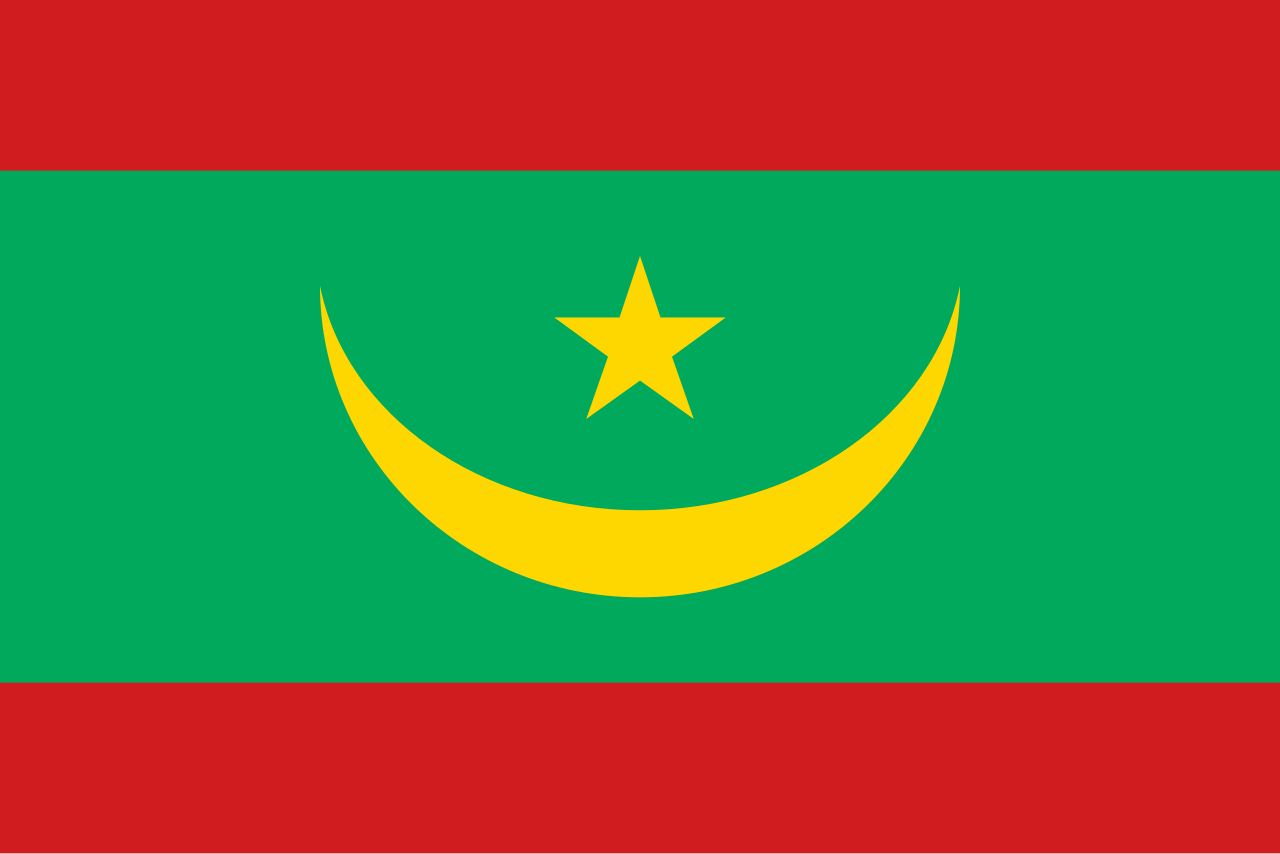

Overview
Mauritania is a land of contrasts, where the scorching Sahara Desert meets the temperate south and the Atlantic coast. The country's rugged terrain, diverse wildlife, and resilient people have shaped its unique culture and history. As the 28th-largest country in the world by land area, Mauritania is a vast and sparsely populated nation, with 90% of its territory covered by the Sahara Desert. Despite the harsh desert environment, the country's southern region is home to a thriving population of around 4.3 million people.
The capital city, Nouakchott, is a bustling metropolis that serves as the economic and cultural hub of the country. With a population of around 1.2 million, Nouakchott is a melting pot of cultures, where traditional Berber and Arab influences blend with modern African and European influences. The city's vibrant markets, historic mosques, and colonial architecture make it a fascinating destination for travelers.
History/Background
Mauritania's history dates back to the ancient Berber kingdoms, which flourished in the region from the 3rd century BC to the 16th century AD. The country's strategic location on the Atlantic coast made it an important hub for trade and commerce, with merchants from across the Mediterranean coming to exchange goods such as gold, ivory, and salt. The arrival of Islam in the 7th century AD had a profound impact on Mauritanian society, shaping its culture, language, and politics.
In the 16th century, Mauritania became a French colony, with the country remaining under French rule until independence in 1960. The country's early years of independence were marked by political instability and conflict, with a series of coups and military regimes dominating the political landscape. In 1984, Mauritania became an Islamic republic, with a new constitution enshrining Islam as the official state religion.
Key Information
* Geography: Mauritania is bordered by the Atlantic Ocean to the west, Western Sahara to the north and northwest, Algeria to the northeast, Mali to the east and southeast, and Senegal to the southwest.
* Population: around 4.3 million people, with 90% living in the southern region.
* Language: Arabic is the official language, but many people also speak French, Berber, and other local languages.
* Economy: Mauritania's economy is primarily based on agriculture, fishing, and mining, with the country rich in natural resources such as iron ore, copper, and gold.
* Culture: Mauritanian culture is a unique blend of Berber, Arab, and African influences, with a strong emphasis on Islam and traditional customs.
Significance
Mauritania's significance lies in its rich cultural heritage and its importance as a bridge between Africa, Europe, and the Arab world. The country's unique blend of cultures has produced a thriving arts scene, with traditional music, dance, and crafts being highly prized. The country's vast desert landscapes and rich natural resources also make it an important destination for tourists and entrepreneurs alike.


