




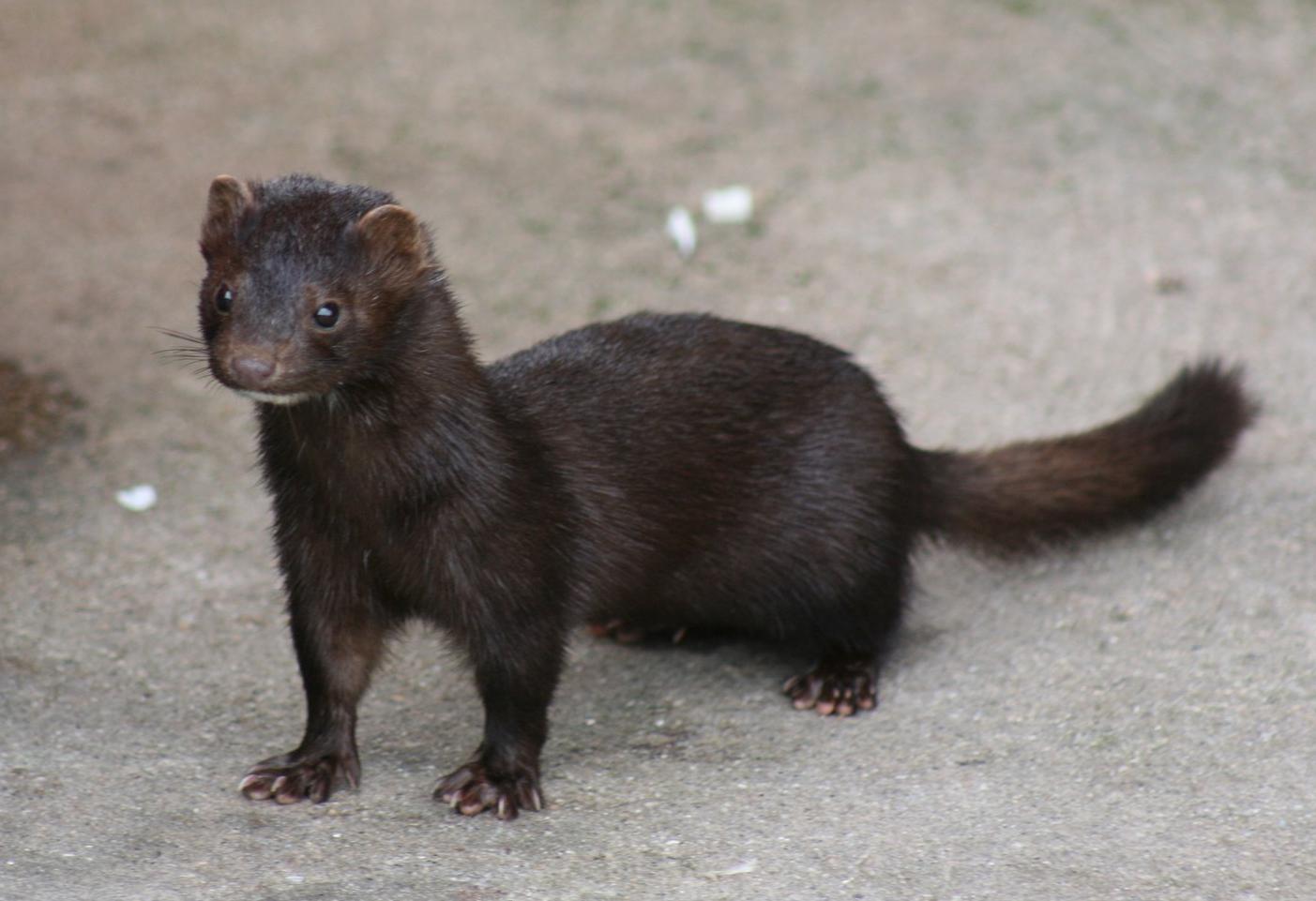
Mink
SUMMARY: The mink is a dark-colored, semiaquatic, carnivorous mammal belonging to the family Mustelidae, with two extant species: the American mink and the European mink.
Overview
The mink is a medium-sized, carnivorous mammal that inhabits aquatic and terrestrial environments. These mammals are known for their sleek, dark coats, which range in color from brown to black, and their distinctive, elongated bodies. Minks are members of the family Mustelidae, a group of carnivorous mammals that also includes weasels, stoats, martens, otters, badgers, and others. The two extant species of mink, the American mink (Neovison vison) and the European mink (Mustela luterola), are found in different parts of the world and have distinct physical and behavioral characteristics.Minks are highly adaptable animals that are capable of living in a variety of environments, from freshwater wetlands to coastal areas and even urban regions. They are skilled swimmers and are often found in areas with access to water, where they feed on a variety of aquatic animals, including fish, crustaceans, and birds. Minks are also known to be opportunistic hunters, and will feed on small mammals, such as rodents and rabbits, as well as insects and other invertebrates.
History/Background
The history of the mink dates back to the Pleistocene era, when the genus Mustela first emerged. The American mink, which is thought to have originated in North America, is believed to have evolved from a common ancestor with the European mink, which is found in Europe and parts of Asia. The extinct sea mink (Neovison macrodon), which was related to the American mink, was a much larger animal that was found in coastal areas of North America.Key Information
- Physical Characteristics: Minks have a sleek, dark coat that ranges in color from brown to black, and a distinctive, elongated body. - Habitat: Minks are found in aquatic and terrestrial environments, including freshwater wetlands, coastal areas, and urban regions. - Diet: Minks are carnivorous and feed on a variety of aquatic animals, including fish, crustaceans, and birds, as well as small mammals, insects, and other invertebrates. - Behavior: Minks are skilled swimmers and are often found in areas with access to water. They are also known to be opportunistic hunters. - Conservation Status: The European mink is listed as Critically Endangered on the IUCN Red List, while the American mink is listed as Least Concern.Significance
The mink is significant for several reasons. Firstly, minks are an important part of their ecosystems, playing a key role in controlling populations of aquatic animals and small mammals. Secondly, minks are highly valued for their fur, which is used in the production of high-quality clothing and accessories. However, the demand for mink fur has led to overhunting and habitat destruction, threatening the survival of both the American and European mink.INFOBOX:
- Name: Mink (Mustela and Neogale)
- Type: Carnivorous mammal
- Date: Pleistocene era (origin)
- Location: North America (American mink), Europe and Asia (European mink)
- Known For: Highly valued fur, skilled swimmers
TAGS: Mink, Mustelidae, Carnivorous mammals, Semiaquatic, Fur trade, Conservation, Wildlife, Aquatic ecosystems, Terrestrial ecosystems, North America, Europe, Asia


