




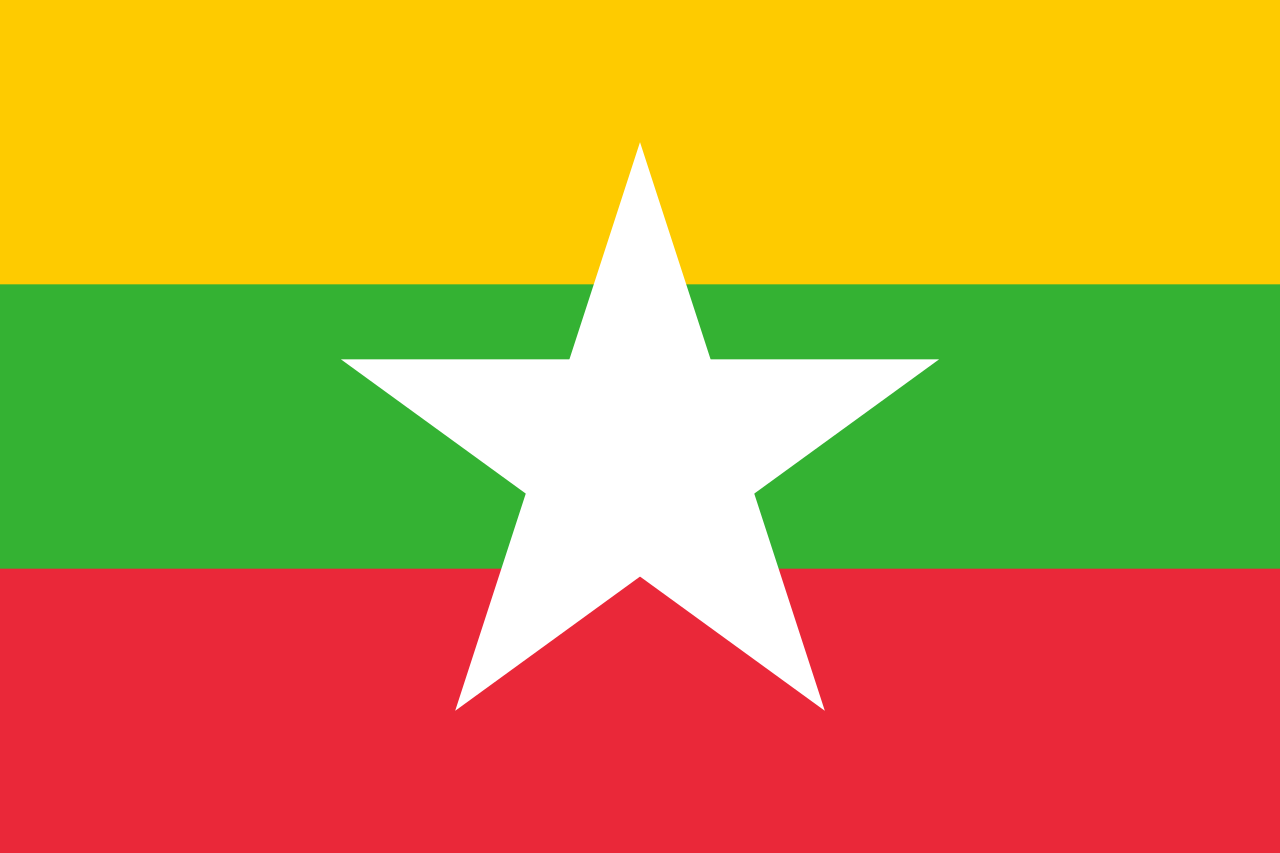
**
Overview
Nestled between the towering Himalayas and the glittering waters of the Andaman Sea, Myanmar is a tapestry of stark contrasts—lush tropical rainforests give way to arid plains, ancient pagodas rise beside bustling modern markets, and tranquil villages coexist with the humming energy of megacities. Its geography stretches from the fertile Irrawaddy River basin, the lifeblood of agriculture and commerce, to the rugged Shan Plateau and the mist‑shrouded peaks of Kachin State. This diversity fuels a mosaic of ethnic groups, each contributing distinct languages, customs, and cuisines to the national fabric.The nation’s political heart beats in Naypyidaw, a purpose‑built capital inaugurated in 2005, while the historic commercial hub of Yangon (formerly Rangoon) remains the country’s largest city and a gateway for travelers seeking colonial architecture, golden Shwedagon Pagoda, and vibrant street life. Myanmar’s strategic location—bordering India, Bangladesh, China, Laos, Thailand, and the Bay of Bengal—has made it a crossroads of trade, culture, and, at times, conflict. Despite decades of military rule and international sanctions, the country has been undergoing a tentative transition toward civilian governance, sparking renewed global interest in its untapped economic potential and cultural treasures.
History/Background
The story of Myanmar begins with the Pyu city‑states (2nd–9th centuries CE), early adopters of Buddhism who laid the groundwork for later kingdoms. The Burmese Empire rose in the 11th century under King Anawrahta, unifying the Irrawaddy valley and establishing Theravada Buddhism as the state religion—a legacy that endures in the countless stupas dotting the landscape. Successive dynasties, notably the Taungoo (16th century) and Konbaung (18th–19th centuries), expanded the realm to its greatest territorial extent, only to encounter European colonial ambitions.In 1824, 1852, and 1885, three Anglo‑Burmese wars culminated in the annexation of the entire country into the British Empire, renaming it Burma. The colonial period introduced railways, teak extraction, and a new administrative framework, but also sowed ethnic divisions by favoring minority groups in the military and civil service. After World II, nationalist leader Aung San negotiated independence, which was achieved on 4 January 1948, establishing the Union of Burma as a parliamentary democracy.
A series of coups in 1962 and 1988 ushered in prolonged military rule under the State Law and Order Restoration Council (SLORC), later renamed the State Peace and Development Council (SPDC). The regime rebranded the nation as Myanmar in 1989, a name still contested by some opposition groups. A landmark 2010 election paved the way for a quasi‑civilian government, and in 2015 the National League for Democracy (NLD) led by Aung San Su Kyi won a landslide victory, raising hopes for democratic reform. However, the 2021 military coup reversed many gains, plunging the country back into political turmoil and prompting widespread protests and international condemnation.
Key Information
- Official name: Republic of the Union of Myanmar - Population: ~55 million (2023 estimate) - Area: 676,578 km², making it the largest mainland country in Southeast Asia - Capital: Naypyidaw (since 2005) – a planned city of wide boulevards, government ministries, and symbolic monuments - Largest city: Yangon – home to over 5 million residents, the former capital, and the iconic Shwedagon Pagoda (≈2,500 years old) - Official language: Burmese (Myanmar) – spoken by the majority, with over 100 minority languages recognized - Religion: Predominantly Theravada Buddhism (~88 %); significant Christian, Muslim, Hindu, and animist minorities - Economy: Agriculture (rice, beans, pulses) accounts for ~30 % of GDP; burgeoning sectors include tourism, natural gas extraction, and garment manufacturing; per‑capita GDP remains low, reflecting decades of sanctions and underinvestment - Biodiversity: Home to the Irrawaddy dolphin, Indochinese tiger, and over 1,000 bird species; protected areas such as Hkakabo Razi National Park preserve some of the world’s most pristine montane ecosystems.Significance
Myanmar’s importance extends far beyond its borders. Culturally, it preserves one of the world’s most continuous Buddhist traditions, with festivals like Thingyan (water festival) and Thadingyut (lighting festival) offering vivid windows into communal life. Its architectural heritage—golden pagodas, teak‑wood monasteries, and colonial-era edifices—draws scholars and travelers alike, fostering a growing tourism sector that, when stable, can become a major economic engine.Geopolitically, Myanmar sits at a pivotal juncture between South and East Asia, acting as a land bridge for trade routes such as the Bangkok–Kunming Economic Corridor. Its abundant natural resources—particularly offshore natural gas fields in the Mergui Archipelago—position it as a potential energy hub for regional markets. Moreover, the country’s ongoing struggle for democratic governance and human rights resonates globally, influencing international policy, humanitarian aid, and diaspora activism.
Ecologically, Myanmar’s vast, relatively untouched forests and river systems are critical for biodiversity conservation and climate regulation. Protecting these habitats not only safeguards endemic species but also contributes to broader efforts against climate change, making Myanmar a key player in regional environmental initiatives.
INFOBOX:
- Name: Republic of the Union of Myanmar
- Type: Sovereign nation (unitary semi‑presidential constitutional republic)
- Date: Independence – 4 January 1948 (as Union of Burma)
- Location: Northwest Southeast Asia, bordering India, Bangladesh, China, Laos, Thailand, Andaman Sea, Bay of Bengal
- Known For: Ancient Buddhist heritage, Shwedagon Pagoda, ethnic diversity, strategic geopolitical position
TAGS: Myanmar, Southeast Asia, Buddhism, Irrawaddy River, Naypyidaw, Yangon, ethnic minorities, political transition


