Overview
The North Atlantic Treaty Organization (NATO) stands as the world’s most enduring intergovernmental military alliance, uniting 32 member states—30 in Europe and 2 in North America—under a single security umbrella. Its creation in the immediate aftermath of World War II reflected a decisive shift from fragmented national defense to a cooperative system where an attack on any one member is treated as an attack on all. This principle is codified in Article 5 of the North Atlantic Treaty, a clause that has defined NATO’s strategic posture for more than seven decades.
Since its inception, NATO has evolved from a Cold‑War bulwark against Soviet expansion into a versatile security institution capable of crisis management, cooperative security, and partnership building across the globe. While the alliance’s core mission remains collective defense, its operational portfolio now includes counter‑terrorism, cyber defence, and support for democratic institutions. The organization’s headquarters in Brussels, Belgium, serves as the political and administrative hub where ambassadors, military leaders, and civilian officials convene to shape policy and coordinate actions.
NATO’s relevance endures because it blends political consensus with military capability, providing a credible deterrent while also offering a platform for diplomatic dialogue. Its continued expansion to 32 members underscores a shared belief among transatlantic partners that collective security is the most effective safeguard against aggression in an increasingly complex international environment.
Background & Origins
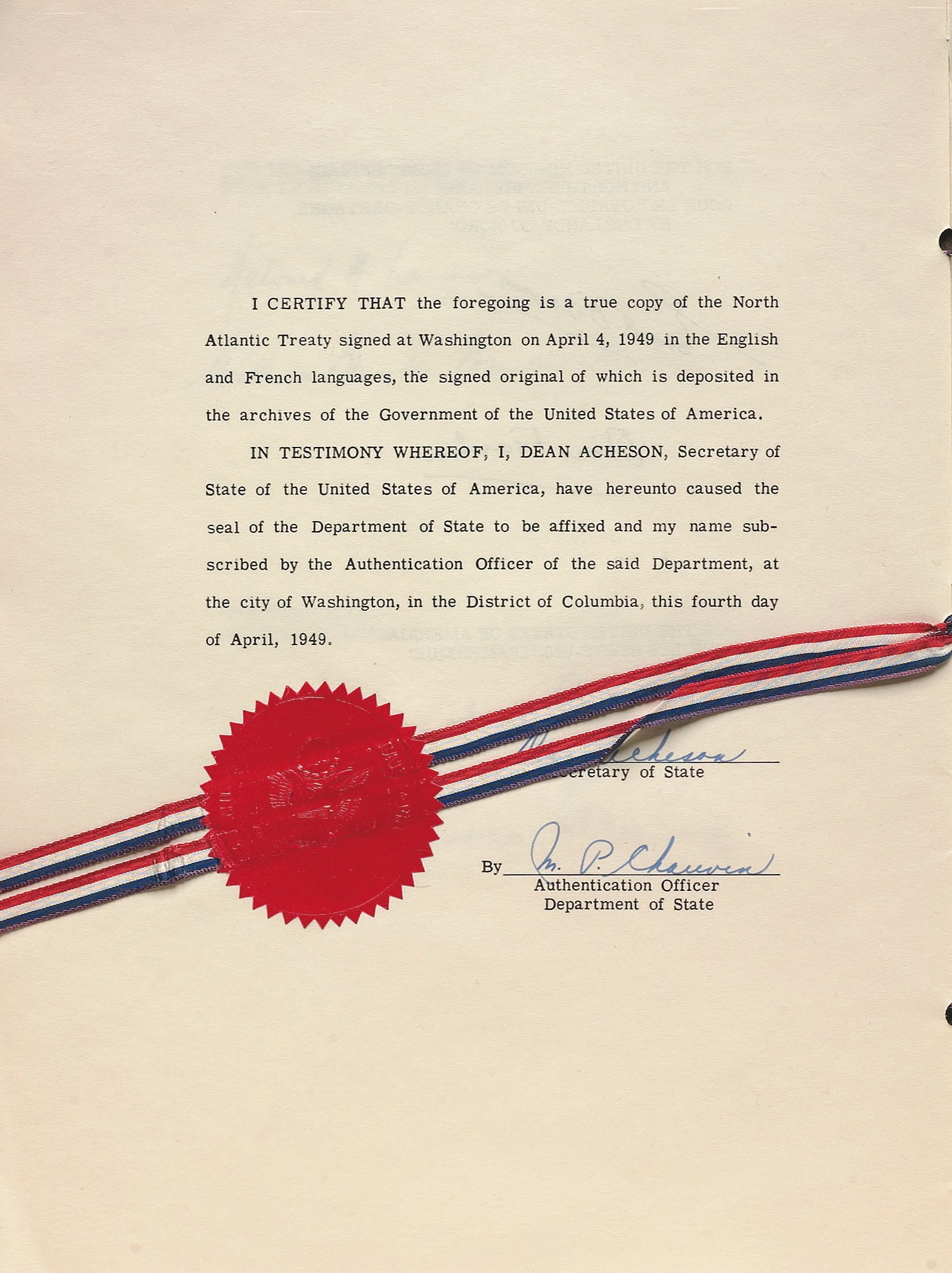
The seeds of NATO were sown in the chaotic final years of World II, when European nations faced the prospect of a power vacuum and the looming threat of Soviet domination. In 1948, the United States, United Kingdom, Canada, France, Italy, the Netherlands, Belgium, Luxembourg, Norway, Denmark, Portugal, and Iceland began informal consultations on a mutual defense arrangement. These talks culminated in the North Atlantic Treaty, signed in 1949, which formally established NATO as an intergovernmental organization dedicated to collective security.
The treaty’s architects envisioned a “system of collective defense” that would bind the Atlantic community together, ensuring that any external aggression would be met with a coordinated response. The inclusion of Article 5—the cornerstone of NATO’s deterrence strategy—reflected a profound commitment: an armed attack against one member would be considered an attack against all, obligating each signatory to respond, including the use of armed force if necessary.
Major Achievements & Milestones
Signing of the North Atlantic Treaty (1949): The formal creation of NATO, establishing a legally binding collective defense pact among the original 12 signatories.
Adoption of Article 5 (1949): Institutionalized the principle that an attack on one member is an attack on all, providing the legal and moral foundation for collective security.
Expansion to 32 Member States (2024): Growth from the original 12 to a transatlantic coalition of 32 nations, reflecting the alliance’s adaptability and continued relevance.
Timeline
- 1949: The North Atlantic Treaty is signed, officially establishing NATO with 12 founding members.
- 1949: Article 5 is adopted, embedding the collective defense principle into the treaty’s core.
- 2024: NATO reaches a membership total of 32 states, comprising 30 European and 2 North American countries.
Impact & Legacy
NATO’s influence extends far beyond the battlefield. Politically, it has fostered a durable transatlantic partnership that underpins democratic governance, rule of law, and market economies across its member states. Militarily, the alliance’s integrated command structure and standardization of equipment have enabled rapid, coordinated responses to crises—from the Balkans in the 1990s to contemporary security challenges such as cyber threats and hybrid warfare.
Culturally, NATO symbolizes a collective commitment to peace and stability, often invoked in diplomatic discourse as a benchmark for international cooperation. Its enduring presence has helped deter major power conflicts in Europe, contributing to a relatively stable security environment for over seven decades. Moreover, NATO’s partnership programs have opened channels of dialogue with non‑member nations, promoting transparency and confidence‑building measures worldwide.
Records & Notable Facts
- Largest collective defense pact: With 32 members, NATO remains the most extensive alliance of its kind.
- Article 5 invocations: The treaty’s collective defense clause has been invoked only once, underscoring its role as a deterrent.
- Geographic reach: NATO’s membership spans the entire North Atlantic region, linking Europe and North America in a single security framework.
> “An attack on one is an attack on all.” – Article 5, North Atlantic Treaty