




Neuron
SUMMARY: A neuron is a cell that is excitable, firing electric signals called action potentials across a neural network in the nervous system, mainly in the central nervous system, and helps to receive and conduct impulses.
Neurons are specialized cells that are capable of transmitting and processing information through electrical and chemical signals. They are the primary components of the nervous system, which includes the brain, spinal cord, and peripheral nerves. The human brain contains approximately 86 billion neurons, each with an average of 7,000 synapses, allowing for complex communication and coordination. Neurons are found in a wide range of organisms, from simple invertebrates to complex vertebrates, and play a crucial role in controlling various physiological and cognitive functions. The study of neurons and their functions has led to a greater understanding of the nervous system and has significant implications for the diagnosis and treatment of neurological disorders. The discovery of neurons dates back to the 19th century, with the work of scientists such as Santiago Ramón y Cajal and Camillo Golgi, who were awarded the Nobel Prize in Physiology or Medicine in 1906 for their pioneering work on the structure and function of the nervous system.
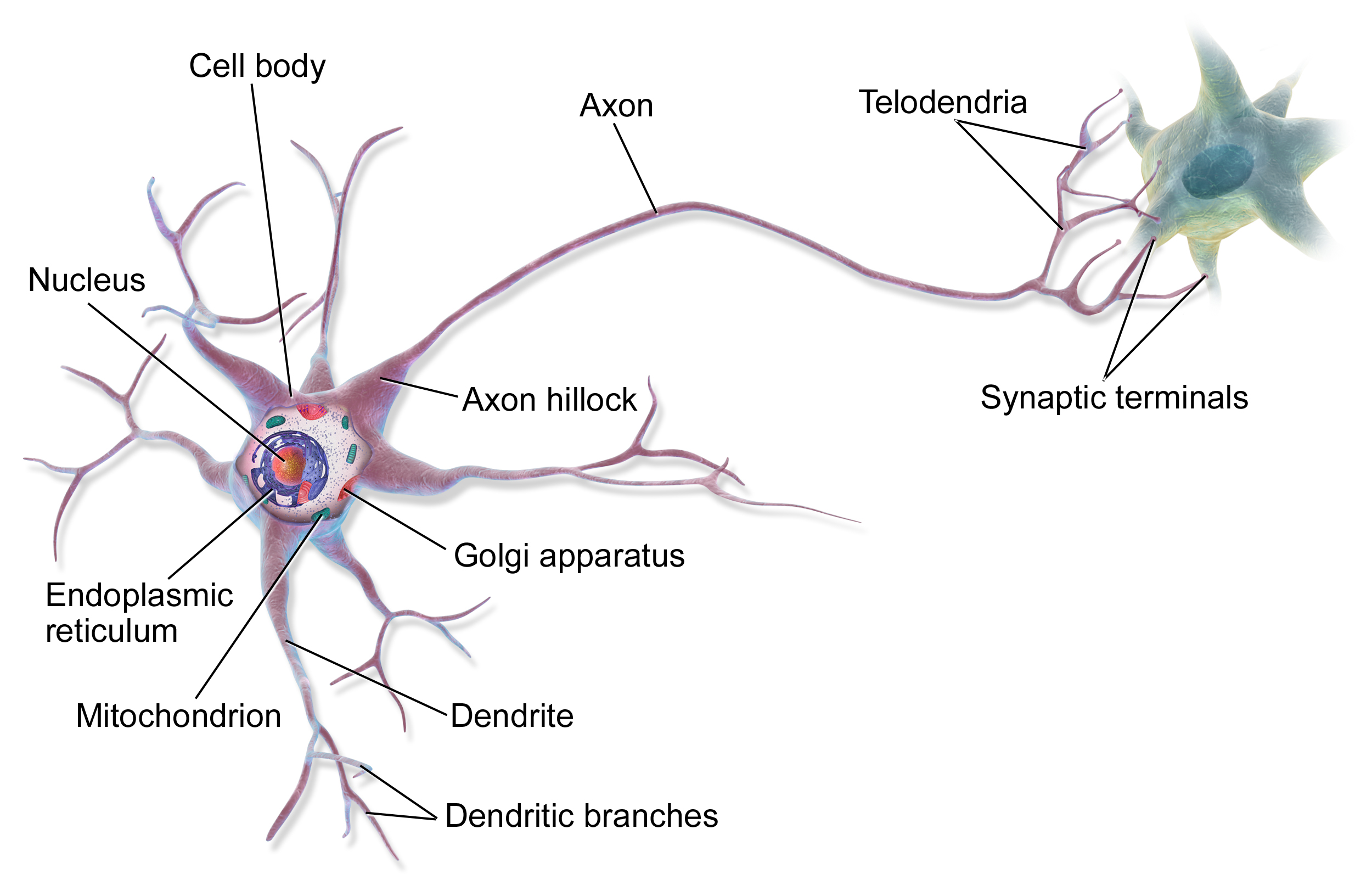
The structure of a neuron consists of three main components: the dendrites, cell body, and axon. The dendrites are branching extensions of the cell that receive signals from other neurons, while the cell body contains the nucleus and the majority of the cell's organelles. The axon is a long, thin extension of the cell that carries signals away from the cell body and transmits them to other neurons or to muscles or glands. Neurons communicate with each other through synapses, which are specialized connections that use chemical neurotransmitters to pass signals from one cell to another. This complex communication network allows neurons to coordinate and control a wide range of physiological and cognitive functions, from simple reflexes to complex thought processes.
The function of neurons is to transmit and process information, and they play a crucial role in controlling various physiological and cognitive functions. Neurons are capable of generating action potentials, which are electrical impulses that travel along the length of the axon and allow the cell to communicate with other neurons. The frequency and pattern of action potentials can vary depending on the type of neuron and the specific function it performs. For example, sensory neurons transmit information from sensory receptors to the central nervous system, while motor neurons transmit signals from the central nervous system to muscles and glands. The study of neurons and their functions has led to a greater understanding of the nervous system and has significant implications for the diagnosis and treatment of neurological disorders, such as Alzheimer's disease, Parkinson's disease, and stroke.
Structure and Function
The structure and function of neurons are closely related, and understanding the morphology of neurons is essential for understanding how they work. Neurons have a unique structure that allows them to transmit and process information, and they are capable of generating action potentials, which are electrical impulses that travel along the length of the axon. The axon is surrounded by a myelin sheath, which is a fatty insulating layer that helps to speed up the transmission of signals. The myelin sheath is produced by glial cells, which are specialized cells that provide support and maintenance functions for neurons. The synapse is the point at which the axon of one neuron meets the dendrite of another neuron, and it is here that chemical neurotransmitters are released and bind to receptors, allowing the signal to be transmitted from one cell to another.Types of Neurons
There are several types of neurons, each with distinct functions and characteristics. Sensory neurons transmit information from sensory receptors to the central nervous system, while motor neurons transmit signals from the central nervous system to muscles and glands. Interneurons are neurons that are found within the central nervous system and play a role in processing and integrating information. Neurons can also be classified based on their morphology, with some neurons having a single axon and others having multiple axons. The different types of neurons work together to control various physiological and cognitive functions, and damage to specific types of neurons can lead to a range of neurological disorders.Neurotransmission
Neurons communicate with each other through neurotransmission, which is the process by which chemical neurotransmitters are released from the axon of one neuron and bind to receptors on the dendrite of another neuron. This process allows neurons to transmit signals to each other and to coordinate and control various physiological and cognitive functions. There are many different types of neurotransmitters, each with distinct functions and characteristics. For example, dopamine is a neurotransmitter that plays a role in reward and motivation, while serotonin is a neurotransmitter that plays a role in mood regulation. The study of neurotransmission has led to a greater understanding of the nervous system and has significant implications for the diagnosis and treatment of neurological disorders.Neuroplasticity
Neurons are capable of reorganizing and adapting in response to changes in the environment, a process known as neuroplasticity. This allows the nervous system to rewire and adapt throughout life, and it is essential for learning and memory. Neuroplasticity is thought to occur through changes in the strength and connectivity of synapses, as well as through the growth and formation of new neurons. The study of neuroplasticity has led to a greater understanding of the nervous system and has significant implications for the diagnosis and treatment of neurological disorders, such as stroke and spinal cord injury.INFOBOX:
- Name: Neuron
- Type: Cell
- Date: 1906 (Nobel Prize in Physiology or Medicine awarded to Santiago Ramón y Cajal and Camillo Golgi)
- Location: Nervous system
- Known For: Transmitting and processing information through electrical and chemical signals
TAGS: neuron, nervous system, synapse, neurotransmitter, action potential, neuroplasticity, neurology, neuroscience




