**
Overview
Neuroscience investigates the nervous system, a complex network of neurons, glial cells, and supporting vasculature that spans from the microscopic synapse (≈ 20 nm cleft) to the macroscopic brain (≈ 1.4 kg in humans). By probing electrical signaling, chemical neurotransmission, and genetic regulation, researchers aim to explain phenomena as diverse as reflex arcs, language acquisition, and the emergence of consciousness. Modern neuroscience is split into sub‑disciplines—cellular, molecular, systems, cognitive, and computational—each employing specialized tools such as patch‑clamp electrophysiology, two‑photon microscopy, functional MRI (fMRI), and deep‑learning models.The field’s ultimate ambition, famously termed the “epic challenge” by Nobel laureate Eric Kandel in 2000, is to map the biological basis of learning, memory, behavior, perception, and consciousness. This quest drives massive collaborative initiatives like the Human Brain Project (EU, launched 2013) and the BRAIN Initiative (U.S., launched 2013), which together have funded billions of dollars in technology development, from high‑density electrode arrays (up to 1 million channels) to whole‑brain connectomics at nanometer resolution.
History/Background
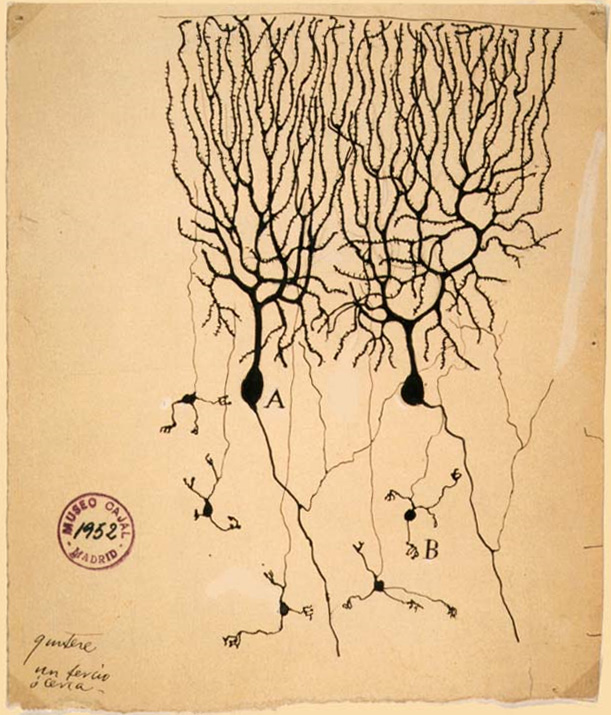
The roots of neuroscience trace back to ancient Egypt (≈ 1500 BCE) where physicians noted the brain’s role in injury. The first systematic anatomical description emerged in 1664 when Thomas Willis coined “brain” and identified the cerebral cortex. In 1873, Camillo Golgi introduced the black‑reaction staining method, later refined by Santiago Ramón y Cajal, whose 1906 drawings revealed the neuron doctrine—the concept that the nervous system is composed of discrete cells.The 20th century saw rapid expansion: Hodgkin and Huxley (1952) quantified the ionic currents underlying the action potential, earning a Nobel Prize and establishing quantitative electrophysiology. The 1970s introduced functional imaging (PET) and later fMRI (1990s), enabling non‑invasive mapping of brain activity in real time. The 1990s also birthed optogenetics, a technique that uses light‑sensitive ion channels to control neuronal firing with millisecond precision. By 2000, the Human Genome Project had sequenced the entire human DNA, providing a molecular toolkit for neurogenetics.
In the 21st century, large‑scale data initiatives have accelerated discovery. The Allen Institute for Brain Science released a mouse brain atlas (2012) with 100 µm voxel resolution, while the Open Connectome Project (2013) made petabytes of electron‑microscopy data publicly available. As of 2023, over 10,000 peer‑reviewed papers per year are indexed under “neuroscience,” reflecting its status as one of the fastest‑growing scientific domains.
Key Information
- Neuronal diversity: The human brain contains ~86 billion neurons, each forming up to 10,000 synapses, yielding a potential 10¹⁴ connections. - Glial dominance: Glial cells outnumber neurons roughly 3:1, providing metabolic support, immune defense, and synaptic modulation. - Techniques: - Patch‑clamp (≤ 1 MΩ resistance) measures single‑channel currents. - Two‑photon microscopy penetrates up to 1 mm deep in living tissue with sub‑micron resolution. - CRISPR‑Cas9 enables precise gene editing to model neurodegenerative diseases in rodents. - Major breakthroughs: - Long‑term potentiation (LTP) discovered in the hippocampus (1973) elucidated a cellular mechanism for memory. - Deep‑brain stimulation (DBS) approved by FDA in 2002 for Parkinson’s disease, illustrating therapeutic neuromodulation. - Artificial neural networks (ANNs), inspired by cortical architecture, now power language models and autonomous systems.Significance
Neuroscience reshapes medicine, technology, and philosophy. Clinically, it underpins treatments for Alzheimer’s disease, schizophrenia, stroke, and chronic pain, reducing global disease burden by an estimated $1.5 trillion annually. Economically, neuro‑tech startups raised $12 billion in venture capital between 2015‑2022, driving innovations from brain‑computer interfaces (BCIs) to neuro‑prosthetics that restore limb function.Beyond health, neuroscience informs education (evidence‑based learning strategies), law (neuro‑ethics of responsibility), and artificial intelligence (bio‑inspired algorithms). By deciphering the neural code, humanity edges closer to answering age‑old questions about free will, self, and consciousness, cementing neuroscience as a cornerstone of 21st‑century science.
INFOBOX:
- Name: Neuroscience
- Type: Interdisciplinary scientific field
- Date: Formalized as a distinct discipline in the early 20th century (≈ 1906)
- Location: Global (major hubs in the United States, Europe, Asia)
- Known For: Integrating biology, psychology, physics, and computer science to study the nervous system
TAGS: neuroscience, brain, neurons, neurobiology, cognition, neurotechnology, neuropsychology, connectomics