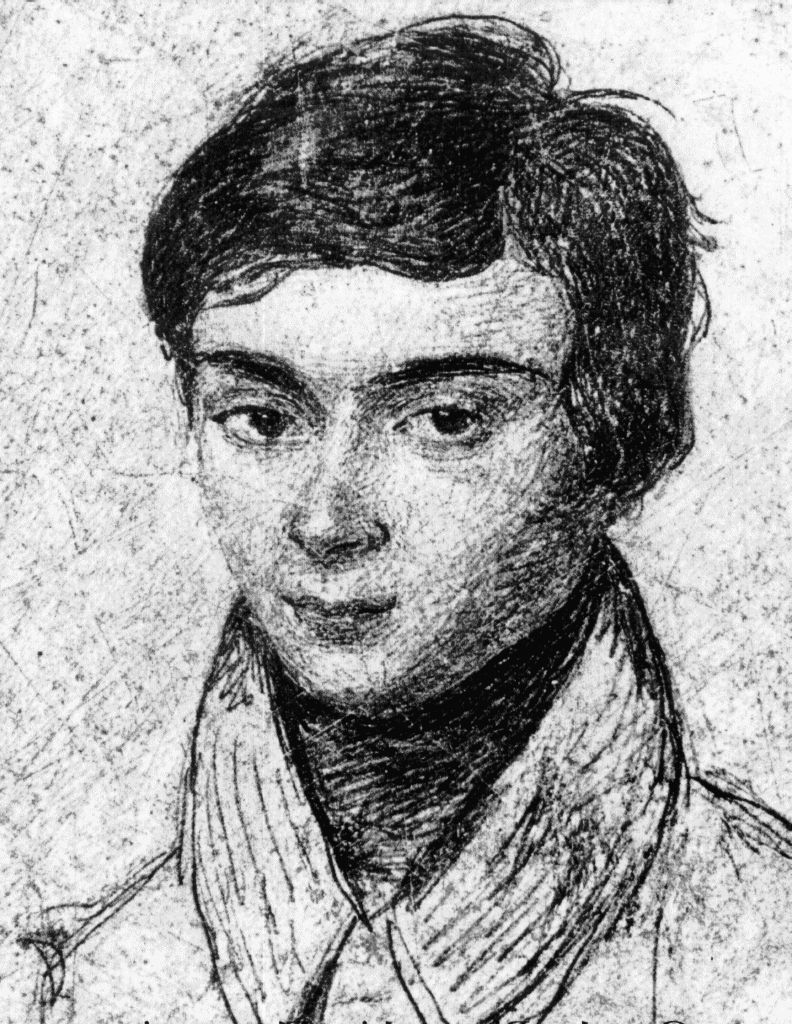
Overview
Niels Henrik Abel’s short life is one of the most poignant “what-ifs” in mathematics. In barely six active years he settled a 250-year-old question—showing that no general formula exists for solving fifth-degree polynomial equations—and then went on to create whole new continents of analysis. Working alone, often hungry, and mailing theorems to colleagues who could not yet appreciate them, Abel supplied the missing rigor that earlier algebraists had only guessed at. His insistence on precise definitions and his uncanny ability to see structure inside symmetry laid the groundwork for modern group theory, algebraic geometry, and complex analysis.Abel’s style was to strip a problem to its essentials and then let the algebra speak. Where others hunted for ever-more-elaborate radical formulas, Abel asked: “What does it mean to solve an equation?” The answer, encoded in what we now call the Abel–Ruffini theorem, is that the symmetric group S₅ is not solvable, so most quintics cannot be solved by any tower of root extractions. The same clarity of thought let him invert elliptic integrals and discover doubly-periodic functions, opening the door to the geometric landscape of Riemann surfaces and, ultimately, to modern cryptography and string theory.
History/Background
Born 5 August 1802 on the windswept island of Finnøy, Norway, Abel grew up under the economic shadow of the Napoleonic wars. A schoolteacher, Bernt Holmboe, recognized the boy’s gift and introduced him to Euler, Lagrange, and Newton. In 1821 Abel entered the University of Christiania (now Oslo); within a year he had produced original results on the convergence of binomial series. A small state grant in 1825 allowed him to travel to Paris and Berlin, where he hoped the leading mathematicians would publish his work. Cauchy and Legendre received him politely but failed to grasp the importance of the manuscripts they were handed; one memoir was lost in Cauchy’s desk. Abel returned to Norway in 1827, his health already declining. He died of tuberculosis on 6 April 1829, two days before a belated professorship arrived from Berlin. The loss was immortalized by a colleague’s lament: “He has left mathematicians enough to keep them busy for five hundred years.”Key Information
- Impossibility of the Quintic (1824): For a general quintic x⁵ + a₄x⁴ + a₃x³ + a₂x² + a₁x + a₀ = 0, Abel proved that no finite algebraic expression built from the coefficients using only +, −, ×, ÷, and nth roots can give a root for every choice of aᵢ. The proof introduces the Galois group concept a decade before Galois.- Elliptic Functions (1826–29):
Abel studied the integral
u = ∫₀^φ dθ/√(1 – k² sin²θ).
Instead of merely inverting it to get φ as a function of u, he defined
sn u = sin φ, cn u = cos φ, dn u = √(1 – k² sin²φ),
and showed these functions are doubly periodic:
sn(u + 4K) = sn u, sn(u + 2iK′) = sn u.
This insight unified dozens of scattered integral formulas under one theory.
- Abelian Functions and Integrals:
Generalizing to integrals of the form
∫ R(x,y) dx, where y² = polynomial of degree ≥ 5,
he uncovered what Riemann later called Abelian varieties, today central in algebraic geometry and mathematical physics.
- Convergence Tests:
The Abel summation and Abel’s limit theorem give rigorous conditions for when a power series converges up to the boundary of its disk of convergence, tools still used in analytic number theory.
- Notation:
The symbol f(x)dx for integrals and the practice of writing sums with Σ from a to b are conventions Abel standardized in his notebooks.