Overview
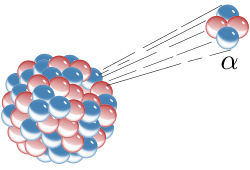
Nuclear chemistry explores the structure, behavior, and transformations of atomic nuclei, diverging from traditional chemistry by focusing on nuclear rather than electron interactions. It encompasses processes like radioactive decay, nuclear fission, and nuclear fusion, which alter the identity of elements and release immense energy. This field bridges physics and chemistry, with applications ranging from power generation to cancer treatment.The nucleus, composed of protons and neutrons, can undergo spontaneous or induced changes, emitting alpha particles, beta particles, or gamma rays. These transformations are governed by principles like mass-energy equivalence (E=mc²) and the strong nuclear force. Nuclear chemists study isotopes, transmutation reactions, and radiation effects, contributing to advancements in energy sustainability, medical diagnostics, and planetary science.
History/Background
Nuclear chemistry emerged in the late 19th century with Henri Becquerel’s 1896 discovery of radioactivity, followed by Marie and Pierre Curie’s isolation of polonium and radium. Ernest Rutherford advanced the field in 1911 by identifying the atomic nucleus through his gold-foil experiment, later classifying radioactive decay modes.The 20th century accelerated progress: Otto Hahn and Lise Meitner discovered nuclear fission in 1938, while Enrico Fermi’s 1942 Chicago Pile-1 experiment achieved the first controlled nuclear chain reaction. The Manhattan Project (1942–1945) harnessed these principles for atomic bombs, sparking ethical debates. Post-war, nuclear power plants like the 1951 Experimental Breeder Reactor I (EBR-I) in Idaho generated electricity, and medical isotopes revolutionized diagnostics and therapy.
Key Information
- Radioactive decay types: Alpha (α), beta (β), gamma (γ), and spontaneous fission. - Half-life measures decay rates, critical for dating (e.g., carbon-14) and dosimetry. - Nuclear fission splits heavy nuclei (e.g., uranium-235), releasing energy and neutrons for chain reactions. - Nuclear fusion combines light nuclei (e.g., hydrogen isotopes) to power stars and experimental reactors like ITER. - Transmutation converts elements via neutron capture or particle bombardment, as in reactor-produced medical isotopes. - Isotopes like technetium-99m (imaging) and iodine-131 (cancer treatment) are vital in healthcare. - Einstein’s equation (E=mc²) explains energy release in nuclear reactions, where mass converts to energy.Significance
Nuclear chemistry underpins modern society: Nuclear power provides ~10% of global electricity, offering low-carbon energy but posing waste and safety challenges. In medicine, it enables PET scans, radiation therapy, and sterilization. Archaeology and geology use radiometric dating to determine artifact and rock ages.The field also addresses global security through nuclear non-proliferation efforts and radiation safety protocols. Despite risks like Chernobyl (1986) and Fukushima (2011), innovations in small modular reactors and plasma confinement aim to enhance efficiency and safety. Nuclear chemistry’s legacy lies in its dual role as a tool for progress and a reminder of humanity’s responsibility to harness powerful forces wisely.