




Overview
Numerical analysis is the art and science of approximating solutions to mathematical problems that cannot be solved exactly or efficiently through symbolic manipulation. It underpins simulations in physics, engineering, finance, and data science, where real-world phenomena are modeled using continuous variables like real or complex numbers. Unlike pure mathematics, which seeks exact answers, numerical analysis embraces approximation, balancing accuracy with computational feasibility. For example, while the equation $ x^2 = 2 $ has an exact solution ($ \sqrt{2} $), numerical methods like the Newton-Raphson iteration approximate roots of more complex equations, such as $ e^x + x = 0 $, where no closed-form solution exists.Key challenges include managing errors—such as rounding errors from finite precision arithmetic and truncation errors from approximating infinite processes (e.g., Taylor series)—and ensuring numerical stability, where small input changes don’t cause large output deviations. Algorithms are evaluated for efficiency (speed, memory use) and robustness (performance across problem types). Modern numerical analysis is inseparable from computers, which execute iterative methods like finite element analysis or Monte Carlo simulations at scale.
History/Background
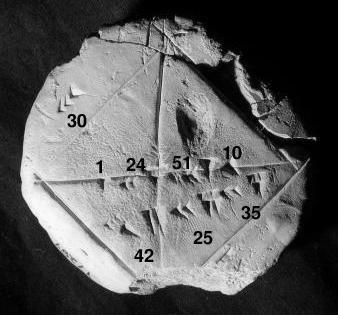
The roots of numerical analysis trace back to ancient civilizations. Babylonians (2000 BCE) used iterative averaging to approximate square roots, while Chinese mathematicians (circa 200 CE) developed Gaussian elimination for solving linear systems. However, the field formalized in the 17th century with Newton and Raphson’s iterative root-finding method (1671) and Euler’s work on differential equations (1768).The 19th century saw advances in numerical integration and interpolation, driven by astronomers and engineers. Gauss’s least squares method (1795) and his contributions to numerical quadrature laid groundwork for modern techniques. The 20th century marked a revolution: John von Neumann and Alan Turing’s work on early computers in the 1940s enabled algorithmic solutions to complex problems. The 1950s–1970s formalized numerical linear algebra (e.g., Householder transformations) and the finite element method, pioneered by engineers like Ray Clough in the 1950s. Today, numerical analysis thrives in machine learning, climate modeling, and quantum mechanics.
Key Information
Core concepts include: - Numerical Stability: An algorithm is stable if errors do not grow uncontrollably. For example, solving $ Ax = b $ with an ill-conditioned matrix $ A $ amplifies input errors. - Convergence: Iterative methods (e.g., Jacobi or Gauss-Seidel) must approach the true solution as iterations increase. The Newton-Raphson method converges quadratically under suitable conditions. - Error Analysis: Total error combines truncation error (from approximating a method, e.g., Euler’s method for ODEs) and round-off error (from finite precision arithmetic).Pivotal algorithms include:
- Newton-Raphson Method: $ x_{n+1} = x_n - \frac{f(x_n)}{f'(x_n)} $ for root-finding.
- Gaussian Elimination: Solves linear systems $ Ax = b $ via row operations.
- Finite Element Method (FEM): Discretizes partial differential equations (PDEs) into solvable algebraic systems, critical in structural engineering.
Landmark achievements include the development of the QR algorithm (1960s) for eigenvalue computation and the creation of software libraries like LINPACK (1979) and MATLAB (1984), which democratized numerical computation.



