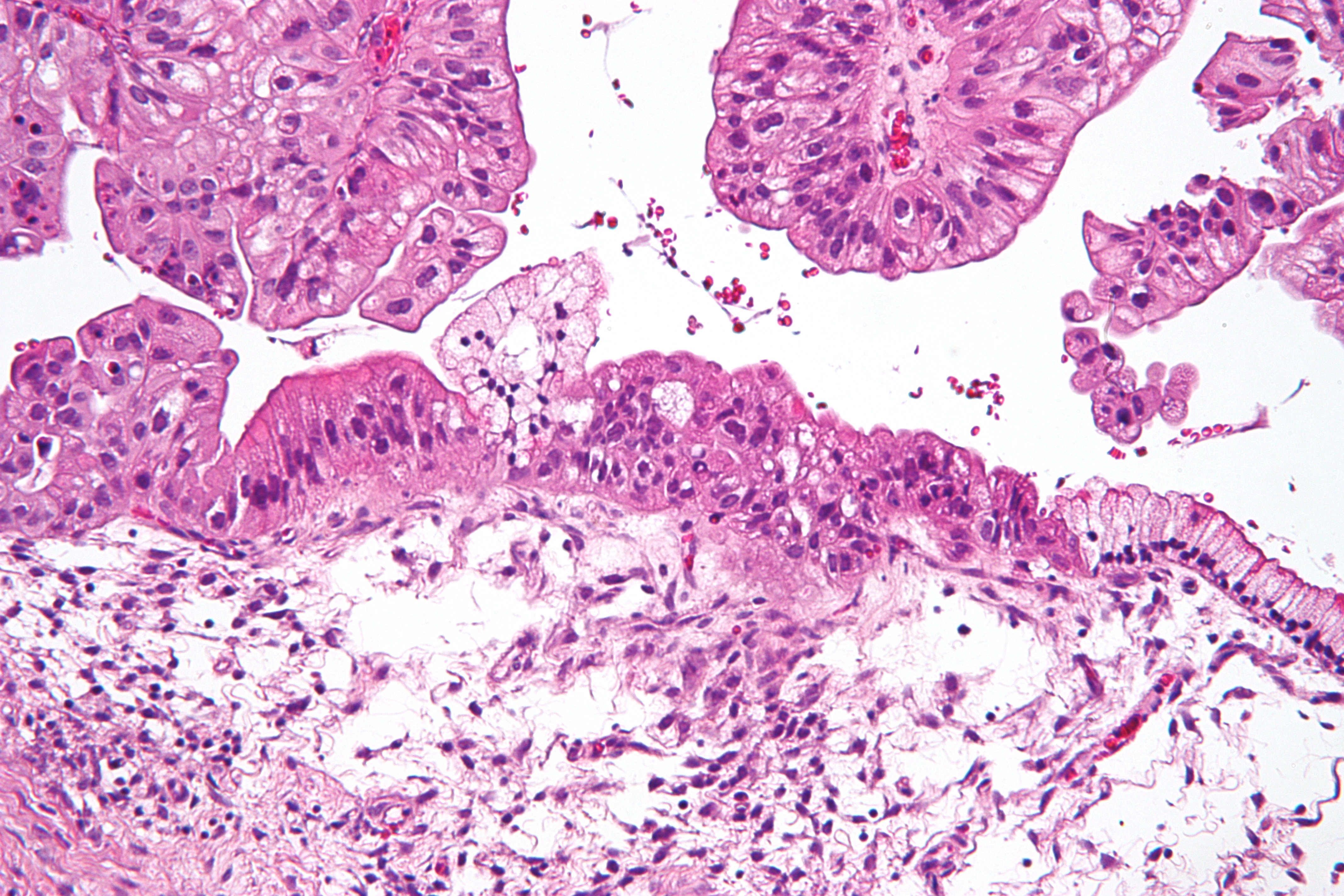
Overview
Ovarian cancer is a cancerous tumor that develops in one or both of the ovaries, which are located on either side of the uterus in the female pelvis. The ovaries are made up of three different cell types:
epithelial cells,
germ cells, and
stromal cells. When these cells become abnormal, they can divide and form tumors, which can invade or spread to other parts of the body. Ovarian cancer is often referred to as a "silent killer" because it may not produce noticeable symptoms until it has advanced to a later stage. According to the American Cancer Society, ovarian cancer is the fifth leading cause of cancer deaths among women in the United States.
The ovaries play a crucial role in the female reproductive system, producing eggs and hormones that regulate the menstrual cycle and support pregnancy. However, when cancer develops in the ovaries, it can disrupt the normal functioning of the reproductive system and lead to a range of symptoms, including bloating, vaginal bleeding, pelvic pain, abdominal swelling, constipation, and loss of appetite. In some cases, ovarian cancer may not produce any symptoms at all, making it difficult to detect in the early stages. As the cancer progresses, it can spread to other parts of the body, such as the lining of the abdomen, lymph nodes, lungs, and liver.
Ovarian cancer is a complex and multifaceted disease that requires a comprehensive approach to diagnosis, treatment, and management. While the exact causes of ovarian cancer are not fully understood, research has identified several risk factors, including family history, genetic mutations, age, and hormonal factors. Women who have a family history of ovarian cancer or who have inherited certain genetic mutations, such as BRCA1 or BRCA2, are at higher risk of developing the disease. Additionally, women who have never given birth or who have a history of infertility may also be at increased risk.
History/Background
The history of ovarian cancer dates back to ancient times, with evidence of the disease found in the medical texts of ancient civilizations such as Egypt and Greece. However, it wasn't until the 19th century that ovarian cancer was first described as a distinct medical condition. Over the years, our understanding of ovarian cancer has evolved significantly, with advances in medical technology and research leading to the development of new diagnostic tools and treatments. Key dates in the history of ovarian cancer include the discovery of the
Pap smear in the 1940s, which revolutionized the diagnosis of cervical cancer and paved the way for the development of screening tests for ovarian cancer.
Key Information
Ovarian cancer is a significant public health concern, with approximately 22,000 new cases diagnosed in the United States each year. The disease is most commonly diagnosed in women over the age of 50, with the majority of cases occurring in women between the ages of 55 and 64. While ovarian cancer can be treated with
surgery,
chemotherapy, and
radiation therapy, the disease is often diagnosed at an advanced stage, when treatment options are limited. As a result, it is essential for women to be aware of the risks and symptoms of ovarian cancer and to seek medical attention if they experience any unusual symptoms or changes in their body.
Significance
Ovarian cancer is a significant health concern that affects thousands of women around the world each year. The disease has a profound impact on the lives of women and their families, causing significant emotional, physical, and financial burden. However, with advances in medical research and technology, there is hope for improved diagnosis, treatment, and management of ovarian cancer. By raising awareness about the disease and promoting education and research, we can work towards reducing the incidence and mortality rates of ovarian cancer and improving the quality of life for women affected by the disease. If you or someone you know is experiencing symptoms of ovarian cancer, it is essential to seek medical attention from a qualified healthcare professional.