




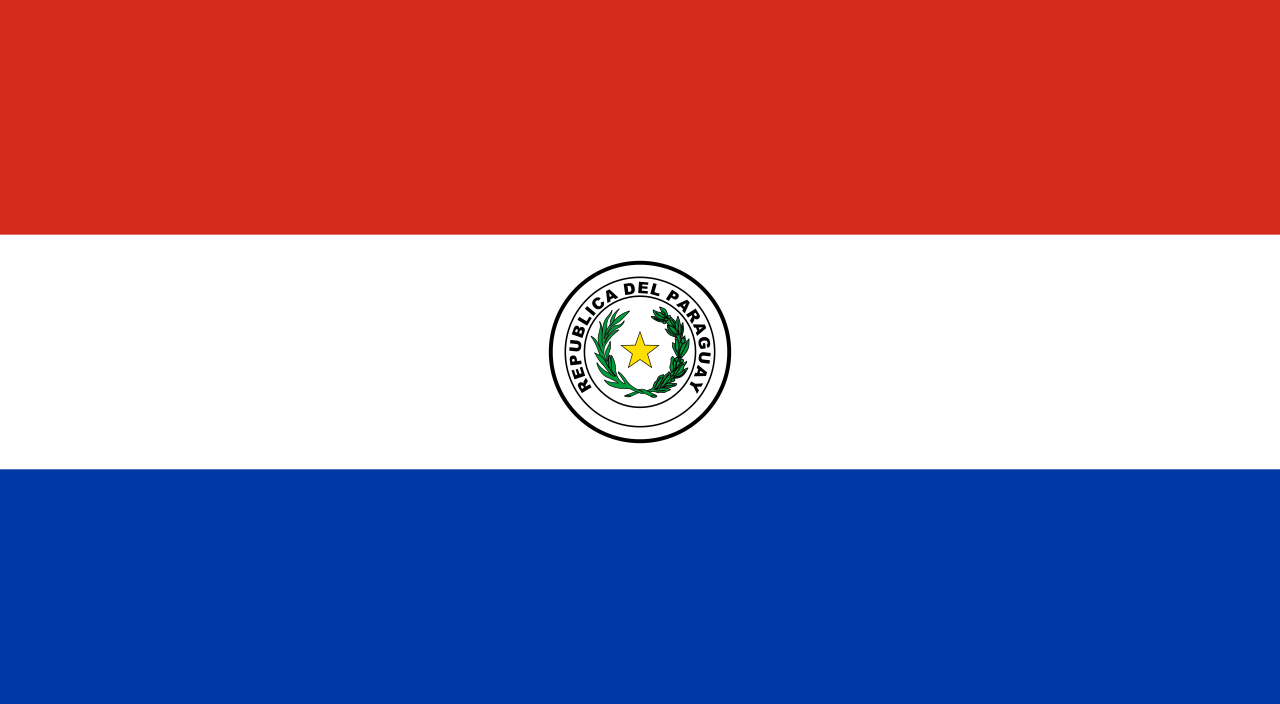
Overview
Nestled in the heart of South America, Paraguay—officially the Republic of Paraguay—is a landlocked country that bridges the continent’s southern cone and the Gran Chaco. Though it lacks a coastline, the nation enjoys a strategic maritime outlet via the Paraná–Paraguay Waterway, a navigable river corridor that links its interior to the Atlantic Ocean. The country’s geography is a striking contrast of verdant, subtropical lowlands in the east and the arid, thorn‑scrub plains of the Chaco to the west. This duality shapes both its economy and its cultural identity.Paraguay’s capital, Asunción, is one of the oldest cities in South America, perched on the left bank of the Paraguay River. With a metropolitan population of roughly 2.3 million, Asunción serves as the political, economic, and cultural hub of a nation of about 7 million people. The country is organized as a unitary presidential republic, comprising a capital district and seventeen departments, each with its own local administration. Spanish and Guaraní—the latter spoken by the majority—are both official languages, reflecting a deep‑rooted bilingual tradition that distinguishes Paraguay from its neighbors.
History/Background
Paraguay’s pre‑colonial era was dominated by the Guaraní peoples, who cultivated the land, built communal villages, and developed a sophisticated oral tradition. In 1537, Spanish explorer Juan de Salazar y Espinosa founded Asunción, establishing the first permanent European settlement in the interior of the continent. The city quickly became a launchpad for expeditions into the interior, earning the nickname “Mother of Cities.”The early 19th century ushered in independence: on May 14 1811, Paraguayan patriots ousted the Spanish governor, and the nascent republic declared full sovereignty in 1813 under the rule of José Gaspar Rodríguez de Francia, a solitary dictator who isolated the country to protect its autonomy. After Francia’s death, the nation experienced a brief liberal period before the War of the Triple Alliance (1864‑1870), a devastating conflict against Brazil, Argentina, and Uruguay that decimated the population and left deep economic scars.
The 20th century saw a series of coups, a long‑lasting dictatorship under Alfredo Stroessner (1954‑1989), and a peaceful transition to democracy in 1992 with the adoption of a new constitution. Since then, Paraguay has pursued market reforms, strengthened its institutions, and cultivated a reputation for political stability in a region often marked by turbulence.
Key Information
- Capital & Largest City: Asunción (population ~2.3 million) - Official Languages: Spanish and Guaraní (co‑official) - Area: 406,752 km² (≈157,048 sq mi) – the 34th largest country worldwide - Population: Approximately 7.4 million (2023 estimate) - Government: Unitary presidential republic; President serves as both head of state and government. - Economy: Mixed; major sectors include agriculture (soybeans, corn, beef), hydroelectric power (the Itaipú Dam, one of the world’s largest), and manufacturing. - Currency: Paraguayan guaraní (PYG) - Geography: Eastern region – fertile Paraná Plateau; Western region – Gran Chaco, semi‑arid, rich in biodiversity. - Cultural Highlights: Traditional music (polka paraguaya, guarania), the iconic ñandutí lace, and the national sport football, with a passionate fan base. - International Relations: Member of MERCOSUR, UN, OAS, and the Paraná–Paraguay Waterway consortium, granting indirect access to global trade routes.Significance
Paraguay’s story is a testament to resilience. Despite losing up to 70 % of its pre‑war population during the Triple Alliance conflict, the nation rebounded to become a stable democracy with a growing middle class. Its bilingual policy preserves the Guaraní language, making Paraguay the only South American country where an indigenous tongue holds equal status with a European language—a model of cultural preservation and linguistic rights.Economically, Paraguay’s hydroelectric capacity—anchored by the Itaipú Dam—positions it as a net exporter of clean energy, contributing to regional sustainability goals. The country’s strategic location along the Paraná–Paraguay Waterway enables it to punch above its weight in trade, moving agricultural commodities to global markets despite its landlocked status.
Culturally, Paraguay’s fusion of Spanish colonial heritage and Guaraní traditions creates a unique artistic tapestry, from the haunting melodies of Harpa to the intricate patterns of ñandutí textiles. Its culinary staples—sopa paraguaya, chipa, and tereré (a cold yerba mate infusion)—offer a sensory window into the nation’s agrarian roots and communal ethos.
In the geopolitical arena, Paraguay’s commitment to democratic norms and regional integration through MERCOSUR underscores its role as a stabilizing force in the Southern Cone. As the nation navigates challenges such as climate change impacts on the Chaco and the need for diversified economic development, its blend of natural wealth, cultural depth, and political continuity makes Paraguay a compelling case study in sustainable nation‑building.


