Overview
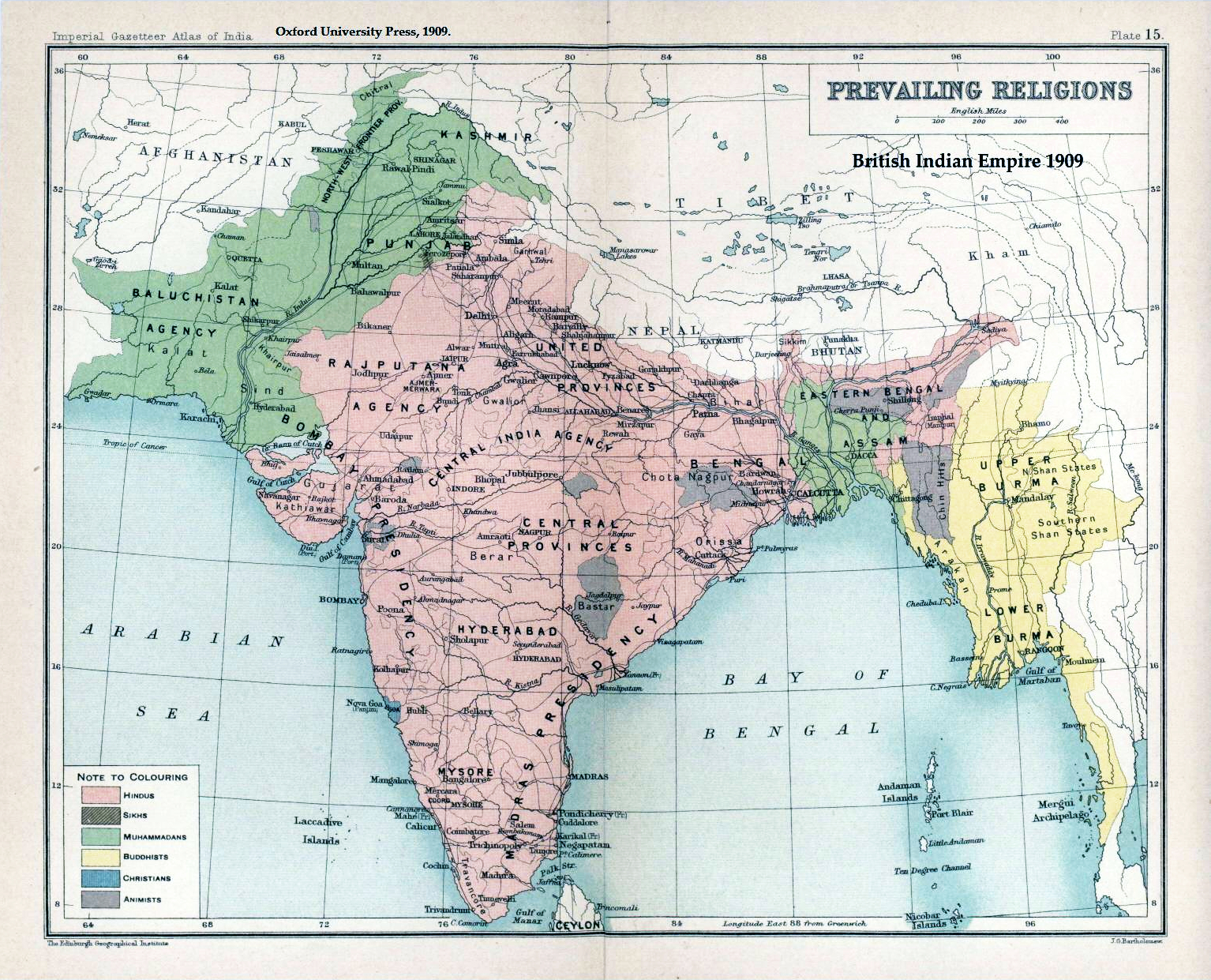
At the stroke of midnight on 14–15 August 1947, British India vanished and two new nations—India and Pakistan—were hastily born. The partition divided Bengal and Punjab along ostensibly religious lines, transferred 565 princely states to accession or independence, and split every pillar of the colonial state: army, navy, civil service, railways, and treasury. What followed was not merely a redrawing of maps but a human convulsion: 12–15 million Hindus, Muslims, and Sikhs crossed frontiers in both directions, while communal violence claimed between 200,000 and 2,000,000 lives. The trauma reshaped South Asia’s demography, foreign policy, and collective memory, leaving legacies of hostility that still shadow the region.
The event is best understood as both culmination and commencement: the culmination of a century of colonial divide-and-rule, constitutional tinkering, and rising communal politics; the commencement of a post-colonial order whose nuclear-armed rivalries and contested borders remain unresolved. Partition was not inevitable, yet once accepted by the departing British and rival Indian National Congress and All-India Muslim League leaderships, it acquired a fatal momentum whose humanitarian and geopolitical aftershocks persist across India, Pakistan, and Bangladesh (which itself seceded from Pakistan in 1971).
History/Background
British annexation after 1757 forged an empire of staggering diversity. By 1909, separate electorates for Muslims institutionalized communal identity, while the Government of India Acts (1919, 1935) incrementally devolved power without resolving Hindu-Muslim power-sharing. The Lahore Resolution (23 March 1940) first demanded “independent states” for Muslims; wartime pressures, Congress’s 1942 Quit India campaign, and the 1946 Indian Naval Mutiny convinced Britain to quit quickly. Lord Mountbatten’s 3 June Plan accepted partition, giving provinces and princely states roughly ten weeks to choose. Cyril Radcliffe, who had never previously visited India, drew the boundary lines in five weeks. On 18 July 1947, the Indian Independence Act received royal assent; on 14 August Pakistan emerged, with India following at midnight.
Key Information
-
Population transfer: ~12–15 million refugees; Punjab’s entire rural map was re-sorted by religion within months.
-
Casualties: Estimates range 200,000–2,000,000; massacres at Rawalpindi, Noakhali, and on refugee trains ("blood trains") became emblematic.
-
Princely states: 562 acceded to India, 3 to Pakistan; Jammu & Kashmir’s accession sparked the first Indo-Pak war (1947-48).
-
Assets division: 64 % of rail stock, 36 % of ordnance factories, and 33 % of military stores went to Pakistan; the Bank of India’s gold reserves were physically divided under armed guard.
-
Leaders: Jawaharlal Nehru (India), Muhammad Ali Jinnah (Pakistan), Lord Mountbatten (last Viceroy), Cyril Radcliffe (Boundary Commission), Mahatma Gandhi (opposed partition, assassinated 1948 by a Hindu nationalist).
-
Legal instrument: Indian Independence Act 1947 (UK Parliament) abolished the title “Emperor of India,” created two dominions within the Commonwealth until republics in 1950/56.
Significance
Partition set the template for post-colonial state formation: hurried colonial exits, ethno-religious borders, and contested sovereignty. It embedded an adversarial dyad—India versus Pakistan—at the heart of South Asian geopolitics, producing four wars, a nuclear arms race, and ongoing cross-border tensions in Kashmir. Internally, both states struggled to define citizenship: India’s constitutional secularism and Pakistan’s Islamic nationalism were, in part, answers to the same blood-soaked moment. The refugee crisis seeded cosmopolitan cities like Karachi and Delhi with new cultural hybrids while generating diasporas whose remittances and memories sustain transnational communities from Bradford to Brampton. Partition also globalized humanitarian law, influencing later UN interventions in population transfers and genocide prevention. Culturally, the trauma lives on in literature (Manto’s
Toba Tek Singh), cinema (
Garam Hawa), and oral histories archived across three countries. Seventy-five years on, the Radcliffe Line remains largely intact, a reminder that imperial cartography can outlast empires and that the politics of identity, once mobilized, are hard to demobilize.