




Overview
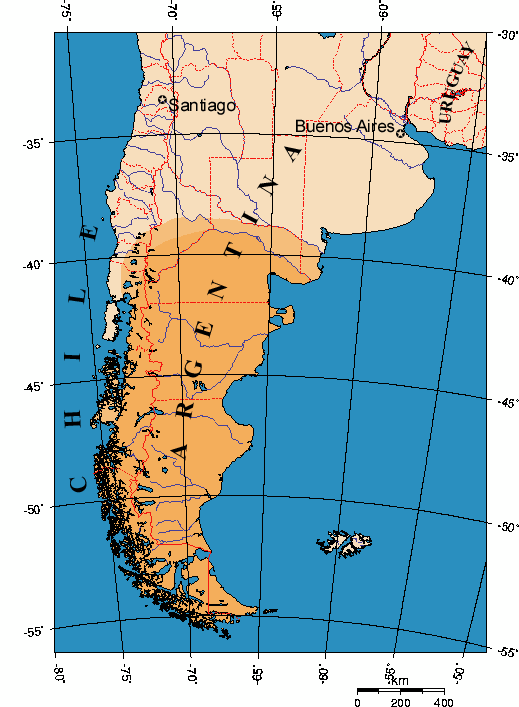
Patagonia is a geographical region in southern South America that spans parts of Argentina and Chile, covering an area of approximately 673,000 square kilometers (260,000 sq mi). The region is bounded by the Pacific Ocean to the west, the Atlantic Ocean to the east, and several waterways that connect them, including the Strait of Magellan, the Beagle Channel, and the Drake Passage to the south. Patagonia is a land of contrasts, featuring towering mountains, pristine lakes, and glaciers in the west, and deserts, tablelands, and steppes toward the east. The region's unique geography and climate have given rise to a diverse range of flora and fauna, including guanacos, pumas, and condors.
The name "Patagonia" was first used by the Spanish explorer Ferdinand Magellan in 1520, who encountered a group of indigenous people that he believed were giants, due to their height and stature. The name "Patagonia" is derived from the word "patagón," which means "giant" in Spanish. Over time, the name has become synonymous with the region's rugged and untamed landscape. Today, Patagonia is a popular destination for outdoor enthusiasts, nature lovers, and adventure seekers, who come to experience the region's stunning natural beauty and unique cultural heritage.
History/Background
The history of Patagonia dates back thousands of years, with evidence of human habitation dating back to the Paleolithic era. The indigenous people of Patagonia, including the Tehuelche and Mapuche, developed a rich and complex culture, with a deep connection to the land and its resources. The arrival of European explorers and settlers in the 16th century marked the beginning of a new era in Patagonia's history, with the establishment of missions, ranches, and trading posts. The region's strategic location made it an important hub for trade and commerce, with the Strait of Magellan providing a key route for ships traveling between the Atlantic and Pacific Oceans.
In the 19th and 20th centuries, Patagonia experienced a period of rapid growth and development, with the establishment of national parks, protected areas, and conservation efforts. Today, Patagonia is a protected region, with a strong focus on conservation and sustainable tourism. The region's unique cultural heritage is celebrated through festivals, traditions, and cultural events, which attract visitors from around the world.
Key Information
* Area: 673,000 square kilometers (260,000 sq mi)
* Population: approximately 2 million people
* Language: Spanish and English
* Currency: Argentine peso and Chilean peso
* Climate: temperate, with cold winters and mild summers
* Economy: tourism, agriculture, and mining
* Notable features: Torres del Paine National Park, Los Glaciares National Park, and the Beagle Channel
Significance
Patagonia is a region of immense cultural and natural significance, with a rich history, diverse landscapes, and unique wildlife. The region's unique geography and climate have given rise to a diverse range of flora and fauna, including guanacos, pumas, and condors. Patagonia is also a popular destination for outdoor enthusiasts, nature lovers, and adventure seekers, who come to experience the region's stunning natural beauty and unique cultural heritage.


