Overview
The
platypus (
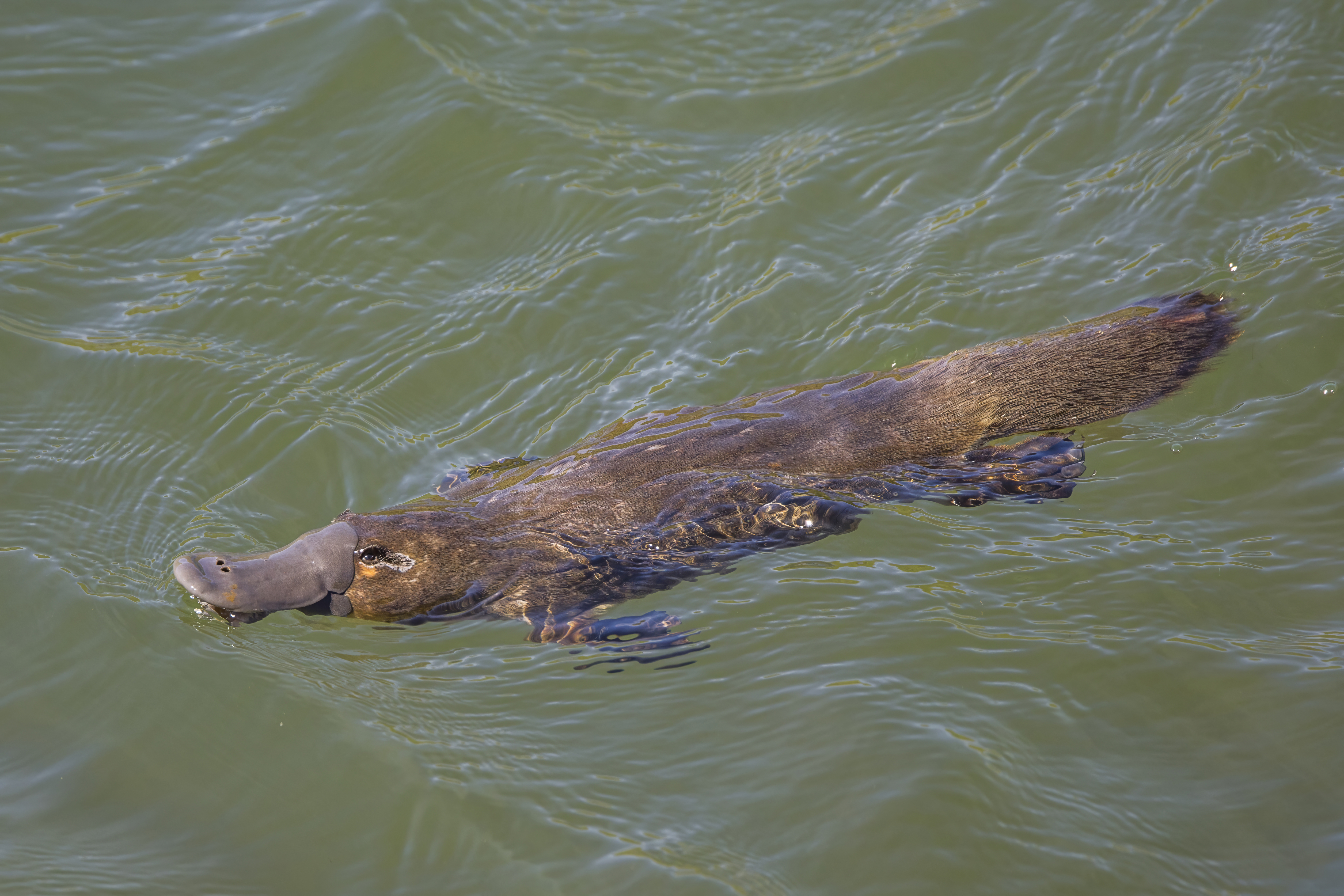
Ornithorhynchus anatinus) is one of the world’s most distinctive mammals, blending traits that seem to belong to birds, reptiles, and fish. Endemic to the freshwater streams, rivers, and coastal lagoons of eastern Australia—including Tasmania—this semi‑aquatic creature spends most of its life underwater, foraging for insects, larvae, and small crustaceans. Its iconic bill, covered in soft skin and packed with electroreceptors, allows it to “see” the faint electric fields generated by the muscle contractions of its prey, a capability known as
electrolocation. While submerged, the platypus closes its eyes, ears, and nostrils, relying entirely on this sensory system to navigate and hunt.
Beyond its sensory marvels, the platypus is one of only five living monotremes, a basal mammalian lineage that reproduces by laying eggs rather than giving birth to live young. Males possess a pair of sharp spurs on the hind limbs that can inject a potent venom during the breeding season, making the platypus one of the few venomous mammals. Despite its seemingly awkward appearance, the species is a highly efficient swimmer, using its webbed front feet for propulsion and its flattened tail as a rudder and fat storage organ.
History/Background
Fossil evidence shows that monotremes diverged from other mammals over 200 million years ago, with the earliest platypus‑like forms appearing in the Cretaceous period. The modern platypus lineage likely solidified during the Oligocene, around 30 million years ago, as Australia drifted northward and its climate shifted toward the temperate environments the species now inhabits. European naturalists first encountered the animal in 1798 when British explorer
George Bass collected specimens near Sydney. The creature’s bizarre mix of features sparked intense scientific debate; early taxonomists even suspected it was a fabricated chimera. It wasn’t until 1825 that
John Edward Gray formally described the species, assigning it the genus
Ornithorhynchus (“bird snout”). Since then, research has uncovered the genetic underpinnings of its electroreception, venom production, and egg‑laying reproductive system, positioning the platypus as a living window into mammalian evolution.
Key Information
-
Taxonomy: Sole extant member of family
Ornithorhynchidae and genus
Ornithorhynchus.
-
Distribution: Eastern Australian mainland and Tasmania, from coastal lowlands to alpine streams.
-
Reproduction: Females lay 1–3 leathery eggs after a 21‑day incubation; hatchlings are nursed via mammary ducts that secrete milk onto the mother’s abdomen.
-
Electrolocation: Over 40,000 electroreceptors line the bill, enabling detection of prey at distances up to 30 cm in turbid water.
-
Venom: Male spurs deliver a cocktail of peptides causing excruciating pain and swelling; venom peaks during the breeding season (June–October).
-
Diet: Aquatic invertebrates—mayfly nymphs, mosquito larvae, freshwater shrimp, and small fish.
-
Conservation status: Listed as
Near Threatened by the IUCN due to habitat loss, water pollution, and climate‑induced droughts.
-
Lifespan: Wild individuals live up to 10 years; captive specimens have reached 17 years.
Significance
The platypus is a keystone species for freshwater ecosystems, helping regulate insect populations and serving as prey for larger predators such as eagles and snakes. Its evolutionary distinctiveness makes it a priority for
conservation genetics, as preserving its lineage safeguards a branch of mammalian history that otherwise would be lost. Moreover, the platypus’s venom has attracted biomedical interest; researchers are isolating its peptide components for potential analgesic and anti‑cancer applications. Culturally, the animal is an Australian icon, featuring on postage stamps, coins, and the national emblem of the Australian Museum. Its presence underscores the importance of protecting clean waterways, prompting government and community initiatives to restore riparian habitats and monitor water quality.