




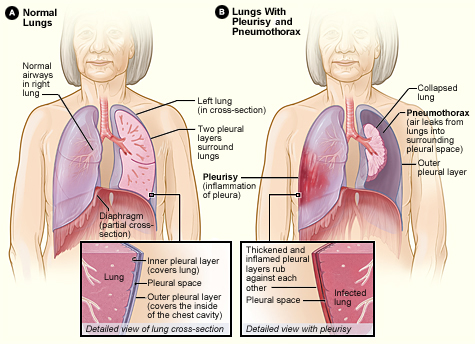
Overview
Pleurisy, also known as pleuritis, is a medical condition that affects the pleurae, the thin layers of tissue surrounding the lungs and lining the chest cavity. The pleurae play a crucial role in facilitating the movement of the lungs during breathing. When the pleurae become inflamed, it can cause a range of symptoms, including sharp chest pain, shortness of breath, cough, fever, and weight loss. The severity of the symptoms can vary depending on the underlying cause of the pleurisy.Pleurisy can be caused by a variety of factors, including infections, autoimmune disorders, and injuries. Infections such as pneumonia, tuberculosis, and influenza can cause pleurisy by triggering an inflammatory response in the pleurae. Autoimmune disorders like rheumatoid arthritis and lupus can also lead to pleurisy by causing the immune system to attack the pleurae. Injuries, such as a punctured lung or a chest trauma, can also cause pleurisy by damaging the pleurae.
History/Background
The term "pleurisy" comes from the Greek word "pleura," meaning "side" or "rib." The condition has been described in medical literature for centuries, with ancient Greek physicians like Hippocrates and Galen writing about it. However, it wasn't until the 19th century that the condition was more fully understood and described. In the late 19th century, the German physician Rudolf Virchow described the condition as a form of inflammation of the pleurae.Key Information
Pleurisy can be classified into several types, including:* Bacterial pleurisy: caused by bacterial infections such as pneumonia or tuberculosis
* Viral pleurisy: caused by viral infections such as influenza or HIV
* Fungal pleurisy: caused by fungal infections such as histoplasmosis or cryptococcosis
* Autoimmune pleurisy: caused by autoimmune disorders such as rheumatoid arthritis or lupus
* Traumatic pleurisy: caused by injuries such as a punctured lung or a chest trauma
Symptoms of pleurisy can vary depending on the underlying cause, but common symptoms include:
* Sharp chest pain that worsens with deep breathing or coughing
* Shortness of breath
* Cough
* Fever
* Weight loss
Significance
Pleurisy is a serious medical condition that requires prompt attention. If left untreated, pleurisy can lead to complications such as:* Pleuritic effusion: a collection of fluid in the pleural space that can cause respiratory distress
* Empyema: a collection of pus in the pleural space that can cause fever and respiratory distress
* Pleurisy-induced respiratory failure: a life-threatening condition that requires immediate medical attention



