




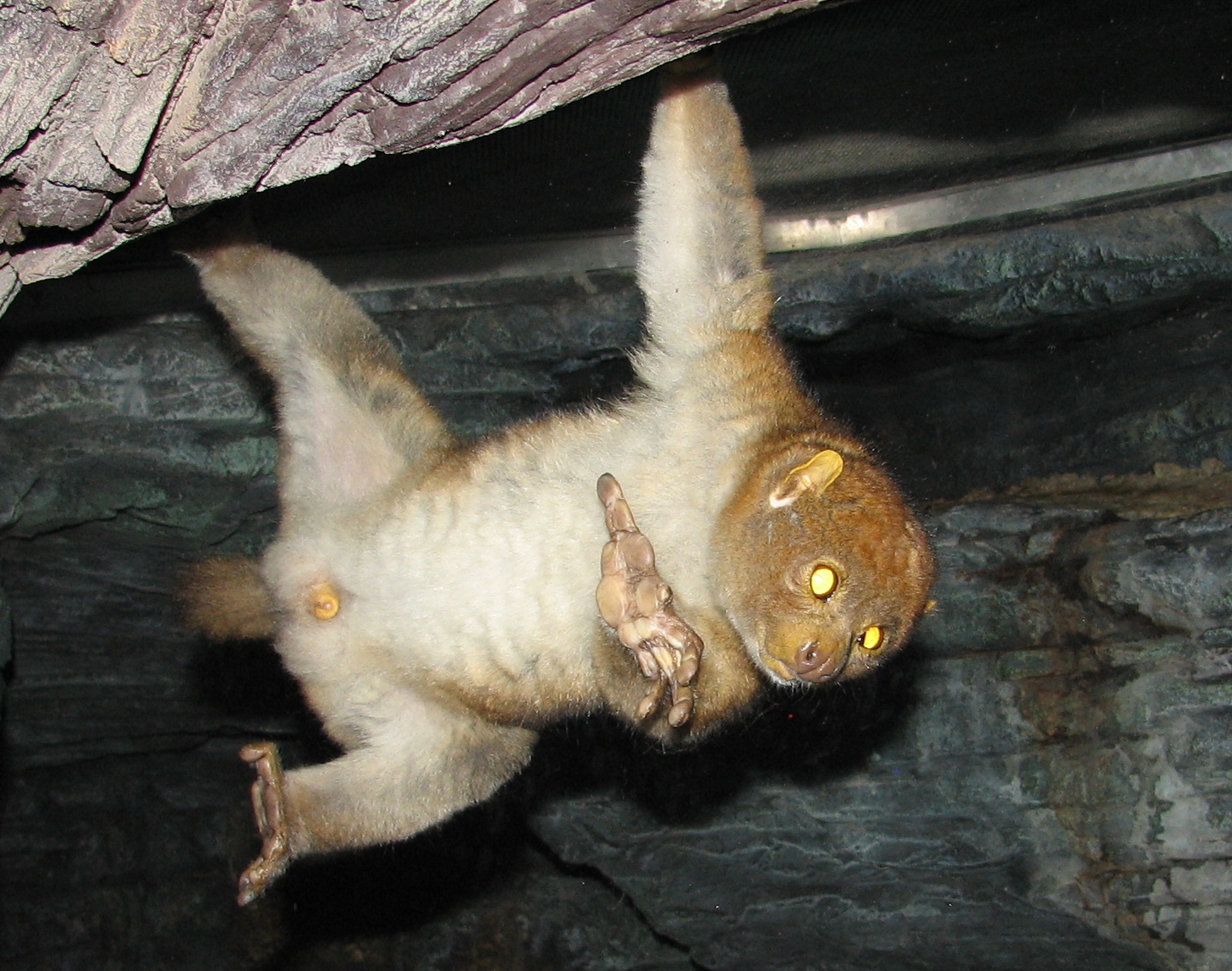
Overview
The potto is a fascinating creature that belongs to the genus Perodicticus of the family Lorisidae. There are three species of pottos, which are found in the tropical forests of central and western Africa. These small, nocturnal primates are also known as "softly-softlys" in some English-speaking parts of Africa, due to their slow and deliberate movements. Pottos have a distinctive appearance, with a thick, woolly coat that ranges in color from brown to gray, and a long, thin tail that they use for balance and communication. They are also known for their large eyes, which are adapted to see in low light conditions, and their strong, grasping hands and feet.Pottos are arboreal animals, spending most of their time in the trees, where they forage for food and shelter. They are primarily frugivores, feeding on a variety of fruits, leaves, and insects, although they may also eat small vertebrates on occasion. In the wild, pottos are solitary animals, only coming together to mate or to protect their territory from other pottos. They are also known for their unique way of moving through the trees, using a slow and deliberate brachiation method to swing from branch to branch.
In addition to their unique appearance and behavior, pottos are also interesting due to their conservation status. All three species of pottos are listed as vulnerable or endangered on the IUCN Red List, due to habitat loss and fragmentation, as well as hunting and persecution by local communities. As a result, conservation efforts are necessary to protect these fascinating creatures and their habitats, and to ensure the long-term survival of the pottos.


