




**
Overview
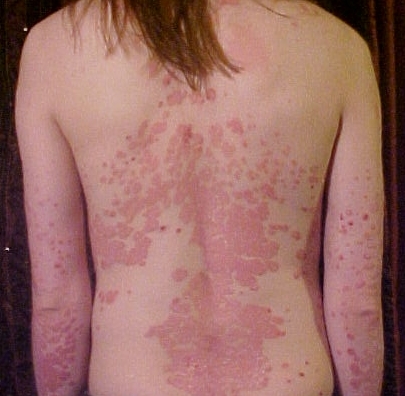
Psoriasis is a long‑lasting autoimmune disease in which the immune system mistakenly accelerates the growth cycle of skin cells. Normally, epidermal cells mature over about a month; in psoriasis, this process is compressed to just three to four days, causing a buildup of immature cells that appear as thick, silvery‑white scales on a background of inflamed, reddish skin. The lesions can be painful, itchy, and sometimes bleed when scratched, and they may appear on the scalp, elbows, knees, lower back, and nails. While the condition is non‑contagious, its visibility can lead to significant psychosocial distress, affecting self‑esteem, work productivity, and quality of life.
The disease exhibits a wide spectrum of severity. Some individuals experience mild, localized plaques that respond to over‑the‑counter moisturizers, whereas others develop moderate to severe disease that covers large body areas and may be associated with systemic inflammation. Psoriasis is also linked with comorbidities such as psoriatic arthritis, cardiovascular disease, metabolic syndrome, and depression. Because of these associations, psoriasis is increasingly viewed as a systemic inflammatory disorder, not merely a skin problem.
A hallmark trigger is the Koebner phenomenon, where skin injury—such as a cut, scrape, or even a tattoo—induces new psoriatic plaques at the site of trauma. Other common triggers include infections (especially streptococcal throat infections), stress, smoking, alcohol, certain medications (e.g., beta‑blockers, lithium), and climate changes. Recognizing these factors helps patients and clinicians tailor lifestyle modifications alongside medical therapy.
History/Background
Descriptions of scaly skin eruptions date back to ancient Egypt (the Ebers Papyrus, c. 1550 BC) and classical Greek writings, where physicians noted “the disease of the king’s skin.” The term psoriasis derives from the Greek psōr (“itch”) and ‑iasis (“condition”). In the 19th century, Robert Willan and Robert Wood classified skin diseases, distinguishing psoriasis from eczema. The autoimmune nature was not recognized until the mid‑20th century, when M. M. Kelley and colleagues demonstrated T‑cell involvement. The discovery of TNF‑α and interleukin‑17 pathways in the 1990s revolutionized treatment, leading to the first biologic agents (e.g., etanercept, 2003). The Koebner phenomenon was first described by Heinrich Koebner in 1876, emphasizing the role of skin injury in disease propagation.Key Information
- Epidemiology: Affects ~2–3 % of the global population, with similar prevalence across genders and ethnicities. - Pathophysiology: Dysregulated Th1/Th17 immune responses cause overproduction of cytokines (IL‑17, IL‑23, TNF‑α) that stimulate keratinocyte proliferation. - Clinical Types: Includes plaque psoriasis (most common), guttate, inverse, pustular, and erythrodermic forms. - Diagnosis: Primarily clinical; skin biopsy reserved for atypical presentations. The Psoriasis Area and Severity Index (PASI) quantifies disease burden. - Treatment Spectrum: - Topical: corticosteroids, vitamin D analogues, retinoids, coal tar. - Phototherapy: narrow‑band UVB, excimer laser. - Systemic non‑biologic: methotrexate, cyclosporine, acitretin. - Biologic agents: TNF inhibitors, IL‑12/23 inhibitors, IL‑17 inhibitors, IL‑23 inhibitors. - Lifestyle Management: Moisturizing, smoking cessation, weight control, stress reduction, and avoidance of known triggers. - When to Seek Professional Care: Immediate evaluation is warranted for sudden widespread redness (erythroderma), severe joint pain suggesting psoriatic arthritis, or if topical measures fail to control symptoms. Persistent lesions that bleed, develop infection, or cause significant emotional distress should also prompt a dermatologist visit.Significance
Psoriasis is more than a cosmetic concern; it serves as a model disease for understanding autoimmunity and the skin‑immune axis. The development of targeted biologics has not only transformed psoriasis care but also paved the way for therapies in other inflammatory conditions, such as inflammatory bowel disease and rheumatoid arthritis. Economically, psoriasis imposes a substantial burden through direct medical costs and indirect losses from work absenteeism. Psychologically, the visible nature of lesions can lead to stigma, anxiety, and depression, underscoring the need for holistic management that includes mental‑health support. Ongoing research into the genetic basis (e.g., HLA‑C*06:02) and microbiome interactions promises to refine personalized treatment strategies, moving the field toward precision dermatology.INFOBOX:
- Name: Psoriasis
- Type: Chronic autoimmune skin disease
- Date: First documented in ancient medical texts; modern classification established 19th century
- Location: Worldwide; prevalence ~2–3 % of population
- Known For: Red, scaly plaques; Koebner phenomenon; pioneering role in biologic therapy development
TAGS: dermatology, autoimmune disease, skin disorders, chronic illness, biologic therapy, Koebner phenomenon, psoriatic arthritis, public health



