




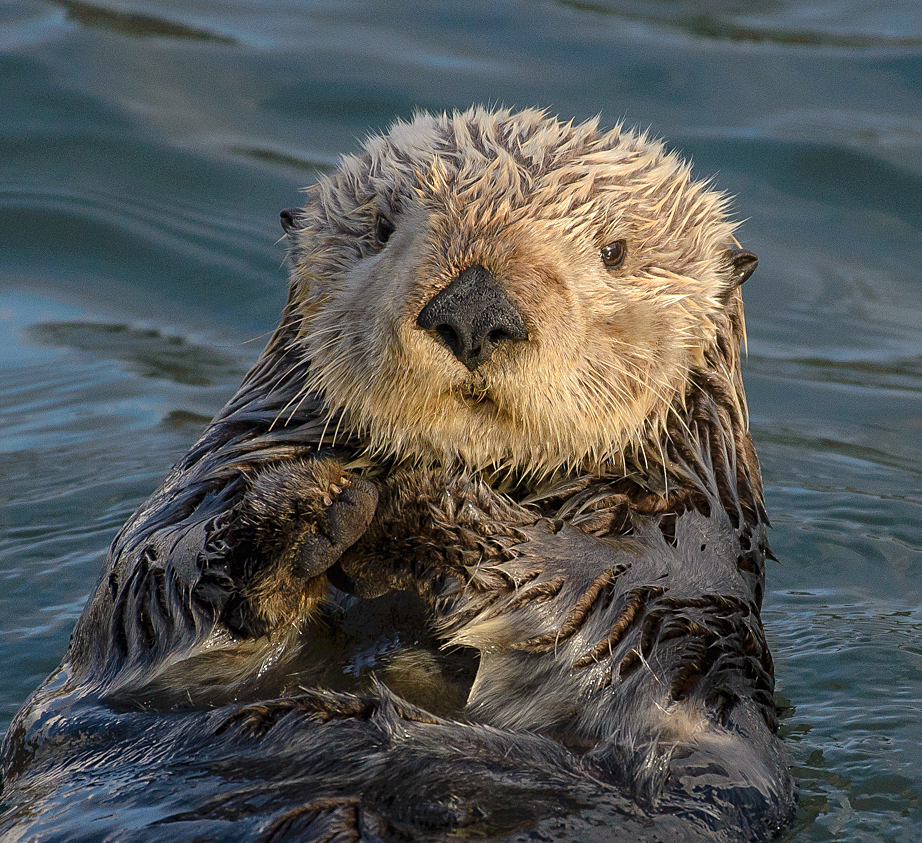
Sea Otter
SUMMARY: The sea otter is a unique, marine mammal native to the coasts of the northern and eastern North Pacific Ocean, characterized by its exceptionally thick coat of fur and ability to live exclusively in the ocean.
Overview
The sea otter (Enhydra lutris) is a member of the weasel family (Mustelidae) and is one of the smallest marine mammals in the world. Despite its small size, the sea otter is a formidable creature, with a robust body and a thick, insulating coat that allows it to thrive in the harsh, cold waters of the North Pacific. Adult sea otters typically weigh between 14 and 45 kg (30–100 lb), making them the heaviest members of the weasel family, but among the smallest marine mammals.
Sea otters are found in shallow coastal waters, from the intertidal zone to depths of up to 100 meters. They are skilled swimmers and divers, using their powerful tails and webbed feet to propel themselves through the water. In the water, sea otters are able to use their sensitive whiskers to detect prey, such as sea urchins, crabs, and clams, which they then devour with their sharp teeth.
History/Background
The sea otter has a long and complex history, dating back to the Pleistocene era. Fossil records indicate that sea otters were once found in the southern hemisphere, but they are now found only in the northern and eastern North Pacific Ocean. The exact timing of their migration to the North Pacific is unclear, but it is thought to have occurred around 1 million years ago.
Historically, sea otters were hunted for their fur, which was highly prized by European and Asian traders. The sea otter fur trade was a major industry in the 18th and 19th centuries, with thousands of sea otters being killed each year. The trade was eventually banned in the early 20th century, but the population had already been severely depleted. Conservation efforts were put in place, and the sea otter population began to recover.
Key Information
- Physical Characteristics: Sea otters have a thick, insulating coat of fur that is the densest in the animal kingdom. Their fur is made up of two layers: a thick undercoat and a longer, guard hair layer. The fur is so dense that it can trap air next to the skin, providing excellent insulation.
- Diet: Sea otters are carnivores and feed on a variety of prey, including sea urchins, crabs, clams, and other marine animals.
- Behavior: Sea otters are highly social animals and are often found in large groups. They are also skilled tool users, using rocks to crack open shells and other hard-shelled prey.
- Conservation Status: The sea otter is listed as a threatened species under the Endangered Species Act (ESA). The main threats to sea otter populations are habitat loss, entanglement in fishing gear, and disease.
Significance
The sea otter is an important species in the North Pacific ecosystem, playing a key role in maintaining the balance of the marine food chain. By controlling sea urchin populations, sea otters help to maintain the health of kelp forests, which provide habitat for a variety of other marine species.
The sea otter is also an important indicator species, providing insights into the health of the marine environment. Changes in sea otter populations can indicate broader ecosystem changes, such as shifts in ocean temperature or changes in prey populations.
INFOBOX:
- Name: Sea Otter (Enhydra lutris)
- Type: Marine mammal
- Date: 1 million years ago (migration to North Pacific)
- Location: Northern and eastern North Pacific Ocean
- Known For: Exceptionally thick coat of fur and ability to live exclusively in the ocean
TAGS: marine mammal, weasel family, North Pacific Ocean, insulating fur, carnivore, social behavior, tool use, conservation status, indicator species


