Overview
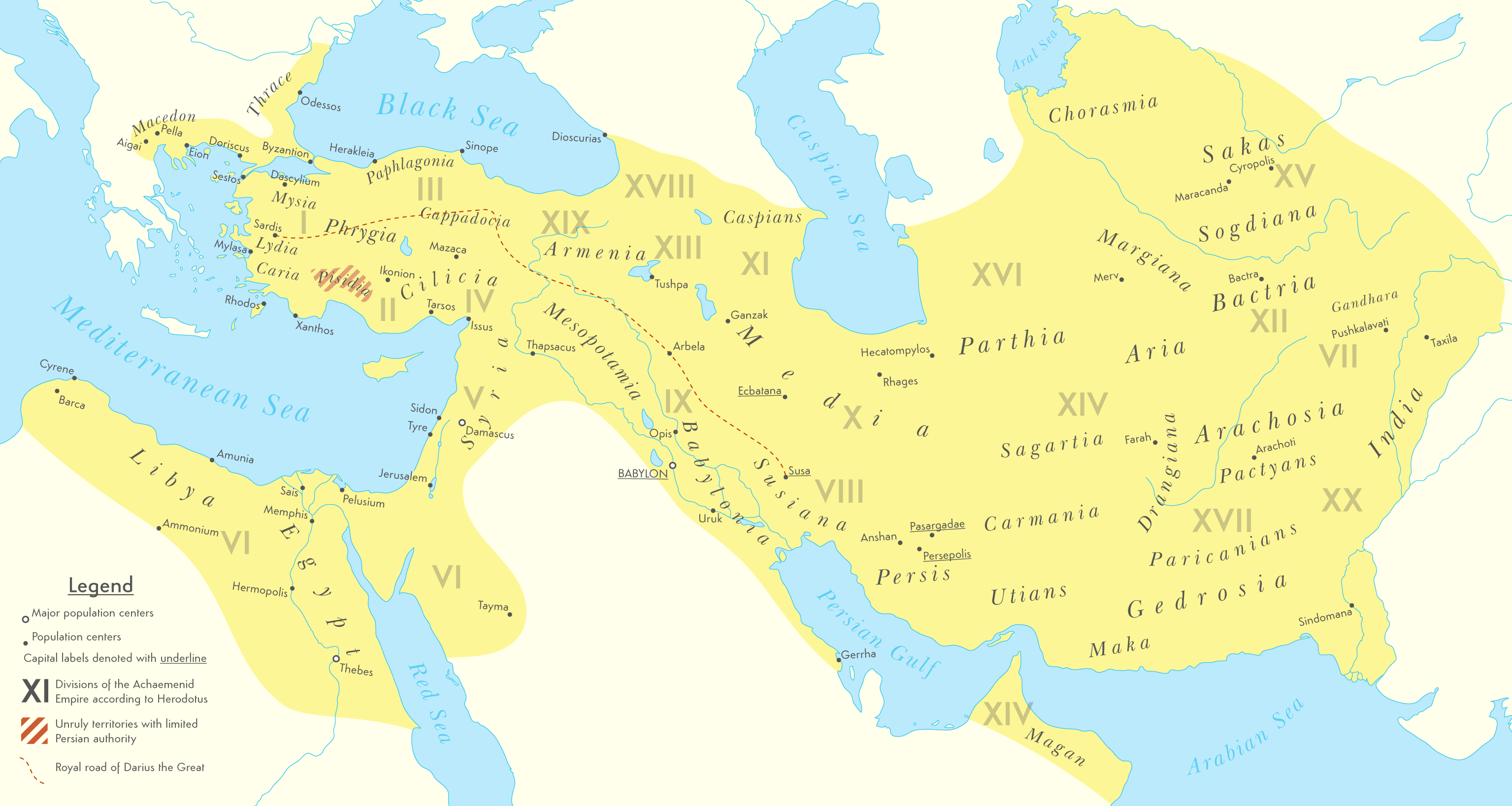
Stretching at its zenith from Thrace through Anatolia, the Levant, Mesopotamia, Persia, and parts of Central Asia, the Seleucid Empire was the territorial giant of the Hellenistic world. Created from the eastern rump of Alexander the Great’s short-lived conquests, it fused Greek civic institutions with Near-Eastern traditions of kingship, producing a hybrid civilization that exported urban planning, theater architecture, and a common Greek dialect (koine) across the ancient East. Though often caricatured as a brittle “colonial” veneer over older cultures, recent archaeology shows vigorous local participation in the new poleis, where Babylonian astronomers collaborated with Greek geometers and Iranian nobles funded gymnasia alongside temples to Mesopotamian gods.The empire’s very size became its Achilles’ heel. Over two and a half centuries Seleucid rulers struggled to balance centrifugal satraps, ambitious cousins, nomadic incursions, and the rising powers of Rome in the west and Parthia in the east. What emerged was a resilient core—northern Syria and the upper Euphrates—ringed by semi-autonomous regions whose loyalty was purchased through tax immunities, dynastic marriages, and the strategic founding of cities such as Antioch-on-the-Orontes, Seleucia-on-the-Tigris, and Laodicea. By the time Pompey the Great annexed the rump kingdom in 63 BC, the Seleucids had already reshaped the mental maps of three continents, bequeathing to Rome a ready-made network of roads, mints, and civic elites who would smooth the transition to provincial rule.
History/Background
Seleucus I Nicator, a Macedonian hetairos (companion) of Alexander, seized his chance in the summer of 312 BC when he recaptured Babylon with only a handful of mercenaries. The Babylonian Chronicle records sacrifices to Marduk and the re-instatement of local tax exemptions, gestures that won him the support of traditional temples. At the Battle of Ipsus (301 BC) Seleucus traded elephants to Lysimachus in return for Anatolia, giving the dynasty its first foothold on the Mediterranean. His son Antiochus I (reigned 281–261 BC) consolidated the realm by marrying the Bactrian princess Apama and adopting the Persian title “Great King,” while his grandson Antiochus II fought the first of six Syrian Wars against the Ptolemies for control of Coele-Syria.The empire reached its greatest extent under Antiochus III “the Great” (223–187 BC). His anabasis into Bactria and India (206–205 BC) forced the Greco-Bactrian king Euthydemus to become an ally and yielded 150 war elephants that would later stampede across the plains of Magnesia. Yet Roman diplomacy after the Battle of Magnesia (190 BC) shackled the king with a crippling indemnity and restricted Seleucid fleets to the eastern Mediterranean. The subsequent usurpation of Antiochus IV Epiphanes (175–164 BC) coincided with the Maccabean Revolt (167–160 BC), a Jewish uprising immortalized in the books of 1 & 2 Maccabees and still commemorated in the festival of Hanukkah. By the 140s BC the eastern satrapies were lost to the Parthian Arsacids; by the 120s BC the Armenian Artaxiads carved out their own kingdom; and in 96 BC the Nabataean Arabs seized Damascus. The final century saw rival Seleucid claimants—Antiochus VIII “Grypus” and Antiochus IX “Cyzicenus”—fighting over little more than the ports of Antioch and Seleucia Pieria until Pompey’s intervention.