




**
Overview
Set theory, the branch of mathematical logic studying sets—collections of distinct objects—serves as the bedrock of modern mathematics. It provides a unified language to define numbers, functions, and geometric spaces while exploring concepts like infinity. German mathematician Georg Cantor pioneered the field in the 1870s, introducing ideas such as one-to-one correspondences and infinite cardinalities. Set theory is divided into naive set theory, which uses informal definitions, and axiomatic set theory, which formalizes sets through rigorous axioms (e.g., Zermelo-Fraenkel set theory with the Axiom of Choice, or ZFC). Its principles underpin disciplines ranging from topology to computer science, offering tools to analyze relationships between mathematical structures.
Background
Georg Cantor’s 1874 paper, On a Property of the Collection of All Real Algebraic Numbers, marked the birth of set theory. He sought to understand the nature of infinite sets, challenging the notion that all infinities are equal. Cantor proved that the set of real numbers is "larger" than the set of natural numbers, introducing the concept of different cardinalities. His work faced fierce opposition, notably from mathematician Leopold Kronecker, who dismissed infinite sets as metaphysical.Paradoxes in naive set theory, such as Bertrand Russell’s 1901 Russell’s Paradox (which exposed contradictions in self-referential sets), forced a reevaluation of its foundations. Ernst Zermelo addressed these issues in 1908 by proposing an axiomatic system, later expanded by Abraham Fraenkel into ZFC. This framework resolved inconsistencies while preserving Cantor’s insights, establishing set theory as the standard foundation for mathematics.
Key Facts
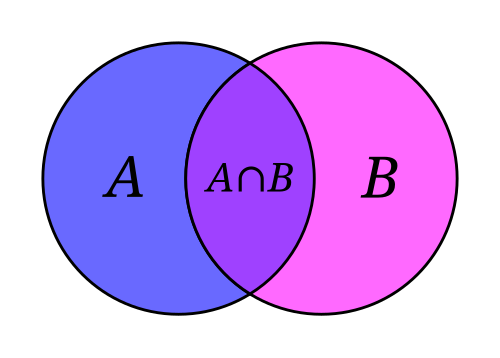
- 1845–1918: Georg Cantor, the "father of set theory," introduced concepts like cardinality and transfinite numbers. - 1874: Cantor proved the uncountability of real numbers using diagonalization, a landmark result in mathematics. - 1908: Zermelo-Fraenkel axioms (ZF) formalized set theory, avoiding paradoxes through restricted comprehension. - 1901: Russell’s Paradox revealed flaws in naive set theory, prompting the development of axiomatic systems. - 1940 & 1963: Kurt Gödel and Paul Cohen demonstrated the independence of the Continuum Hypothesis from ZFC, showing it cannot be proven or disproven within the system. - Symbols: Set theory uses notation like ∈ (element of), ⊆ (subset), ∪ (union), ∩ (intersection), and 𝒫(S) (power set of S). - Cardinality: The cardinality of a set S is denoted |S|. For infinite sets, |ℕ| = ℵ₀ (countable infinity), while |ℝ| = 2^{ℵ₀} (uncountable infinity).Impact
Set theory revolutionized mathematics by providing a universal framework for defining mathematical objects. It underpins topology, analysis, and algebra, enabling precise definitions of functions, sequences, and spaces. In computer science, set operations inform database design and algorithm optimization. Philosophically, it reshaped debates on infinity and the nature of mathematical truth, particularly through undecidable propositions like the Continuum Hypothesis.Beyond academia, set theory influences real-world applications. Probability theory relies on set operations to model events, while logic circuits in computing use Boolean algebra—a subset of set theory principles. Its axiomatic structure also inspired formal systems in linguistics and artificial intelligence. Despite early controversies, set theory remains indispensable, bridging abstract thought and practical problem-solving.
INFOBOX:
- Full Name: Georg Ferdinand Ludwig Philipp Cantor
- Born: March 3, 1845 (St. Petersburg, Russian Empire)
- Known For: Founding set theory, proving infinite sets have different sizes, introducing transfinite numbers
TAGS:
#SetTheory #GeorgCantor #MathematicalLogic #ZFC #InfiniteSets #AxiomaticSystems #FoundationsOfMathematics #RussellsParadox
---
This article synthesizes historical context, technical breakthroughs, and interdisciplinary relevance, illustrating set theory’s role as both a foundational discipline and a catalyst for mathematical innovation.



