




**
Overview
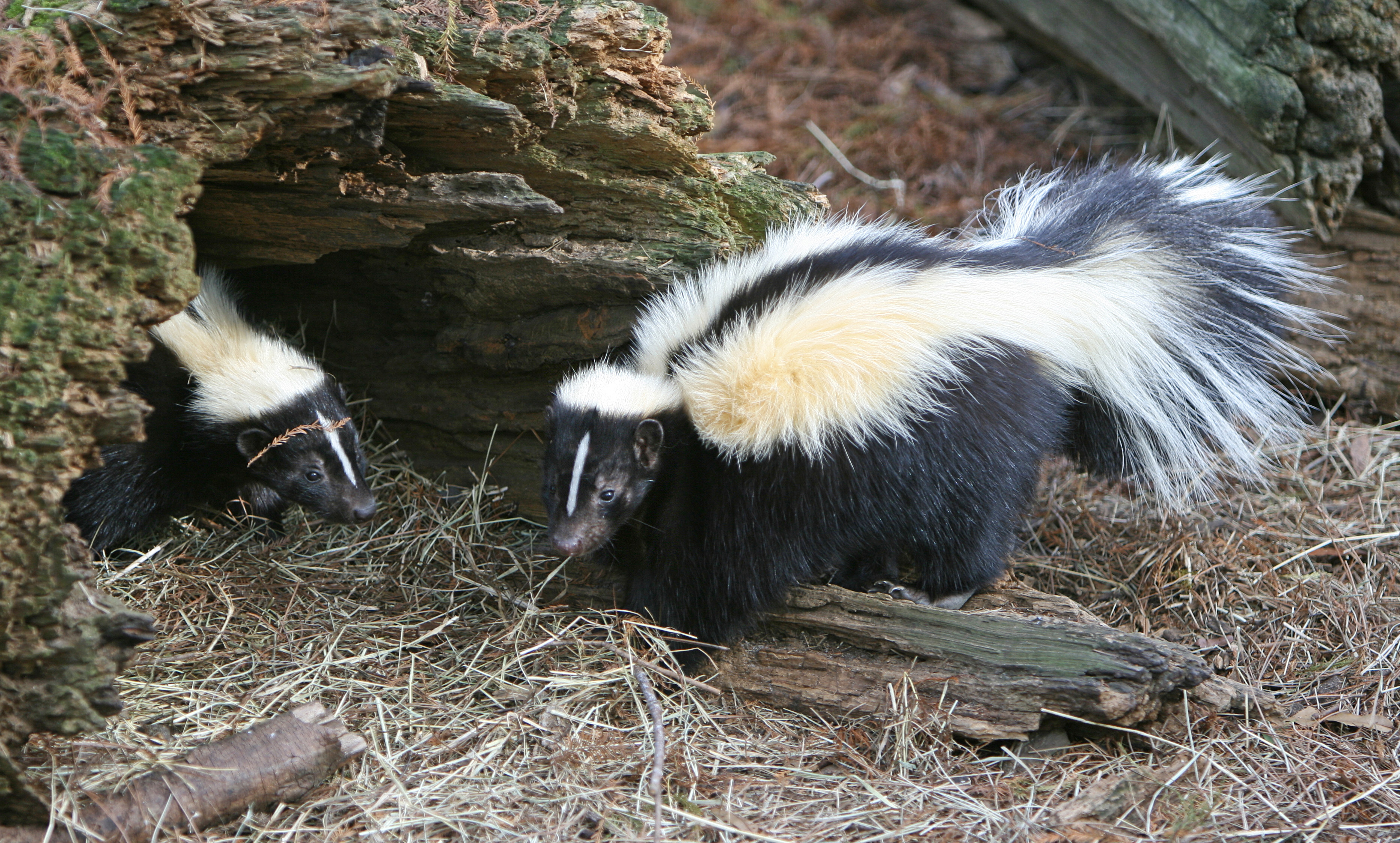
Skunks are nocturnal omnivores native to the Americas, ranging from southern Canada through the United States and into Central and South America. Their most recognizable feature is the bold, contrasting pattern of black fur interrupted by a white stripe or patch that runs down the back, tail, or both sides of the body. This aposematic coloration serves as a visual warning to predators that the animal possesses a powerful chemical defense. The spray is produced in enlarged anal glands and can travel up to three meters, delivering a mixture of sulfur‑containing compounds (thiols) that cause intense irritation to eyes, mucous membranes, and the respiratory tract.
There are 12 recognized species of skunk, grouped mainly into the striped skunk (Mephitis mephitis), spotted skunk (Spilogale spp.), and hog‑nosed skunk (Conepatus spp.). While the striped skunk is the most familiar to North Americans, other species display a variety of color palettes—from the brown‑tinged western spotted skunk to the ginger‑hued hooded skunk of the Andes. Despite these differences, all skunks share the same basic body plan: a stout, elongated torso, short legs, and a bushy tail that can be raised when the animal feels threatened.
Skunks are highly adaptable. They thrive in diverse habitats such as forests, grasslands, deserts, and even suburban neighborhoods. Their diet is equally varied, consisting of insects, small vertebrates, eggs, fruits, nuts, and human‑derived food waste. This opportunistic feeding behavior, combined with their low reproductive rate (typically one to three kits per year), makes skunks both resilient and vulnerable, depending on local environmental pressures.
History/Background
The evolutionary lineage of skunks diverged from other mustelids (weasels, otters, and ferrets) roughly 38–40 million years ago during the Oligocene epoch, giving rise to the distinct family Mephitidae. Fossil records from North America reveal early skunk ancestors that already possessed enlarged scent glands, suggesting that chemical defense is an ancient trait. The genus Mephitis was formally described by Geoffroy Saint‑Hilaire in 1803, while the spotted skunk genus Spilogale was identified by John Edward Gray in 1845.European settlers in the 17th and 18th centuries encountered skunks as they expanded westward across the continent. Early naturalists such as John James Audubon documented skunk behavior in field sketches, noting the animal’s “remarkable capacity to discharge a stinking fluid.” By the late 19th century, skunks had entered popular folklore, often portrayed as mischievous yet harmless critters. In the 20th century, scientific interest shifted toward the chemistry of skunk spray, leading to the isolation of thiol compounds and the development of odor‑neutralizing agents used by wildlife professionals and law enforcement.
Key Information
- Family: Mephitidae (distinct from Mustelidae) - Species count: 12 extant species, divided among three genera (Mephitis, Spilogale, Conepatus) - Defensive spray: Up to 3 m (10 ft) range; composed mainly of thiols and thioacetates that oxidize to produce the characteristic “rotten‑egg” odor - Reproduction: Breeding season in late winter; gestation ≈ 66 days; litters of 1–6 kits, born blind and hairless - Lifespan: 2–4 years in the wild; up to 10 years in captivity - Diet: Omnivorous; insects (beetles, larvae), small mammals, eggs, fruits, berries, carrion, and anthropogenic food scraps - Habitat flexibility: Forest edges, grasslands, deserts, agricultural fields, suburban yards - Conservation status: Most species listed as Least Concern by the IUCN, though habitat loss and road mortality pose localized threatsSignificance
Skunks play a crucial ecological role as pest controllers; their voracious appetite for insects and rodents helps regulate populations of agricultural pests and disease vectors such as ticks and fleas. Their foraging also aids seed dispersal, particularly for berry‑producing plants, contributing to forest regeneration. The skunk’s chemical defense has inspired biomimetic research, with scientists exploring thiol‑based compounds for use in non‑lethal crowd control, wildlife management, and even medical diagnostics.From a cultural perspective, skunks have become symbols of warning and resilience. Their unmistakable coloration teaches a simple lesson in nature: bright colors often signal danger. In conservation education, skunks serve as charismatic ambassadors for urban wildlife coexistence, illustrating how humans can share spaces with native mammals without resorting to lethal control. Protecting skunk habitats aligns with broader goals of preserving biodiversity corridors, ensuring that these adaptable mammals continue to fulfill their ecological functions across North and South America.
INFOBOX:
- Name: Skunk (Family Mephitidae)
- Type: Mammal – Carnivora
- Date: First scientific description, 1803 (Genus Mephitis)
- Location: Americas (North, Central, South)
- Known For: Ability to spray a foul‑smelling liquid as a defense mechanism
TAGS: wildlife, mammalogy, chemical defense, North America, biodiversity, urban ecology, conservation, Mephitidae


