Overview
The
snowy owl, also known as the
polar owl,
white owl, and
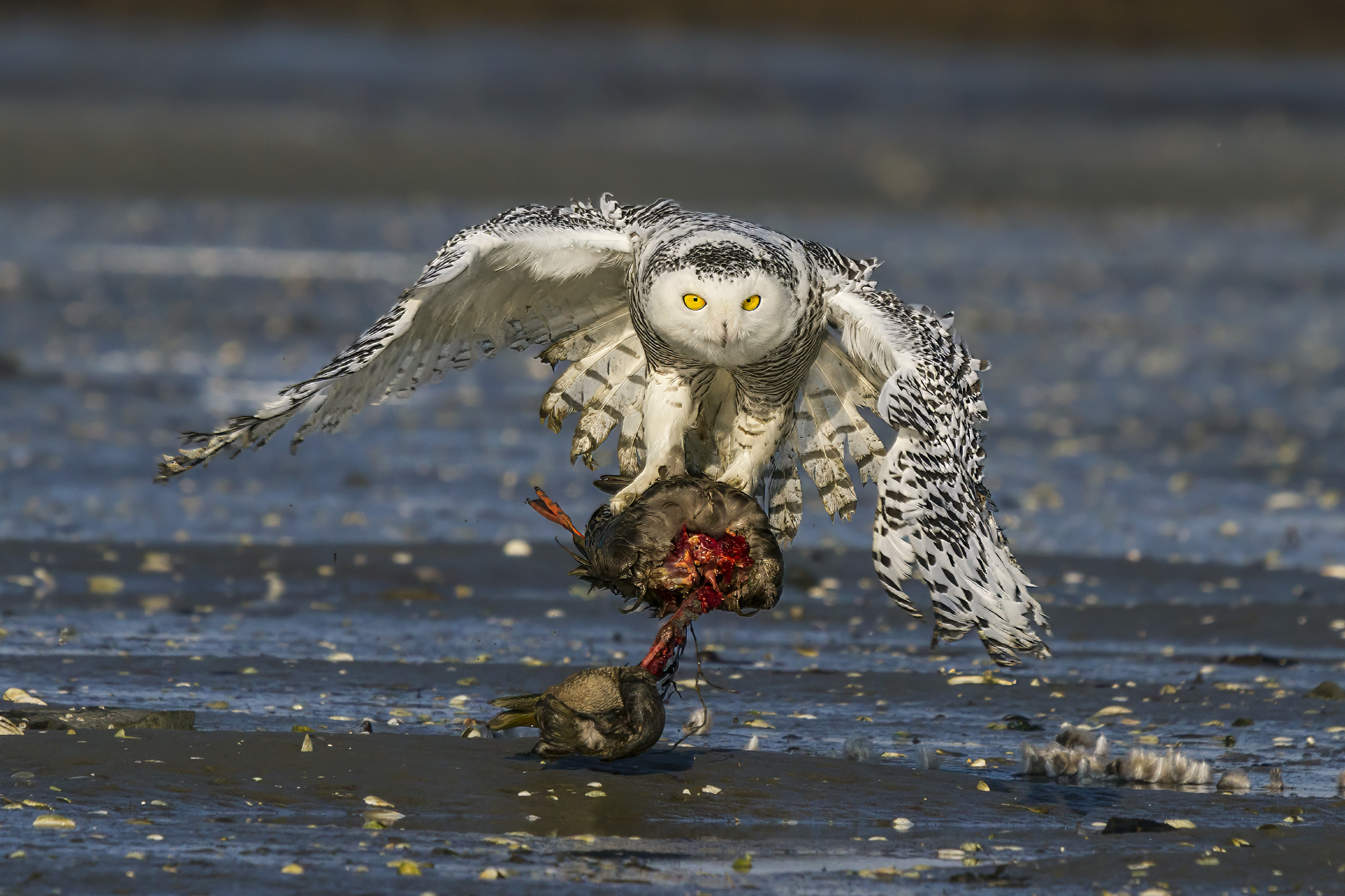
Arctic owl, is a member of the true owl family, characterized by its distinctive white plumage and impressive size. Found in the Arctic regions of North America and the Palearctic, these birds breed primarily on the tundra, where they have adapted to the harsh, cold climate. With a wingspan of up to 5 feet (1.5 meters) and a body length of up to 27 inches (69 cm), the
snowy owl is one of the largest owl species, making it a formidable hunter in its native habitat.
The snowy owl's white plumage serves as camouflage in the snow-covered tundra, allowing it to sneak up on its prey, which consists mainly of small mammals, such as lemmings and voles. The owl's acute hearing and exceptional vision also play a crucial role in its hunting success, enabling it to detect and catch its prey even under thick snow cover. In addition to its impressive physical attributes, the snowy owl is also known for its unique mating and breeding habits, which involve elaborate courtship displays and territorial behaviors.
In terms of its physical appearance, the snowy owl is distinguished by its mainly white plumage, with males tend to be a purer white overall, while females have more extensive flecks of dark brown. Juvenile male snowy owls have dark markings and may appear similar to females until maturity, at which point they typically turn whiter. The composition of brown markings on the wing, although not foolproof, is the most reliable technique for aging and sexing individual snowy owls.
History/Background
The
snowy owl has been a subject of interest and study for centuries, with early records of the species dating back to the 18th century. The owl's Arctic habitat and migratory patterns have made it a challenging species to study, but advances in technology and conservation efforts have improved our understanding of its behavior, ecology, and population dynamics. The
snowy owl is listed as
Vulnerable on the International Union for Conservation of Nature (IUCN) Red List, due to habitat degradation, climate change, and other environmental factors that threaten its populations.
Key Information
Some key facts about the
snowy owl include its unique adaptations to the Arctic environment, such as its thick, insulating feathers and its ability to slow down its metabolism to conserve energy during periods of food scarcity. The owl's hunting behavior is also notable, as it uses a variety of techniques, including flying, perching, and even walking, to catch its prey. In addition, the
snowy owl is known for its impressive migratory journeys, which can take it thousands of miles each year, from its breeding grounds in the Arctic to its wintering grounds in more southern latitudes.
Significance
The
snowy owl plays a crucial role in its ecosystem, serving as a top predator and helping to regulate the populations of small mammals and other prey species. The owl's presence also has cultural and symbolic significance, appearing in mythology, folklore, and popular culture as a symbol of wisdom, power, and beauty. Conservation efforts aimed at protecting the
snowy owl and its habitat are essential for maintaining the health and biodiversity of Arctic ecosystems, and for preserving the natural heritage of future generations.