Overview
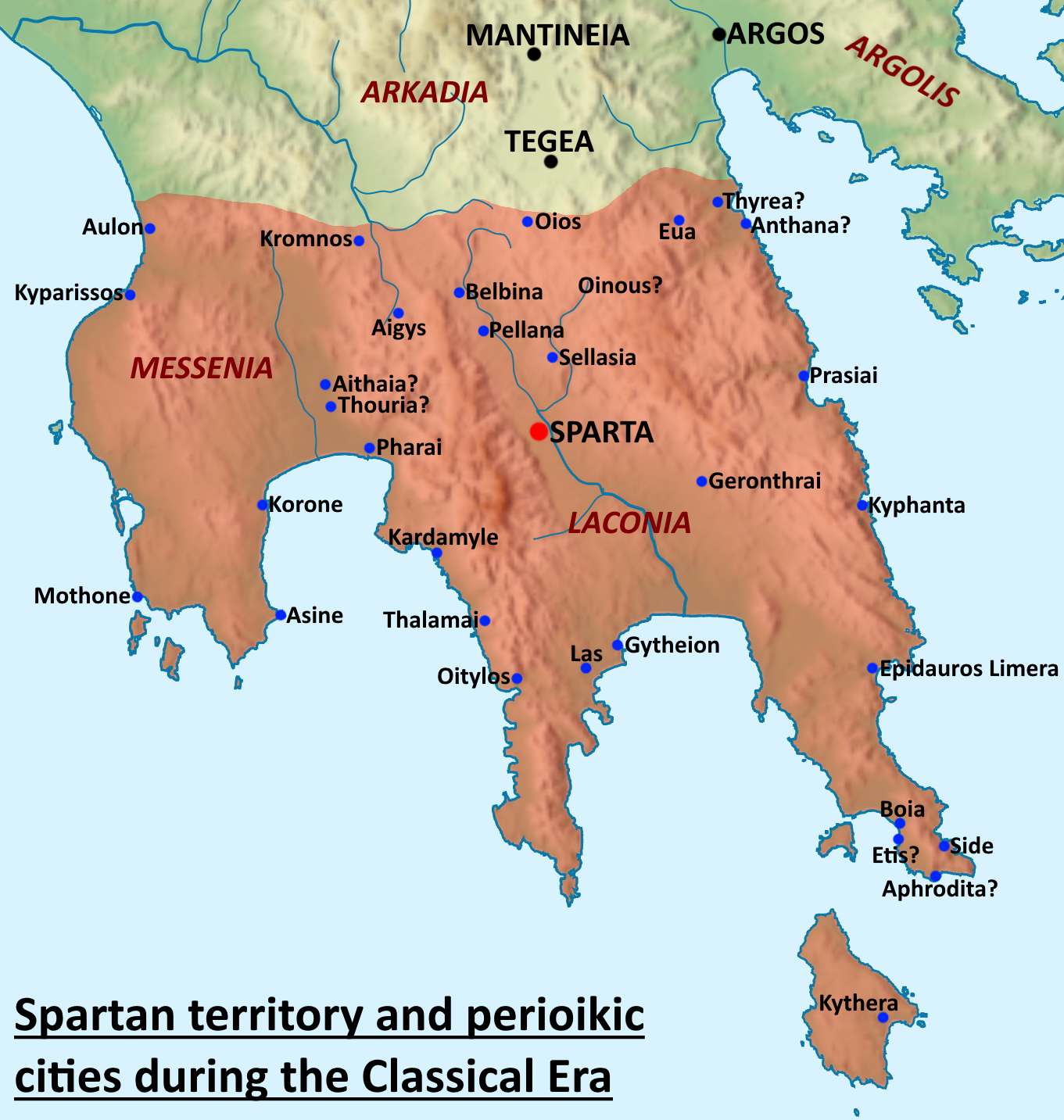
Sparta, officially Lacedaemon, was less a single city than an alliance of five villages strung along the fertile Eurotas valley in the southern Peloponnese. Unlike Athens or Corinth, it developed no walls, harbors, or marble temples; its grandeur lay in its citizens. Between the 8th and 6th centuries BC, Sparta forged a unique socio-political system that subordinated every institution to the production of professional soldiers. The result was a state that fielded the most feared infantry in Greece, but at the cost of demographic rigidity and cultural stagnation.The Spartan mirage—frugal, laconic, indomitable—has fascinated writers from Herodotus to Hollywood, yet archaeology and contemporary sources reveal a complex society stratified between full citizens (Spartiates), free but disenfranchised perioikoi, and the enslaved helots who underpinned the economy. Spartan women, famously, enjoyed unusual physical and legal freedoms because the state required healthy mothers for its warrior class. Sparta’s influence peaked after the Peloponnesian War (431–404 BC), when it briefly governed an overseas empire, but defeat at Leuctra in 371 BC shattered its military monopoly and exposed the brittleness of its system.
History/Background
Archaeology shows Mycenaean settlement at the Menelaion shrine c. 1500 BC, yet Spartan tradition dated its own origin to the 10th-century BC Dorian invasion. The “Lycurgan” reforms—traditionally ascribed to the shadowy lawgiver Lycurgus but crystallizing c. 700–650 BC—created the classical Spartan order: equal land allotments, common messes (syssitia), and a dual kingship balanced by five annually elected ephors and a council of elders (gerousia).Expansion followed. Sparta conquered neighboring Messenia in the 8th and 7th centuries, reducing its inhabitants to helotry; the constant threat of revolt necessitated permanent militarization. By 550 BC Sparta headed the Peloponnesian League, a network of alliances that would face down Persia at Thermopylae (480 BC) and Plataea (479 BC). After decades of rivalry with Athens, Sparta emerged victorious in 404 BC, only to lose hegemony to Thebes in 371 BC. Thereafter Sparta declined into a touristic curiosity, though it remained a strategic pawn for Macedonians, Romans, and Crusaders until its final eclipse under Byzantine rule.
Key Information
- Population structure: ~8,000 Spartiates controlled a territory of roughly 8,500 km² and perhaps 200,000 helots; the ratio demanded annual declaration of war on the helots and secret police operations (krypteia). - Education (agōgē): Boys entered state barracks at age 7; training emphasized endurance, stealth, and loyalty. Literacy was incidental; the ideal was taciturnity (lakonizein). - Military: Hoplites fought in tight phalanx formation, red cloaks and lambda shields, never retreating. At Thermopylae 300 Spartans under King Leonidas held a pass against tens of thousands for three days. - Women: Girls exercised publicly to ensure robust offspring; mothers reputedly told sons to return “with your shield or on it.” Land heiresses (epikleroi) could own property, making Spartan women famously wealthy by the 4th century. - Economy: Iron bars supposedly replaced gold to discourage luxury; trade was left to perioikoi. The state’s survival depended on Messenian grain harvested by helots. - Religion: Spartan festivals—Karneia, Hyakinthia—blended Doric austerity with choral and athletic contests; Apollo Karneios was patron deity.Significance
Sparta’s legacy is twofold. Militarily, its hoplite ethos shaped Greek warfare and inspired later elite units (e.g., The Sacred Band). Politically, its mixed constitution—monarchy, oligarchy, and popular assembly—influenced philosophers from Plato to the American Founders, who admired its “balanced” government. Culturally, Sparta became the antithesis to Athenian democracy, a mirror in which Western thought has repeatedly examined tensions between freedom and discipline, individual and collective rights.Yet Sparta also serves as a cautionary tale: dependence on a narrow citizen body rendered it demographically fragile; economic rigidity stifled innovation; victory bred imperial over-reach. By the Roman period Sparta had become a theme-park of its former self, where tourists watched boys flogged at the altar of Artemis Orthia. Still, the Spartan ideal—discipline, equality among peers, and willingness to die for the polis—retains potent symbolic force, echoing in modern military academies, political rhetoric, and popular culture.