




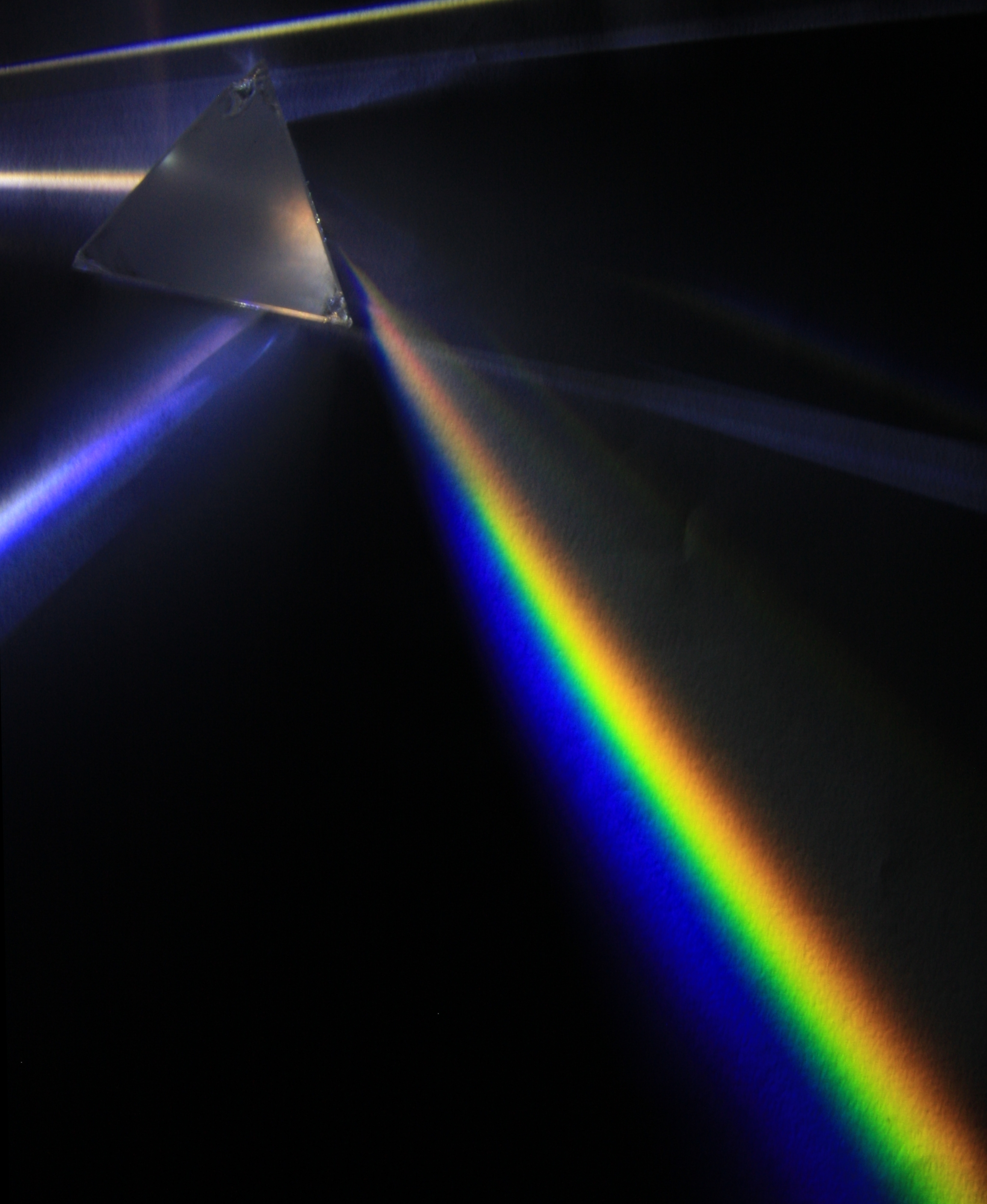
Overview
Spectroscopy is a cornerstone of modern science, allowing researchers to decode the "fingerprints" of matter by analyzing how it absorbs, emits, or scatters light. At its core, spectroscopy relies on the electromagnetic spectrum—ranging from gamma rays to radio waves—to probe the physical and chemical properties of materials. When light interacts with a sample, unique spectral patterns emerge, revealing information about the sample’s composition, temperature, motion, and more. This technique transcends visible light, applying to ultraviolet, infrared, X-ray, and other wavelengths.Spectroscopy is divided into three primary categories: absorption spectroscopy (measuring light absorbed by a material), emission spectroscopy (analyzing light emitted by excited atoms), and scattering spectroscopy (studying light deflected by particles). These methods are indispensable in fields like chemistry, astronomy, environmental science, and medicine. For example, astronomers use spectroscopy to determine the elemental makeup of stars, while chemists identify unknown compounds in a lab.
History/Background
The origins of spectroscopy trace back to 1666, when Isaac Newton demonstrated that a prism could split sunlight into a spectrum of colors, laying the groundwork for understanding light’s properties. In the 19th century, Gustav Kirchhoff and Robert Bunsen revolutionized the field by linking spectral lines to chemical elements. In 1859, they discovered that each element produces a unique emission or absorption spectrum, enabling the identification of new elements like cesium and rubidium.A pivotal moment came in 1868 when Pierre Janssen and Norman Lockyer detected an unknown spectral line in the Sun’s corona, leading to the discovery of helium. The 20th century saw quantum mechanics deepen spectroscopy’s theoretical foundation. Albert Einstein’s 1917 work on stimulated emission and Max Planck’s quantum theory explained spectral lines as electron transitions between energy levels. Modern advancements, such as laser spectroscopy (1960s) and nuclear magnetic resonance (NMR) spectroscopy (1940s), expanded its precision and applications.




