




**
Overview
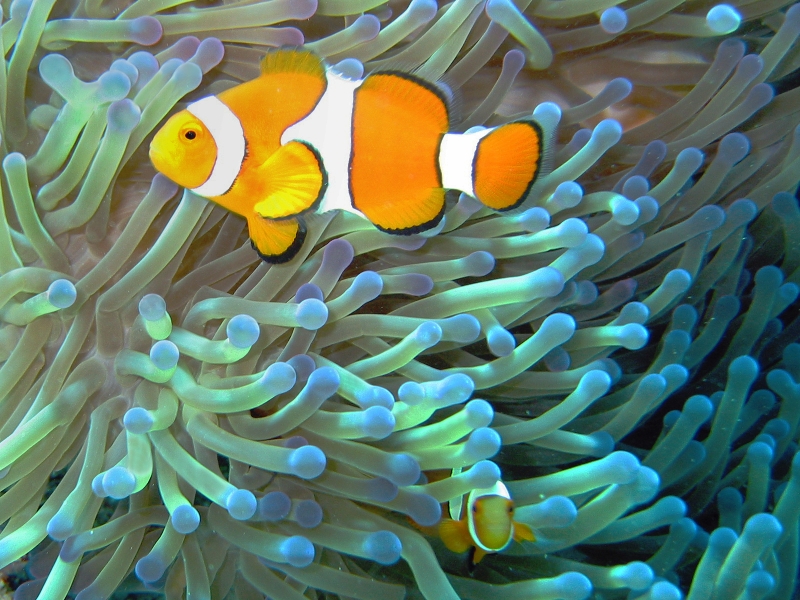
Symbiosis encompasses any persistent association between organisms of distinct species, from the microscopic partnership of Rhizobium bacteria fixing nitrogen in legume root nodules to the grand spectacle of coral reefs built by tiny zooxanthellae algae living inside coral polyps. These relationships can be obligate, where each partner cannot survive without the other, or facultative, allowing independent life but offering measurable advantages when together. The classic textbook example—mycorrhizal fungi extending the absorptive surface of plant roots—illustrates how a fungus can increase a plant’s phosphorus uptake by up to 300 %, while the plant supplies the fungus with carbohydrates derived from photosynthesis.The spectrum of symbiotic outcomes is traditionally divided into three categories. Mutualism describes interactions where both parties gain fitness benefits; commensalism benefits one organism while the other is neither helped nor harmed; and parasitism imposes a cost on the host while the parasite profits. Modern research shows that many associations shift along this continuum depending on environmental conditions, resource availability, and evolutionary pressures, blurring the once‑sharp lines between categories.
History/Background
The term symbiosis entered scientific parlance in 1879, when German mycologist Heinrich Anton de Bary coined it to describe “the living together of unlike organisms.” De Bary’s definition emphasized the physical proximity of the partners rather than the direction of benefit, a view that dominated biology for decades. In the early 20th century, ecologists such as E. O. Wilson and Robert H. MacArthur began to parse symbiotic interactions by their ecological outcomes, coining the modern categories of mutualism, commensalism, and parasitism.The mid‑1900s saw a surge of experimental work: R. H. Whittaker (1975) introduced the concept of symbiotic gradients, while the discovery of endosymbiotic theory by Lynn Margulis (1967) revolutionized our understanding of cellular evolution, proposing that mitochondria and chloroplasts originated as free‑living bacteria that entered into a permanent mutualistic relationship with early eukaryotes. This theory, now universally accepted, underscores symbiosis as a driver of major evolutionary transitions.
Key Information
- Types of symbiosis: - Mutualism (e.g., pollination by bees, nitrogen fixation by Rhizobium). - Commensalism (e.g., barnacles attaching to whales). - Parasitism (e.g., malaria parasite Plasmodium in humans). - Obligate vs. facultative: Obligate mutualists like lichens (fungus + algae) cannot complete their life cycles alone; facultative partners such as mycorrhizal fungi can survive independently but thrive in association. - Scale: Symbiotic interactions occur at molecular, cellular, organismal, and ecosystem levels, influencing nutrient cycles, energy flow, and biodiversity. - Quantitative impact: Coral reefs, built on a mutualism between corals and zooxanthellae, support ~25 % of marine species while covering less than 1 % of the ocean floor. - Evolutionary significance: Endosymbiosis accounts for the origin of eukaryotic organelles, a pivotal event dated to roughly 1.5–2 billion years ago.Significance
Understanding symbiosis reshapes how we view ecosystem resilience and human health. Agricultural practices now exploit mutualistic nitrogen fixation to reduce synthetic fertilizer use, saving an estimated $30 billion annually worldwide. In medicine, the human microbiome—trillions of bacterial symbionts inhabiting our gut—has been linked to immunity, metabolism, and even behavior, prompting a new era of microbiome therapeutics. Conservation biology leverages symbiotic knowledge to protect keystone relationships; for instance, reef restoration projects often inoculate coral fragments with heat‑tolerant strains of zooxanthellae to combat bleaching.Beyond applied science, symbiosis challenges the notion of the “individual” in biology, emphasizing that many organisms exist as holobionts—integrated units of host plus symbionts—whose collective genome (the hologenome) evolves as a single entity. This paradigm shift influences fields from evolutionary theory to climate change modeling, where the stability of symbiotic networks can dictate ecosystem responses to stressors.
INFOBOX:
- Name: Symbiosis
- Type: Biological interaction
- Date: Defined 1879 (Heinrich Anton de Bary)
- Location: Global (occurs in virtually all ecosystems)
- Known For: Long‑term interspecific associations ranging from mutualism to parasitism
TAGS: ecology, evolution, mutualism, parasitism, microbiome, endosymbiosis, biodiversity, environmental science




