




Overview
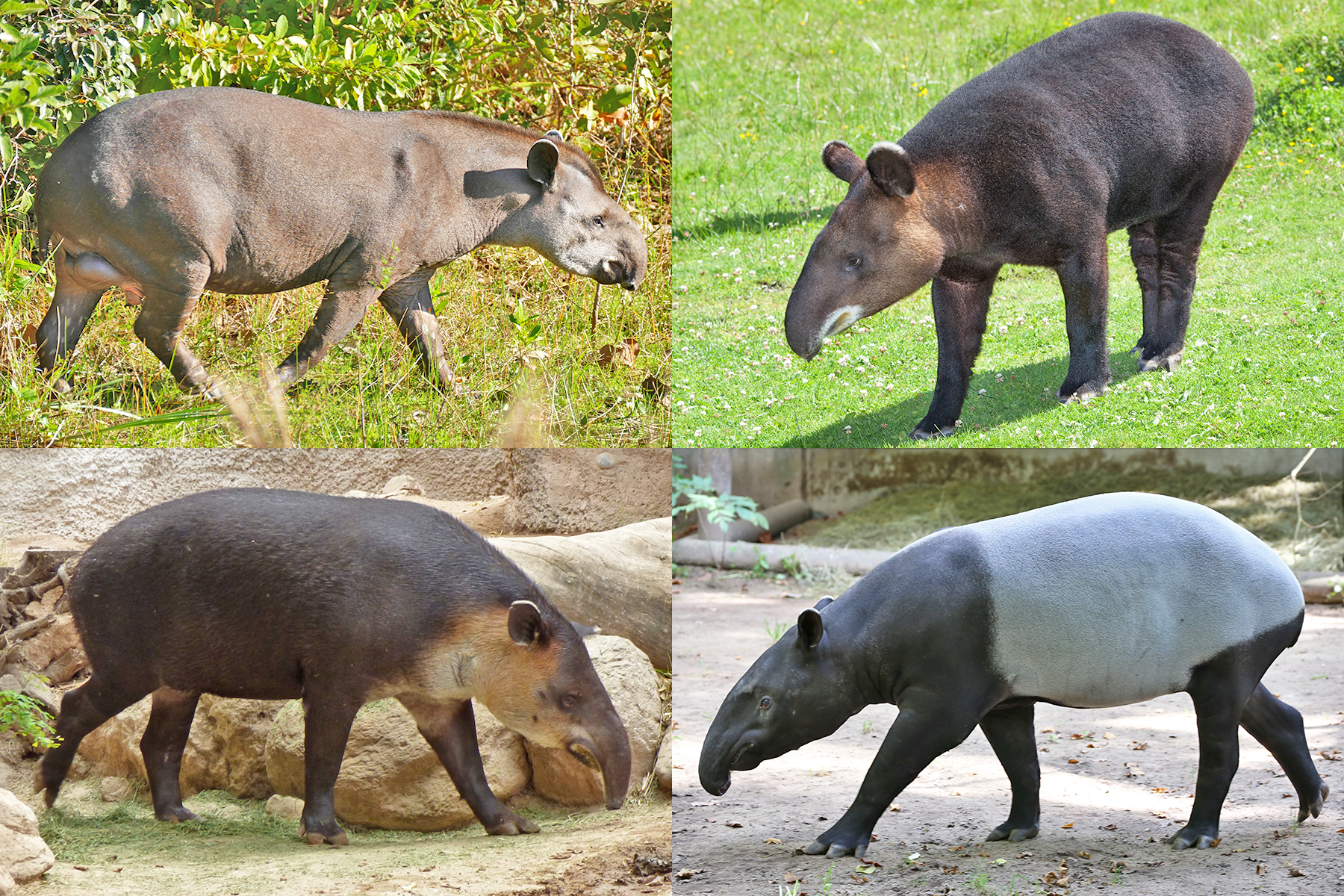
The tapir is a fascinating and enigmatic creature, often referred to as the "living fossil" due to its unique appearance and evolutionary history. With a body shape similar to a pig, but with a distinctive short, prehensile nose trunk (proboscis), tapirs are herbivores that roam the dense jungles and forests of South and Central America and Southeast Asia. These gentle giants are members of the family Tapiridae and are one of the three extant branches of Perissodactyla, alongside equines and rhinoceroses. There is only a single genus, Tapirus, which comprises four extant species: the South American tapir (Tapirus terrestris), the Central American tapir (Tapirus bairdii), the Malayan tapir (Tapirus indicus), and the mountain tapir (Tapirus pinchaque).
Tapirs are remarkable creatures, with a unique set of adaptations that enable them to thrive in their environments. Their short, prehensile nose trunks allow them to grasp and manipulate vegetation, while their powerful legs and sharp hooves enable them to move through dense undergrowth with ease. Their coats are often brown or gray in color, providing excellent camouflage in their forest habitats. Despite their impressive size, tapirs are shy and elusive creatures, rarely seen by humans.
History/Background
The history of tapirs dates back to the Pleistocene epoch, when they migrated into South America from North America after the formation of the Isthmus of Panama as part of the Great American Interchange. This event, which occurred around 3 million years ago, allowed for the exchange of species between North and South America, resulting in the diversification of many animal groups, including tapirs. Tapirs were once present across North America, but became extinct in the region at the end of the Late Pleistocene, around 12,000 years ago.
Key Information
- Physical Characteristics: Tapirs have a distinctive short, prehensile nose trunk (proboscis), a body shape similar to a pig, and powerful legs and sharp hooves.
- Habitat: Tapirs inhabit jungle and forest regions of South and Central America and Southeast Asia.
- Diet: Tapirs are herbivores, feeding on a variety of plants, including leaves, fruits, and grasses.
- Conservation Status: All four extant species of tapirs are listed as vulnerable or endangered on the IUCN Red List, due to habitat loss, hunting, and human-tapir conflict.
- Behavior: Tapirs are shy and elusive creatures, rarely seen by humans. They are primarily solitary animals, but will occasionally gather in small groups during the breeding season.
Significance
The tapir is an important species, not only due to its unique appearance and evolutionary history, but also due to its ecological significance. As herbivores, tapirs play a crucial role in shaping their ecosystems, dispersing seeds, and maintaining the diversity of plant species. Additionally, tapirs are often considered "umbrella species," meaning that their conservation can have a positive impact on the conservation of other species in their ecosystems.


