




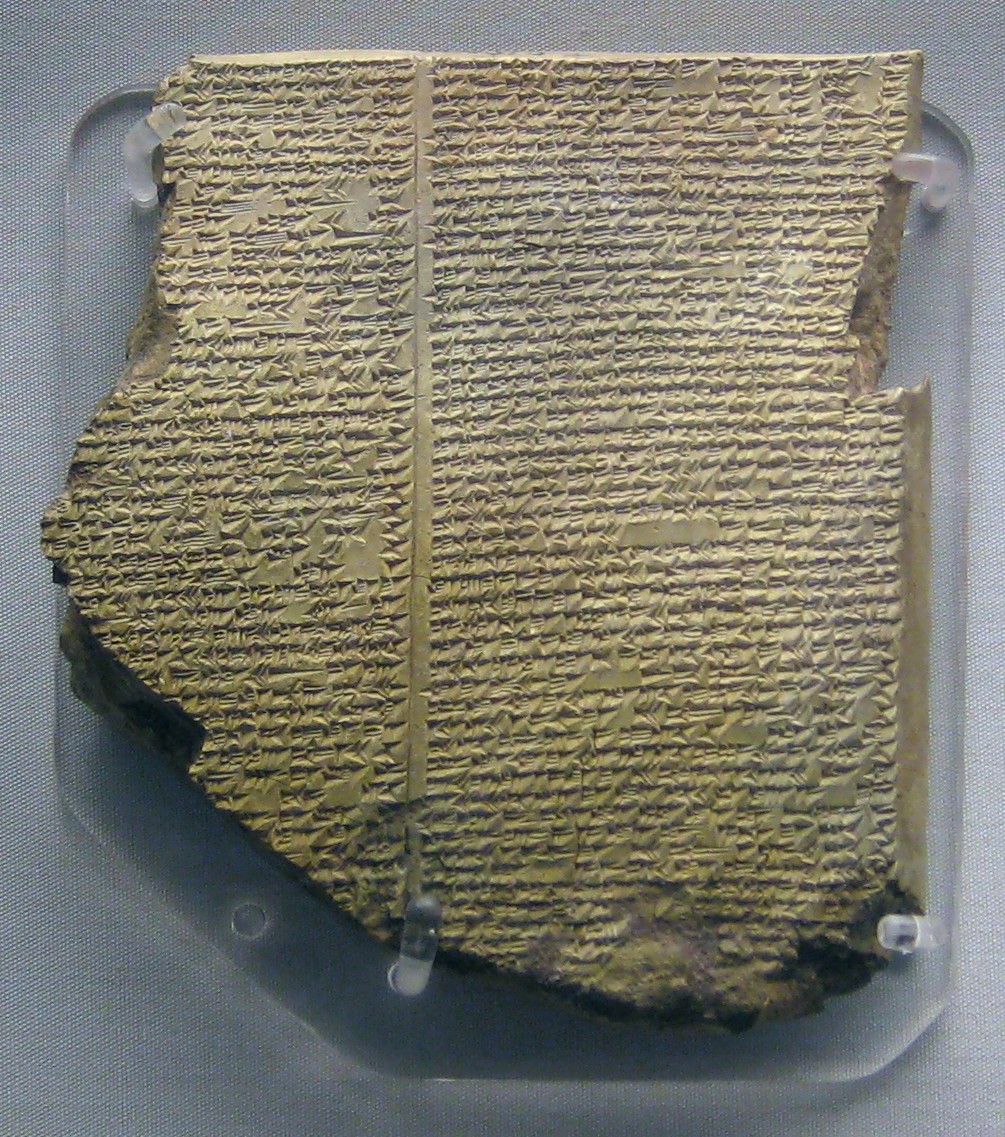
The Epic of Gilgamesh
The Epic of Gilgamesh is an ancient Mesopotamian epic poem that tells the story of Gilgamesh, king of Uruk, and his adventures with his friend Enkidu. The epic is considered to be one of the earliest surviving works of literature and has had a profound influence on the development of literature and mythology in the ancient Near East. The epic is a rich tapestry of themes, motifs, and characters that explore the human condition, friendship, love, and the search for immortality.
The literary history of Gilgamesh begins with five Sumerian poems about Gilgamesh, king of Uruk, some of which may date back to the Third Dynasty of Ur. These independent stories were later used as source material for a combined epic in Akkadian. The first surviving version of this combined epic, known as the "Old Babylonian" version, dates back to the 18th century BCE and is titled after its incipit, Shūtur eli sharrī. Only a few tablets of it have survived. The later Standard Babylonian version compiled by Sîn-lēqi-unninni dates to somewhere between the 13th and 10th centuries BCE and bears the incipit Sha naqba īmuru. About two-thirds of this longer, 12-tablet version have been recovered. Some of the best copies were discovered in the library ruins of the 7th-century BCE Assyrian King Ashurbanipal.
Origins
The earliest surviving versions of the epic were written in cuneiform script on clay tablets in ancient Sumerian. The Sumerian poems about Gilgamesh were likely composed in the Third Dynasty of Ur, around 2100 BCE. These poems were later adapted and expanded into a combined epic in Akkadian, which became the basis for the Standard Babylonian version. The epic was likely composed over a period of time, with different authors contributing to its development.
Early Sumerian Poems
The earliest surviving Sumerian poems about Gilgamesh are known as the "Gilgamesh Cycle." These poems include the "Gilgamesh and Huwawa," "Gilgamesh and the Bull of Heaven," and "The Death of Gilgamesh." These poems tell the story of Gilgamesh's adventures with Enkidu, his friend and companion. The poems also introduce the theme of the search for immortality, which becomes a central theme in the epic.
History
The epic was composed over a period of time, with different authors contributing to its development. The first surviving version of the epic, the "Old Babylonian" version, dates back to the 18th century BCE. This version is titled after its incipit, Shūtur eli sharrī. Only a few tablets of it have survived. The later Standard Babylonian version compiled by Sîn-lēqi-unninni dates to somewhere between the 13th and 10th centuries BCE and bears the incipit Sha naqba īmuru. About two-thirds of this longer, 12-tablet version have been recovered.
Standard Babylonian Version
The Standard Babylonian version is the most well-known and widely studied version of the epic. It was compiled by Sîn-lēqi-unninni and dates to somewhere between the 13th and 10th centuries BCE. This version is longer than the Old Babylonian version, consisting of 12 tablets instead of 5. The Standard Babylonian version includes many of the themes and motifs that are characteristic of the epic, including the search for immortality, friendship, love, and the human condition.
Themes and Motifs
The epic explores a wide range of themes and motifs, including the search for immortality, friendship, love, and the human condition. The epic also introduces the concept of the "hero's journey," which is a common motif in literature and mythology. The epic also explores the theme of the "friendship" between Gilgamesh and Enkidu, which is a central theme in the epic.
The Search for Immortality
The search for immortality is a central theme in the epic. Gilgamesh's quest for immortality is driven by his desire to prevent the death of his friend Enkidu. The epic explores the idea that immortality is not possible, and that death is an inevitable part of life. The epic also introduces the concept of the "afterlife," which is a common theme in ancient Mesopotamian literature and mythology.
Legacy
The epic has had a profound influence on the development of literature and mythology in the ancient Near East. The epic has been translated into many languages and has been studied by scholars and readers around the world. The epic has also inspired many works of literature and art, including the works of Homer and Virgil.
Influence on Literature and Mythology
The epic has had a significant influence on the development of literature and mythology in the ancient Near East. The epic has been studied and translated by scholars and readers around the world, and has inspired many works of literature and art. The epic has also influenced the development of mythology in the ancient Near East, introducing many of the themes and motifs that are characteristic of Mesopotamian mythology.
INFOBOX:
- Name: The Epic of Gilgamesh
- Type: Epic poem
- Date: 2100 BCE - 1000 BCE
- Location: Ancient Mesopotamia
- Known For: Being one of the earliest surviving works of literature, exploring the human condition, friendship, love, and the search for immortality
TAGS: Epic poetry, Mesopotamian literature, Ancient Near East, Gilgamesh, Enkidu, Immortality, Friendship, Love, Human condition, Hero's journey, Afterlife, Mythology, Literature.





