The Kybalion
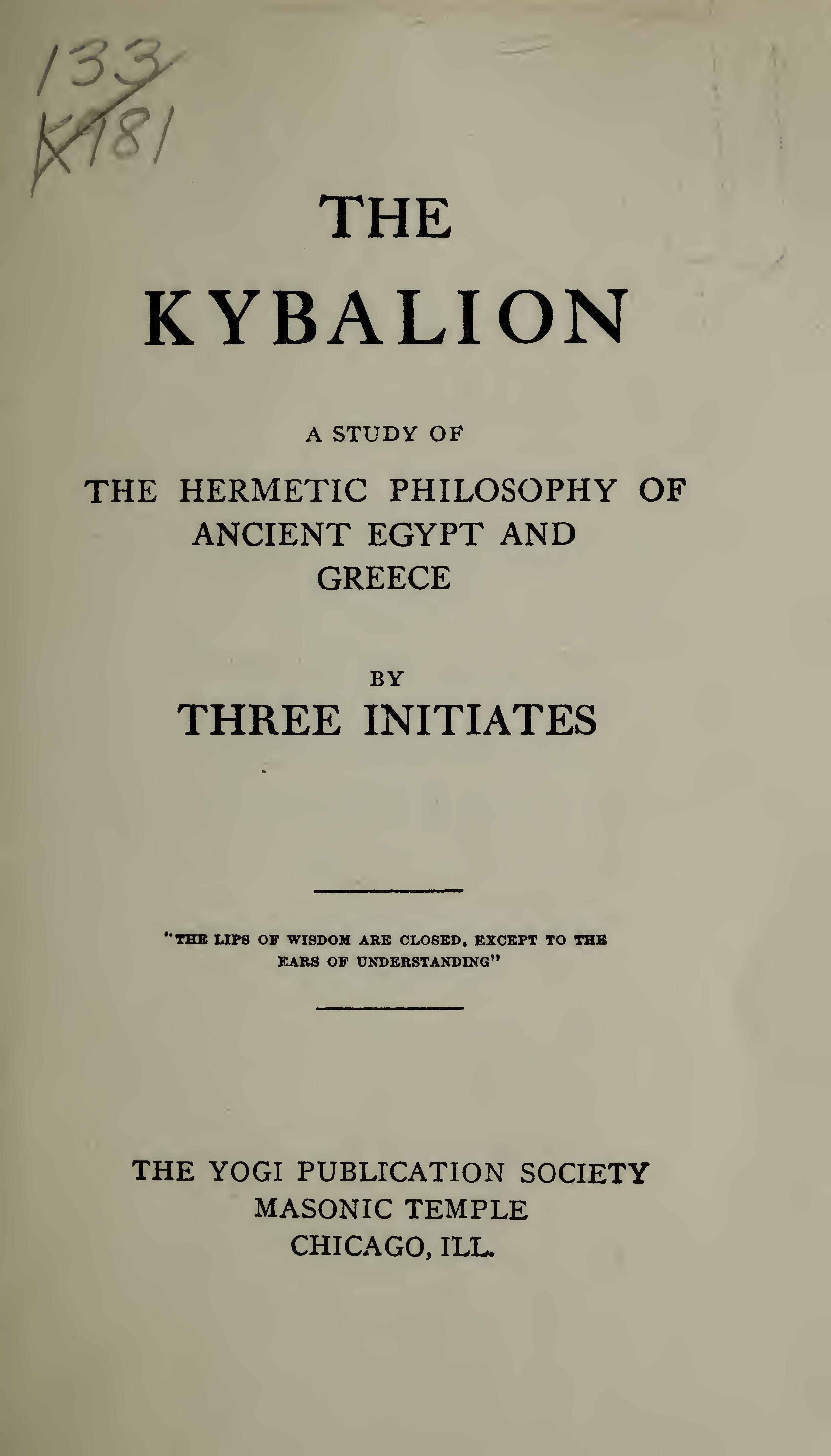
The Kybalion is a spiritual text that purports to convey the teachings of Hermes Trismegistus, an ancient Greek philosopher and alchemist. Written in 1908 by the pseudonymous authors "Three Initiates," the book presents a comprehensive system of Hermetic philosophy, outlining the principles of the universe and the nature of the human soul. The Kybalion has been widely read and studied by spiritual seekers, occultists, and esotericists, and its teachings continue to influence contemporary spirituality and personal development.
The Kybalion is a dense and complex text that draws upon a wide range of sources, including ancient Greek philosophy, alchemy, and mysticism. The book is divided into seven principles, each of which explores a different aspect of the universe and the human condition. These principles are: the Principle of Mentalism, the Principle of Correspondence, the Principle of Vibration, the Principle of Polarity, the Principle of Rhythm, the Principle of Cause and Effect, and the Principle of Gender.
The Kybalion's teachings are presented in a style that is both poetic and cryptic, making it challenging for readers to decipher the book's meaning. However, the text's authors claim that the book contains the essence of Hermetic wisdom, and that its teachings can be applied to various aspects of life, from personal growth and spiritual development to practical problem-solving and creative expression.
History
The Kybalion was first published in 1908 by the Yogi Publication Society, a publishing house founded by the Theosophical Society. The book's authors, "Three Initiates," were pseudonyms used by the society's leaders to conceal their identities. The true identities of the authors remain unknown to this day, and their intentions behind writing the book are still a matter of speculation.
The Kybalion's publication coincided with a surge of interest in Theosophy and occultism in the early 20th century. The book's teachings resonated with many spiritual seekers who were seeking a deeper understanding of the universe and their place within it. The Kybalion's popularity continued to grow throughout the 20th century, and it has since become a classic of esoteric literature.
Principles
The Kybalion's seven principles are the core of its teachings, and each principle explores a different aspect of the universe and the human condition. The principles are:
The Principle of Mentalism
The Principle of Mentalism asserts that the universe is a mental creation, and that everything that exists is a manifestation of the collective unconscious. This principle suggests that the human mind is the source of all creation, and that our thoughts and intentions have the power to shape reality.
The Principle of Correspondence
The Principle of Correspondence states that there is a correspondence between the macrocosm and the microcosm, between the universe and the individual. This principle suggests that the patterns and structures that exist in the universe also exist within the human being, and that understanding these correspondences can reveal hidden truths about the nature of reality.
The Principle of Vibration
The Principle of Vibration asserts that everything in the universe is in a state of vibration, and that these vibrations determine the nature of reality. This principle suggests that the human mind is capable of vibrating at different frequencies, and that these vibrations can be used to access higher states of consciousness and to manifest desired outcomes.
The Principle of Polarity
The Principle of Polarity states that everything in the universe exists in a state of polarity, with opposing forces and energies that are in constant interaction. This principle suggests that the human being is a microcosm of the universe, with opposing forces and energies that must be balanced and integrated in order to achieve wholeness and fulfillment.
The Principle of Rhythm
The Principle of Rhythm asserts that everything in the universe is subject to cycles and rhythms, with periods of growth and decay, expansion and contraction. This principle suggests that the human being is part of these cycles, and that understanding and working with these rhythms can reveal hidden patterns and structures in the universe.
The Principle of Cause and Effect
The Principle of Cause and Effect states that every effect has a cause, and that the cause is always prior to the effect. This principle suggests that the human being has the power to create their own reality through their thoughts, intentions, and actions, and that every effect is a result of a prior cause.
The Principle of Gender
The Principle of Gender asserts that everything in the universe is dual, with masculine and feminine principles that are in constant interaction. This principle suggests that the human being is a microcosm of the universe, with masculine and feminine energies that must be balanced and integrated in order to achieve wholeness and fulfillment.
Influence and Legacy
The Kybalion has had a profound influence on contemporary spirituality and personal development. Its teachings have been applied in various fields, from psychology and education to art and spirituality. The book's principles have been used to develop new spiritual and philosophical systems, and its ideas have been incorporated into various forms of esoteric and occult practice.
The Kybalion's influence can be seen in the work of many spiritual teachers and philosophers, including Aleister Crowley, Manly P. Hall, and Joseph Campbell. The book's teachings have also been applied in various forms of art and literature, including poetry, music, and film.
INFOBOX:
- Name: The Kybalion
- Type: Spiritual text
- Date: 1908
- Location: United States
- Known For: Presenting the teachings of Hermes Trismegistus and outlining the principles of Hermetic philosophy
TAGS: Hermes Trismegistus, Hermetic philosophy, Theosophy, Occultism, Spirituality, Personal development, Esotericism, Philosophy, Psychology