




Overview
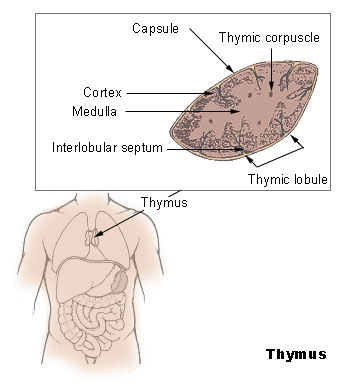
The thymus is a unique and essential component of the immune system, located in the upper front part of the chest, in the anterior superior mediastinum, behind the sternum, and in front of the heart. It is a bilobed organ, consisting of a central medulla and an outer cortex, surrounded by a capsule. The thymus is a highly dynamic and adaptable organ, with a significant role in the development and maturation of T cells, which are critical to the adaptive immune response.
During fetal development, the thymus is the primary site for the production of T cells, which are essential for fighting off infections and foreign invaders. After birth, the thymus continues to play a vital role in the maturation and selection of T cells, ensuring that only functional and self-tolerant T cells are released into the circulation. The thymus is also responsible for the production of thymic hormones, such as thymosin, which play a crucial role in the development and maturation of T cells.
History/Background
The thymus has been a subject of interest for scientists and researchers for centuries. The ancient Greek physician Galen (129-216 AD) was one of the first to describe the thymus as a glandular organ. However, it was not until the 19th century that the thymus was recognized as a lymphoid organ. In 1885, the German pathologist Ludwig Rehn first described the thymus as a site for the production of T cells. Since then, extensive research has been conducted on the thymus, including its development, function, and role in the immune system.
Key Information
- Location: The thymus is located in the upper front part of the chest, in the anterior superior mediastinum, behind the sternum, and in front of the heart.
- Structure: The thymus is a bilobed organ, consisting of a central medulla and an outer cortex, surrounded by a capsule.
- Function: The thymus is responsible for the maturation and development of T cells, which are critical to the adaptive immune response.
- Thymic Hormones: The thymus produces thymic hormones, such as thymosin, which play a crucial role in the development and maturation of T cells.
- Development: The thymus is a highly dynamic and adaptable organ, with a significant role in the development and maturation of T cells.
- T Cell Maturation: The thymus is responsible for the selection and maturation of T cells, ensuring that only functional and self-tolerant T cells are released into the circulation.
Significance
The thymus plays a vital role in the development and maturation of T cells, which are critical to the adaptive immune response. The thymus is essential for the protection against infections and foreign invaders, and its dysfunction can lead to immunodeficiency and increased susceptibility to infections. The thymus also has a significant role in the development of autoimmune diseases, such as type 1 diabetes and rheumatoid arthritis.



