




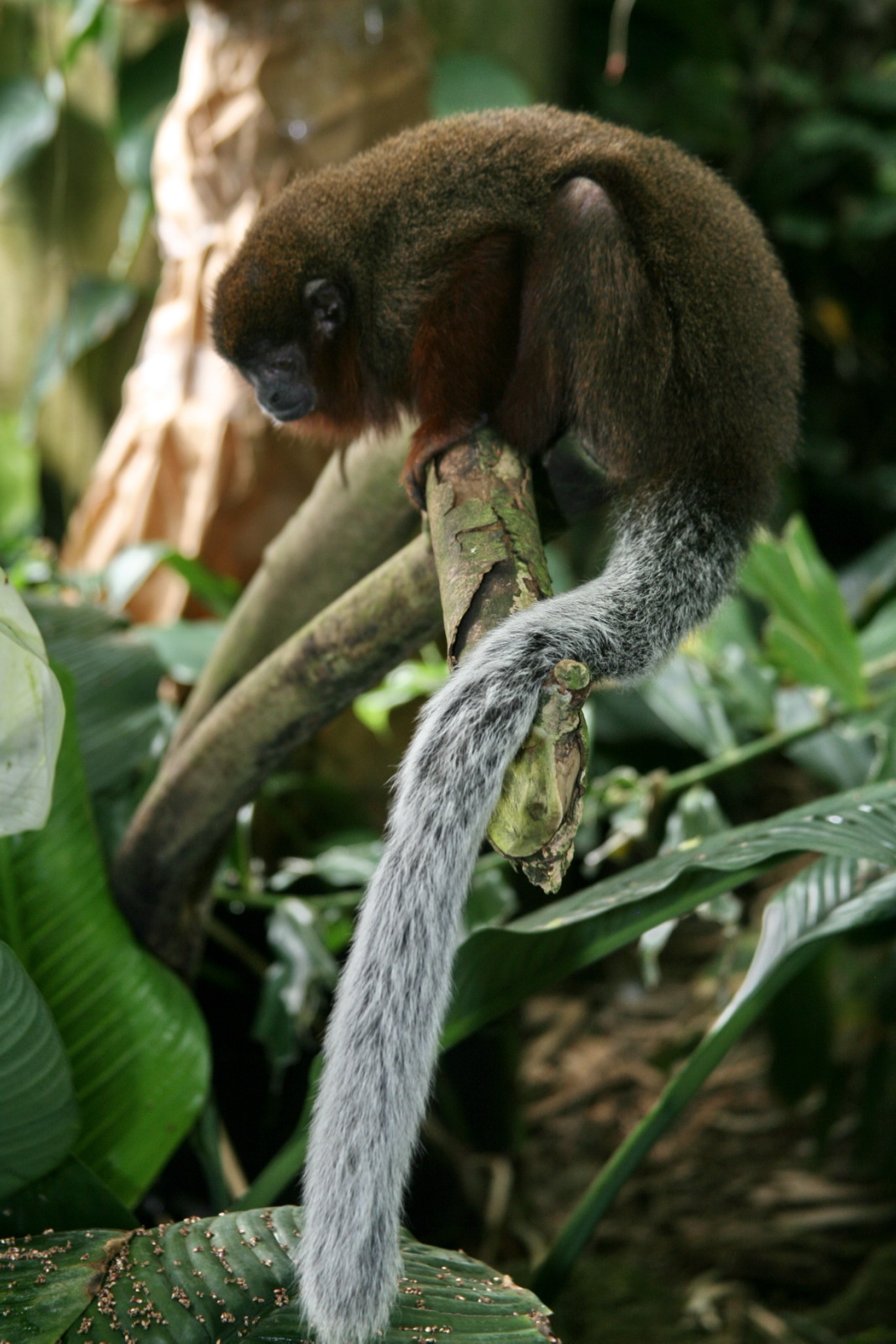
Titi Monkey
SUMMARY: The titi monkey is a small, arboreal primate native to the tropical forests of Central and South America, characterized by its distinctive tufted ears and long, flowing tails.
Overview
Titi monkeys belong to the subfamily Callicebinae, which comprises three extant genera: Cheracebus, Callicebus, and Plecturocebus. These New World monkeys are primarily found in the tropical forests of Central and South America, ranging from Mexico to Argentina. They inhabit dense, humid environments, where they spend most of their time in the canopy and understory layers. Titi monkeys are known for their social behavior, often living in small groups of up to 15 individuals, led by a dominant male.
One of the most distinctive features of titi monkeys is their tufted ears, which are long and pointed, giving them a unique appearance. They also have long, flowing tails, which they use for balance and communication. Titi monkeys are primarily frugivorous, feeding on a variety of fruits, leaves, and flowers. They are also known to cache food, hiding it in various spots to retrieve later.
History/Background
The history of titi monkeys dates back to the Miocene epoch, around 20 million years ago. Fossil records show that these primates have evolved over time, with the extinct genera Miocallicebus, Homunculus, and Carlocebus providing valuable insights into their evolutionary history. The modern genera of titi monkeys, Cheracebus, Callicebus, and Plecturocebus, are thought to have diverged around 10-15 million years ago.
Key Information
* Habitat: Titi monkeys are found in the tropical forests of Central and South America, from Mexico to Argentina.
* Diet: Primarily frugivorous, feeding on fruits, leaves, and flowers.
* Social behavior: Live in small groups of up to 15 individuals, led by a dominant male.
* Reproduction: Give birth to a single infant after a gestation period of around 5-6 months.
* Conservation status: Many species of titi monkeys are listed as Endangered or Vulnerable due to habitat loss and hunting.
Significance
Titi monkeys play a crucial role in their ecosystems, serving as seed dispersers and nutrient vectors. Their frugivorous diet helps to maintain the diversity of plant species in their habitats. Unfortunately, many species of titi monkeys are threatened by habitat loss and hunting, highlighting the need for conservation efforts to protect these unique and fascinating primates.
INFOBOX:
- Name: Titi Monkey
- Type: Primate
- Date: Miocene epoch (20 million years ago)
- Location: Tropical forests of Central and South America
- Known For: Distinctive tufted ears and long, flowing tails
TAGS: Titi monkey, New World monkey, Callicebinae, primate, frugivorous, seed disperser, nutrient vector, conservation, endangered, vulnerable.


