




**
Overview
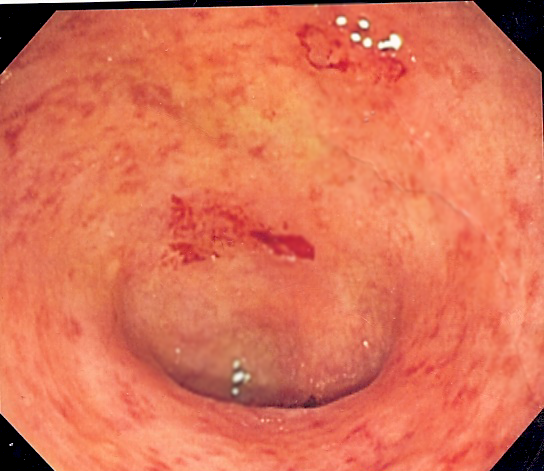
Ulcerative colitis (UC) is one of the two principal forms of inflammatory bowel disease (IBD), the other being Crohn’s disease. It is characterized by continuous inflammation that begins in the rectum and may extend proximally to involve part or all of the colon. The inflamed mucosa develops superficial ulcers, which bleed easily, producing the hallmark symptom of hematochezia (bright red blood in the stool). Patients typically experience crampy abdominal pain, urgency, and frequent watery or mushy stools that may contain mucus and blood.The disease follows a relapsing‑remitting course: periods of active inflammation (“flares”) alternate with intervals of relative quiescence (“remission”). Flares can be mild, with only a few loose stools per day, or severe, leading to massive bleeding, dehydration, and systemic signs such as fever, weight loss, and anemia. Extra‑intestinal manifestations are common, affecting the eyes (uveitis), joints (arthritis), skin (erythema nodosum), and liver (primary sclerosing cholangitis). Long‑standing UC increases the risk of colorectal cancer, especially when the disease involves the entire colon and has persisted for many years.
Because UC is a chronic condition with no definitive cure, management focuses on controlling inflammation, maintaining remission, and monitoring for complications. Treatment options range from aminosalicylates and corticosteroids to immunomodulators, biologic agents, and, in refractory cases, surgical removal of the colon (colectomy). Patients should seek prompt medical evaluation if they notice new or worsening symptoms, especially severe abdominal pain, high‑fever, or a sudden increase in blood loss, as these may signal a life‑threatening complication such as toxic megacolon.
History/Background
The first clinical descriptions of ulcerative colitis date back to the 19th century. In 1859, British physician Sir Samuel Wilks reported a series of patients with “chronic ulcerative colitis,” distinguishing it from infectious dysentery. The term “ulcerative colitis” was coined by Sir William Osler in 1905, who emphasized the disease’s ulcerative nature and its confinement to the colon. Throughout the early 20th century, the condition was considered rare and often fatal, with limited therapeutic options.A major breakthrough occurred in the 1950s when aminosalicylates (e.g., sulfasalazine) were introduced, providing the first effective anti‑inflammatory medication for UC. The discovery of corticosteroids in the 1960s further improved flare control. In the 1990s, the advent of immunosuppressive agents (azathioprine, 6‑mercaptopurine) and later biologic therapies targeting tumor necrosis factor‑α (TNF‑α) and integrins revolutionized long‑term disease management. Surgical techniques also evolved, making total proctocolectomy with ileal pouch‑anal anastomosis (IPAA) a safe, continent‑preserving option for patients with refractory disease.
Research into the genetic and environmental underpinnings of UC accelerated after the Human Genome Project, identifying susceptibility loci such as HLA‑DRB1, IL23R, and NOD2. These discoveries have paved the way for personalized medicine approaches that are still emerging in clinical practice.
Key Information
- Epidemiology: UC affects approximately 0.2–0.5 % of the population in North America and Europe, with a peak onset between ages 15–35 and a second smaller peak after age 50. - Pathophysiology: The disease results from an inappropriate immune response to intestinal microbiota in genetically predisposed individuals, leading to cytokine‑mediated mucosal injury. - Diagnostic criteria: Colonoscopy with biopsies remains the gold standard, revealing continuous mucosal ulceration, crypt architectural distortion, and inflammatory infiltrates. Laboratory tests may show anemia, elevated C‑reactive protein (CRP), and fecal calprotectin. - Treatment hierarchy: 1. 5‑ASA agents (mesalamine, sulfasalazine) for mild‑to‑moderate disease. 2. Corticosteroids for acute flares. 3. Immunomodulators (azathioprine, methotrexate) for steroid‑sparing maintenance. 4. Biologics (infliximab, adalimumab, vedolizumab, ustekinumab) for moderate‑to‑severe or refractory disease. 5. Surgery (colectomy with IPAA) when medical therapy fails or complications arise. - Complications: Toxic megacolon, perforation, severe hemorrhage, primary sclerosing cholangitis, and increased colorectal cancer risk (surveillance colonoscopy every 1–3 years after 8–10 years of disease). - Lifestyle considerations: Diet modification, smoking cessation (smoking appears protective for UC but is harmful overall), stress management, and regular exercise can aid symptom control, though they do not replace medical therapy.Important: Anyone experiencing new, severe abdominal pain, persistent high‑grade fever, or a sudden surge in rectal bleeding should seek immediate medical attention, as these may indicate an emergency such as toxic megacolon or perforation.
Significance
Ulcerative colitis is a major public health concern because of its chronic nature, impact on quality of life, and association with serious complications. The disease imposes substantial economic costs related to healthcare utilization, lost productivity, and long‑term medication. Advances in biologic therapy have dramatically improved remission rates and reduced the need for colectomy, yet access to these treatments remains uneven worldwide.From a scientific perspective, UC serves as a model for studying mucosal immunology, host‑microbiome interactions, and the genetics of auto‑inflammatory disorders. Insights gained from UC research have informed therapeutic strategies for other immune‑mediated diseases, such as rheumatoid arthritis and psoriasis. Moreover, the emphasis on surveillance colonoscopy for cancer prevention underscores the broader principle of early detection in chronic inflammatory conditions.
Understanding UC empowers patients, clinicians, and policymakers to implement timely interventions, promote research funding, and improve health outcomes for millions of individuals living with this challenging disease.
INFOBOX:
- Name: Ulcerative colitis
- Type: Chronic inflammatory bowel disease (IBD)
- Date: First described in 1859 (clinical description)
- Location: Primarily affects the colon and rectum; worldwide distribution
- Known For: Continuous colonic mucosal inflammation with ulceration and increased colorectal cancer risk
TAGS: ulcerative colitis, inflammatory bowel disease, gastroenterology, autoimmune disease, colon cancer, biologic therapy, colonoscopy, extra‑intestinal manifestations



