



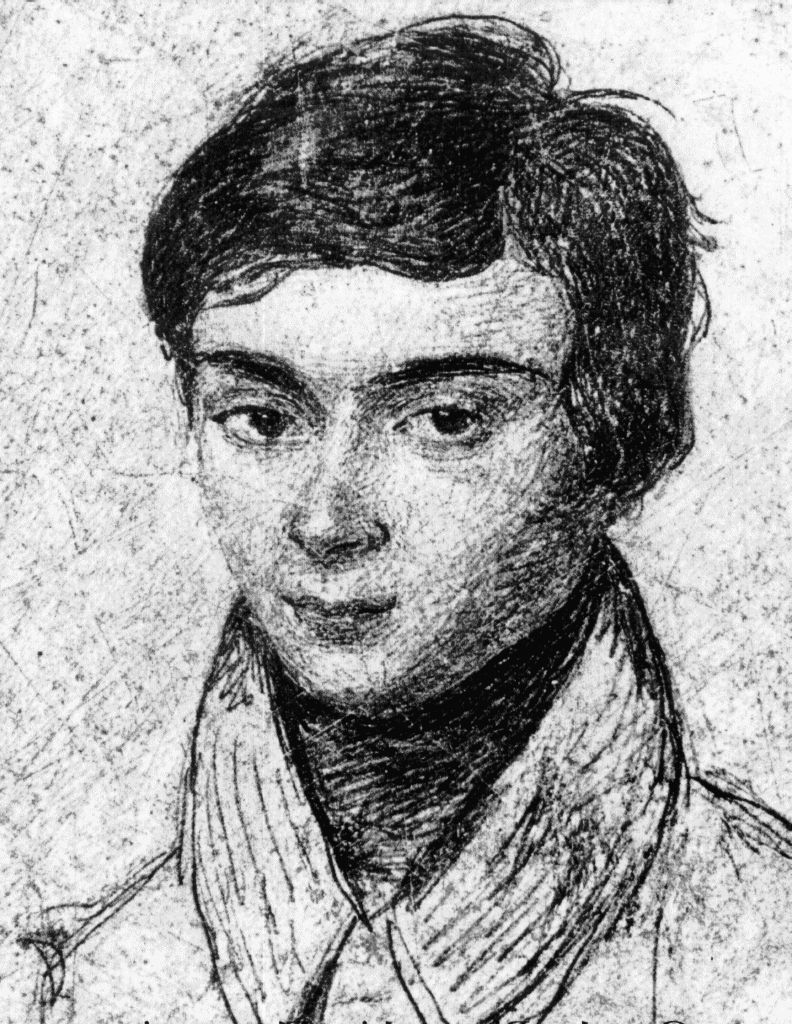

Overview
Évariste Galois (1811-1832) fused algebra and symmetry so profoundly that mathematicians still speak his language every day. In a single 1831 memoir—only 66 pages—he introduced what we now call Galois theory, a machine that converts questions about roots of equations into questions about the group of symmetries that permute those roots. The payoff: a crisp criterion for when the familiar quadratic, cubic, and quartic formulas have higher-degree analogues. (Spoiler: they almost never do.) His insight opened the door to modern group theory, the algebraic study of symmetry that today underlies cryptography, crystallography, particle physics, and Sudoku.Galois’s life reads like tragic opera. A fiery republican expelled from school, twice rejected by the École Polytechnique, imprisoned for threatening the king’s life, and finally lured into a duel over a mysterious woman, he spent his final night racing to write down the ideas that had been dismissed or lost by the French Academy. Found by his brother at dawn, he whispered, “Don’t cry, I need all my courage to die at twenty.” The next morning a bullet pierced his abdomen; the following day he was dead. Yet the manuscript he left behind rewrote the map of mathematics.
History/Background
The problem Galois cracked had haunted mathematicians since the 16th century. Scipione del Ferro and Cardano had produced “by radicals” formulas for cubics and quartics, but for 250 years the quintic resisted. Lagrange (1770) suspected no such formula existed; Ruffini (1799) offered a 500-page proof that few trusted; Abel (1824) finally proved the impossibility for the general quintic. Yet Abel left no test for specific equations. Galois, still at school, read Abel and asked the next question: “Which particular equations are solvable?” Between 1828 and 1831 he wrote four versions of his memoir, each refining the group concept until it became the perfect diagnostic tool. Cauchy and Poisson reviewed his submissions to the Academy; Poisson declared the ideas “incomprehensible” and rejected them. Two days after the duel, Galois’s letter to Auguste Chevalier appeared: “You will publicly ask Jacobi or Gauss to give their opinion not on the truth, but on the importance of the theorems.” Thirty-eight years later, Joseph Liouville published the memoir and the world finally understood.Key Information
- Galois correspondence: For any polynomial, there is a finite group Gal(K/F) whose subgroups classify all intermediate fields between the base field F and the splitting field K. Solvability by radicals translates into the existence of a composition series whose quotients are cyclic of prime order.- Solvable groups: A group G is called solvable if it has a chain
{e} = G₀ ◁ G₁ ◁ … ◁ Gₙ = G
with each quotient Gᵢ₊₁/Gᵢ abelian. A polynomial is solvable by radicals ⇔ its Galois group is solvable. The symmetric group S₅ is not solvable, hence the general quintic is unsolvable.
- Finite fields: Galois constructed the finite fields GF(pⁿ) as quotient rings Fₚ[x]/(P(x)) with P irreducible of degree n, proving they exist for every prime power and are unique up to isomorphism—results essential to error-correcting codes and AES cryptography.
- Équation modulaire: He studied the modular equation of degree p+1 for the j-function, anticipating aspects of modular forms and the Langlands program.
- Political activism: Member of the republican Société des Amis du Peuple, he was arrested for wearing the uniform of the outlawed artillery guard and later for proposing a toast to the king’s death with a dagger above the cup. In prison he continued doing mathematics, writing on the walls when paper was denied.


