




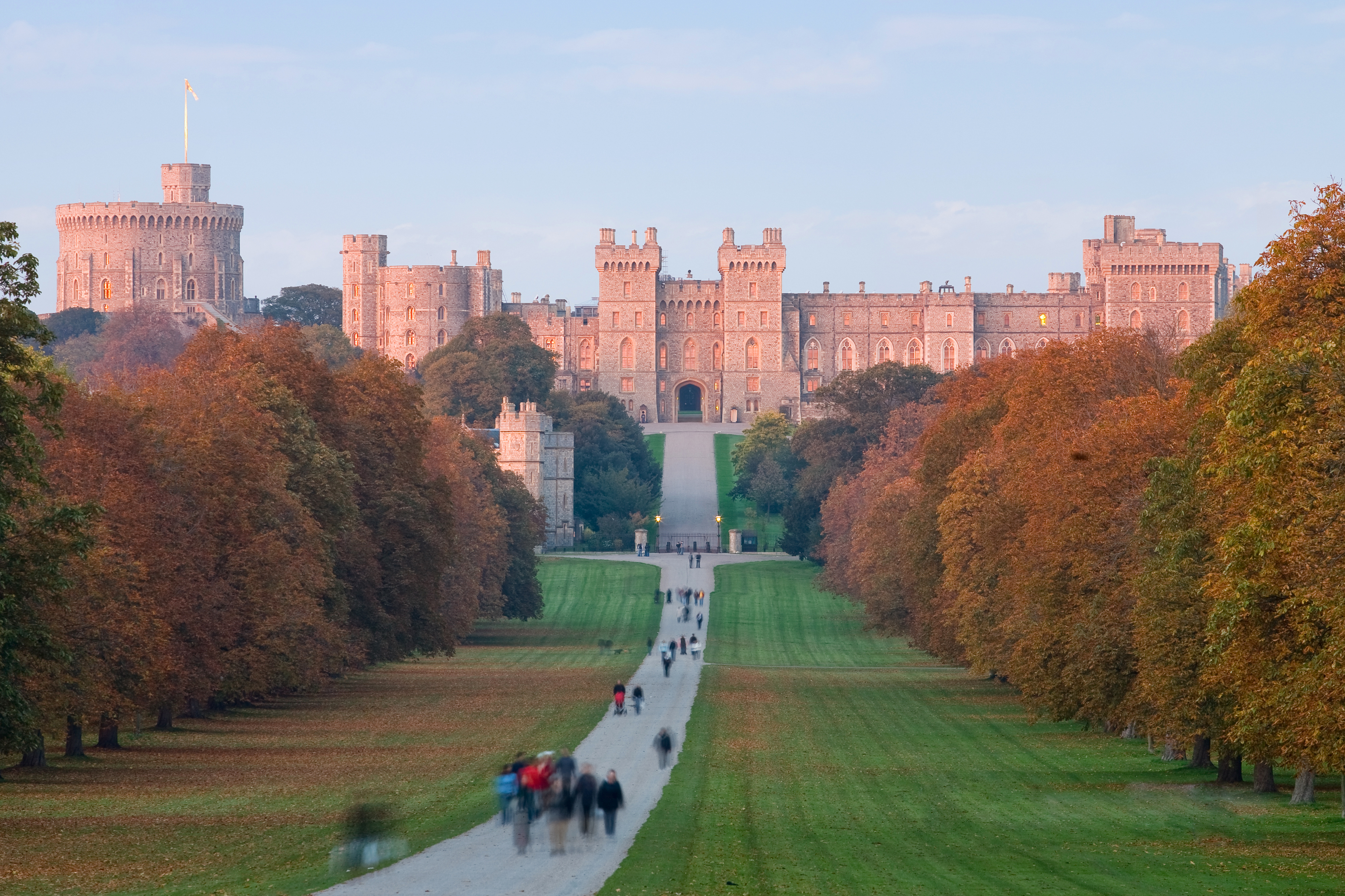
Overview
Windsor Castle, perched on a chalk ridge overlooking the River Thames, is the oldest and largest inhabited castle in the world. Constructed originally as a wooden fort by William the Conqueror in the 11th century, it has been transformed over nine centuries into a palatial complex of State Apartments, St George’s Chapel, and extensive grounds. Today it serves as a working royal home for His Majesty King Charles III, a venue for state ceremonies, and a major tourist attraction drawing over a million visitors annually.The castle’s strategic location—about 25 miles (40 km) west of central London—made it a key defensive stronghold during the medieval period and later a preferred retreat for monarchs seeking proximity to the capital without the bustle of the city. Its iconic silhouette, with towering round towers and the distinctive Round Tower, is instantly recognizable on the British skyline and has been featured in countless works of art, film, and literature.
Beyond its architectural grandeur, Windsor Castle is a repository of British cultural heritage. Its State Apartments house priceless works by Rembrandt, Rubens, and Canaletto, while St George’s Chapel is the burial site of 11 monarchs, including Henry VIII and Queen Victoria. The castle’s continuous use by the royal family for over 900 years makes it a living museum, where tradition and modernity intersect daily.
History/Background
The origins of Windsor Castle trace back to 1070, when William the Conqueror ordered the construction of a motte‑and‑bailey fortification to secure the western approach to London. By the early 12th century, Henry I replaced the wooden structures with stone, establishing the core of the present complex. Henry II expanded the castle, adding the Round Tower (1175) and a grand chapel that would evolve into St George’s Chapel.During the reign of Edward III (1327‑1377), Windsor entered its golden age as a royal residence. Edward commissioned the Great Hall and the Privy Chambers, and the castle became a center for chivalric orders, notably the Order of the Garter, founded in 1348. The Tudor monarchs, especially Henry VIII, further enlarged the palace, introducing the Upper Ward and extensive gardens.
The English Civil War (1642‑1651) saw the castle besieged and partially damaged, but the Restoration under Charles II restored its splendor. In the 19th century, Queen Victoria made Windsor her principal home, commissioning the Windsor Castle Act 1848 to protect the surrounding parkland. The 20th century brought modernization: electric lighting, central heating, and the addition of the Queen’s Guard barracks.
A major fire in 1992 devastated the State Apartments, prompting a five‑year restoration that blended historic craftsmanship with contemporary conservation techniques. The rebuilt interiors reopened in 1997, reaffirming Windsor’s status as a functional royal residence and a symbol of resilience.
Key Information
- Location: Windsor, Berkshire, England (≈ 25 mi west of London) - Area: Approximately 13 acres of built‑up floor space; the entire estate covers about 13,000 acres of parkland and gardens. - Population: Not applicable; the castle houses the monarch, a small household staff, and the Queen’s Guard. - Architectural Styles: Norman, Gothic, Tudor, Baroque, and Victorian elements coexist within the complex. - Key Structures: The Round Tower, State Apartments, St George’s Chapel, Semi‑State Rooms, Queen Mary’s Dolls’ House, and the Royal Archives. - Cultural Assets: Over 2,000 works of art, 500 historic tapestries, and the world‑famous St George’s Chapel (UNESCO World Heritage Site candidate). - Public Access: Open to visitors most days of the year; the State Apartments and St George’s Chapel are the primary tour sites. - Royal Functions: Site of the Garter Day ceremony, royal weddings, state banquets, and occasional diplomatic receptions.Significance
Windsor Castle stands as a tangible chronicle of the British monarchy’s evolution, embodying political power, religious devotion, and artistic patronage across centuries. Its continuous occupation by successive monarchs makes it a rare example of a living heritage site, where ancient stone walls witness modern statecraft. The castle’s role in the Order of the Garter links it to the oldest chivalric order in the world, reinforcing its symbolic weight in British identity.Architecturally, Windsor is a masterclass in adaptive reuse; each monarch left a distinct imprint, creating a layered tapestry that scholars study to understand medieval fortifications, Tudor domesticity, and Victorian restoration philosophies. The 1992 fire and subsequent restoration highlighted advances in heritage conservation, setting international standards for repairing historic structures while preserving authenticity.
Economically, Windsor Castle contributes significantly to the local and national economy through tourism, employment, and the promotion of British craftsmanship. Culturally, its art collections and ceremonial functions inspire countless works of literature, film, and visual art, cementing its place in the global imagination as a quintessential emblem of royalty.


