




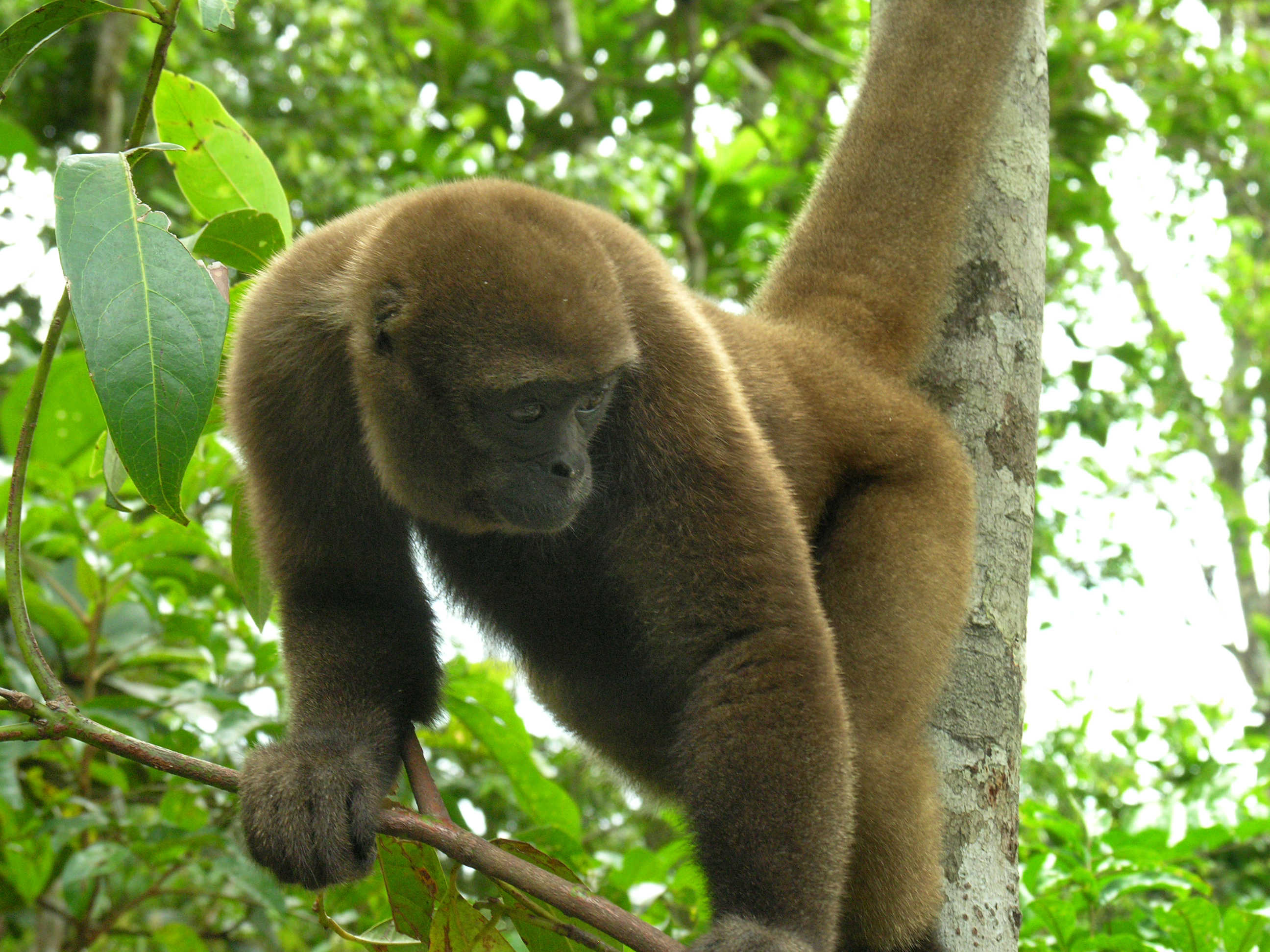
Woolly Monkey
SUMMARY: The woolly monkeys, belonging to the genus Lagothrix, are a group of New World monkeys native to the tropical forests of Central and South America, characterized by their distinctive thick, woolly coats and social behavior.
Overview
The woolly monkeys are a group of primates that inhabit the tropical forests of Central and South America, ranging from Mexico to Argentina. These intelligent and social creatures are known for their thick, woolly coats, which help them adapt to their cold and humid environments. There are four recognized species of woolly monkeys: the brown woolly monkey (Lagothrix lagotricha), the silvery woolly monkey (Lagothrix cana), the red-faced woolly monkey (Lagothrix poeppigi), and the yellow-tailed woolly monkey (Lagothrix flavicauda).
Woolly monkeys are arboreal, spending most of their time in the forest canopy, where they feed on fruits, leaves, and seeds. They are skilled climbers and jumpers, using their strong arms and prehensile tails to navigate through the trees. These monkeys are also known for their complex social behavior, often living in large groups of up to 100 individuals. Within these groups, they have a strict hierarchical structure, with dominant males leading the group and younger males often leaving to form their own groups.
History/Background
The woolly monkeys have been present in the tropical forests of Central and South America for millions of years, with fossil records dating back to the Pleistocene era. The genus Lagothrix was first described by the French naturalist Étienne de Flacourt in 1658, and since then, several species have been identified and classified. Despite their long history, woolly monkeys have faced numerous threats to their survival, including habitat loss, hunting, and disease.
Key Information
- Physical Characteristics: Woolly monkeys have thick, woolly coats that range in color from brown to gray, with some species having distinctive markings on their faces and tails. They have strong arms and prehensile tails, which they use to climb and jump through the trees.
- Diet: Woolly monkeys are primarily herbivores, feeding on fruits, leaves, and seeds. They also occasionally eat insects and small animals.
- Social Structure: Woolly monkeys live in large groups, with a strict hierarchical structure. Dominant males lead the group, while younger males often leave to form their own groups.
- Habitat: Woolly monkeys inhabit the tropical forests of Central and South America, ranging from Mexico to Argentina.
- Conservation Status: The woolly monkeys are listed as vulnerable or endangered on the IUCN Red List, due to habitat loss, hunting, and disease.
Significance
The woolly monkeys play a crucial role in maintaining the balance of their ecosystems, serving as seed dispersers and forest regenerators. Their social behavior and complex communication systems also provide valuable insights into the evolution of primate behavior. Unfortunately, the woolly monkeys are facing numerous threats to their survival, including habitat loss and hunting. Conservation efforts are underway to protect their habitats and reduce human-wildlife conflict, but more needs to be done to ensure the long-term survival of these incredible creatures.
INFOBOX:
- Name: Woolly Monkey (Lagothrix)
- Type: New World monkey
- Date: 1658 (first described by Étienne de Flacourt)
- Location: Tropical forests of Central and South America
- Known For: Their distinctive thick, woolly coats and complex social behavior
TAGS: New World monkey, Atelidae, tropical forest, Central America, South America, primate, conservation, habitat loss, hunting, social behavior.


