



Captain Cosmos
Space & Astronomy Editor
241Articles
2.8KTotal views
 Space & Astronomy
Transit Timing Variations
Transit timing variations (TTVs) are a phenomenon in exoplanetary science where the time it takes for a planet to pass in front of its host star varies, providing valuable information about the planet's mass and the presence of additional bodies in the system.
Space & Astronomy
Anomalous X-ray Pulsars
Anomalous X-ray pulsars (AXPs) are a class of isolated neutron stars that exhibit unusual X-ray emission patterns, characterized by intense bursts of radiation and steady emission.
## Overview
Anomalous X-ray pulsars (AXPs) are a fascinating subclass of neutron stars that have puzzled astronomers for decades. These enigmatic objects were first discovered in the 1980s and have since been the subject of intense study. AXPs are characterized by their unusual X-ray emission patterns, which include intense bursts of radiation and steady emission. Unlike other neutron stars, AXPs do not have a clear companion star, and their X-ray emission is not powered by accretion. This has led to a range of theories attempting to explain the origin of AXPs, from magnetars to exotic forms of neutron star matter.
AXPs are typically found in the galaxy, with the majority located in the Milky Way. They are relatively rare, with only about 20 known AXPs in the galaxy. AXPs are often associated with supernova remnants, suggesting that they may have formed through the collapse of massive stars. However, the exact mechanisms that lead to the formation of AXPs are still not well understood.
## History/Background
The discovery of AXPs dates back to the 1980s, when astronomers were conducting surveys of the X-ray sky using the Einstein Observatory. The first AXP was discovered in 1982, and it was initially thought to be a normal neutron star. However, further observations revealed that this object was emitting X-rays at a much higher rate than expected, with bursts of radiation that were thousands of times more intense than the steady emission. This led to the realization that AXPs were a distinct class of neutron stars.
In the following years, several more AXPs were discovered, and astronomers began to study these objects in greater detail. The development of new X-ray telescopes, such as the Chandra X-ray Observatory, has allowed for more precise measurements of AXP properties and has revealed new insights into their behavior.
## Key Information
AXPs are characterized by their intense bursts of radiation, which can last from seconds to hours. These bursts are thought to be caused by the buildup of magnetic energy in the neutron star's crust, which is then released in a catastrophic event. The steady emission from AXPs is thought to be caused by the decay of this magnetic energy over time.
AXPs are also characterized by their slow rotation periods, which range from 5-12 seconds. This is slower than the rotation periods of other neutron stars, which can range from milliseconds to seconds. The slow rotation period of AXPs is thought to be due to the braking action of the magnetic field, which slows down the rotation of the neutron star over time.
## Significance
The study of AXPs has significant implications for our understanding of neutron stars and the extreme physics that govern their behavior. AXPs are thought to be powered by the decay of their magnetic fields, which is a process that is not well understood. Studying AXPs can provide insights into the properties of neutron star matter and the behavior of magnetic fields in extreme environments.
AXPs are also of interest to astronomers searching for signs of life beyond Earth. The intense bursts of radiation from AXPs could potentially be mistaken for signals from an extraterrestrial civilization. While this is highly unlikely, it highlights the importance of understanding the properties of AXPs and their behavior.
INFOBOX:
- Name: Anomalous X-ray Pulsars
- Type: Neutron stars
- Date: 1982 (first discovery)
- Location: Galaxy (primarily Milky Way)
- Known For: Intense bursts of radiation and steady emission
TAGS: **Anomalous X-ray Pulsars**, **Neutron stars**, **Magnetars**, **X-ray astronomy**, **Supernova remnants**, **Astrophysics**, **Space exploration**, **Extreme physics**, **Magnetic fields**
Space & Astronomy
Transit Timing Variations
Transit timing variations (TTVs) are a phenomenon in exoplanetary science where the time it takes for a planet to pass in front of its host star varies, providing valuable information about the planet's mass and the presence of additional bodies in the system.
Space & Astronomy
Anomalous X-ray Pulsars
Anomalous X-ray pulsars (AXPs) are a class of isolated neutron stars that exhibit unusual X-ray emission patterns, characterized by intense bursts of radiation and steady emission.
## Overview
Anomalous X-ray pulsars (AXPs) are a fascinating subclass of neutron stars that have puzzled astronomers for decades. These enigmatic objects were first discovered in the 1980s and have since been the subject of intense study. AXPs are characterized by their unusual X-ray emission patterns, which include intense bursts of radiation and steady emission. Unlike other neutron stars, AXPs do not have a clear companion star, and their X-ray emission is not powered by accretion. This has led to a range of theories attempting to explain the origin of AXPs, from magnetars to exotic forms of neutron star matter.
AXPs are typically found in the galaxy, with the majority located in the Milky Way. They are relatively rare, with only about 20 known AXPs in the galaxy. AXPs are often associated with supernova remnants, suggesting that they may have formed through the collapse of massive stars. However, the exact mechanisms that lead to the formation of AXPs are still not well understood.
## History/Background
The discovery of AXPs dates back to the 1980s, when astronomers were conducting surveys of the X-ray sky using the Einstein Observatory. The first AXP was discovered in 1982, and it was initially thought to be a normal neutron star. However, further observations revealed that this object was emitting X-rays at a much higher rate than expected, with bursts of radiation that were thousands of times more intense than the steady emission. This led to the realization that AXPs were a distinct class of neutron stars.
In the following years, several more AXPs were discovered, and astronomers began to study these objects in greater detail. The development of new X-ray telescopes, such as the Chandra X-ray Observatory, has allowed for more precise measurements of AXP properties and has revealed new insights into their behavior.
## Key Information
AXPs are characterized by their intense bursts of radiation, which can last from seconds to hours. These bursts are thought to be caused by the buildup of magnetic energy in the neutron star's crust, which is then released in a catastrophic event. The steady emission from AXPs is thought to be caused by the decay of this magnetic energy over time.
AXPs are also characterized by their slow rotation periods, which range from 5-12 seconds. This is slower than the rotation periods of other neutron stars, which can range from milliseconds to seconds. The slow rotation period of AXPs is thought to be due to the braking action of the magnetic field, which slows down the rotation of the neutron star over time.
## Significance
The study of AXPs has significant implications for our understanding of neutron stars and the extreme physics that govern their behavior. AXPs are thought to be powered by the decay of their magnetic fields, which is a process that is not well understood. Studying AXPs can provide insights into the properties of neutron star matter and the behavior of magnetic fields in extreme environments.
AXPs are also of interest to astronomers searching for signs of life beyond Earth. The intense bursts of radiation from AXPs could potentially be mistaken for signals from an extraterrestrial civilization. While this is highly unlikely, it highlights the importance of understanding the properties of AXPs and their behavior.
INFOBOX:
- Name: Anomalous X-ray Pulsars
- Type: Neutron stars
- Date: 1982 (first discovery)
- Location: Galaxy (primarily Milky Way)
- Known For: Intense bursts of radiation and steady emission
TAGS: **Anomalous X-ray Pulsars**, **Neutron stars**, **Magnetars**, **X-ray astronomy**, **Supernova remnants**, **Astrophysics**, **Space exploration**, **Extreme physics**, **Magnetic fields**
 Space & Astronomy
Kepler-22b
Kepler-22b is a potentially habitable exoplanet orbiting within the habitable zone of the Sun-like star Kepler-22, offering a prime target for scientists studying the possibility of life beyond Earth.
## Overview
Located about 640 light-years from our solar system in the constellation Cygnus, Kepler-22b is a fascinating exoplanet that has garnered significant attention from astronomers and astrophysicists. The discovery of Kepler-22b in December 2011 marked a significant milestone in the search for life beyond Earth. As the first known transiting planet to orbit within the habitable zone of a Sun-like star, Kepler-22b presents an intriguing opportunity to explore the possibility of liquid water existing on its surface, a crucial ingredient for life as we know it. The detection of Kepler-22b was made possible by the Kepler Space Telescope, a remarkable space-based observatory that has revolutionized our understanding of exoplanetary systems.
## History/Background
The Kepler Space Telescope was launched in March 2009, with the primary objective of searching for exoplanets using the transit method. This technique involves measuring the decrease in brightness of a star as a planet passes in front of it, allowing astronomers to infer the presence of a planet. The Kepler Space Telescope detected thousands of exoplanet candidates during its initial four-year mission, including Kepler-22b. The subsequent analysis of data revealed that Kepler-22b orbits its host star, Kepler-22, every 290 days, which falls within the habitable zone. This zone is the region around a star where temperatures are suitable for liquid water to exist on the surface of a planet, making it an attractive target for the search for life.
## Key Information
- **Mass and Radius:** Kepler-22b is a super-Earth, with a mass approximately 2.4 times that of our own Earth and a radius about 2.4 times larger.
- **Surface Temperature:** The surface temperature of Kepler-22b is estimated to be around 22°C (72°F), which is similar to Earth's average temperature.
- **Orbital Period:** Kepler-22b orbits its host star every 290 days.
- **Habitability:** The discovery of Kepler-22b within the habitable zone of Kepler-22 makes it a prime candidate for hosting liquid water and potentially life.
## Significance
The discovery of Kepler-22b has significant implications for the search for life beyond Earth. The presence of liquid water on a planet is a crucial factor in determining its habitability, making Kepler-22b a prime target for future studies. The Kepler Space Telescope has played a pivotal role in the detection of exoplanets, including Kepler-22b, and has paved the way for the next generation of space-based observatories. The continued exploration of exoplanetary systems, such as Kepler-22b, will undoubtedly shed more light on the possibility of life existing elsewhere in the universe.
INFOBOX:
- Name: **Kepler-22b**
- Type: **Super-Earth Exoplanet**
- Date: **December 2011 (discovery)**
- Location: **640 light-years from Earth in the constellation Cygnus**
- Known For: **First known transiting planet to orbit within the habitable zone of a Sun-like star**
TAGS: **Exoplanet, Habitable Zone, Super-Earth, Kepler Space Telescope, Cygnus Constellation, Transit Method, Liquid Water, Life Beyond Earth, Space Exploration**
Space & Astronomy
Kepler-22b
Kepler-22b is a potentially habitable exoplanet orbiting within the habitable zone of the Sun-like star Kepler-22, offering a prime target for scientists studying the possibility of life beyond Earth.
## Overview
Located about 640 light-years from our solar system in the constellation Cygnus, Kepler-22b is a fascinating exoplanet that has garnered significant attention from astronomers and astrophysicists. The discovery of Kepler-22b in December 2011 marked a significant milestone in the search for life beyond Earth. As the first known transiting planet to orbit within the habitable zone of a Sun-like star, Kepler-22b presents an intriguing opportunity to explore the possibility of liquid water existing on its surface, a crucial ingredient for life as we know it. The detection of Kepler-22b was made possible by the Kepler Space Telescope, a remarkable space-based observatory that has revolutionized our understanding of exoplanetary systems.
## History/Background
The Kepler Space Telescope was launched in March 2009, with the primary objective of searching for exoplanets using the transit method. This technique involves measuring the decrease in brightness of a star as a planet passes in front of it, allowing astronomers to infer the presence of a planet. The Kepler Space Telescope detected thousands of exoplanet candidates during its initial four-year mission, including Kepler-22b. The subsequent analysis of data revealed that Kepler-22b orbits its host star, Kepler-22, every 290 days, which falls within the habitable zone. This zone is the region around a star where temperatures are suitable for liquid water to exist on the surface of a planet, making it an attractive target for the search for life.
## Key Information
- **Mass and Radius:** Kepler-22b is a super-Earth, with a mass approximately 2.4 times that of our own Earth and a radius about 2.4 times larger.
- **Surface Temperature:** The surface temperature of Kepler-22b is estimated to be around 22°C (72°F), which is similar to Earth's average temperature.
- **Orbital Period:** Kepler-22b orbits its host star every 290 days.
- **Habitability:** The discovery of Kepler-22b within the habitable zone of Kepler-22 makes it a prime candidate for hosting liquid water and potentially life.
## Significance
The discovery of Kepler-22b has significant implications for the search for life beyond Earth. The presence of liquid water on a planet is a crucial factor in determining its habitability, making Kepler-22b a prime target for future studies. The Kepler Space Telescope has played a pivotal role in the detection of exoplanets, including Kepler-22b, and has paved the way for the next generation of space-based observatories. The continued exploration of exoplanetary systems, such as Kepler-22b, will undoubtedly shed more light on the possibility of life existing elsewhere in the universe.
INFOBOX:
- Name: **Kepler-22b**
- Type: **Super-Earth Exoplanet**
- Date: **December 2011 (discovery)**
- Location: **640 light-years from Earth in the constellation Cygnus**
- Known For: **First known transiting planet to orbit within the habitable zone of a Sun-like star**
TAGS: **Exoplanet, Habitable Zone, Super-Earth, Kepler Space Telescope, Cygnus Constellation, Transit Method, Liquid Water, Life Beyond Earth, Space Exploration**
 Space & Astronomy
Enceladus Life Finder
The Enceladus Life Finder (ELF) is a proposed NASA astrobiology mission concept designed to explore the habitability of Enceladus's internal ocean, a potential candidate for hosting life beyond Earth.
## Overview
Enceladus, a moon of Saturn, has garnered significant attention in the scientific community due to its unique features and potential for hosting life. The Enceladus Life Finder (ELF) mission concept aims to investigate the habitability of Enceladus's internal ocean, which is thought to be in contact with rock and has a chemical makeup similar to that of comets. This similarity suggests that the moon's ocean may be capable of supporting life, making it an exciting target for astrobiological research.
The ELF mission would involve a spacecraft orbiting Saturn and flying through Enceladus's geyser-like plumes multiple times. These plumes are thought to originate from the moon's subsurface ocean and contain water vapor, ice particles, and organic compounds. By analyzing the composition of these plumes, the ELF mission would be able to determine the presence of biosignatures, such as oxygen, methane, or other biomarkers, which could indicate the presence of life.
## History/Background
The idea of exploring Enceladus's habitability dates back to the early 2000s, when NASA's Cassini mission revealed the presence of a subsurface ocean beneath the moon's icy crust. Since then, several mission concepts have been proposed to explore Enceladus in more detail. The ELF mission concept was first proposed in 2019 as a potential candidate for NASA's Astrobiology Program. The mission would be powered by energy supplied from solar panels on the spacecraft, allowing it to operate for several years.
## Key Information
- **Mission Objectives:** The primary objective of the ELF mission is to assess the habitability of Enceladus's internal ocean by analyzing the composition of the moon's plumes.
- **Spacecraft Design:** The ELF spacecraft would be designed to orbit Saturn and fly through Enceladus's plumes multiple times, using a combination of propulsion systems and gravitational assists to achieve its objectives.
- **Instruments:** The ELF mission would be equipped with a suite of instruments, including a mass spectrometer, a gas chromatograph, and a radiometer, to analyze the composition of the plumes and determine the presence of biosignatures.
- **Timeline:** The ELF mission is currently in the concept study phase, with a potential launch window in the late 2020s or early 2030s.
## Significance
The ELF mission has significant implications for our understanding of the potential for life beyond Earth. Enceladus's subsurface ocean is thought to be in contact with rock, which could provide the necessary energy and nutrients for life to thrive. The discovery of biosignatures in the moon's plumes would be a major breakthrough in the search for life beyond our planet and could have significant implications for the search for life elsewhere in the solar system.
INFOBOX:
- Name: Enceladus Life Finder (ELF)
- Type: NASA Astrobiology Mission Concept
- Date: 2019 (proposed)
- Location: Saturn's Moon Enceladus
- Known For: Potential to assess the habitability of Enceladus's internal ocean
TAGS: Enceladus, Saturn, Astrobiology, Space Exploration, NASA, Astrobiology Mission, Biosignatures, Life Beyond Earth, Spacecraft Design, Mission Objectives.
Space & Astronomy
Enceladus Life Finder
The Enceladus Life Finder (ELF) is a proposed NASA astrobiology mission concept designed to explore the habitability of Enceladus's internal ocean, a potential candidate for hosting life beyond Earth.
## Overview
Enceladus, a moon of Saturn, has garnered significant attention in the scientific community due to its unique features and potential for hosting life. The Enceladus Life Finder (ELF) mission concept aims to investigate the habitability of Enceladus's internal ocean, which is thought to be in contact with rock and has a chemical makeup similar to that of comets. This similarity suggests that the moon's ocean may be capable of supporting life, making it an exciting target for astrobiological research.
The ELF mission would involve a spacecraft orbiting Saturn and flying through Enceladus's geyser-like plumes multiple times. These plumes are thought to originate from the moon's subsurface ocean and contain water vapor, ice particles, and organic compounds. By analyzing the composition of these plumes, the ELF mission would be able to determine the presence of biosignatures, such as oxygen, methane, or other biomarkers, which could indicate the presence of life.
## History/Background
The idea of exploring Enceladus's habitability dates back to the early 2000s, when NASA's Cassini mission revealed the presence of a subsurface ocean beneath the moon's icy crust. Since then, several mission concepts have been proposed to explore Enceladus in more detail. The ELF mission concept was first proposed in 2019 as a potential candidate for NASA's Astrobiology Program. The mission would be powered by energy supplied from solar panels on the spacecraft, allowing it to operate for several years.
## Key Information
- **Mission Objectives:** The primary objective of the ELF mission is to assess the habitability of Enceladus's internal ocean by analyzing the composition of the moon's plumes.
- **Spacecraft Design:** The ELF spacecraft would be designed to orbit Saturn and fly through Enceladus's plumes multiple times, using a combination of propulsion systems and gravitational assists to achieve its objectives.
- **Instruments:** The ELF mission would be equipped with a suite of instruments, including a mass spectrometer, a gas chromatograph, and a radiometer, to analyze the composition of the plumes and determine the presence of biosignatures.
- **Timeline:** The ELF mission is currently in the concept study phase, with a potential launch window in the late 2020s or early 2030s.
## Significance
The ELF mission has significant implications for our understanding of the potential for life beyond Earth. Enceladus's subsurface ocean is thought to be in contact with rock, which could provide the necessary energy and nutrients for life to thrive. The discovery of biosignatures in the moon's plumes would be a major breakthrough in the search for life beyond our planet and could have significant implications for the search for life elsewhere in the solar system.
INFOBOX:
- Name: Enceladus Life Finder (ELF)
- Type: NASA Astrobiology Mission Concept
- Date: 2019 (proposed)
- Location: Saturn's Moon Enceladus
- Known For: Potential to assess the habitability of Enceladus's internal ocean
TAGS: Enceladus, Saturn, Astrobiology, Space Exploration, NASA, Astrobiology Mission, Biosignatures, Life Beyond Earth, Spacecraft Design, Mission Objectives.
 Space & Astronomy
Ross 128b
Space & Astronomy
Ice Giants Mission
The **Ice Giants Mission** is a hypothetical space exploration endeavor aimed at studying the **Ice Giants**, specifically **Uranus** and **Neptune**, in unprecedented detail, with a focus on understanding their unique atmospheric and magnetic properties.
Space & Astronomy
Changing Look AGN
**Changing Look Active Galactic Nuclei (CLAGN)** are a type of **Active Galactic Nuclei (AGN)** that exhibit a significant change in their **spectral energy distribution (SED)** over time, often transitioning from a **radio-loud** to a **radio-quiet** state or vice versa.
## Overview
Active Galactic Nuclei (AGN) are incredibly luminous objects at the centers of galaxies, powered by supermassive black holes (SMBHs) actively accreting material. These objects are characterized by their intense emission across the entire electromagnetic spectrum, from radio waves to gamma rays. Changing Look Active Galactic Nuclei (CLAGN) are a subset of AGN that display a remarkable transformation in their spectral energy distribution (SED), often accompanied by changes in their **optical**, **ultraviolet (UV)**, **X-ray**, and **radio** emission. This phenomenon has sparked significant interest in the astrophysical community, as it may provide insights into the complex processes governing the growth and evolution of SMBHs.
The study of CLAGN has been facilitated by the advent of advanced telescopes and spectrographs, which have enabled astronomers to monitor the SED of these objects over extended periods. Observations have revealed that CLAGN can undergo significant changes in their emission properties, often in response to variations in the accretion rate or the presence of **relativistic jets**. These changes can be accompanied by dramatic shifts in the object's **luminosity**, **color**, and **polarization**, making CLAGN fascinating objects for study.
## History/Background
The concept of CLAGN emerged in the 1990s, as astronomers began to recognize that some AGN exhibited unusual variability in their SED. Early studies focused on the **optical** and **UV** properties of these objects, which were found to change over timescales of months to years. The development of more sensitive telescopes and spectrographs has since enabled astronomers to study CLAGN in greater detail, revealing the complex interplay between accretion, jet activity, and radiation.
## Key Information
* **Definition**: CLAGN are AGN that exhibit a significant change in their SED over time, often transitioning from a radio-loud to a radio-quiet state or vice versa.
* **Characteristics**: CLAGN are typically found in galaxies with **supermassive black holes** (SMBHs) with masses ranging from 10^6 to 10^9 solar masses.
* **Variability**: CLAGN can exhibit dramatic changes in their emission properties, including shifts in luminosity, color, and polarization.
* **Accretion**: Changes in the accretion rate are thought to be a key driver of CLAGN variability, with variations in the SMBH's spin and magnetic field also playing a role.
* **Relativistic jets**: CLAGN often exhibit relativistic jets, which can interact with the surrounding interstellar medium, producing **synchrotron radiation** and **inverse Compton scattering**.
## Significance
The study of CLAGN has significant implications for our understanding of AGN and SMBH growth. By monitoring the SED of these objects over time, astronomers can gain insights into the complex processes governing the growth and evolution of SMBHs. CLAGN may also provide a unique window into the physics of relativistic jets and the interaction between jets and the surrounding interstellar medium.
INFOBOX:
- Name: Changing Look Active Galactic Nuclei (CLAGN)
- Type: Active Galactic Nuclei (AGN)
- Date: 1990s (concept emergence)
- Location: Galaxies with supermassive black holes (SMBHs)
- Known For: Exhibiting significant changes in spectral energy distribution (SED) over time
TAGS: Active Galactic Nuclei (AGN), Supermassive Black Holes (SMBHs), Spectral Energy Distribution (SED), Relativistic Jets, Accretion, Galaxy Evolution, Astrophysics
Space & Astronomy
Ultraluminous X-ray Sources
Ultraluminous X-ray sources (ULXs) are extremely luminous X-ray emitters found in various environments, including galaxies, galaxy clusters, and star-forming regions, that challenge our understanding of high-energy astrophysics.
## Overview
Ultraluminous X-ray sources (ULXs) are a class of objects that emit X-rays at an incredibly high rate, often exceeding the luminosity of **supermassive black holes** at the centers of galaxies. These enigmatic objects have been a subject of intense study in the field of high-energy astrophysics, as they pose significant challenges to our current understanding of the universe. ULXs are typically found in regions of intense star formation, such as star clusters, or in the vicinity of **active galactic nuclei** (AGN). They are thought to be powered by a variety of mechanisms, including **accretion** onto compact objects like neutron stars or black holes, or by the interaction of **supernovae** remnants with the surrounding interstellar medium.
The study of ULXs has led to a deeper understanding of the complex processes that govern the behavior of matter in extreme environments. By analyzing the X-ray spectra and variability of ULXs, astronomers can gain insights into the physical conditions that give rise to their extraordinary luminosity. Furthermore, ULXs have been found to be associated with a range of astrophysical phenomena, including **gamma-ray bursts**, **fast radio bursts**, and **gravitational waves**. As a result, the study of ULXs has become an exciting area of research, with significant implications for our understanding of the universe.
## History/Background
The discovery of ULXs dates back to the 1970s, when the first X-ray surveys of the sky were conducted using instruments like the **Uhuru** satellite. However, it wasn't until the launch of the **Chandra X-ray Observatory** in 1999 that the first high-resolution X-ray images of ULXs were obtained. These observations revealed that ULXs are not simply a class of **X-ray binaries**, but rather a distinct population of objects that require a more nuanced understanding of their underlying physics. Since then, numerous space-based and ground-based telescopes have been used to study ULXs in greater detail, leading to a significant increase in our understanding of these enigmatic objects.
## Key Information
ULXs are characterized by their extremely high luminosities, often exceeding 10^39 erg/s. They are typically found in the X-ray band, but can also emit radiation at other wavelengths, including **gamma rays**, **ultraviolet**, and **optical**. The X-ray spectra of ULXs are often complex, showing a range of features that can be used to constrain models of their underlying physics. Some of the key features of ULXs include:
* **Variable X-ray emission**: ULXs are known to exhibit significant variability in their X-ray emission, which can be used to constrain models of their accretion physics.
* **High-energy emission**: ULXs are often detected at high energies, including **gamma rays** and **ultraviolet** radiation.
* **Association with star-forming regions**: Many ULXs are found in regions of intense star formation, suggesting a connection between ULXs and the process of star formation.
## Significance
The study of ULXs has significant implications for our understanding of the universe. By analyzing the X-ray spectra and variability of ULXs, astronomers can gain insights into the physical conditions that give rise to their extraordinary luminosity. Furthermore, ULXs have been found to be associated with a range of astrophysical phenomena, including **gamma-ray bursts**, **fast radio bursts**, and **gravitational waves**. As a result, the study of ULXs has become an exciting area of research, with significant implications for our understanding of the universe.
INFOBOX:
- Name: Ultraluminous X-ray sources (ULXs)
- Type: High-energy astrophysical objects
- Date: 1970s (discovery)
- Location: Various environments, including galaxies, galaxy clusters, and star-forming regions
- Known For: Extremely high luminosity and complex X-ray spectra
TAGS: **Ultraluminous X-ray sources**, **High-energy astrophysics**, **X-ray binaries**, **Active galactic nuclei**, **Supernovae**, **Gamma-ray bursts**, **Fast radio bursts**, **Gravitational waves**, **Accretion**, **Compact objects**
Space & Astronomy
Ross 128b
Space & Astronomy
Ice Giants Mission
The **Ice Giants Mission** is a hypothetical space exploration endeavor aimed at studying the **Ice Giants**, specifically **Uranus** and **Neptune**, in unprecedented detail, with a focus on understanding their unique atmospheric and magnetic properties.
Space & Astronomy
Changing Look AGN
**Changing Look Active Galactic Nuclei (CLAGN)** are a type of **Active Galactic Nuclei (AGN)** that exhibit a significant change in their **spectral energy distribution (SED)** over time, often transitioning from a **radio-loud** to a **radio-quiet** state or vice versa.
## Overview
Active Galactic Nuclei (AGN) are incredibly luminous objects at the centers of galaxies, powered by supermassive black holes (SMBHs) actively accreting material. These objects are characterized by their intense emission across the entire electromagnetic spectrum, from radio waves to gamma rays. Changing Look Active Galactic Nuclei (CLAGN) are a subset of AGN that display a remarkable transformation in their spectral energy distribution (SED), often accompanied by changes in their **optical**, **ultraviolet (UV)**, **X-ray**, and **radio** emission. This phenomenon has sparked significant interest in the astrophysical community, as it may provide insights into the complex processes governing the growth and evolution of SMBHs.
The study of CLAGN has been facilitated by the advent of advanced telescopes and spectrographs, which have enabled astronomers to monitor the SED of these objects over extended periods. Observations have revealed that CLAGN can undergo significant changes in their emission properties, often in response to variations in the accretion rate or the presence of **relativistic jets**. These changes can be accompanied by dramatic shifts in the object's **luminosity**, **color**, and **polarization**, making CLAGN fascinating objects for study.
## History/Background
The concept of CLAGN emerged in the 1990s, as astronomers began to recognize that some AGN exhibited unusual variability in their SED. Early studies focused on the **optical** and **UV** properties of these objects, which were found to change over timescales of months to years. The development of more sensitive telescopes and spectrographs has since enabled astronomers to study CLAGN in greater detail, revealing the complex interplay between accretion, jet activity, and radiation.
## Key Information
* **Definition**: CLAGN are AGN that exhibit a significant change in their SED over time, often transitioning from a radio-loud to a radio-quiet state or vice versa.
* **Characteristics**: CLAGN are typically found in galaxies with **supermassive black holes** (SMBHs) with masses ranging from 10^6 to 10^9 solar masses.
* **Variability**: CLAGN can exhibit dramatic changes in their emission properties, including shifts in luminosity, color, and polarization.
* **Accretion**: Changes in the accretion rate are thought to be a key driver of CLAGN variability, with variations in the SMBH's spin and magnetic field also playing a role.
* **Relativistic jets**: CLAGN often exhibit relativistic jets, which can interact with the surrounding interstellar medium, producing **synchrotron radiation** and **inverse Compton scattering**.
## Significance
The study of CLAGN has significant implications for our understanding of AGN and SMBH growth. By monitoring the SED of these objects over time, astronomers can gain insights into the complex processes governing the growth and evolution of SMBHs. CLAGN may also provide a unique window into the physics of relativistic jets and the interaction between jets and the surrounding interstellar medium.
INFOBOX:
- Name: Changing Look Active Galactic Nuclei (CLAGN)
- Type: Active Galactic Nuclei (AGN)
- Date: 1990s (concept emergence)
- Location: Galaxies with supermassive black holes (SMBHs)
- Known For: Exhibiting significant changes in spectral energy distribution (SED) over time
TAGS: Active Galactic Nuclei (AGN), Supermassive Black Holes (SMBHs), Spectral Energy Distribution (SED), Relativistic Jets, Accretion, Galaxy Evolution, Astrophysics
Space & Astronomy
Ultraluminous X-ray Sources
Ultraluminous X-ray sources (ULXs) are extremely luminous X-ray emitters found in various environments, including galaxies, galaxy clusters, and star-forming regions, that challenge our understanding of high-energy astrophysics.
## Overview
Ultraluminous X-ray sources (ULXs) are a class of objects that emit X-rays at an incredibly high rate, often exceeding the luminosity of **supermassive black holes** at the centers of galaxies. These enigmatic objects have been a subject of intense study in the field of high-energy astrophysics, as they pose significant challenges to our current understanding of the universe. ULXs are typically found in regions of intense star formation, such as star clusters, or in the vicinity of **active galactic nuclei** (AGN). They are thought to be powered by a variety of mechanisms, including **accretion** onto compact objects like neutron stars or black holes, or by the interaction of **supernovae** remnants with the surrounding interstellar medium.
The study of ULXs has led to a deeper understanding of the complex processes that govern the behavior of matter in extreme environments. By analyzing the X-ray spectra and variability of ULXs, astronomers can gain insights into the physical conditions that give rise to their extraordinary luminosity. Furthermore, ULXs have been found to be associated with a range of astrophysical phenomena, including **gamma-ray bursts**, **fast radio bursts**, and **gravitational waves**. As a result, the study of ULXs has become an exciting area of research, with significant implications for our understanding of the universe.
## History/Background
The discovery of ULXs dates back to the 1970s, when the first X-ray surveys of the sky were conducted using instruments like the **Uhuru** satellite. However, it wasn't until the launch of the **Chandra X-ray Observatory** in 1999 that the first high-resolution X-ray images of ULXs were obtained. These observations revealed that ULXs are not simply a class of **X-ray binaries**, but rather a distinct population of objects that require a more nuanced understanding of their underlying physics. Since then, numerous space-based and ground-based telescopes have been used to study ULXs in greater detail, leading to a significant increase in our understanding of these enigmatic objects.
## Key Information
ULXs are characterized by their extremely high luminosities, often exceeding 10^39 erg/s. They are typically found in the X-ray band, but can also emit radiation at other wavelengths, including **gamma rays**, **ultraviolet**, and **optical**. The X-ray spectra of ULXs are often complex, showing a range of features that can be used to constrain models of their underlying physics. Some of the key features of ULXs include:
* **Variable X-ray emission**: ULXs are known to exhibit significant variability in their X-ray emission, which can be used to constrain models of their accretion physics.
* **High-energy emission**: ULXs are often detected at high energies, including **gamma rays** and **ultraviolet** radiation.
* **Association with star-forming regions**: Many ULXs are found in regions of intense star formation, suggesting a connection between ULXs and the process of star formation.
## Significance
The study of ULXs has significant implications for our understanding of the universe. By analyzing the X-ray spectra and variability of ULXs, astronomers can gain insights into the physical conditions that give rise to their extraordinary luminosity. Furthermore, ULXs have been found to be associated with a range of astrophysical phenomena, including **gamma-ray bursts**, **fast radio bursts**, and **gravitational waves**. As a result, the study of ULXs has become an exciting area of research, with significant implications for our understanding of the universe.
INFOBOX:
- Name: Ultraluminous X-ray sources (ULXs)
- Type: High-energy astrophysical objects
- Date: 1970s (discovery)
- Location: Various environments, including galaxies, galaxy clusters, and star-forming regions
- Known For: Extremely high luminosity and complex X-ray spectra
TAGS: **Ultraluminous X-ray sources**, **High-energy astrophysics**, **X-ray binaries**, **Active galactic nuclei**, **Supernovae**, **Gamma-ray bursts**, **Fast radio bursts**, **Gravitational waves**, **Accretion**, **Compact objects**
 Space & Astronomy
Gliese 667Cc
Gliese 667Cc is an exoplanet orbiting within the habitable zone of the red dwarf star Gliese 667 C, a member of the Gliese 667 triple-star system, approximately 23.62 light-years away in the constellation of Scorpius.
## Overview
Gliese 667Cc is a fascinating exoplanet that has garnered significant attention in the scientific community due to its potential habitability. Located in the habitable zone of the red dwarf star Gliese 667 C, this exoplanet is a terrestrial world that could potentially support liquid water, a crucial ingredient for life as we know it. The discovery of Gliese 667Cc has opened up new avenues for the search for life beyond our solar system, and its study has shed light on the possibilities of life existing on other planets.
Gliese 667Cc is a member of the Gliese 667 triple-star system, which consists of three stars: Gliese 667 A, Gliese 667 B, and Gliese 667 C. The system is located in the constellation of Scorpius, approximately 23.62 light-years away from Earth. The red dwarf star Gliese 667 C is the primary star of the system, and it is around this star that Gliese 667Cc orbits.
## History/Background
The discovery of Gliese 667Cc was announced in 2011 by a team of astronomers using the radial velocity method. This method involves measuring the Doppler shift in the spectrum of the parent star, which is caused by the gravitational pull of the exoplanet. By analyzing the radial velocity measurements, the astronomers were able to determine the presence of an exoplanet orbiting within the habitable zone of Gliese 667 C.
The discovery of Gliese 667Cc was a significant milestone in the search for life beyond our solar system. Prior to this discovery, there were several other exoplanets that were thought to be potentially habitable, but Gliese 667Cc was the first to be confirmed as being within the habitable zone of its parent star.
## Key Information
- **Orbital Period**: 28 days
- **Mass**: 4.5 times the mass of Earth
- **Radius**: 1.5 times the radius of Earth
- **Surface Temperature**: around 0°C (32°F)
- **Habitability**: potentially habitable due to its location within the habitable zone of Gliese 667 C
Gliese 667Cc is a terrestrial exoplanet, meaning that it is a rocky world with a solid surface. Its mass is around 4.5 times the mass of Earth, and its radius is around 1.5 times the radius of our planet. The surface temperature of Gliese 667Cc is around 0°C (32°F), which is similar to the surface temperature of Earth.
## Significance
The discovery of Gliese 667Cc has significant implications for the search for life beyond our solar system. The fact that this exoplanet is located within the habitable zone of its parent star means that it could potentially support liquid water, a crucial ingredient for life as we know it. The study of Gliese 667Cc has also shed light on the possibilities of life existing on other planets, and it has opened up new avenues for the search for life beyond our solar system.
INFOBOX:
- Name: Gliese 667Cc
- Type: Exoplanet
- Date: 2011 (discovery announced)
- Location: Gliese 667 triple-star system, Scorpius constellation
- Known For: First confirmed exoplanet with potential habitability
TAGS: exoplanet, habitability, red dwarf star, Gliese 667 C, Scorpius constellation, radial velocity method, Doppler shift, terrestrial exoplanet, life beyond Earth.
Space & Astronomy
Gliese 667Cc
Gliese 667Cc is an exoplanet orbiting within the habitable zone of the red dwarf star Gliese 667 C, a member of the Gliese 667 triple-star system, approximately 23.62 light-years away in the constellation of Scorpius.
## Overview
Gliese 667Cc is a fascinating exoplanet that has garnered significant attention in the scientific community due to its potential habitability. Located in the habitable zone of the red dwarf star Gliese 667 C, this exoplanet is a terrestrial world that could potentially support liquid water, a crucial ingredient for life as we know it. The discovery of Gliese 667Cc has opened up new avenues for the search for life beyond our solar system, and its study has shed light on the possibilities of life existing on other planets.
Gliese 667Cc is a member of the Gliese 667 triple-star system, which consists of three stars: Gliese 667 A, Gliese 667 B, and Gliese 667 C. The system is located in the constellation of Scorpius, approximately 23.62 light-years away from Earth. The red dwarf star Gliese 667 C is the primary star of the system, and it is around this star that Gliese 667Cc orbits.
## History/Background
The discovery of Gliese 667Cc was announced in 2011 by a team of astronomers using the radial velocity method. This method involves measuring the Doppler shift in the spectrum of the parent star, which is caused by the gravitational pull of the exoplanet. By analyzing the radial velocity measurements, the astronomers were able to determine the presence of an exoplanet orbiting within the habitable zone of Gliese 667 C.
The discovery of Gliese 667Cc was a significant milestone in the search for life beyond our solar system. Prior to this discovery, there were several other exoplanets that were thought to be potentially habitable, but Gliese 667Cc was the first to be confirmed as being within the habitable zone of its parent star.
## Key Information
- **Orbital Period**: 28 days
- **Mass**: 4.5 times the mass of Earth
- **Radius**: 1.5 times the radius of Earth
- **Surface Temperature**: around 0°C (32°F)
- **Habitability**: potentially habitable due to its location within the habitable zone of Gliese 667 C
Gliese 667Cc is a terrestrial exoplanet, meaning that it is a rocky world with a solid surface. Its mass is around 4.5 times the mass of Earth, and its radius is around 1.5 times the radius of our planet. The surface temperature of Gliese 667Cc is around 0°C (32°F), which is similar to the surface temperature of Earth.
## Significance
The discovery of Gliese 667Cc has significant implications for the search for life beyond our solar system. The fact that this exoplanet is located within the habitable zone of its parent star means that it could potentially support liquid water, a crucial ingredient for life as we know it. The study of Gliese 667Cc has also shed light on the possibilities of life existing on other planets, and it has opened up new avenues for the search for life beyond our solar system.
INFOBOX:
- Name: Gliese 667Cc
- Type: Exoplanet
- Date: 2011 (discovery announced)
- Location: Gliese 667 triple-star system, Scorpius constellation
- Known For: First confirmed exoplanet with potential habitability
TAGS: exoplanet, habitability, red dwarf star, Gliese 667 C, Scorpius constellation, radial velocity method, Doppler shift, terrestrial exoplanet, life beyond Earth.
 Space & Astronomy
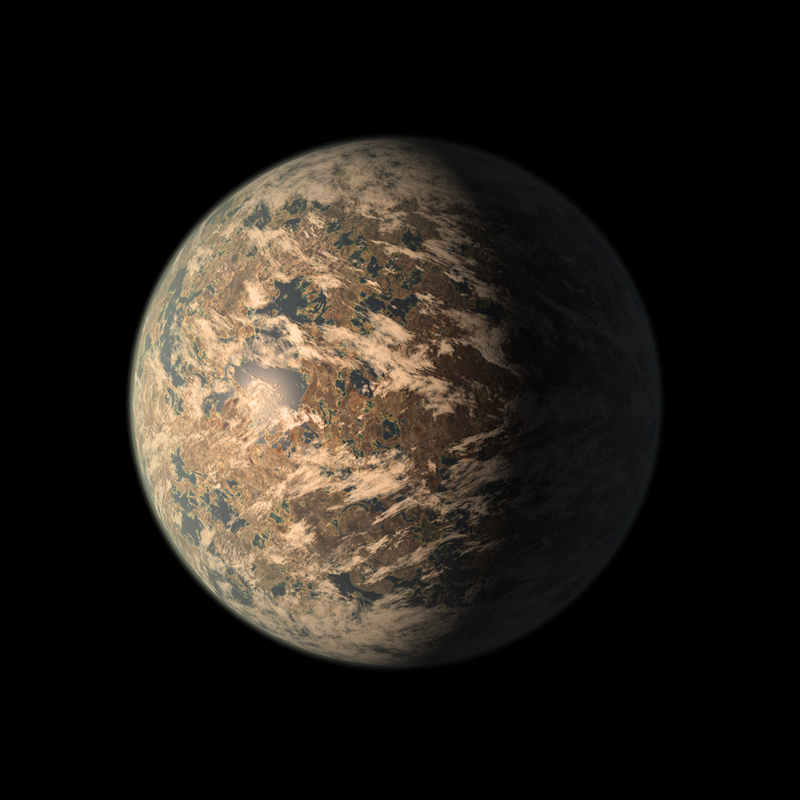
TRAPPIST-1e
TRAPPIST-1e is a close-to-Earth-sized exoplanet orbiting within the habitable zone of the ultracool dwarf star TRAPPIST-1, located 40.7 light-years away from Earth in the constellation of Aquarius.
## Overview
TRAPPIST-1e is one of seven Earth-sized planets discovered orbiting the ultracool dwarf star TRAPPIST-1, located in the constellation of Aquarius. The star, a type of **M-dwarf**, is about 8% the mass of the Sun and has a surface temperature of around 2,500 Kelvin (4,000°F). The TRAPPIST-1 system is of great interest to astronomers due to its proximity to Earth and the presence of multiple planets in the habitable zone, where liquid water could exist on their surfaces.
The discovery of TRAPPIST-1e and its siblings was announced in 2017 by a team of astronomers using the **Spitzer Space Telescope**. The team used the transit method to detect the planets, which involves measuring the dimming of a star as a planet passes in front of it. This technique allows astronomers to infer the presence of a planet and its size, but not its mass or composition.
## History/Background
The discovery of TRAPPIST-1e is a result of a long-term monitoring campaign of the TRAPPIST-1 star by the Spitzer Space Telescope. The telescope was designed to study the infrared radiation emitted by cool stars, and it was used to search for planets orbiting TRAPPIST-1. The team of astronomers, led by Dr. Michaël Gillon, used a technique called the "transit method" to detect the planets. This method involves measuring the dimming of a star as a planet passes in front of it, which allows astronomers to infer the presence of a planet and its size.
## Key Information
- **Size**: TRAPPIST-1e is approximately 0.92 times the size of Earth, making it a close-to-Earth-sized exoplanet.
- **Mass**: The mass of TRAPPIST-1e is not directly known, but it is estimated to be around 0.9 times the mass of Earth.
- **Orbital Period**: TRAPPIST-1e orbits its star every 6.1 days, which is relatively close to the star.
- **Surface Temperature**: The surface temperature of TRAPPIST-1e is estimated to be around 0°C (32°F), which is close to the freezing point of water.
- **Habitability**: TRAPPIST-1e is considered a potentially habitable exoplanet due to its location in the habitable zone and its size, which suggests that it may have a solid surface.
## Significance
The discovery of TRAPPIST-1e and its siblings has significant implications for the search for life beyond Earth. The presence of multiple planets in the habitable zone of TRAPPIST-1 increases the likelihood of finding life on one of these planets. Additionally, the study of TRAPPIST-1e and its siblings provides valuable insights into the formation and evolution of planetary systems.
INFOBOX:
- Name: TRAPPIST-1e
- Type: Rocky exoplanet
- Date: Announced in 2017
- Location: TRAPPIST-1 system, 40.7 light-years away from Earth in the constellation of Aquarius
- Known For: Potentially habitable exoplanet in the TRAPPIST-1 system
TAGS: TRAPPIST-1, exoplanet, habitable zone, rocky planet, Spitzer Space Telescope, transit method, ultracool dwarf star, M-dwarf, planetary system, astrobiology, astronomy.
Space & Astronomy
Microlensing Events
**Microlensing events** are a phenomenon in astrophysics where the gravitational field of a compact object, such as a star or a black hole, bends and amplifies the light from a background source, creating a temporary and detectable brightening effect.
## Overview
Microlensing events are a fascinating area of study in astrophysics, offering a unique window into the universe's hidden populations of compact objects. The concept of microlensing was first proposed by the French astrophysicist Bernard Paczynski in 1986, and since then, it has become a powerful tool for detecting and characterizing these elusive objects. Microlensing occurs when the gravitational field of a compact object, such as a star or a black hole, bends and amplifies the light from a background source, creating a temporary and detectable brightening effect.
The microlensing effect is a result of the bending of light around a massive object, a phenomenon predicted by **Albert Einstein**'s theory of general relativity. When a background source, such as a star or a galaxy, passes close to a compact object, the object's gravity causes the light from the source to be bent and focused onto a smaller area, creating a magnified image. This magnification can be thousands of times stronger than the original light, making it possible to detect the microlensing event even if the compact object is too faint to be seen directly.
## History/Background
The concept of microlensing was first proposed by Bernard Paczynski in 1986, as a way to detect and study the populations of compact objects in the galaxy. Paczynski realized that microlensing could be used to detect the presence of dark matter, a type of matter that does not emit, absorb, or reflect any electromagnetic radiation, making it invisible to our telescopes. He proposed that microlensing could be used to detect the gravitational lensing effect caused by dark matter, which would create a temporary and detectable brightening effect on the background source.
Since Paczynski's proposal, microlensing has become a popular area of research in astrophysics. The first microlensing event was detected in 1993, and since then, hundreds of events have been detected and studied. The most notable microlensing event was the **MACHO-1A** event, which was detected in 1993 and was the first microlensing event to be observed and studied in detail.
## Key Information
Microlensing events are characterized by several key features:
* **Duration**: Microlensing events typically last for several weeks or months, depending on the mass of the compact object and the distance between the object and the background source.
* **Amplification**: The amplification of the background source can be thousands of times stronger than the original light, making it possible to detect the microlensing event even if the compact object is too faint to be seen directly.
* **Eccentricity**: The shape of the microlensing event can be used to determine the eccentricity of the compact object's orbit.
* **Mass**: The mass of the compact object can be determined by measuring the duration and amplification of the microlensing event.
## Significance
Microlensing events have significant implications for our understanding of the universe. They offer a unique window into the populations of compact objects in the galaxy, including dark matter, which is thought to make up approximately 85% of the universe's mass. Microlensing events can also be used to study the properties of compact objects, such as their mass and eccentricity.
INFOBOX:
- Name: Microlensing Event
- Type: Astrophysical Phenomenon
- Date: 1986 (proposed by Bernard Paczynski)
- Location: Galaxy
- Known For: Detection of compact objects, including dark matter
TAGS: **Microlensing**, **Astrophysics**, **Gravitational Lensing**, **Dark Matter**, **Compact Objects**, **General Relativity**, **Einstein**, **Paczynski**, **MACHO-1A**
Space & Astronomy
TRAPPIST-1e
TRAPPIST-1e is a close-to-Earth-sized exoplanet orbiting within the habitable zone of the ultracool dwarf star TRAPPIST-1, located 40.7 light-years away from Earth in the constellation of Aquarius.
## Overview
TRAPPIST-1e is one of seven Earth-sized planets discovered orbiting the ultracool dwarf star TRAPPIST-1, located in the constellation of Aquarius. The star, a type of **M-dwarf**, is about 8% the mass of the Sun and has a surface temperature of around 2,500 Kelvin (4,000°F). The TRAPPIST-1 system is of great interest to astronomers due to its proximity to Earth and the presence of multiple planets in the habitable zone, where liquid water could exist on their surfaces.
The discovery of TRAPPIST-1e and its siblings was announced in 2017 by a team of astronomers using the **Spitzer Space Telescope**. The team used the transit method to detect the planets, which involves measuring the dimming of a star as a planet passes in front of it. This technique allows astronomers to infer the presence of a planet and its size, but not its mass or composition.
## History/Background
The discovery of TRAPPIST-1e is a result of a long-term monitoring campaign of the TRAPPIST-1 star by the Spitzer Space Telescope. The telescope was designed to study the infrared radiation emitted by cool stars, and it was used to search for planets orbiting TRAPPIST-1. The team of astronomers, led by Dr. Michaël Gillon, used a technique called the "transit method" to detect the planets. This method involves measuring the dimming of a star as a planet passes in front of it, which allows astronomers to infer the presence of a planet and its size.
## Key Information
- **Size**: TRAPPIST-1e is approximately 0.92 times the size of Earth, making it a close-to-Earth-sized exoplanet.
- **Mass**: The mass of TRAPPIST-1e is not directly known, but it is estimated to be around 0.9 times the mass of Earth.
- **Orbital Period**: TRAPPIST-1e orbits its star every 6.1 days, which is relatively close to the star.
- **Surface Temperature**: The surface temperature of TRAPPIST-1e is estimated to be around 0°C (32°F), which is close to the freezing point of water.
- **Habitability**: TRAPPIST-1e is considered a potentially habitable exoplanet due to its location in the habitable zone and its size, which suggests that it may have a solid surface.
## Significance
The discovery of TRAPPIST-1e and its siblings has significant implications for the search for life beyond Earth. The presence of multiple planets in the habitable zone of TRAPPIST-1 increases the likelihood of finding life on one of these planets. Additionally, the study of TRAPPIST-1e and its siblings provides valuable insights into the formation and evolution of planetary systems.
INFOBOX:
- Name: TRAPPIST-1e
- Type: Rocky exoplanet
- Date: Announced in 2017
- Location: TRAPPIST-1 system, 40.7 light-years away from Earth in the constellation of Aquarius
- Known For: Potentially habitable exoplanet in the TRAPPIST-1 system
TAGS: TRAPPIST-1, exoplanet, habitable zone, rocky planet, Spitzer Space Telescope, transit method, ultracool dwarf star, M-dwarf, planetary system, astrobiology, astronomy.
Space & Astronomy
Microlensing Events
**Microlensing events** are a phenomenon in astrophysics where the gravitational field of a compact object, such as a star or a black hole, bends and amplifies the light from a background source, creating a temporary and detectable brightening effect.
## Overview
Microlensing events are a fascinating area of study in astrophysics, offering a unique window into the universe's hidden populations of compact objects. The concept of microlensing was first proposed by the French astrophysicist Bernard Paczynski in 1986, and since then, it has become a powerful tool for detecting and characterizing these elusive objects. Microlensing occurs when the gravitational field of a compact object, such as a star or a black hole, bends and amplifies the light from a background source, creating a temporary and detectable brightening effect.
The microlensing effect is a result of the bending of light around a massive object, a phenomenon predicted by **Albert Einstein**'s theory of general relativity. When a background source, such as a star or a galaxy, passes close to a compact object, the object's gravity causes the light from the source to be bent and focused onto a smaller area, creating a magnified image. This magnification can be thousands of times stronger than the original light, making it possible to detect the microlensing event even if the compact object is too faint to be seen directly.
## History/Background
The concept of microlensing was first proposed by Bernard Paczynski in 1986, as a way to detect and study the populations of compact objects in the galaxy. Paczynski realized that microlensing could be used to detect the presence of dark matter, a type of matter that does not emit, absorb, or reflect any electromagnetic radiation, making it invisible to our telescopes. He proposed that microlensing could be used to detect the gravitational lensing effect caused by dark matter, which would create a temporary and detectable brightening effect on the background source.
Since Paczynski's proposal, microlensing has become a popular area of research in astrophysics. The first microlensing event was detected in 1993, and since then, hundreds of events have been detected and studied. The most notable microlensing event was the **MACHO-1A** event, which was detected in 1993 and was the first microlensing event to be observed and studied in detail.
## Key Information
Microlensing events are characterized by several key features:
* **Duration**: Microlensing events typically last for several weeks or months, depending on the mass of the compact object and the distance between the object and the background source.
* **Amplification**: The amplification of the background source can be thousands of times stronger than the original light, making it possible to detect the microlensing event even if the compact object is too faint to be seen directly.
* **Eccentricity**: The shape of the microlensing event can be used to determine the eccentricity of the compact object's orbit.
* **Mass**: The mass of the compact object can be determined by measuring the duration and amplification of the microlensing event.
## Significance
Microlensing events have significant implications for our understanding of the universe. They offer a unique window into the populations of compact objects in the galaxy, including dark matter, which is thought to make up approximately 85% of the universe's mass. Microlensing events can also be used to study the properties of compact objects, such as their mass and eccentricity.
INFOBOX:
- Name: Microlensing Event
- Type: Astrophysical Phenomenon
- Date: 1986 (proposed by Bernard Paczynski)
- Location: Galaxy
- Known For: Detection of compact objects, including dark matter
TAGS: **Microlensing**, **Astrophysics**, **Gravitational Lensing**, **Dark Matter**, **Compact Objects**, **General Relativity**, **Einstein**, **Paczynski**, **MACHO-1A**
 Space & Astronomy
Proxima Centauri B
Proxima Centauri b is a potentially habitable exoplanet orbiting within the habitable zone of the red dwarf star Proxima Centauri, located approximately 4.2 light-years from Earth.
## Overview
Proxima Centauri b is an exoplanet that has garnered significant attention from the scientific community and the general public alike due to its proximity to Earth and potential habitability. The exoplanet orbits within the habitable zone of Proxima Centauri, a small, cool red dwarf star that is part of the larger triple star system Alpha Centauri. This system, consisting of Proxima Centauri, Alpha Centauri A, and Alpha Centauri B, is the closest star system to the Sun.
Proxima Centauri b was discovered in 2016 by a team of astronomers using the radial velocity method, which involves measuring the star's subtle wobble caused by the gravitational pull of an orbiting planet. The discovery was announced on August 25, 2016, and sparked widespread interest in the possibility of life beyond Earth. The exoplanet's discovery has also raised questions about the potential for interstellar travel and the search for extraterrestrial intelligence (SETI).
## History/Background
The search for exoplanets has been an active area of research for several decades, with the first exoplanet discovery dating back to 1992. However, the discovery of Proxima Centauri b marked a significant milestone in the field, as it is the closest known exoplanet to the Solar System. The discovery was made possible by advances in telescope technology and the development of new detection methods, such as the radial velocity method.
Proxima Centauri, the host star of Proxima Centauri b, has been studied extensively in the past due to its proximity to Earth and its potential for hosting a habitable exoplanet. In the 1980s, astronomers began to suspect that Proxima Centauri might be a good candidate for hosting an exoplanet due to its small size and cool temperature, which would make it more likely to have a stable planetary system.
## Key Information
Proxima Centauri b is a terrestrial exoplanet with a mass similar to that of Earth, approximately 1.3 times the mass of our planet. Its radius is estimated to be around 1.1 times the radius of Earth, suggesting that it may be a rocky world with a solid surface. The exoplanet orbits its host star at a distance of approximately 0.05 astronomical units (AU), which is within the habitable zone where liquid water could potentially exist on its surface.
The surface temperature of Proxima Centauri b is estimated to be around -10°C to 30°C (-14°F to 86°F), which is similar to the temperature range of Earth. However, the exoplanet's atmosphere is likely to be very different from Earth's, with a strong greenhouse effect due to the presence of methane and other gases. This could lead to a runaway greenhouse effect, making the surface temperature of Proxima Centauri b much warmer than Earth's.
## Significance
The discovery of Proxima Centauri b has significant implications for the search for life beyond Earth. The exoplanet's proximity to Earth and its potential habitability make it an attractive target for future studies. The discovery also raises questions about the possibility of interstellar travel and the search for extraterrestrial intelligence (SETI).
The discovery of Proxima Centauri b has also sparked interest in the development of new technologies for detecting exoplanets and studying their atmospheres. The exoplanet's discovery has also raised questions about the potential for life on other planets in the Alpha Centauri system, including the possibility of life on Proxima Centauri's companion planets, Proxima d and Proxima c.
INFOBOX:
- Name: Proxima Centauri b
- Type: Terrestrial exoplanet
- Date: August 25, 2016
- Location: Alpha Centauri system
- Known For: Closest known exoplanet to the Solar System, potential habitability
TAGS: Proxima Centauri, exoplanet, habitable zone, radial velocity method, Alpha Centauri, interstellar travel, SETI, astrobiology, planetary science.
Space & Astronomy
Rotating Radio Transients
Rotating Radio Transients (RRATs) are a class of **pulsars** that emit brief, intense pulses of radio waves, which can be detected by radio telescopes.
## Overview
Rotating Radio Transients (RRATs) are a fascinating class of **neutron stars** that have been discovered in recent years. These objects are known for their unique behavior of emitting brief, intense pulses of radio waves, which can be detected by radio telescopes. RRATs are thought to be **magnetars**, a type of neutron star with extremely strong magnetic fields, which are responsible for the emission of these pulses. The discovery of RRATs has opened up new avenues of research in the field of **astrophysics**, particularly in the study of neutron stars and their behavior.
RRATs are distinct from other types of neutron stars, such as **pulsars**, which emit regular pulses of radiation as they rotate. RRATs, on the other hand, emit brief, intense pulses of radiation, which can be detected for only a short period of time. This unique behavior makes RRATs challenging to detect and study, but also provides valuable insights into the properties of these enigmatic objects.
The study of RRATs has also led to the discovery of new types of **transient events**, which are brief, intense phenomena that occur in the universe. These events can provide valuable insights into the behavior of neutron stars and other objects in the universe.
## History/Background
The discovery of RRATs is a relatively recent development in the field of **astrophysics**. The first RRAT was discovered in 2006 by a team of astronomers using the **Parkes Radio Telescope** in Australia. Since then, several other RRATs have been discovered, using a variety of radio telescopes around the world.
The discovery of RRATs has been made possible by advances in **radio astronomy** and the development of new detection techniques. These techniques allow astronomers to detect brief, intense pulses of radiation, which would otherwise be lost in the noise of the radio telescope.
## Key Information
* RRATs are a class of **neutron stars** that emit brief, intense pulses of radio waves.
* RRATs are thought to be **magnetars**, a type of neutron star with extremely strong magnetic fields.
* RRATs emit brief, intense pulses of radiation, which can be detected for only a short period of time.
* RRATs are distinct from other types of neutron stars, such as **pulsars**, which emit regular pulses of radiation.
* RRATs are challenging to detect and study, but provide valuable insights into the properties of neutron stars.
## Significance
The discovery of RRATs has significant implications for our understanding of neutron stars and their behavior. RRATs provide valuable insights into the properties of these enigmatic objects, including their magnetic fields, rotation rates, and emission mechanisms.
The study of RRATs has also led to the discovery of new types of **transient events**, which are brief, intense phenomena that occur in the universe. These events can provide valuable insights into the behavior of neutron stars and other objects in the universe.
INFOBOX:
- Name: Rotating Radio Transients
- Type: Neutron stars
- Date: 2006 (first discovery)
- Location: Various locations in the universe
- Known For: Unique behavior of emitting brief, intense pulses of radio waves
TAGS: **Neutron stars**, **Pulsars**, **Magnetars**, **Radio astronomy**, **Astrophysics**, **Transient events**, **Pulsar astronomy**, **Neutron star physics**
Space & Astronomy
Uranus Orbiter Probe
The Uranus Orbiter Probe is a planned NASA mission aimed at exploring the seventh planet in our solar system, **Uranus**, in the mid-2020s.
## Overview
The Uranus Orbiter Probe is a NASA mission designed to study the seventh planet in our solar system, **Uranus**. The mission is part of NASA's **Explorers Program**, which focuses on conducting scientific research in the fields of space and aeronautics. The Uranus Orbiter Probe is expected to launch in the mid-2020s and will take approximately 12 years to reach **Uranus**. Once in orbit, the spacecraft will begin its scientific observations, providing valuable insights into the planet's atmosphere, magnetic field, and moons.
The Uranus Orbiter Probe is a significant mission for NASA, as it will be the first time a spacecraft has visited **Uranus** since the **Voyager 2** flyby in 1986. The mission will also provide scientists with a unique opportunity to study the planet's unique rotation axis, which is tilted at 98 degrees, resulting in extreme seasons on the planet. This tilt also leads to unusual features such as the **Uranus**'s magnetic field, which is highly offset from the planet's center.
## History/Background
The concept of a Uranus Orbiter Probe mission dates back to the 1990s, when NASA first considered sending a spacecraft to the planet. However, due to budget constraints and the complexity of the mission, it was put on hold. In 2019, NASA announced the selection of the Uranus Orbiter Probe as one of the next-generation **Explorers Program** missions. The mission is currently in the development phase, with NASA working closely with its industry partners to design and build the spacecraft.
## Key Information
The Uranus Orbiter Probe is designed to study the planet's atmosphere, magnetic field, and moons. The spacecraft will be equipped with a range of scientific instruments, including:
* **Magnetometer**: to study the planet's magnetic field and its interaction with the solar wind
* **Infrared Spectrometer**: to study the planet's atmosphere and its composition
* **Imaging System**: to capture high-resolution images of the planet and its moons
* **Radio Science**: to study the planet's interior and its rotation
The spacecraft will also be equipped with a **Gravity Science** instrument, which will allow scientists to study the planet's interior and its gravitational field.
## Significance
The Uranus Orbiter Probe mission is significant for several reasons:
* **Scientific Discovery**: The mission will provide scientists with a wealth of new information about the planet's atmosphere, magnetic field, and moons.
* **Technological Advancements**: The mission will push the boundaries of space exploration technology, with the development of new instruments and spacecraft systems.
* **Inspiration**: The mission will inspire a new generation of scientists and engineers, who will be fascinated by the opportunity to explore a new and mysterious world.
INFOBOX:
- Name: Uranus Orbiter Probe
- Type: Spacecraft
- Date: 2025 (launch)
- Location: **Uranus** (target)
- Known For: First spacecraft to visit **Uranus** since **Voyager 2** flyby in 1986
TAGS: **Uranus**, NASA, Explorers Program, Spacecraft, Space Exploration, Astronomy, Planetary Science, Magnetometer, Infrared Spectrometer, Imaging System, Radio Science, Gravity Science.
Space & Astronomy
Proxima Centauri B
Proxima Centauri b is a potentially habitable exoplanet orbiting within the habitable zone of the red dwarf star Proxima Centauri, located approximately 4.2 light-years from Earth.
## Overview
Proxima Centauri b is an exoplanet that has garnered significant attention from the scientific community and the general public alike due to its proximity to Earth and potential habitability. The exoplanet orbits within the habitable zone of Proxima Centauri, a small, cool red dwarf star that is part of the larger triple star system Alpha Centauri. This system, consisting of Proxima Centauri, Alpha Centauri A, and Alpha Centauri B, is the closest star system to the Sun.
Proxima Centauri b was discovered in 2016 by a team of astronomers using the radial velocity method, which involves measuring the star's subtle wobble caused by the gravitational pull of an orbiting planet. The discovery was announced on August 25, 2016, and sparked widespread interest in the possibility of life beyond Earth. The exoplanet's discovery has also raised questions about the potential for interstellar travel and the search for extraterrestrial intelligence (SETI).
## History/Background
The search for exoplanets has been an active area of research for several decades, with the first exoplanet discovery dating back to 1992. However, the discovery of Proxima Centauri b marked a significant milestone in the field, as it is the closest known exoplanet to the Solar System. The discovery was made possible by advances in telescope technology and the development of new detection methods, such as the radial velocity method.
Proxima Centauri, the host star of Proxima Centauri b, has been studied extensively in the past due to its proximity to Earth and its potential for hosting a habitable exoplanet. In the 1980s, astronomers began to suspect that Proxima Centauri might be a good candidate for hosting an exoplanet due to its small size and cool temperature, which would make it more likely to have a stable planetary system.
## Key Information
Proxima Centauri b is a terrestrial exoplanet with a mass similar to that of Earth, approximately 1.3 times the mass of our planet. Its radius is estimated to be around 1.1 times the radius of Earth, suggesting that it may be a rocky world with a solid surface. The exoplanet orbits its host star at a distance of approximately 0.05 astronomical units (AU), which is within the habitable zone where liquid water could potentially exist on its surface.
The surface temperature of Proxima Centauri b is estimated to be around -10°C to 30°C (-14°F to 86°F), which is similar to the temperature range of Earth. However, the exoplanet's atmosphere is likely to be very different from Earth's, with a strong greenhouse effect due to the presence of methane and other gases. This could lead to a runaway greenhouse effect, making the surface temperature of Proxima Centauri b much warmer than Earth's.
## Significance
The discovery of Proxima Centauri b has significant implications for the search for life beyond Earth. The exoplanet's proximity to Earth and its potential habitability make it an attractive target for future studies. The discovery also raises questions about the possibility of interstellar travel and the search for extraterrestrial intelligence (SETI).
The discovery of Proxima Centauri b has also sparked interest in the development of new technologies for detecting exoplanets and studying their atmospheres. The exoplanet's discovery has also raised questions about the potential for life on other planets in the Alpha Centauri system, including the possibility of life on Proxima Centauri's companion planets, Proxima d and Proxima c.
INFOBOX:
- Name: Proxima Centauri b
- Type: Terrestrial exoplanet
- Date: August 25, 2016
- Location: Alpha Centauri system
- Known For: Closest known exoplanet to the Solar System, potential habitability
TAGS: Proxima Centauri, exoplanet, habitable zone, radial velocity method, Alpha Centauri, interstellar travel, SETI, astrobiology, planetary science.
Space & Astronomy
Rotating Radio Transients
Rotating Radio Transients (RRATs) are a class of **pulsars** that emit brief, intense pulses of radio waves, which can be detected by radio telescopes.
## Overview
Rotating Radio Transients (RRATs) are a fascinating class of **neutron stars** that have been discovered in recent years. These objects are known for their unique behavior of emitting brief, intense pulses of radio waves, which can be detected by radio telescopes. RRATs are thought to be **magnetars**, a type of neutron star with extremely strong magnetic fields, which are responsible for the emission of these pulses. The discovery of RRATs has opened up new avenues of research in the field of **astrophysics**, particularly in the study of neutron stars and their behavior.
RRATs are distinct from other types of neutron stars, such as **pulsars**, which emit regular pulses of radiation as they rotate. RRATs, on the other hand, emit brief, intense pulses of radiation, which can be detected for only a short period of time. This unique behavior makes RRATs challenging to detect and study, but also provides valuable insights into the properties of these enigmatic objects.
The study of RRATs has also led to the discovery of new types of **transient events**, which are brief, intense phenomena that occur in the universe. These events can provide valuable insights into the behavior of neutron stars and other objects in the universe.
## History/Background
The discovery of RRATs is a relatively recent development in the field of **astrophysics**. The first RRAT was discovered in 2006 by a team of astronomers using the **Parkes Radio Telescope** in Australia. Since then, several other RRATs have been discovered, using a variety of radio telescopes around the world.
The discovery of RRATs has been made possible by advances in **radio astronomy** and the development of new detection techniques. These techniques allow astronomers to detect brief, intense pulses of radiation, which would otherwise be lost in the noise of the radio telescope.
## Key Information
* RRATs are a class of **neutron stars** that emit brief, intense pulses of radio waves.
* RRATs are thought to be **magnetars**, a type of neutron star with extremely strong magnetic fields.
* RRATs emit brief, intense pulses of radiation, which can be detected for only a short period of time.
* RRATs are distinct from other types of neutron stars, such as **pulsars**, which emit regular pulses of radiation.
* RRATs are challenging to detect and study, but provide valuable insights into the properties of neutron stars.
## Significance
The discovery of RRATs has significant implications for our understanding of neutron stars and their behavior. RRATs provide valuable insights into the properties of these enigmatic objects, including their magnetic fields, rotation rates, and emission mechanisms.
The study of RRATs has also led to the discovery of new types of **transient events**, which are brief, intense phenomena that occur in the universe. These events can provide valuable insights into the behavior of neutron stars and other objects in the universe.
INFOBOX:
- Name: Rotating Radio Transients
- Type: Neutron stars
- Date: 2006 (first discovery)
- Location: Various locations in the universe
- Known For: Unique behavior of emitting brief, intense pulses of radio waves
TAGS: **Neutron stars**, **Pulsars**, **Magnetars**, **Radio astronomy**, **Astrophysics**, **Transient events**, **Pulsar astronomy**, **Neutron star physics**
Space & Astronomy
Uranus Orbiter Probe
The Uranus Orbiter Probe is a planned NASA mission aimed at exploring the seventh planet in our solar system, **Uranus**, in the mid-2020s.
## Overview
The Uranus Orbiter Probe is a NASA mission designed to study the seventh planet in our solar system, **Uranus**. The mission is part of NASA's **Explorers Program**, which focuses on conducting scientific research in the fields of space and aeronautics. The Uranus Orbiter Probe is expected to launch in the mid-2020s and will take approximately 12 years to reach **Uranus**. Once in orbit, the spacecraft will begin its scientific observations, providing valuable insights into the planet's atmosphere, magnetic field, and moons.
The Uranus Orbiter Probe is a significant mission for NASA, as it will be the first time a spacecraft has visited **Uranus** since the **Voyager 2** flyby in 1986. The mission will also provide scientists with a unique opportunity to study the planet's unique rotation axis, which is tilted at 98 degrees, resulting in extreme seasons on the planet. This tilt also leads to unusual features such as the **Uranus**'s magnetic field, which is highly offset from the planet's center.
## History/Background
The concept of a Uranus Orbiter Probe mission dates back to the 1990s, when NASA first considered sending a spacecraft to the planet. However, due to budget constraints and the complexity of the mission, it was put on hold. In 2019, NASA announced the selection of the Uranus Orbiter Probe as one of the next-generation **Explorers Program** missions. The mission is currently in the development phase, with NASA working closely with its industry partners to design and build the spacecraft.
## Key Information
The Uranus Orbiter Probe is designed to study the planet's atmosphere, magnetic field, and moons. The spacecraft will be equipped with a range of scientific instruments, including:
* **Magnetometer**: to study the planet's magnetic field and its interaction with the solar wind
* **Infrared Spectrometer**: to study the planet's atmosphere and its composition
* **Imaging System**: to capture high-resolution images of the planet and its moons
* **Radio Science**: to study the planet's interior and its rotation
The spacecraft will also be equipped with a **Gravity Science** instrument, which will allow scientists to study the planet's interior and its gravitational field.
## Significance
The Uranus Orbiter Probe mission is significant for several reasons:
* **Scientific Discovery**: The mission will provide scientists with a wealth of new information about the planet's atmosphere, magnetic field, and moons.
* **Technological Advancements**: The mission will push the boundaries of space exploration technology, with the development of new instruments and spacecraft systems.
* **Inspiration**: The mission will inspire a new generation of scientists and engineers, who will be fascinated by the opportunity to explore a new and mysterious world.
INFOBOX:
- Name: Uranus Orbiter Probe
- Type: Spacecraft
- Date: 2025 (launch)
- Location: **Uranus** (target)
- Known For: First spacecraft to visit **Uranus** since **Voyager 2** flyby in 1986
TAGS: **Uranus**, NASA, Explorers Program, Spacecraft, Space Exploration, Astronomy, Planetary Science, Magnetometer, Infrared Spectrometer, Imaging System, Radio Science, Gravity Science.
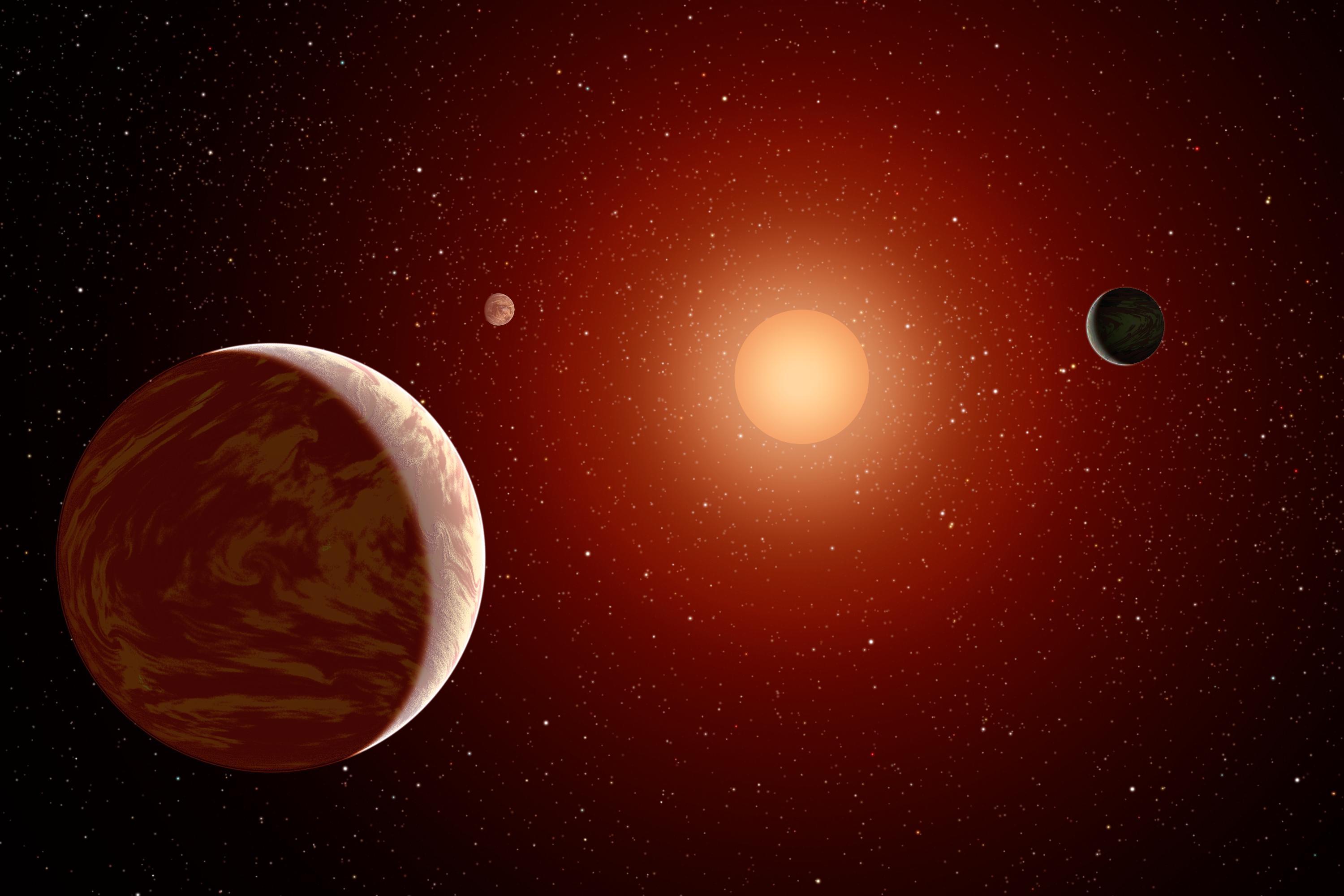 Space & Astronomy
Wolf 1061c
Wolf 1061c is a super-Earth exoplanet orbiting within the habitable zone of the red dwarf star Wolf 1061, offering a promising candidate for hosting liquid water and potentially supporting life.
## Overview
Wolf 1061c is an exoplanet that has garnered significant attention in the scientific community due to its proximity to Earth and its potential for hosting life. Located in the constellation Ophiuchus, approximately 14.1 light-years from our planet, Wolf 1061c orbits its host star, Wolf 1061, a small, cool red dwarf star. This exoplanet is part of a triple planetary system, with two other planets, Wolf 1061b and Wolf 1061d, also orbiting the star. Wolf 1061c is classified as a super-Earth exoplanet, with a mass between that of Earth and the ice giants, such as Uranus and Neptune.
The discovery of Wolf 1061c was announced in 2015 by a team of astronomers using the radial velocity method to detect the planet's presence. This method involves measuring the star's subtle wobbling motion caused by the gravitational pull of the orbiting planet. The team, led by Dr. Paul Robertson, used the Anglo-Australian Telescope and the Magellan Telescopes to make the detection. The orbital period of Wolf 1061c is approximately 17.9 days, which is relatively short compared to Earth's 365.25 days.
## History/Background
The search for exoplanets has been an ongoing effort in the field of astrophysics for several decades. The first exoplanet was discovered in 1992, and since then, thousands of exoplanets have been detected. The radial velocity method, used to detect Wolf 1061c, was one of the first techniques employed to search for exoplanets. This method has been instrumental in the discovery of many exoplanets, including those in the habitable zones of their host stars.
The discovery of Wolf 1061c was significant not only because of its proximity to Earth but also because of its potential for hosting liquid water. The habitable zone, also known as the Goldilocks zone, is the region around a star where temperatures are just right for liquid water to exist on a planet's surface. Wolf 1061c's orbit within this zone makes it an attractive candidate for supporting life.
## Key Information
- **Mass**: Wolf 1061c has a mass of approximately 4.3 times that of Earth.
- **Radius**: The planet's radius is estimated to be around 1.2 times that of Earth.
- **Orbital Period**: The orbital period of Wolf 1061c is approximately 17.9 days.
- **Host Star**: Wolf 1061c orbits the red dwarf star Wolf 1061.
- **Location**: The exoplanet is located in the constellation Ophiuchus, approximately 14.1 light-years from Earth.
## Significance
The discovery of Wolf 1061c highlights the importance of continued exoplanet hunting efforts. The search for life beyond Earth is a driving force behind the study of exoplanets, and Wolf 1061c offers a promising candidate for hosting life. The potential for liquid water on this exoplanet makes it an attractive target for future studies, such as the search for biosignatures or the characterization of the planet's atmosphere.
INFOBOX:
- Name: Wolf 1061c
- Type: Super-Earth exoplanet
- Date: 2015 (discovery)
- Location: Ophiuchus constellation, 14.1 light-years from Earth
- Known For: Potentially habitable exoplanet in the habitable zone of Wolf 1061
TAGS: exoplanet, super-Earth, habitable zone, red dwarf star, Ophiuchus constellation, radial velocity method, astrobiology, life beyond Earth, space exploration.
Space & Astronomy
Earth Planet
Earth is the third planet from the Sun in the **Solar System**, a terrestrial **planet** that supports a diverse range of life forms and is home to a vast array of ecosystems.
## Overview
Earth is a remarkable planet, often referred to as the "Blue Planet" due to its vast oceans that cover approximately 71% of its surface. With a diameter of approximately 12,742 kilometers, Earth is the fifth-largest planet in our **Solar System**. The planet's surface is composed of 29% water, 30% land, and 41% atmosphere, which is essential for life as we know it. Earth's atmosphere is composed of 78% **nitrogen**, 21% **oxygen**, and 1% other gases, making it an ideal environment for a wide variety of life forms to thrive.
Earth's unique combination of atmospheric conditions, liquid water, and a stable **climate** has allowed life to evolve and diversify over billions of years. The planet's **geology** is characterized by vast mountain ranges, deep oceans, and numerous **continents**, which have been shaped by tectonic activity, **weathering**, and **erosion**. Earth's **magnetic field** protects the planet from harmful **solar winds** and **cosmic radiation**, creating a safe haven for life to flourish.
## History/Background
The formation of Earth is believed to have occurred around 4.5 billion years ago, when the **Solar System** was still in its early stages of development. The planet is thought to have formed from a **protoplanetary disk**, a swirling cloud of gas and dust that surrounded the young Sun. Over time, the disk cooled and condensed, eventually giving rise to the formation of the planets, including Earth. The planet's early history was marked by intense **volcanic activity**, which released large amounts of **greenhouse gases** into the atmosphere, leading to a **runaway greenhouse effect** that warmed the planet.
The development of life on Earth is a complex and still somewhat mysterious process. The earliest evidence of life dates back to around 3.5 billion years ago, in the form of **fossilized bacteria**. Over time, life on Earth evolved and diversified, giving rise to a wide range of **ecosystems**, from the simplest **single-celled organisms** to the complex **multicellular organisms** that dominate the planet today.
## Key Information
- **Diameter**: 12,742 kilometers
- **Surface area**: 510 million square kilometers
- **Atmospheric composition**: 78% nitrogen, 21% oxygen, 1% other gases
- **Water coverage**: 71% of the surface
- **Land coverage**: 29% of the surface
- **Continents**: 7 major continents, numerous smaller islands
- **Mountain ranges**: numerous, including the Himalayas, Andes, and Rocky Mountains
- **Ocean currents**: global circulation patterns that play a crucial role in regulating the planet's climate
## Significance
Earth is a unique and precious planet, supporting a vast array of life forms and ecosystems. The planet's **biodiversity** is unparalleled, with an estimated 8.7 million species, of which only 1.3 million have been formally described. Earth's **ecosystems** play a crucial role in regulating the planet's **climate**, producing **oxygen**, and supporting the **water cycle**.
The significance of Earth extends beyond its biological importance. The planet's **geology** has provided a wealth of resources, including **minerals**, **metals**, and **fossil fuels**, which have been exploited by humans to support our civilization. Earth's **atmosphere** has also played a crucial role in regulating the planet's **temperature**, making it possible for life to thrive.
INFOBOX:
- Name: Earth
- Type: Terrestrial planet
- Date: 4.5 billion years ago (formation)
- Location: Third planet from the Sun in the Solar System
- Known For: Supporting a diverse range of life forms and ecosystems
TAGS: Earth, Solar System, planet, terrestrial, geology, climate, biodiversity, ecosystems, atmosphere, oceans, continents, mountain ranges, ocean currents.
Space & Astronomy
Polaris North Star
**Polaris**, also known as the North Star, is the brightest star in the constellation Ursa Minor and serves as the primary navigational aid for determining direction in the Northern Hemisphere.
## Overview
Located approximately 431 light-years from Earth, **Polaris** is a **Multiple Star System** consisting of a primary star, a secondary star, and a companion star. The primary star, a **White Supergiant**, is the brightest in the constellation Ursa Minor and is situated nearly aligned with the Earth's axis of rotation. This alignment makes **Polaris** appear stationary in the night sky while the other stars appear to rotate around it, earning it the nickname "the North Star." **Polaris** has been an essential aid for navigation and orientation for thousands of years, particularly for sailors and travelers in the Northern Hemisphere.
The **Polaris** system is a complex one, with the primary star being a **Cepheid Variable**, meaning its brightness varies in a predictable pattern. This variability is caused by the star's expansion and contraction, which affects its brightness. The secondary star is a **Red Giant**, and the companion star is a **White Dwarf**. The system is also surrounded by a **Circumstellar Disk**, a disk of gas and dust that surrounds the stars.
## History/Background
The ancient Greeks were among the first to recognize the importance of **Polaris** as a navigational aid. The Greek philosopher **Hipparchus** is credited with being the first to identify **Polaris** as the North Star around 150 BCE. The Romans later adopted the use of **Polaris** for navigation, and it became an essential tool for sailors and travelers in the Northern Hemisphere. In the 16th century, the German astronomer **Tycho Brahe** made precise measurements of the position of **Polaris**, which helped to establish its importance as a navigational aid.
## Key Information
- **Polaris** is the brightest star in the constellation Ursa Minor, with a visual magnitude of 2.02.
- The star is approximately 431 light-years from Earth.
- **Polaris** is a **Multiple Star System**, consisting of a primary star, a secondary star, and a companion star.
- The primary star is a **White Supergiant**, with a mass of approximately 4-6 times that of the Sun.
- The secondary star is a **Red Giant**, and the companion star is a **White Dwarf**.
- **Polaris** is surrounded by a **Circumstellar Disk**, a disk of gas and dust that surrounds the stars.
## Significance
The significance of **Polaris** lies in its importance as a navigational aid. For thousands of years, **Polaris** has been used to determine direction in the Northern Hemisphere. The star's alignment with the Earth's axis of rotation makes it appear stationary in the night sky, allowing sailors and travelers to use it as a reference point. **Polaris** has also played a significant role in the development of astronomy, with ancient civilizations recognizing its importance and making precise measurements of its position.
INFOBOX:
- Name: **Polaris** (Alpha Ursae Minoris)
- Type: **Multiple Star System**
- Date: 150 BCE (first identified by **Hipparchus**)
- Location: Ursa Minor constellation
- Known For: Primary navigational aid in the Northern Hemisphere
TAGS: **Polaris**, **North Star**, **Multiple Star System**, **White Supergiant**, **Cepheid Variable**, **Red Giant**, **White Dwarf**, **Circumstellar Disk**, **Navigation**, **Astronomy**
Space & Astronomy
Venus Planet
Venus is the second planet from the **Sun** in our **Solar System**, known for its thick atmosphere and extreme surface conditions.
## Overview
Venus is often referred to as Earth's twin due to its similar size and mass. However, the two planets have distinct differences in their composition, atmosphere, and surface features. The planet's atmosphere is primarily composed of **Carbon Dioxide (CO2)**, which creates a strong **Greenhouse Effect** that traps heat and makes Venus the hottest planet in the Solar System. This extreme heat, combined with crushing pressure, makes Venus one of the most inhospitable places in the universe.
The surface of Venus is hidden beneath a thick layer of sulfuric acid clouds, making it difficult to study. However, NASA's Magellan spacecraft, which orbited Venus from 1990 to 1994, provided valuable information about the planet's surface features. The Magellan mission revealed a vast network of volcanoes, mountains, and valleys, indicating that Venus has a geologically active surface.
## History/Background
The study of Venus dates back to ancient civilizations, with the first recorded observations made by the ancient Greeks. However, it wasn't until the 17th century that Galileo Galilei became the first astronomer to observe Venus using a **Telescope**. Galileo's observations provided evidence for the **Copernican Heliocentric Model**, which placed the Sun at the center of our Solar System.
In the 20th century, NASA's Mariner 2 spacecraft became the first spacecraft to visit Venus in 1962. The spacecraft provided valuable information about the planet's atmosphere and surface temperature. Since then, numerous spacecraft have been sent to study Venus, including the Soviet Union's Venera program and NASA's Magellan mission.
## Key Information
- **Atmosphere**: Venus' atmosphere is primarily composed of CO2, with surface pressure 92 times that of Earth.
- **Surface Temperature**: The average surface temperature on Venus is around 462°C (863°F), making it the hottest planet in the Solar System.
- **Surface Features**: Venus has a vast network of volcanoes, mountains, and valleys, indicating a geologically active surface.
- **Rotation**: Venus rotates in the opposite direction of its orbit around the Sun, a phenomenon known as **Retrograde Rotation**.
- **Moons**: Venus has no natural satellites.
## Significance
Venus is significant for several reasons:
- **Climate Change**: Studying Venus' atmosphere and surface conditions can provide valuable insights into the effects of climate change on Earth.
- **Astrobiology**: The extreme conditions on Venus make it an unlikely candidate for supporting life, but studying the planet can help us better understand the conditions necessary for life to exist elsewhere in the universe.
- **Space Exploration**: Venus is a challenging planet to explore due to its extreme environment, but studying the planet can help us develop technologies and strategies for exploring other hostile environments in the universe.
INFOBOX:
- Name: Venus
- Type: Planet
- Date: 1962 (first spacecraft visit)
- Location: Inner Solar System
- Known For: Hottest planet in the Solar System
TAGS: Venus, Solar System, Planets, Atmosphere, Climate Change, Astrobiology, Space Exploration, Greenhouse Effect
Space & Astronomy
Wolf 1061c
Wolf 1061c is a super-Earth exoplanet orbiting within the habitable zone of the red dwarf star Wolf 1061, offering a promising candidate for hosting liquid water and potentially supporting life.
## Overview
Wolf 1061c is an exoplanet that has garnered significant attention in the scientific community due to its proximity to Earth and its potential for hosting life. Located in the constellation Ophiuchus, approximately 14.1 light-years from our planet, Wolf 1061c orbits its host star, Wolf 1061, a small, cool red dwarf star. This exoplanet is part of a triple planetary system, with two other planets, Wolf 1061b and Wolf 1061d, also orbiting the star. Wolf 1061c is classified as a super-Earth exoplanet, with a mass between that of Earth and the ice giants, such as Uranus and Neptune.
The discovery of Wolf 1061c was announced in 2015 by a team of astronomers using the radial velocity method to detect the planet's presence. This method involves measuring the star's subtle wobbling motion caused by the gravitational pull of the orbiting planet. The team, led by Dr. Paul Robertson, used the Anglo-Australian Telescope and the Magellan Telescopes to make the detection. The orbital period of Wolf 1061c is approximately 17.9 days, which is relatively short compared to Earth's 365.25 days.
## History/Background
The search for exoplanets has been an ongoing effort in the field of astrophysics for several decades. The first exoplanet was discovered in 1992, and since then, thousands of exoplanets have been detected. The radial velocity method, used to detect Wolf 1061c, was one of the first techniques employed to search for exoplanets. This method has been instrumental in the discovery of many exoplanets, including those in the habitable zones of their host stars.
The discovery of Wolf 1061c was significant not only because of its proximity to Earth but also because of its potential for hosting liquid water. The habitable zone, also known as the Goldilocks zone, is the region around a star where temperatures are just right for liquid water to exist on a planet's surface. Wolf 1061c's orbit within this zone makes it an attractive candidate for supporting life.
## Key Information
- **Mass**: Wolf 1061c has a mass of approximately 4.3 times that of Earth.
- **Radius**: The planet's radius is estimated to be around 1.2 times that of Earth.
- **Orbital Period**: The orbital period of Wolf 1061c is approximately 17.9 days.
- **Host Star**: Wolf 1061c orbits the red dwarf star Wolf 1061.
- **Location**: The exoplanet is located in the constellation Ophiuchus, approximately 14.1 light-years from Earth.
## Significance
The discovery of Wolf 1061c highlights the importance of continued exoplanet hunting efforts. The search for life beyond Earth is a driving force behind the study of exoplanets, and Wolf 1061c offers a promising candidate for hosting life. The potential for liquid water on this exoplanet makes it an attractive target for future studies, such as the search for biosignatures or the characterization of the planet's atmosphere.
INFOBOX:
- Name: Wolf 1061c
- Type: Super-Earth exoplanet
- Date: 2015 (discovery)
- Location: Ophiuchus constellation, 14.1 light-years from Earth
- Known For: Potentially habitable exoplanet in the habitable zone of Wolf 1061
TAGS: exoplanet, super-Earth, habitable zone, red dwarf star, Ophiuchus constellation, radial velocity method, astrobiology, life beyond Earth, space exploration.
Space & Astronomy
Earth Planet
Earth is the third planet from the Sun in the **Solar System**, a terrestrial **planet** that supports a diverse range of life forms and is home to a vast array of ecosystems.
## Overview
Earth is a remarkable planet, often referred to as the "Blue Planet" due to its vast oceans that cover approximately 71% of its surface. With a diameter of approximately 12,742 kilometers, Earth is the fifth-largest planet in our **Solar System**. The planet's surface is composed of 29% water, 30% land, and 41% atmosphere, which is essential for life as we know it. Earth's atmosphere is composed of 78% **nitrogen**, 21% **oxygen**, and 1% other gases, making it an ideal environment for a wide variety of life forms to thrive.
Earth's unique combination of atmospheric conditions, liquid water, and a stable **climate** has allowed life to evolve and diversify over billions of years. The planet's **geology** is characterized by vast mountain ranges, deep oceans, and numerous **continents**, which have been shaped by tectonic activity, **weathering**, and **erosion**. Earth's **magnetic field** protects the planet from harmful **solar winds** and **cosmic radiation**, creating a safe haven for life to flourish.
## History/Background
The formation of Earth is believed to have occurred around 4.5 billion years ago, when the **Solar System** was still in its early stages of development. The planet is thought to have formed from a **protoplanetary disk**, a swirling cloud of gas and dust that surrounded the young Sun. Over time, the disk cooled and condensed, eventually giving rise to the formation of the planets, including Earth. The planet's early history was marked by intense **volcanic activity**, which released large amounts of **greenhouse gases** into the atmosphere, leading to a **runaway greenhouse effect** that warmed the planet.
The development of life on Earth is a complex and still somewhat mysterious process. The earliest evidence of life dates back to around 3.5 billion years ago, in the form of **fossilized bacteria**. Over time, life on Earth evolved and diversified, giving rise to a wide range of **ecosystems**, from the simplest **single-celled organisms** to the complex **multicellular organisms** that dominate the planet today.
## Key Information
- **Diameter**: 12,742 kilometers
- **Surface area**: 510 million square kilometers
- **Atmospheric composition**: 78% nitrogen, 21% oxygen, 1% other gases
- **Water coverage**: 71% of the surface
- **Land coverage**: 29% of the surface
- **Continents**: 7 major continents, numerous smaller islands
- **Mountain ranges**: numerous, including the Himalayas, Andes, and Rocky Mountains
- **Ocean currents**: global circulation patterns that play a crucial role in regulating the planet's climate
## Significance
Earth is a unique and precious planet, supporting a vast array of life forms and ecosystems. The planet's **biodiversity** is unparalleled, with an estimated 8.7 million species, of which only 1.3 million have been formally described. Earth's **ecosystems** play a crucial role in regulating the planet's **climate**, producing **oxygen**, and supporting the **water cycle**.
The significance of Earth extends beyond its biological importance. The planet's **geology** has provided a wealth of resources, including **minerals**, **metals**, and **fossil fuels**, which have been exploited by humans to support our civilization. Earth's **atmosphere** has also played a crucial role in regulating the planet's **temperature**, making it possible for life to thrive.
INFOBOX:
- Name: Earth
- Type: Terrestrial planet
- Date: 4.5 billion years ago (formation)
- Location: Third planet from the Sun in the Solar System
- Known For: Supporting a diverse range of life forms and ecosystems
TAGS: Earth, Solar System, planet, terrestrial, geology, climate, biodiversity, ecosystems, atmosphere, oceans, continents, mountain ranges, ocean currents.
Space & Astronomy
Polaris North Star
**Polaris**, also known as the North Star, is the brightest star in the constellation Ursa Minor and serves as the primary navigational aid for determining direction in the Northern Hemisphere.
## Overview
Located approximately 431 light-years from Earth, **Polaris** is a **Multiple Star System** consisting of a primary star, a secondary star, and a companion star. The primary star, a **White Supergiant**, is the brightest in the constellation Ursa Minor and is situated nearly aligned with the Earth's axis of rotation. This alignment makes **Polaris** appear stationary in the night sky while the other stars appear to rotate around it, earning it the nickname "the North Star." **Polaris** has been an essential aid for navigation and orientation for thousands of years, particularly for sailors and travelers in the Northern Hemisphere.
The **Polaris** system is a complex one, with the primary star being a **Cepheid Variable**, meaning its brightness varies in a predictable pattern. This variability is caused by the star's expansion and contraction, which affects its brightness. The secondary star is a **Red Giant**, and the companion star is a **White Dwarf**. The system is also surrounded by a **Circumstellar Disk**, a disk of gas and dust that surrounds the stars.
## History/Background
The ancient Greeks were among the first to recognize the importance of **Polaris** as a navigational aid. The Greek philosopher **Hipparchus** is credited with being the first to identify **Polaris** as the North Star around 150 BCE. The Romans later adopted the use of **Polaris** for navigation, and it became an essential tool for sailors and travelers in the Northern Hemisphere. In the 16th century, the German astronomer **Tycho Brahe** made precise measurements of the position of **Polaris**, which helped to establish its importance as a navigational aid.
## Key Information
- **Polaris** is the brightest star in the constellation Ursa Minor, with a visual magnitude of 2.02.
- The star is approximately 431 light-years from Earth.
- **Polaris** is a **Multiple Star System**, consisting of a primary star, a secondary star, and a companion star.
- The primary star is a **White Supergiant**, with a mass of approximately 4-6 times that of the Sun.
- The secondary star is a **Red Giant**, and the companion star is a **White Dwarf**.
- **Polaris** is surrounded by a **Circumstellar Disk**, a disk of gas and dust that surrounds the stars.
## Significance
The significance of **Polaris** lies in its importance as a navigational aid. For thousands of years, **Polaris** has been used to determine direction in the Northern Hemisphere. The star's alignment with the Earth's axis of rotation makes it appear stationary in the night sky, allowing sailors and travelers to use it as a reference point. **Polaris** has also played a significant role in the development of astronomy, with ancient civilizations recognizing its importance and making precise measurements of its position.
INFOBOX:
- Name: **Polaris** (Alpha Ursae Minoris)
- Type: **Multiple Star System**
- Date: 150 BCE (first identified by **Hipparchus**)
- Location: Ursa Minor constellation
- Known For: Primary navigational aid in the Northern Hemisphere
TAGS: **Polaris**, **North Star**, **Multiple Star System**, **White Supergiant**, **Cepheid Variable**, **Red Giant**, **White Dwarf**, **Circumstellar Disk**, **Navigation**, **Astronomy**
Space & Astronomy
Venus Planet
Venus is the second planet from the **Sun** in our **Solar System**, known for its thick atmosphere and extreme surface conditions.
## Overview
Venus is often referred to as Earth's twin due to its similar size and mass. However, the two planets have distinct differences in their composition, atmosphere, and surface features. The planet's atmosphere is primarily composed of **Carbon Dioxide (CO2)**, which creates a strong **Greenhouse Effect** that traps heat and makes Venus the hottest planet in the Solar System. This extreme heat, combined with crushing pressure, makes Venus one of the most inhospitable places in the universe.
The surface of Venus is hidden beneath a thick layer of sulfuric acid clouds, making it difficult to study. However, NASA's Magellan spacecraft, which orbited Venus from 1990 to 1994, provided valuable information about the planet's surface features. The Magellan mission revealed a vast network of volcanoes, mountains, and valleys, indicating that Venus has a geologically active surface.
## History/Background
The study of Venus dates back to ancient civilizations, with the first recorded observations made by the ancient Greeks. However, it wasn't until the 17th century that Galileo Galilei became the first astronomer to observe Venus using a **Telescope**. Galileo's observations provided evidence for the **Copernican Heliocentric Model**, which placed the Sun at the center of our Solar System.
In the 20th century, NASA's Mariner 2 spacecraft became the first spacecraft to visit Venus in 1962. The spacecraft provided valuable information about the planet's atmosphere and surface temperature. Since then, numerous spacecraft have been sent to study Venus, including the Soviet Union's Venera program and NASA's Magellan mission.
## Key Information
- **Atmosphere**: Venus' atmosphere is primarily composed of CO2, with surface pressure 92 times that of Earth.
- **Surface Temperature**: The average surface temperature on Venus is around 462°C (863°F), making it the hottest planet in the Solar System.
- **Surface Features**: Venus has a vast network of volcanoes, mountains, and valleys, indicating a geologically active surface.
- **Rotation**: Venus rotates in the opposite direction of its orbit around the Sun, a phenomenon known as **Retrograde Rotation**.
- **Moons**: Venus has no natural satellites.
## Significance
Venus is significant for several reasons:
- **Climate Change**: Studying Venus' atmosphere and surface conditions can provide valuable insights into the effects of climate change on Earth.
- **Astrobiology**: The extreme conditions on Venus make it an unlikely candidate for supporting life, but studying the planet can help us better understand the conditions necessary for life to exist elsewhere in the universe.
- **Space Exploration**: Venus is a challenging planet to explore due to its extreme environment, but studying the planet can help us develop technologies and strategies for exploring other hostile environments in the universe.
INFOBOX:
- Name: Venus
- Type: Planet
- Date: 1962 (first spacecraft visit)
- Location: Inner Solar System
- Known For: Hottest planet in the Solar System
TAGS: Venus, Solar System, Planets, Atmosphere, Climate Change, Astrobiology, Space Exploration, Greenhouse Effect