
Wolf 1061c: A Potentially Habitable Exoplanet in the Ophiuchus Constellation
SUMMARY: Wolf 1061c is a super-Earth exoplanet orbiting within the habitable zone of the red dwarf star Wolf 1061, offering a promising candidate for hosting liquid water and potentially supporting life.
Overview
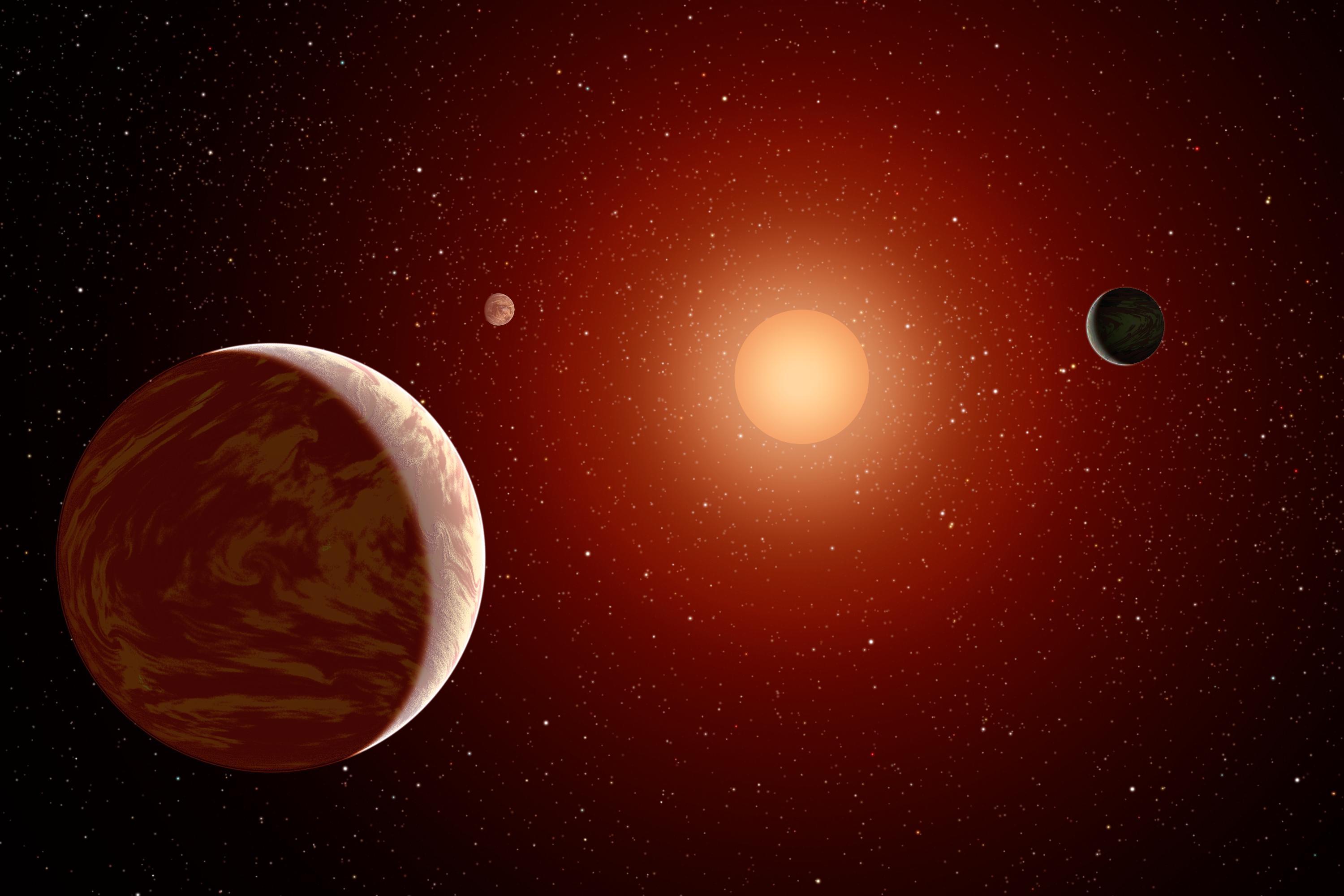
Wolf 1061c is an exoplanet that has garnered significant attention in the scientific community due to its proximity to Earth and its potential for hosting life. Located in the constellation Ophiuchus, approximately 14.1 light-years from our planet, Wolf 1061c orbits its host star, Wolf 1061, a small, cool red dwarf star. This exoplanet is part of a triple planetary system, with two other planets, Wolf 1061b and Wolf 1061d, also orbiting the star. Wolf 1061c is classified as a super-Earth exoplanet, with a mass between that of Earth and the ice giants, such as Uranus and Neptune.
The discovery of Wolf 1061c was announced in 2015 by a team of astronomers using the radial velocity method to detect the planet's presence. This method involves measuring the star's subtle wobbling motion caused by the gravitational pull of the orbiting planet. The team, led by Dr. Paul Robertson, used the Anglo-Australian Telescope and the Magellan Telescopes to make the detection. The orbital period of Wolf 1061c is approximately 17.9 days, which is relatively short compared to Earth's 365.25 days.
History/Background
The search for exoplanets has been an ongoing effort in the field of astrophysics for several decades. The first exoplanet was discovered in 1992, and since then, thousands of exoplanets have been detected. The radial velocity method, used to detect Wolf 1061c, was one of the first techniques employed to search for exoplanets. This method has been instrumental in the discovery of many exoplanets, including those in the habitable zones of their host stars.
The discovery of Wolf 1061c was significant not only because of its proximity to Earth but also because of its potential for hosting liquid water. The habitable zone, also known as the Goldilocks zone, is the region around a star where temperatures are just right for liquid water to exist on a planet's surface. Wolf 1061c's orbit within this zone makes it an attractive candidate for supporting life.
Key Information
- Mass: Wolf 1061c has a mass of approximately 4.3 times that of Earth.
- Radius: The planet's radius is estimated to be around 1.2 times that of Earth.
- Orbital Period: The orbital period of Wolf 1061c is approximately 17.9 days.
- Host Star: Wolf 1061c orbits the red dwarf star Wolf 1061.
- Location: The exoplanet is located in the constellation Ophiuchus, approximately 14.1 light-years from Earth.
Significance
The discovery of Wolf 1061c highlights the importance of continued exoplanet hunting efforts. The search for life beyond Earth is a driving force behind the study of exoplanets, and Wolf 1061c offers a promising candidate for hosting life. The potential for liquid water on this exoplanet makes it an attractive target for future studies, such as the search for biosignatures or the characterization of the planet's atmosphere.
INFOBOX:
- Name: Wolf 1061c
- Type: Super-Earth exoplanet
- Date: 2015 (discovery)
- Location: Ophiuchus constellation, 14.1 light-years from Earth
- Known For: Potentially habitable exoplanet in the habitable zone of Wolf 1061
TAGS: exoplanet, super-Earth, habitable zone, red dwarf star, Ophiuchus constellation, radial velocity method, astrobiology, life beyond Earth, space exploration.