Space & Astronomy

Planets, stars, space missions, astronauts and cosmic phenomena

4,118 articles

47 Tucanae

** 47 Tucanae (47 Tuc) is a massive, bright globular cluster in the southern sky, located about 14,500 light‑years from Earth and spanning roughly 120 light‑years across. **CONTENT:** ## Overview 47 Tucanae, commonly abbreviated **47 Tuc**, is one of the most massive and luminous globular clusters in the Milky Way. Nestled in the constellation **Tucana**, it lies roughly **4.45 ± 0.01 kpc** (≈ 14,500 ± 33 light‑years) from the Sun and presents an angular diameter of about **44 arcminutes**, making it appear almost as large as the full Moon when viewed through a modest telescope. Its integrated apparent magnitude of **4.1** allows it to be seen with the naked eye under dark southern skies, a rarity for globular clusters. The cluster’s physical size—about **120 light‑years** across—contains several hundred thousand stars, densely packed toward the core where stellar interactions are frequent and exotic objects such as millisecond pulsars and blue stragglers thrive. The stellar population of 47 Tuc is old and metal‑rich compared with many other globular clusters, with an estimated age of **≈ 12 billion years** and a metallicity of **[Fe/H] ≈ –0.76**. This relatively high metal content suggests that the cluster formed in a region of the early Milky Way that had already undergone significant chemical enrichment. Its color‑magnitude diagram shows a well‑defined **horizontal branch**, a prominent **red giant branch**, and a substantial number of **blue straggler stars**, indicating ongoing dynamical processes that rejuvenate some stars through binary mergers or mass transfer. Because of its proximity and brightness, 47 Tuc has become a benchmark object for calibrating distance scales, testing stellar evolution models, and probing the dynamics of dense stellar systems. High‑resolution imaging from the **Hubble Space Telescope** and spectroscopy from ground‑based observatories have revealed a complex internal kinematic structure, including evidence for a modest amount of **internal rotation** and a possible intermediate‑mass **black hole** at its core—though the latter remains a topic of active debate. ## History/Background The cluster’s southern declination (**≈ –72°**) placed it beyond the reach of early European astronomers, who catalogued the night sky from mid‑latitude observatories. It was first recorded in the mid‑18th century by the French astronomer **Nicolas‑Louis de Lacaille** during his systematic survey of the southern heavens from the Cape of Good Hope. In **1751–1752**, Lacaille listed the object as **NGC 104** in his catalogue, noting its fuzzy, nebulous appearance. The designation “47 Tucanae” stems from the **John Frederick William Luyten** (J F W) numbering system for southern deep‑sky objects, later incorporated into the **New General Catalogue (NGC)**. Subsequent centuries saw 47 Tuc become a laboratory for astrophysics. In the **1930s**, Walter Baade used it to refine the **period‑luminosity relation** for RR Lyrae variables, establishing a more accurate distance ladder. The advent of **photoelectric photometry** in the 1950s allowed precise measurement of its metallicity and age. The launch of the **Hubble Space Telescope** in 1990 provided unprecedented resolution, revealing the dense core and enabling the discovery of dozens of **millisecond pulsars** in the 1990s—making 47 Tuc the richest known globular cluster in such objects. ## Key Information - **Distance:** 4.45 ± 0.01 kpc (≈ 14,500 ± 33 ly) - **Apparent magnitude:** 4.1 (visible to the naked eye) - **Angular size:** ~44 arcminutes (including outer halo) - **Physical diameter:** ~120 light‑years - **Mass:** ≈ 1 × 10⁶ M☉ (about a million solar masses) - **Age:** ~12 billion years - **Metallicity:** [Fe/H] ≈ –0.76 (relatively metal‑rich) - **Core radius:** ~0.5 pc; **half‑light radius:** ~3.5 pc - **Notable members:** > 20 millisecond pulsars, numerous blue stragglers, several low‑mass X‑ray binaries, and a candidate intermediate‑mass black hole (~2,000 M☉). These parameters make 47 Tuc a cornerstone for studies of **stellar dynamics**, **binary evolution**, and **gravitational wave progenitors** within dense environments. ## Significance 47 Tucanae’s combination of brightness, proximity, and richness renders it a **cosmic Rosetta Stone** for multiple branches of astrophysics. Its well‑populated **horizontal branch** provides a stringent test for stellar evolution codes, while the abundance of **millisecond pulsars** offers insight into the end stages of binary evolution and the recycling of neutron stars. The cluster’s relatively high metallicity challenges early models that assumed all globular clusters were uniformly metal‑poor, prompting revisions to theories of **galactic chemical evolution**. In the realm of **gravitational‑wave astronomy**, the dense core of 47 Tuc is a natural breeding ground for compact binary mergers, potentially contributing to the background of detectable signals. Moreover, the debated presence of an **intermediate‑mass black hole** at its center could illuminate the formation pathways of supermassive black holes in galactic nuclei. Finally, 47 Tuc serves as a cultural touchstone for amateur astronomers in the Southern Hemisphere. Its naked‑eye visibility and striking appearance in modest telescopes make it a popular target for outreach, inspiring the next generation of astronomers and reinforcing the global nature of sky‑watching. **INFOBOX:** - Name: 47 Tucanae (NGC 104) - Type: Globular cluster - Date: First catalogued 1752 (Lacaille) - Location: Constellation Tucana, ~18° from the South Celestial Pole - Known For: One of the brightest, most massive, and nearest globular clusters; rich in millisecond pulsars and blue stragglers **TAGS:** globular cluster, 47 Tucanae, Milky Way, stellar dynamics, millisecond pulsars, blue stragglers, astronomical distance ladder, southern sky

Accretion Disk

Akatsuki Spacecraft

Akatsuki (also known as the Venus Climate Orbiter) is a Japanese space probe launched in 2010 to study the atmospheric dynamics and climate of Venus, ultimately achieving orbit after a dramatic recovery from a failed initial insertion.

Aldebaran Star

Aldebaran is a bright, orange‑hued giant star in the constellation Taurus, serving as a key benchmark for stellar evolution and a cultural icon across millennia.

Alpha Centauri

Altair Star

Andromeda Galaxy

The Andromeda Galaxy (M 31) is a massive barred spiral galaxy, the nearest large galactic neighbor to the Milky Way, located about 2.5 million light‑years away in the constellation Andromeda.

Anomalous X-ray Pulsars

Anomalous X-ray pulsars (AXPs) are a class of isolated neutron stars that exhibit unusual X-ray emission patterns, characterized by intense bursts of radiation and steady emission. ## Overview Anomalous X-ray pulsars (AXPs) are a fascinating subclass of neutron stars that have puzzled astronomers for decades. These enigmatic objects were first discovered in the 1980s and have since been the subject of intense study. AXPs are characterized by their unusual X-ray emission patterns, which include intense bursts of radiation and steady emission. Unlike other neutron stars, AXPs do not have a clear companion star, and their X-ray emission is not powered by accretion. This has led to a range of theories attempting to explain the origin of AXPs, from magnetars to exotic forms of neutron star matter. AXPs are typically found in the galaxy, with the majority located in the Milky Way. They are relatively rare, with only about 20 known AXPs in the galaxy. AXPs are often associated with supernova remnants, suggesting that they may have formed through the collapse of massive stars. However, the exact mechanisms that lead to the formation of AXPs are still not well understood. ## History/Background The discovery of AXPs dates back to the 1980s, when astronomers were conducting surveys of the X-ray sky using the Einstein Observatory. The first AXP was discovered in 1982, and it was initially thought to be a normal neutron star. However, further observations revealed that this object was emitting X-rays at a much higher rate than expected, with bursts of radiation that were thousands of times more intense than the steady emission. This led to the realization that AXPs were a distinct class of neutron stars. In the following years, several more AXPs were discovered, and astronomers began to study these objects in greater detail. The development of new X-ray telescopes, such as the Chandra X-ray Observatory, has allowed for more precise measurements of AXP properties and has revealed new insights into their behavior. ## Key Information AXPs are characterized by their intense bursts of radiation, which can last from seconds to hours. These bursts are thought to be caused by the buildup of magnetic energy in the neutron star's crust, which is then released in a catastrophic event. The steady emission from AXPs is thought to be caused by the decay of this magnetic energy over time. AXPs are also characterized by their slow rotation periods, which range from 5-12 seconds. This is slower than the rotation periods of other neutron stars, which can range from milliseconds to seconds. The slow rotation period of AXPs is thought to be due to the braking action of the magnetic field, which slows down the rotation of the neutron star over time. ## Significance The study of AXPs has significant implications for our understanding of neutron stars and the extreme physics that govern their behavior. AXPs are thought to be powered by the decay of their magnetic fields, which is a process that is not well understood. Studying AXPs can provide insights into the properties of neutron star matter and the behavior of magnetic fields in extreme environments. AXPs are also of interest to astronomers searching for signs of life beyond Earth. The intense bursts of radiation from AXPs could potentially be mistaken for signals from an extraterrestrial civilization. While this is highly unlikely, it highlights the importance of understanding the properties of AXPs and their behavior. INFOBOX: - Name: Anomalous X-ray Pulsars - Type: Neutron stars - Date: 1982 (first discovery) - Location: Galaxy (primarily Milky Way) - Known For: Intense bursts of radiation and steady emission TAGS: **Anomalous X-ray Pulsars**, **Neutron stars**, **Magnetars**, **X-ray astronomy**, **Supernova remnants**, **Astrophysics**, **Space exploration**, **Extreme physics**, **Magnetic fields**

Antares Star

Antares is a red supergiant star in the constellation Scorpius, notable for its immense size, brightness, and role as a benchmark for stellar evolution studies.

Apollo 11 Mission

Apollo 13 Mission

Apollo Program

** The Apollo program was NASA’s daring 1960s‑1970s venture that turned the dream of landing a human on the Moon into reality, reshaping humanity’s view of its place in the cosmos. **CONTENT:** ## Overview Born from the ambition of the United States to outpace its Cold‑War rival, **Apollo** (officially *Project Apollo*) was the nation’s flagship human‑spaceflight effort from **1961 to 1972**. Conceived in **1960** as a three‑person spacecraft under President Dwight D. Eisenhower, the program matured under the visionary leadership of President **John F. Kennedy**, who, on **May 25 1961**, addressed Congress with a bold national goal: “**to land a man on the Moon and return him safely to the Earth**.” The program’s crowning achievement arrived in **1969** when Apollo astronauts set foot on the lunar surface for the first time in human history. Over the next three years, the United States continued to send crews to orbit and explore the Moon, cementing Apollo as the defining chapter of 20th‑century space exploration. Though the program concluded in **1972**, its technological breakthroughs, scientific discoveries, and cultural resonance endure to this day. ## Background & Origins Apollo’s roots stretch back to **Project Mercury**, America’s first crewed spaceflight effort, and **Project Gemini**, which refined orbital rendezvous and long‑duration flight techniques. As the United States transitioned from proving it could send a human into orbit to proving it could **venture beyond Earth’s gravity**, NASA engineers and policymakers drafted a new vehicle capable of carrying three astronauts to lunar orbit and back. The concept was formalized in **1960**, during Eisenhower’s administration, when NASA outlined a three‑person spacecraft that could serve as the workhorse for deep‑space missions. The program’s purpose shifted dramatically after Kennedy’s 1961 congressional address, which transformed Apollo from a technical study into a national imperative, linking scientific progress with geopolitical prestige. ## Major Achievements & Milestones **First Human Moon Landing** (**1969**): Apollo succeeded in landing the first humans on the Moon, fulfilling Kennedy’s promise and marking a historic first in human exploration. **Program Duration** (**1961‑1972**): Over a twelve‑year span, Apollo conducted a series of crewed missions that tested, refined, and ultimately mastered lunar travel. **Transition from Mercury & Gemini** (**1960s**): Apollo built upon the lessons of earlier programs, integrating orbital rendezvous, life‑support, and deep‑space navigation into a single, cohesive system. ## Timeline - **1960**: Conceptual design of a three‑person spacecraft begins under Eisenhower’s presidency. - **May 25 1961**: President Kennedy delivers his iconic congressional address, setting the national goal of a lunar landing. - **1961**: Official launch of the Apollo program; NASA begins development of the Saturn rockets and command‑service module. - **1969**: Apollo achieves the first crewed lunar landing, a watershed moment for humanity. - **1972**: The final Apollo mission flies, concluding the program’s active phase. ## Impact & Legacy Apollo reshaped the world’s imagination, proving that a nation could marshal science, engineering, and political will to achieve a goal once thought impossible. The program’s **technological spin‑offs**—from advances in computer miniaturization to materials science—found applications in medicine, telecommunications, and industry. Culturally, the image of a lone astronaut standing on the Moon’s desolate plain became an enduring symbol of human curiosity and perseverance. Beyond the hardware, Apollo sparked a generation of scientists, engineers, and dreamers, many of whom trace their career inspiration to the sight of a flag planted on the lunar surface. The program also set a template for large‑scale, interdisciplinary collaboration that informs modern missions to Mars and beyond. ## Records & Notable Facts - **First crewed lunar landing** (1969) – the only time humans have walked on another celestial body. - **Longest continuous human presence** in deep space at the time, with missions lasting up to two weeks in lunar orbit. - **Iconic phrase** from Kennedy’s 1961 speech: “*We choose to go to the Moon in this decade and do the other things, not because they are easy, but because they are hard.*” > “We choose to go to the Moon in this decade and do the other things, not because they are easy, but because they are hard.” – **John F. Kennedy**, May 25 1961 **INFOBOX:** - Full Name: **Apollo program (Project Apollo)** - Born: **1960 (conceptual start, United States)** - Died: **1972 (program conclusion, United States)** - Age: **12 years** - Nationality: **United States** - Occupation: **Human spaceflight program** - Active Years: **1961‑1972** - Known For: **First human Moon landing (1969); pioneering crewed lunar exploration** - Awards: **N/A** - Spouse: **N/A** - Children: **N/A** - Height: **N/A** - Net Worth: **N/A** - World Records: **First crewed lunar landing** - Championships: **N/A** **FACTS:** - Birth Date: **1960 (conceptual)** (type: date) - Birth Place: **United States** (type: location) - Death Date: **1972** (type: date) - Career Start: **1961** (type: year) - Peak Achievement: **First human Moon landing, 1969** (type: achievement) - Career Earnings: **N/A** (type: statistic) - World Record: **First crewed lunar landing** (type: record) - Famous Quote: **“We choose to go to the Moon…” – John F. Kennedy** (type: quote) - Fun Fact: **Apollo was conceived under Eisenhower but achieved under Kennedy’s vision** (type: trivia) - Legacy Stat: **Only program to land humans on another world (as of 2025)** (type: statistic) **TAGS:** apollo, nasa, moon, spaceflight, lunar, exploration, 1960s, americanhistory

Arcturus Star

Ariane Rockets

Ariel Moon

Artemis Program

** The Artemis program is NASA’s bold, 21st‑century quest to return humans to the Moon—first time since Apollo 17 in 1972—and to lay the groundwork for a permanent lunar foothold that will launch the next giant leap toward Mars. **CONTENT:** ## Overview In December 2017, the United States took a decisive step toward a new era of deep‑space exploration when President Donald J. Trump signed **Space Policy Directive 1**, formally establishing the **Artemis program**. This NASA‑led initiative is more than a nostalgic nod to the Apollo era; it is a strategic, long‑term vision to rebuild a sustainable human presence on the Moon, turning the barren highlands into a thriving outpost for science, industry, and international partnership. The program’s ambition is twofold. First, it seeks to land the next generation of astronauts—**the first woman and the next man**—on the lunar surface, marking humanity’s return after a half‑century hiatus since Apollo 17’s historic descent in December 1972. Second, and perhaps more consequential, Artemis is designed as a stepping‑stone to **human missions to Mars**, using the Moon’s proximity and resources as a proving ground for the technologies, life‑support systems, and deep‑space operations that will be required for the Red Planet. While the Artemis program is still in its early operational phase, its framework already includes the development of the **Space Launch System (SLS)**, the **Orion crew capsule**, and the **Gateway lunar orbiting outpost**—all critical pieces that will enable crewed missions beyond low‑Earth orbit. By weaving together government agencies, commercial partners, and international collaborators, Artemis embodies a new model of space exploration that is collaborative, commercial‑driven, and focused on long‑term sustainability. ## Background & Origins The seeds of Artemis were sown in the early 2010s, when NASA’s leadership recognized that the United States needed a fresh, coherent policy to guide its post‑International Space Station (ISS) ambitions. The **Space Policy Directive 1**, issued in 2017, explicitly called for a return to the Moon and a subsequent human presence on Mars. This directive revived the spirit of the Apollo program while updating its goals for the modern era—emphasizing scientific discovery, commercial participation, and international cooperation. NASA quickly organized a dedicated team, drawing on decades of lunar expertise from the Apollo era, the International Space Station program, and emerging commercial launch capabilities. The program was christened **“Artemis”** after the Greek goddess of the Moon and twin sister of Apollo, symbolizing a continuation and expansion of the legacy that first took humans to another world. From its inception, Artemis was framed not merely as a series of short‑term missions, but as a **sustained lunar architecture**. This includes plans for a lunar surface habitat, in‑situ resource utilization (such as extracting water ice for fuel and life support), and a permanent gateway in lunar orbit that will serve as a hub for scientific research and a staging point for deeper space voyages. ## Major Achievements & Milestones **Program Establishment** (**2017**): The Artemis program was officially launched under Space Policy Directive 1, marking the United States’ renewed commitment to lunar exploration and setting the policy foundation for future missions. **Goal Definition – Return to the Moon** (**1972 – 2017**): Artemis explicitly aims to achieve what has not been done since **Apollo 17** in 1972—placing humans back on the lunar surface, this time with a broader, sustainable vision. **Strategic Architecture Development** (**2017**): Within its first year, Artemis outlined the core components—SLS, Orion, and the Gateway—creating a cohesive roadmap that integrates government, commercial, and international assets for lunar and Martian exploration. ## Timeline - **December 2017**: Space Policy Directive 1 signed; Artemis program formally established. - **1972**: Apollo 17 mission completes; last human walk on the Moon before Artemis’s planned return. - **2017**: Artemis releases its strategic architecture, defining the SLS, Orion, and Gateway as the backbone of lunar exploration. ## Impact & Legacy Artemis is reshaping how humanity thinks about space. By committing to a **permanent lunar presence**, the program is spurring advances in habitats, life‑support recycling, and in‑situ resource utilization—technologies that will be indispensable for Mars. Its emphasis on commercial partnerships is already catalyzing a new wave of private‑sector innovation, from lunar landers to lunar‑based manufacturing. Culturally, Artemis has reignited public fascination with the Moon, inspiring a new generation of scientists, engineers, and explorers. The program’s inclusive language—highlighting the first woman on the Moon—signals a broader societal shift toward diversity in spaceflight. Internationally, Artemis has opened doors for cooperation with agencies such as ESA, JAXA, and CSA, fostering a collaborative spirit reminiscent of the International Space Station era but extended to deep‑space destinations. ## Records & Notable Facts - **First program named after a lunar deity**: Artemis is the first major NASA initiative to adopt a mythological name directly tied to the Moon, linking past (Apollo) and future (Artemis) lunar endeavors. - **Longest gap between crewed lunar landings**: Artemis aims to close the 51‑year interval between Apollo 17 (1972) and the next human touchdown, the longest hiatus in human spaceflight history. > “Artemis will take humanity back to the Moon and beyond, establishing a sustainable presence that will enable us to explore deeper into the solar system.” – NASA Administrator (official statement, 2017) **INFOBOX:** - Full Name: Artemis program - Born: December 2017, United States - Died: N/A - Age: Living (as of 2025) - Nationality: United States - Occupation: Lunar exploration program - Active Years: 2017–present - Known For: Reestablishing human presence on the Moon; paving the path to Mars - Awards: N/A - Spouse: N/A - Children: N/A - Height: N/A - Net Worth: N/A - World Records: N/A - Championships: N/A **FACTS:** - Birth Date: 2017‑12‑01 (type: date) - Birth Place: United States (type: location) - Death Date: N/A (type: date) - Career Start: 2017 (type: year) - Peak Achievement: Program establishment under Space Policy Directive 1 (2017) (type: achievement) - Career Earnings: N/A (type: statistic) - World Record: N/A (type: record) - Famous Quote: “Artemis will take humanity back to the Moon and beyond, establishing a sustainable presence that will enable us to explore deeper into the solar system.” (type: quote) - Fun Fact: Artemis is named after the Greek goddess of the Moon, twin sister of Apollo, symbolizing a new chapter in lunar exploration (type: trivia) - Legacy Stat: Goal to enable human missions to Mars (type: statistic) **TAGS:** artemis, nasa, moon, lunar-exploration, space-policy, mars, space-program, astronomy

Asteroid Belt

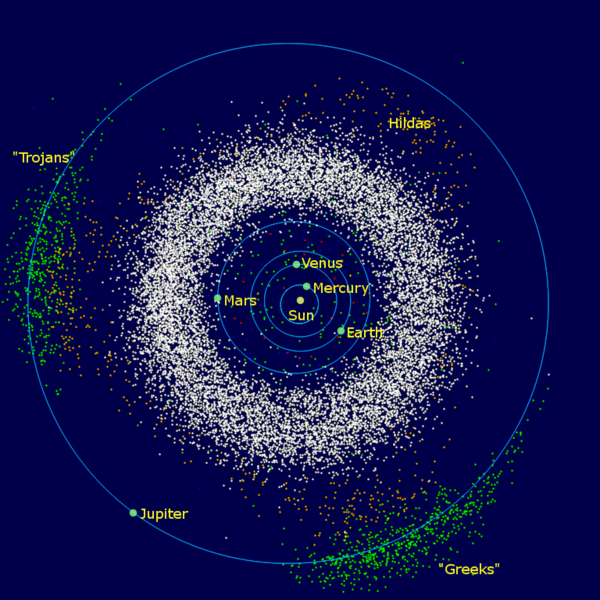
The asteroid belt is a torus‑shaped collection of rocky bodies orbiting the Sun between Mars and Jupiter, often called the main asteroid belt.

Astrometric Wobble

Aurora Australis

The Aurora Australis, or southern lights, is a spectacular natural light display in Earth’s polar atmosphere caused by solar‑charged particles colliding with atmospheric gases.

Aurora Borealis

** The aurora borealis is a spectacular natural light show in Earth’s polar upper atmosphere, produced when solar‑charged particles collide with atmospheric gases, causing them to glow in vivid colors. **CONTENT:** ## Overview The **aurora borealis**, commonly known as the **northern lights**, is a luminous display that dances across the night sky of high‑latitude regions. It originates in the **thermosphere**, roughly 80–300 km above the surface, where streams of energetic electrons and protons ejected from the Sun—collectively called the **solar wind**—are guided by Earth’s magnetic field toward the magnetic poles. When these particles slam into oxygen and nitrogen atoms, they transfer energy that excites the atoms to higher electronic states. As the atoms relax back to their ground state, they release photons of characteristic wavelengths, producing the familiar greens, reds, purples, and occasional blues of the aurora. The visual forms of the aurora are as varied as they are mesmerizing. **Curtains** ripple like silk banners, **rays** shoot upward in vertical shafts, **spirals** swirl in vortex‑like patterns, and **dynamic flickers** pulse across the horizon. The shape of each display is dictated by the geometry of Earth’s magnetic field lines, the energy of the incoming particles, and the composition of the local atmosphere. While the **aurora borealis** dominates the northern hemisphere, its southern counterpart—the **aurora australis**—illuminates the skies over Antarctica and the southernmost continents. Auroral activity is not constant; it waxes and wanes with the **11‑year solar cycle**. During solar maximum, heightened sunspot numbers and frequent coronal mass ejections (CMEs) flood the magnetosphere with charged particles, leading to more intense and widespread auroral storms. Conversely, solar minimum periods produce quieter, more localized displays. Modern space weather monitoring allows scientists to predict auroral conditions days in advance, turning a once‑mysterious phenomenon into a forecastable natural event. ## History/Background Human fascination with the aurora stretches back millennia. Indigenous peoples of the Arctic, such as the **Sámi**, the **Inuit**, and the **Nenets**, wove the lights into myth, attributing them to spirits, ancestors, or celestial hunters. Early European explorers recorded the phenomenon in the 16th century, but scientific explanation lagged until the 19th century. In 1820, **André-Marie Ampère** first linked auroral activity to geomagnetic disturbances, and **Christian Olaf Rømer** later suggested a solar origin. The breakthrough came in 1908 when **Kristian Birkeland**, a Norwegian physicist, demonstrated with his **terrella** experiment that charged particles from the Sun could be funneled by Earth’s magnetic field to the poles, producing auroral‑like glows. The space age accelerated understanding dramatically. The launch of **Explorer 1** (1958) and subsequent satellite missions mapped the Earth’s magnetosphere, confirming that the **Van Allen radiation belts** and the **magnetotail** store solar wind energy. The **International Geophysical Year** (1957‑58) coordinated global observations, establishing a baseline of auroral data. In 1972, the **Auroral Research Program** aboard the **NASA OGO‑5** satellite captured the first comprehensive ultraviolet images of auroral arcs, revealing their three‑dimensional structure. Today, constellations of ground‑based all‑sky cameras, magnetometers, and orbiting observatories like **NASA’s THEMIS** and **ESA’s Swarm** provide real‑time monitoring of auroral dynamics. ## Key Information - **Cause:** Collision of solar‑wind electrons/protons with atmospheric O₂ and N₂. - **Primary colors:** Green (557.7 nm, from atomic oxygen at ~100 km), Red (630.0 nm, high‑altitude oxygen), Purple/blue (N₂⁺ emissions). - **Altitude range:** 80 km (lower limit) to >300 km (upper limit). - **Geographic focus:** Auroral ovals centered on magnetic poles; in the north, roughly 65°–75° N latitude. - **Solar cycle influence:** Activity peaks every ~11 years; extreme storms can push auroras to mid‑latitudes (e.g., the 1859 Carrington Event). - **Scientific value:** Auroras serve as natural laboratories for plasma physics, magnetospheric dynamics, and space‑weather forecasting. - **Cultural impact:** Featured in folklore, literature, and modern media; a major driver of Arctic tourism. - **Observation tips:** Dark, clear skies; minimal light pollution; optimal viewing between 21:00–02:00 local time during geomagnetic storms. ## Significance The aurora borealis is more than a visual wonder; it is a tangible manifestation of the Sun–Earth connection. By studying auroral emissions, scientists decode the processes that transfer solar energy into the magnetosphere, influencing satellite operations, radio communications, and power‑grid stability. Understanding these mechanisms is essential for mitigating the risks of **space weather**—a growing concern as humanity becomes increasingly dependent on space‑based infrastructure. Culturally, the northern lights inspire awe and curiosity, fostering a sense of planetary unity. They have become a symbol of the Arctic’s pristine environment, driving conservation efforts and responsible tourism. Moreover, auroral research pushes the frontiers of plasma physics, informing the design of future fusion reactors and advancing our grasp of astrophysical phenomena such as pulsar wind nebulae and magnetized exoplanet atmospheres. **INFOBOX:** - Name: Aurora Borealis (Northern Lights) - Type: Natural atmospheric light display (space‑weather phenomenon) - Date: Continuous; intensity modulated by the 11‑year solar cycle (e.g., peaks 2001, 2014, 2025) - Location: High‑latitude regions of the Northern Hemisphere, centered on the magnetic north pole (≈65°–75° N) - Known For: Spectacular multicolored curtains of light caused by solar‑wind particle collisions with atmospheric gases **TAGS:** aurora borealis, northern lights, space weather, solar wind, magnetosphere, atmospheric physics, polar phenomena, astrophysics

Barnards Star

** Barnard’s Star is a nearby red dwarf in Ophiuchus, the fourth‑closest individual star to the Sun and the brightest northern‑hemisphere star invisible to the naked eye. **CONTENT:** ## Overview Barnard’s Star (BD +04 3561a, Gliese 699) is a low‑mass **M4 V red dwarf** located in the constellation **Ophiuchus**. At a measured distance of **5.96 light‑years (1.83 pc)**, it ranks as the fourth‑nearest known star after the three components of the Alpha Centauri system. Its proximity makes it a cornerstone for studies of stellar kinematics, low‑mass stellar physics, and the search for exoplanets around the smallest suns. Despite being only **9.5 mag** in visible light—far too faint for unaided eyes—Barnard’s Star shines brightly in the infrared, where its cool surface temperature of roughly **3,200 K** peaks. The star’s **mass** is about **0.16 M☉** (16 % of the Sun’s) and its **radius** roughly **0.19 R☉** (19 % of the Sun’s). Its luminosity is a mere **0.0004 L☉**, meaning it emits only four‑tenths of a percent of the Sun’s total energy. This modest output, combined with a long main‑sequence lifetime exceeding **10 trillion years**, makes Barnard’s Star a stable laboratory for investigating the physics of fully convective stars. Its high proper motion—**10.3 arcseconds per year**, the largest of any known star—propels it across the sky at a rate that would shift its position by a full Moon’s width in just over a decade. ## History/Background Barnard’s Star was first catalogued by **E. E. Barnard** in 1916, who noted its extraordinary proper motion while surveying photographic plates. Barnard’s meticulous measurements revealed a motion of **10.3″ yr⁻¹**, a record that still stands. In 1919, the star’s parallax was measured by **Harlow Shapley**, confirming its distance as the nearest star in the northern sky. The star’s high velocity through the Milky Way—about **140 km s⁻¹** relative to the Sun—suggests it belongs to the **old disk population**, likely over **7 billion years** old. The 1960s and 1970s saw Barnard’s Star become a focal point for early exoplanet searches. In 1969, **Peter van de Kamp** claimed to have detected a planetary companion via astrometric wobble, a claim later refuted by more precise measurements. The advent of high‑precision radial‑velocity spectrographs in the 1990s revived interest, leading to the 2018 announcement of **Barnard b**, a super‑Earth‑mass planet in a 233‑day orbit, detected through a combination of radial‑velocity data and astrometry from the **Hubble Space Telescope**. ## Key Information - **Spectral Type:** M4 V (red dwarf) - **Mass:** 0.16 M☉ (≈ 16 % of the Sun) - **Radius:** 0.19 R☉ (≈ 19 % of the Sun) - **Luminosity:** 0.0004 L☉ (≈ 0.04 % of the Sun) - **Effective Temperature:** ~3,200 K - **Apparent Magnitude (V):** +9.5 (invisible to naked eye) - **Infrared Magnitude (K):** +4.5 (bright in IR surveys) - **Proper Motion:** 10.3 arcsec yr⁻¹ (largest known) - **Radial Velocity:** +110 km s⁻¹ (moving away from the Sun) - **Age:** ~7–10 Gyr (old disk star) - **Planetary System:** One confirmed super‑Earth (Barnard b, ~3.2 M⊕) in a temperate orbit; additional candidate signals remain under investigation. Barnard’s Star’s magnetic activity is modest but detectable; it exhibits **flare events** roughly once per year, producing brief spikes in ultraviolet and X‑ray output. Its rotation period, measured via photometric modulation, is about **130 days**, indicating a slowly spinning, magnetically quiet star. ## Significance Barnard’s Star serves as a benchmark for **low‑mass stellar astrophysics**. Its proximity allows astronomers to resolve its photospheric features, measure its magnetic field, and test models of fully convective interiors. The star’s extreme proper motion provides a natural laboratory for studying **stellar dynamics** and the gravitational potential of the Milky Way’s disk and halo. The detection of **Barnard b** marked a milestone: it was the first exoplanet discovered around a red dwarf using a combination of radial‑velocity and astrometric techniques, demonstrating that even the faintest stars can host terrestrial‑mass worlds. This finding fuels the ongoing quest for habitable planets around red dwarfs, which are the most common stellar type in the Galaxy. Barnard’s Star also plays a practical role in **future interstellar mission concepts**. Its closeness and well‑characterized environment make it a prime target for proposed probes such as **Breakthrough Starshot**, which envisions gram‑scale sails accelerated to a significant fraction of light speed. Understanding the star’s radiation environment, stellar wind, and flare frequency is essential for designing safe passage for such missions. **INFOBOX:** - Name: Barnard’s Star (Gliese 699) - Type: Red dwarf (M4 V) - Date: First catalogued 1916; proper‑motion record confirmed 1919 - Location: Constellation Ophiuchus, Northern celestial hemisphere - Known For: Highest proper motion of any star; fourth‑closest individual star to the Sun; host of exoplanet Barnard b **TAGS:** red dwarf, proper motion, Ophiuchus, exoplanet, Barnard’s Star, stellar astrophysics, nearby stars, interstellar travel

BepiColombo

** BepiColombo is a joint ESA‑JAXA mission comprising two spacecraft that will orbit Mercury to deliver the most detailed investigation yet of the innermost planet’s magnetic field, interior, and surface. **CONTENT:** ## Overview BepiColombo is a collaborative interplanetary venture between the **European Space Agency (ESA)** and the **Japan Aerospace Exploration Agency (JAXA)**, designed to place two sophisticated probes into orbit around **Mercury**, the Solar System’s closest planet to the Sun. The mission carries the **Mercury Planetary Orbiter (MPO)**, built by ESA, and the **Mercury Magnetospheric Orbiter (MMO)**—nicknamed **Mio**—developed by JAXA. Together they will conduct a comprehensive suite of measurements that address long‑standing questions about Mercury’s **magnetic field**, **magnetosphere**, **internal structure**, and **surface composition**. The spacecraft were launched together on an **Ariane 5** launch vehicle from the Guiana Space Centre on **20 October 2018**. After a complex cruise phase involving a **gravity‑assist flyby of Earth**, **two Venus flybys**, and **six Mercury flybys**, the pair will perform a Mercury orbit insertion (MOI) in **November 2026**. Once in orbit, MPO will settle into a low‑altitude, near‑circular trajectory to map the planet’s geology, while Mio will adopt a highly elliptical orbit optimized for studying the planet’s magnetosphere and solar‑wind interaction. The mission’s scientific payload includes high‑resolution cameras, laser altimeters, magnetometers, spectrometers, and radio science experiments. By combining data from both spacecraft, scientists aim to resolve Mercury’s anomalously large iron core, the origin of its weak but globally present magnetic field, and the processes that shape its extreme surface environment. ## History/Background The concept of a dedicated Mercury mission dates back to the 1990s, when both ESA and JAXA independently explored the technical challenges of reaching the Sun‑swept planet. In 2007, ESA’s **“Mercury Planetary Orbiter”** study and JAXA’s **“Mio”** concept were merged under the **BepiColombo** name—honoring the 16th‑century Italian astronomer **Bepi Colombo**, who first observed Mercury’s transit across the Sun. A formal **ESA–JAXA cooperation agreement** was signed in 2010, establishing shared responsibilities: ESA would provide the MPO, the launch vehicle, and overall mission management, while JAXA would supply Mio, the cruise‑phase propulsion module, and a portion of the scientific instruments. The mission was approved by ESA’s **Science Programme Committee** in 2012 and by JAXA’s advisory board in 2013. Key milestones included the **selection of the Ariane 5 ECA** as the launch system (2014), the **completion of spacecraft integration** at the European Spaceport in Kourou (2017), and the **final pre‑launch reviews** in early 2018. The launch on 20 October 2018 marked the beginning of a **seven‑year interplanetary cruise**, during which the spacecraft performed a series of carefully timed gravity assists to shed enough velocity to be captured by Mercury’s deep gravity well. ## Key Information - **Mission name:** BepiColombo (Mercury Planetary Orbiter + Mercury Magnetospheric Orbiter) - **Launch vehicle:** Ariane 5 ECA (VA‑247) - **Launch date:** 20 October 2018 (UTC) - **Orbit insertion:** Planned for November 2026 (Mercury orbit) - **Spacecraft mass:** MPO ≈ 1 200 kg; Mio ≈ 800 kg (including cruise module) - **Cost:** Approximately **US $2 billion** (ESA + JAXA combined) as of 2017 estimates - **Primary scientific goals:** 1. Determine Mercury’s **internal structure** and core size via radio‑science and laser altimetry. 2. Map the **global magnetic field** and characterize the **magnetosphere** with high‑precision magnetometers. 3. Study surface composition, exosphere, and space‑weathering processes using imaging spectrometers and X‑ray/gamma‑ray detectors. - **Key instruments:** **MPO** – BepiColombo Laser Altimeter (BELA), Mercury Imaging X‑ray Spectrometer (MIXS), Mercury Radiometer and Thermal Imaging Spectrometer (MERTIS); **Mio** – Magnetometer (Mio-MAG), Plasma Wave Analyzer (PWA), Solar Wind Analyzer (SWA). ## Significance BepiColombo will deliver the most detailed portrait of Mercury ever obtained, filling a critical gap in our understanding of terrestrial planet formation. By precisely measuring the planet’s **core‑to‑mantle ratio**, the mission will test hypotheses about how Mercury acquired its oversized iron core—whether through giant impacts, solar nebula processes, or early stripping of a silicate mantle. The dual‑spacecraft architecture provides a unique **synergy**: while MPO conducts high‑resolution geological mapping, Mio continuously monitors the planet’s magnetospheric dynamics, offering unprecedented insight into how a weak intrinsic magnetic field interacts with the solar wind at extreme heliocentric distances. This knowledge is directly relevant to space‑weather modeling and to the design of future missions to the inner Solar System, including potential human exploration of Mercury’s polar ice deposits. Beyond pure science, BepiColombo exemplifies **international cooperation** in deep‑space exploration, demonstrating how ESA and JAXA can pool expertise, share risk, and achieve objectives that would be prohibitive for a single agency. The mission’s success will reinforce the collaborative model for upcoming endeavors such as the **JUICE** mission to the Jovian system and the **Artemis** lunar program, cementing a legacy of shared discovery. **INFOBOX:** - Name: BepiColombo (Mercury Planetary Orbiter + Mercury Magnetospheric Orbiter) - Type: Interplanetary scientific mission / dual‑orbiter - Date: Launched 20 October 2018; Mercury orbit insertion November 2026 (planned) - Location: Mercury (planetary orbit) - Known For: First joint ESA‑JAXA mission to Mercury; dual‑spacecraft study of Mercury’s interior, magnetic field, and surface **TAGS:** Mercury, ESA, JAXA, interplanetary mission, planetary science, magnetosphere, space exploration, BepiColombo

Betelgeuse Star

** Betelgeuse is a red supergiant star in the constellation Orion, famous for its immense size, variability, and recent dimming events that sparked worldwide interest in stellar evolution and supernova prospects. **CONTENT:** ## Overview Betelgeuse (α Orionis) is a **red supergiant** situated roughly 642 light‑years from Earth in the shoulder of the iconic constellation Orion. With a radius about 1,000 times that of the Sun—large enough to engulf the orbits of Mercury, Venus, Earth, and even Mars if placed at the center of our Solar System—Betelgeuse stands among the largest known stars that are still observable to the naked eye. Its spectral type is **M1‑M2 Ia‑Iab**, indicating a cool surface temperature of ~3,500 K, which gives the star its characteristic deep orange‑red hue. Unlike most bright stars, Betelgeuse is a **semi‑regular variable**; its brightness fluctuates between magnitude +0.0 and +1.6 over periods ranging from a few hundred days to several years. This variability, combined with its proximity and sheer brilliance (it is the ninth brightest star in the night sky), makes Bethegeuse a natural laboratory for studying the late evolutionary stages of massive stars. In late 2019 and early 2020, Betelgeuse underwent an unprecedented dimming, dropping to a historic low of magnitude +1.6. The event, dubbed the “Great Dimming,” prompted intense scrutiny from professional observatories and citizen scientists alike, leading to a deeper understanding of the star’s complex **convection cells**, dust formation, and mass‑loss processes. ## History/Background Betelgeus​e has been noted by human cultures for millennia. Ancient Egyptian astronomers identified it as part of the “foreleg of the god Osiris,” while the Greeks named it after the hunter Orion’s shoulder. The star’s Arabic name, **Betelgeuse**, derives from “Yad al‑Jauzā,” meaning “the hand of the central one,” later corrupted through medieval Latin translations. Modern astrophysics began to unravel Betelgeuse’s nature in the 19th century when spectroscopic techniques revealed its **red color** and **low surface temperature**. In 1920, the Harvard College Observatory’s Henry D. Harvey measured its radial velocity, confirming it as a **massive, evolved star**. The first interferometric measurements of its angular diameter were achieved in 1979 using the **Mark III stellar interferometer**, establishing Betelgeuse as the first star whose size could be directly resolved. Key dates: - **1836:** Friedrich Bessel estimates Betelgeuse’s distance using parallax. - **1920s‑1930s:** Spectral classification refined; identified as a supergiant. - **1979:** First direct angular diameter measurement (≈55 mas). - **1990s‑2000s:** Space‑based infrared observations (IRAS, ISO) detect extensive circumstellar dust. - **2019‑2020:** “Great Dimming” observed; multi‑wavelength campaigns reveal dust cloud ejection and large convection cells. ## Key Information - **Spectral Type:** M1‑M2 Ia‑Iab (red supergiant). - **Mass:** Approximately 15–20 M☉ (solar masses). - **Radius:** ~1,000 R☉ (≈7 AU). - **Luminosity:** 100,000–150,000 L☉ (solar luminosities). - **Effective Temperature:** ~3,500 K. - **Distance:** 642 ± 30 light‑years (Gaia DR3 parallax). - **Variability:** Semi‑regular; primary periods of ~400 days and ~2,100 days. - **Mass‑Loss Rate:** ~1–2 × 10⁻⁶ M☉ yr⁻¹, producing a complex, dusty stellar wind. - **Future Evolution:** Expected to end its life as a **core‑collapse supernova** (likely Type II‑P) within the next 100,000 years, though the exact timing remains uncertain. The 2020 dimming episode was traced to a combination of a **large convective plume** that lifted cooler material to the surface and a subsequent **dust cloud** that partially obscured the star in visible light, while infrared observations showed the star’s intrinsic brightness remained relatively stable. ## Significance Betelgeuse serves as a cornerstone for several astrophysical disciplines. Its proximity allows astronomers to test **stellar evolution models** for massive stars, particularly the poorly understood transition from red supergiant to supernova. The star’s **mass‑loss mechanisms**—including pulsation‑driven winds, convection, and dust formation—inform theories about how massive stars enrich the interstellar medium with heavy elements. The “Great Dimming” illustrated the power of **global, multi‑wavelength collaboration**, uniting professional observatories, space telescopes, and amateur astronomers. The event also captured public imagination, highlighting how a single star can become a cultural touchstone for discussions about cosmic timescales, the life cycle of matter, and humanity’s place in the universe. Betelgeuse’s eventual supernova will be a once‑in‑a‑lifetime event for modern observers, potentially visible even during daylight. Preparing for that eventuality drives the development of early‑warning detection systems and informs safety considerations for satellites and Earth‑based technologies. **INFOBOX:** - Name: Betelgeuse (α Orionis) - Type: Red Supergiant Star (M‑type Ia‑Iab) - Date: First recorded observations c. 1500 BC; modern scientific study began 19th century - Location: Constellation Orion, approximately 642 light‑years from Earth - Known For: Enormous size, semi‑regular variability, 2019‑2020 “Great Dimming,” and status as a likely imminent supernova candidate **TAGS:** red supergiant, stellar evolution, variable star, Orion, supernova progenitor, mass loss, dust formation, great dimming

Big Bang Theory

** The Big Bang theory is the prevailing cosmological model describing the universe’s origin from an extremely hot, dense state and its subsequent expansion over roughly 13.8 billion years. **CONTENT:** ## Overview The **Big Bang theory** posits that all space, time, matter, and energy were once compressed into a singularity—a point of infinite density and temperature—around 13.8 billion years ago. From this primordial fireball, the universe began to expand, cooling as it grew. This expansion is not an explosion into pre‑existing space; rather, space itself stretches, carrying galaxies apart. Observational pillars such as the **cosmic microwave background (CMB)**, the **abundance of light elements**, and the **Hubble‑Lemaître redshift law** provide converging evidence that the universe has been expanding and cooling since its fiery birth. Modern cosmology treats the Big Bang as a framework rather than a single event. It integrates **general relativity**, **quantum field theory**, and **particle physics** to explain phenomena from the formation of the first atomic nuclei (Big Bang nucleosynthesis) to the emergence of large‑scale structures like galaxy clusters. While the theory successfully accounts for a wide range of observations, it also leaves open questions—most notably the nature of the singularity, the cause of inflation, and the composition of dark matter and dark energy. ## History/Background The seeds of the Big Bang model were sown in the 1920s. In 1927, Belgian priest‑astronomer **Georges Lemaître** derived solutions to Einstein’s field equations that described an expanding universe, coining the term “primeval atom.” Two years later, **Edwin Hubble** empirically demonstrated that distant galaxies recede from us, establishing the **Hubble‑Lemaître law** and providing the first direct evidence of cosmic expansion. In 1948, **George Gamow**, **Ralph Alpher**, and **Robert Herman** predicted a relic radiation—a faint afterglow—that would later be identified as the CMB. The decisive breakthrough arrived in 1965 when **Arno Penzias** and **Robert Wilson** inadvertently discovered the CMB, a uniform microwave signal permeating the sky at a temperature of 2.73 K. This discovery earned them the Nobel Prize and cemented the Big Bang as the dominant cosmological paradigm. Subsequent refinements—such as the **inflationary model** proposed by **Alan Guth** in 1980 and the precise measurements of CMB anisotropies by the **COBE**, **WMAP**, and **Planck** satellites—have sharpened the theory’s parameters and resolved earlier inconsistencies. ## Key Information - **Cosmic Microwave Background (CMB):** The afterglow of the early universe, providing a snapshot of the cosmos 380,000 years after the Big Bang. Its temperature fluctuations map the seeds of all later structure. - **Hubble‑Lemaître Law:** Quantifies the linear relationship between a galaxy’s recessional velocity and its distance, expressed as *v = H₀ × d*, where *H₀* is the Hubble constant. - **Big Bang Nucleosynthesis (BBN):** Predicts the primordial abundances of hydrogen, helium‑4, deuterium, and lithium‑7, matching observations within a few percent. - **Cosmic Inflation:** A brief epoch of exponential expansion occurring ≤10⁻³⁶ seconds after the singularity, solving the horizon, flatness, and monopole problems. - **Dark Matter & Dark Energy:** While not directly explained by the original model, the Big Bang framework accommodates these components, which together constitute ~95 % of the universe’s total energy density. - **Age of the Universe:** Current estimates place the universe at **13.8 ± 0.02 billion years** old, derived from CMB data and the Hubble constant. - **Observable Universe:** Approximately 93 billion light‑years in diameter, limited by the finite speed of light and the universe’s expansion. ## Significance The Big Bang theory reshaped humanity’s cosmic perspective, replacing static, eternal universe models with a dynamic, evolving cosmos. It underpins modern astrophysics, guiding research into galaxy formation, particle physics, and the ultimate fate of the universe. By providing a coherent narrative that links the smallest subatomic processes to the largest cosmic structures, the theory bridges disciplines and fuels interdisciplinary collaborations. Moreover, its predictive power—exemplified by the successful forecast of the CMB—demonstrates the potency of scientific inference, inspiring public fascination and informing philosophical debates about origins, time, and existence. **INFOBOX:** - Name: **Big Bang Theory** - Type: **Cosmological model** - Date: **1927 (initial proposal)** - Location: **Universe (cosmic scale)** - Known For: **Describing the origin, expansion, and thermal evolution of the universe** **TAGS:** cosmology, universe, expansion, cosmic microwave background, Hubble law, inflation, nucleosynthesis, dark matter, dark energy