**
Overview
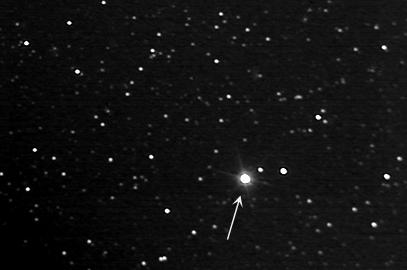
Barnard’s Star (BD +04 3561a, Gliese 699) is a low‑mass M4 V red dwarf located in the constellation Ophiuchus. At a measured distance of 5.96 light‑years (1.83 pc), it ranks as the fourth‑nearest known star after the three components of the Alpha Centauri system. Its proximity makes it a cornerstone for studies of stellar kinematics, low‑mass stellar physics, and the search for exoplanets around the smallest suns. Despite being only 9.5 mag in visible light—far too faint for unaided eyes—Barnard’s Star shines brightly in the infrared, where its cool surface temperature of roughly 3,200 K peaks.The star’s mass is about 0.16 M☉ (16 % of the Sun’s) and its radius roughly 0.19 R☉ (19 % of the Sun’s). Its luminosity is a mere 0.0004 L☉, meaning it emits only four‑tenths of a percent of the Sun’s total energy. This modest output, combined with a long main‑sequence lifetime exceeding 10 trillion years, makes Barnard’s Star a stable laboratory for investigating the physics of fully convective stars. Its high proper motion—10.3 arcseconds per year, the largest of any known star—propels it across the sky at a rate that would shift its position by a full Moon’s width in just over a decade.
History/Background
Barnard’s Star was first catalogued by E. E. Barnard in 1916, who noted its extraordinary proper motion while surveying photographic plates. Barnard’s meticulous measurements revealed a motion of 10.3″ yr⁻¹, a record that still stands. In 1919, the star’s parallax was measured by Harlow Shapley, confirming its distance as the nearest star in the northern sky. The star’s high velocity through the Milky Way—about 140 km s⁻¹ relative to the Sun—suggests it belongs to the old disk population, likely over 7 billion years old.The 1960s and 1970s saw Barnard’s Star become a focal point for early exoplanet searches. In 1969, Peter van de Kamp claimed to have detected a planetary companion via astrometric wobble, a claim later refuted by more precise measurements. The advent of high‑precision radial‑velocity spectrographs in the 1990s revived interest, leading to the 2018 announcement of Barnard b, a super‑Earth‑mass planet in a 233‑day orbit, detected through a combination of radial‑velocity data and astrometry from the Hubble Space Telescope.
Key Information
- Spectral Type: M4 V (red dwarf) - Mass: 0.16 M☉ (≈ 16 % of the Sun) - Radius: 0.19 R☉ (≈ 19 % of the Sun) - Luminosity: 0.0004 L☉ (≈ 0.04 % of the Sun) - Effective Temperature: ~3,200 K - Apparent Magnitude (V): +9.5 (invisible to naked eye) - Infrared Magnitude (K): +4.5 (bright in IR surveys) - Proper Motion: 10.3 arcsec yr⁻¹ (largest known) - Radial Velocity: +110 km s⁻¹ (moving away from the Sun) - Age: ~7–10 Gyr (old disk star) - Planetary System: One confirmed super‑Earth (Barnard b, ~3.2 M⊕) in a temperate orbit; additional candidate signals remain under investigation.Barnard’s Star’s magnetic activity is modest but detectable; it exhibits flare events roughly once per year, producing brief spikes in ultraviolet and X‑ray output. Its rotation period, measured via photometric modulation, is about 130 days, indicating a slowly spinning, magnetically quiet star.
Significance
Barnard’s Star serves as a benchmark for low‑mass stellar astrophysics. Its proximity allows astronomers to resolve its photospheric features, measure its magnetic field, and test models of fully convective interiors. The star’s extreme proper motion provides a natural laboratory for studying stellar dynamics and the gravitational potential of the Milky Way’s disk and halo.The detection of Barnard b marked a milestone: it was the first exoplanet discovered around a red dwarf using a combination of radial‑velocity and astrometric techniques, demonstrating that even the faintest stars can host terrestrial‑mass worlds. This finding fuels the ongoing quest for habitable planets around red dwarfs, which are the most common stellar type in the Galaxy.
Barnard’s Star also plays a practical role in future interstellar mission concepts. Its closeness and well‑characterized environment make it a prime target for proposed probes such as Breakthrough Starshot, which envisions gram‑scale sails accelerated to a significant fraction of light speed. Understanding the star’s radiation environment, stellar wind, and flare frequency is essential for designing safe passage for such missions.
INFOBOX:
- Name: Barnard’s Star (Gliese 699)
- Type: Red dwarf (M4 V)
- Date: First catalogued 1916; proper‑motion record confirmed 1919
- Location: Constellation Ophiuchus, Northern celestial hemisphere
- Known For: Highest proper motion of any star; fourth‑closest individual star to the Sun; host of exoplanet Barnard b
TAGS: red dwarf, proper motion, Ophiuchus, exoplanet, Barnard’s Star, stellar astrophysics, nearby stars, interstellar travel