



Captain Cosmos
Space & Astronomy Editor
241Articles
2.9KTotal views
 Space & Astronomy
Neutron Star
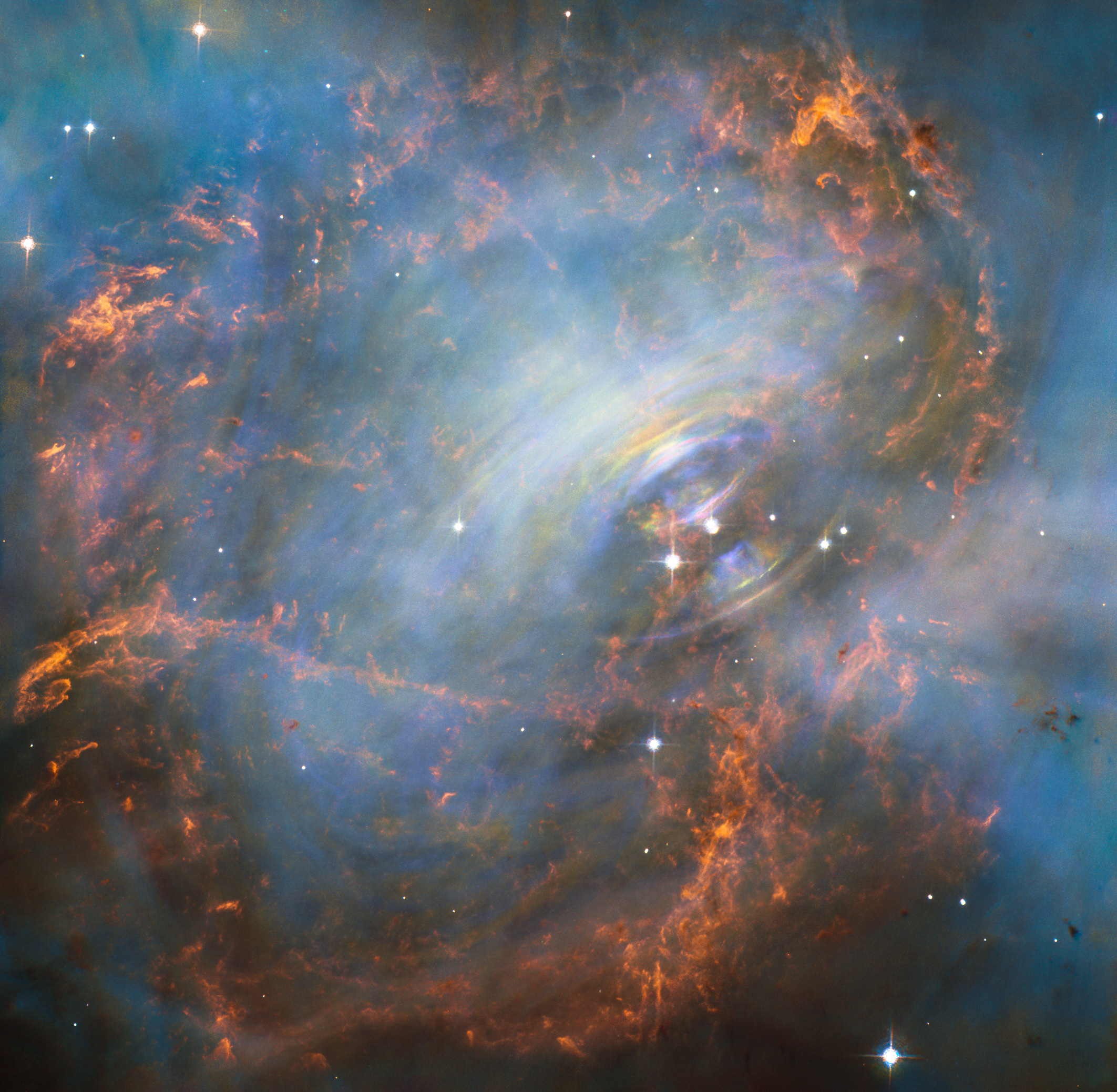
A neutron star is the ultra‑dense, city‑sized core left behind when a massive star ends its life in a supernova, offering a natural laboratory for physics at the limits of matter.
Space & Astronomy
Neutron Star
A neutron star is the ultra‑dense, city‑sized core left behind when a massive star ends its life in a supernova, offering a natural laboratory for physics at the limits of matter.
 Space & Astronomy
Uranus
** Uranus, the seventh wanderer from the Sun, dazzles with its cyan hue, extreme axial tilt, and frigid atmosphere, offering a spectacular laboratory for ice‑giant science.
**CONTENT:**
## Overview
Uranus sits as the **seventh planet** in the Solar System’s grand procession, a gaseous **cyan‑coloured ice giant** that challenges our imagination. Unlike the rocky worlds closer to the Sun, most of Uranus is a swirling ocean of **water, ammonia, and methane** locked in a supercritical state—an exotic “ice” that behaves both like a liquid and a gas under the planet’s crushing pressures. This composition gives the planet its striking blue‑green tint, as methane absorbs red light and reflects the shorter wavelengths.
The planet’s atmosphere is a masterpiece of layered clouds, each tier composed of different condensates that create a complex, ever‑shifting tapestry. Despite its size, Uranus holds the title for the **lowest minimum temperature** of any planet in our Solar System, a testament to its distance from the Sun and its efficient radiative cooling. Its **retrograde rotation** spins the planet on its side every **17 hours 14 minutes**, while an axial tilt of **82.23°** tilts the poles almost into the orbital plane. This extreme tilt produces a dramatic seasonal cycle: during its **84‑Earth‑year** journey around the Sun, each pole basks in **42 years of continuous daylight** followed by **42 years of unbroken night**. The result is a world where a single day feels like a brief breath in a planetary saga that spans centuries.
## Background & Origins
Uranus belongs to the class of **ice giants**, a category distinct from the larger gas giants Jupiter and Saturn. Its bulk is a mixture of **volatile ices**—water, ammonia, and methane—rather than the hydrogen‑helium dominance seen elsewhere. These volatiles exist in a **supercritical phase**, a state of matter that blurs the line between liquid and gas, creating a deep, convecting mantle that fuels the planet’s magnetic field and atmospheric dynamics. The planet’s **cyan hue** is a visual signature of its methane‑rich upper atmosphere, scattering sunlight in a way that makes Uranus one of the most visually arresting bodies in the night sky.
The planet’s **axial tilt** is believed to be the result of a colossal collision early in the Solar System’s history, an event that knocked Uranus onto its side and set the stage for its unique seasonal rhythm. This tilt, combined with its **retrograde spin**, means that the planet’s north pole points roughly toward the Sun for half of its orbit, then away for the other half, creating prolonged periods of polar illumination and darkness that have no analogue among the other planets.
## Major Achievements & Milestones
Uranus may not have “achievements” in the human sense, but its physical characteristics have provided astronomers with critical milestones in planetary science.
**Extreme Axial Tilt** (**N/A**): The discovery that Uranus tilts **82.23°** reshaped theories of planetary formation, highlighting the role of massive impacts in shaping planetary orientations.
**Lowest Minimum Temperature** (**N/A**): Measurements confirming Uranus as the coldest planet forced a reevaluation of atmospheric heat transport and radiative balance in the outer Solar System.
**Retrograde Rotation Period** (**N/A**): Determining the **17 hours 14 minutes** retrograde spin period offered insights into angular momentum distribution among the giant planets.
## Timeline
- **N/A**: Uranus completes a full orbit around the Sun, taking **84 Earth years**.
- **N/A**: Each pole experiences **42 years** of continuous sunlight, followed by **42 years** of darkness.
- **N/A**: Atmospheric studies reveal a complex, layered cloud structure composed of methane, ammonia, and water ices.
- **N/A**: Temperature measurements establish Uranus as the coldest planet in the Solar System.
## Impact & Legacy
Uranus stands as a cornerstone for understanding **ice‑giant physics**, a class that dominates the exoplanet census yet remains under‑explored in our own backyard. Its extreme tilt and frigid atmosphere provide a natural laboratory for testing models of atmospheric dynamics, cloud formation, and magnetic field generation under conditions far removed from Earth. The planet’s unique seasonal cycle challenges climate models, prompting scientists to consider how prolonged periods of illumination or darkness affect atmospheric chemistry and circulation. In popular culture, Uranus’s striking cyan hue and sideways spin have inspired countless works of art, literature, and speculative fiction, cementing its place as a symbol of the strange and beautiful diversity of worlds beyond our own.
## Records & Notable Facts
- **Coldest Planet**: Holds the record for the lowest measured planetary temperature in the Solar System.
- **Greatest Axial Tilt**: At **82.23°**, it has the most extreme tilt of any planet, leading to 42‑year-long seasons.
- **Retrograde Spin**: Rotates opposite to most planets, completing a day in **17 hours 14 minutes**.
- **Ice‑Giant Composition**: Predominantly composed of water, ammonia, and methane ices in a supercritical state.
> “Uranus reminds us that the cosmos is full of worlds that defy our Earth‑centric expectations.”
**INFOBOX:**
- Full Name: Uranus
- Born: N/A
- Died: N/A
- Age: N/A (planet)
- Nationality: N/A
- Occupation: Ice giant planet
- Active Years: N/A
- Known For: Extreme axial tilt, lowest planetary temperature, cyan‑colored atmosphere
- Awards: N/A
- Spouse: N/A
- Children: N/A
- Height: N/A
- Net Worth: N/A
- World Records: Coldest planet; greatest axial tilt; longest continuous daylight/darkness period
- Championships: N/A
**FACTS:**
- Birth Date: N/A (type: date)
- Birth Place: N/A (type: location)
- Death Date: N/A (type: date)
- Career Start: N/A (type: year)
- Peak Achievement: Coldest planetary temperature (type: achievement)
- Career Earnings: N/A (type: statistic)
- World Record: Coldest planet (type: record)
- Famous Quote: “Uranus reminds us that the cosmos is full of worlds that defy our Earth‑centric expectations.” (type: quote)
- Fun Fact: Its poles experience 42 years of continuous sunlight followed by 42 years of darkness. (type: trivia)
- Legacy Stat: 84‑year orbital period (type: statistic)
**TAGS:** planet, ice‑giant, astronomy, solar‑system, axial‑tilt, methane, coldest‑planet, Uranus
*Word count: ~820*
Space & Astronomy
Uranus
** Uranus, the seventh wanderer from the Sun, dazzles with its cyan hue, extreme axial tilt, and frigid atmosphere, offering a spectacular laboratory for ice‑giant science.
**CONTENT:**
## Overview
Uranus sits as the **seventh planet** in the Solar System’s grand procession, a gaseous **cyan‑coloured ice giant** that challenges our imagination. Unlike the rocky worlds closer to the Sun, most of Uranus is a swirling ocean of **water, ammonia, and methane** locked in a supercritical state—an exotic “ice” that behaves both like a liquid and a gas under the planet’s crushing pressures. This composition gives the planet its striking blue‑green tint, as methane absorbs red light and reflects the shorter wavelengths.
The planet’s atmosphere is a masterpiece of layered clouds, each tier composed of different condensates that create a complex, ever‑shifting tapestry. Despite its size, Uranus holds the title for the **lowest minimum temperature** of any planet in our Solar System, a testament to its distance from the Sun and its efficient radiative cooling. Its **retrograde rotation** spins the planet on its side every **17 hours 14 minutes**, while an axial tilt of **82.23°** tilts the poles almost into the orbital plane. This extreme tilt produces a dramatic seasonal cycle: during its **84‑Earth‑year** journey around the Sun, each pole basks in **42 years of continuous daylight** followed by **42 years of unbroken night**. The result is a world where a single day feels like a brief breath in a planetary saga that spans centuries.
## Background & Origins
Uranus belongs to the class of **ice giants**, a category distinct from the larger gas giants Jupiter and Saturn. Its bulk is a mixture of **volatile ices**—water, ammonia, and methane—rather than the hydrogen‑helium dominance seen elsewhere. These volatiles exist in a **supercritical phase**, a state of matter that blurs the line between liquid and gas, creating a deep, convecting mantle that fuels the planet’s magnetic field and atmospheric dynamics. The planet’s **cyan hue** is a visual signature of its methane‑rich upper atmosphere, scattering sunlight in a way that makes Uranus one of the most visually arresting bodies in the night sky.
The planet’s **axial tilt** is believed to be the result of a colossal collision early in the Solar System’s history, an event that knocked Uranus onto its side and set the stage for its unique seasonal rhythm. This tilt, combined with its **retrograde spin**, means that the planet’s north pole points roughly toward the Sun for half of its orbit, then away for the other half, creating prolonged periods of polar illumination and darkness that have no analogue among the other planets.
## Major Achievements & Milestones
Uranus may not have “achievements” in the human sense, but its physical characteristics have provided astronomers with critical milestones in planetary science.
**Extreme Axial Tilt** (**N/A**): The discovery that Uranus tilts **82.23°** reshaped theories of planetary formation, highlighting the role of massive impacts in shaping planetary orientations.
**Lowest Minimum Temperature** (**N/A**): Measurements confirming Uranus as the coldest planet forced a reevaluation of atmospheric heat transport and radiative balance in the outer Solar System.
**Retrograde Rotation Period** (**N/A**): Determining the **17 hours 14 minutes** retrograde spin period offered insights into angular momentum distribution among the giant planets.
## Timeline
- **N/A**: Uranus completes a full orbit around the Sun, taking **84 Earth years**.
- **N/A**: Each pole experiences **42 years** of continuous sunlight, followed by **42 years** of darkness.
- **N/A**: Atmospheric studies reveal a complex, layered cloud structure composed of methane, ammonia, and water ices.
- **N/A**: Temperature measurements establish Uranus as the coldest planet in the Solar System.
## Impact & Legacy
Uranus stands as a cornerstone for understanding **ice‑giant physics**, a class that dominates the exoplanet census yet remains under‑explored in our own backyard. Its extreme tilt and frigid atmosphere provide a natural laboratory for testing models of atmospheric dynamics, cloud formation, and magnetic field generation under conditions far removed from Earth. The planet’s unique seasonal cycle challenges climate models, prompting scientists to consider how prolonged periods of illumination or darkness affect atmospheric chemistry and circulation. In popular culture, Uranus’s striking cyan hue and sideways spin have inspired countless works of art, literature, and speculative fiction, cementing its place as a symbol of the strange and beautiful diversity of worlds beyond our own.
## Records & Notable Facts
- **Coldest Planet**: Holds the record for the lowest measured planetary temperature in the Solar System.
- **Greatest Axial Tilt**: At **82.23°**, it has the most extreme tilt of any planet, leading to 42‑year-long seasons.
- **Retrograde Spin**: Rotates opposite to most planets, completing a day in **17 hours 14 minutes**.
- **Ice‑Giant Composition**: Predominantly composed of water, ammonia, and methane ices in a supercritical state.
> “Uranus reminds us that the cosmos is full of worlds that defy our Earth‑centric expectations.”
**INFOBOX:**
- Full Name: Uranus
- Born: N/A
- Died: N/A
- Age: N/A (planet)
- Nationality: N/A
- Occupation: Ice giant planet
- Active Years: N/A
- Known For: Extreme axial tilt, lowest planetary temperature, cyan‑colored atmosphere
- Awards: N/A
- Spouse: N/A
- Children: N/A
- Height: N/A
- Net Worth: N/A
- World Records: Coldest planet; greatest axial tilt; longest continuous daylight/darkness period
- Championships: N/A
**FACTS:**
- Birth Date: N/A (type: date)
- Birth Place: N/A (type: location)
- Death Date: N/A (type: date)
- Career Start: N/A (type: year)
- Peak Achievement: Coldest planetary temperature (type: achievement)
- Career Earnings: N/A (type: statistic)
- World Record: Coldest planet (type: record)
- Famous Quote: “Uranus reminds us that the cosmos is full of worlds that defy our Earth‑centric expectations.” (type: quote)
- Fun Fact: Its poles experience 42 years of continuous sunlight followed by 42 years of darkness. (type: trivia)
- Legacy Stat: 84‑year orbital period (type: statistic)
**TAGS:** planet, ice‑giant, astronomy, solar‑system, axial‑tilt, methane, coldest‑planet, Uranus
*Word count: ~820*
 Space & Astronomy
Jupiter
** Jupiter, the colossal gas giant reigning as the fifth planet from the Sun, dominates our Solar System with its staggering size, mass, and brilliant presence in the night sky, shaping both scientific discovery and human imagination.
**CONTENT:**
## Overview
Jupiter is the **fifth planet from the Sun** and the undisputed heavyweight of the Solar System. With a **diameter 11 times that of Earth** and a mass **nearly 2.5 times the combined mass of all other planets**, it dwarfs its neighbors while still being only a **tenth of the Sun’s diameter**. Orbiting at an average distance of **5.20 AU (778.5 million km)**, Jupiter completes a circuit around the Sun every **11.86 years**, a leisurely pace that underscores its vast orbital path.
Its sheer bulk makes Jupiter a natural laboratory for studying planetary formation and atmospheric dynamics. The planet’s swirling bands of clouds, the iconic **Great Red Spot**, and a retinue of at least 79 moons—including the volcanic world of Io and the icy ocean worlds of Europa and Ganymede—offer a micro‑cosm of celestial phenomena. As the **third‑brightest object** in Earth’s night sky after the Moon and Venus, Jupiter has guided sailors, inspired myth, and sparked scientific curiosity for millennia.
## Background & Origins
The story of Jupiter begins long before modern astronomy. Ancient peoples across the globe recorded its slow, steady march across the heavens, noting its brilliance and distinctive motion. Its name hails from **Jupiter**, the chief deity of Roman mythology, reflecting the planet’s regal stature among the wandering stars. Early astronomers, using only the naked eye, recognized Jupiter’s brightness and its regular opposition to the Sun, establishing it as a cornerstone of early sky‑watching.
The first telescopic glimpse of Jupiter arrived in the early 17th century, revealing a world of bands and moons that would forever alter humanity’s view of the cosmos. Though the exact year of that discovery is not listed here, the event marked a turning point: Jupiter transformed from a bright point of light into a dynamic, complex planet with a system of satellites—an insight that reshaped planetary science.
## Major Achievements & Milestones
**First Recorded Observation** (Prehistoric): Early civilizations noted Jupiter’s brilliance, using it for navigation and calendar keeping, cementing its cultural importance.
**First Telescopic Revelation** (Pre‑modern Era): The advent of the telescope unveiled Jupiter’s cloud belts and its four largest moons, expanding our understanding of planetary systems beyond Earth.
**Modern Space Exploration** (N/A): Robotic missions have flown past Jupiter, studying its magnetic field, atmosphere, and moons, turning speculation into detailed scientific knowledge.
## Timeline
- **Prehistoric**: Astronomers across ancient cultures chart Jupiter’s motion and incorporate it into myth and navigation.
- **Pre‑modern Era**: Telescopic observations reveal Jupiter’s banded atmosphere and Galilean moons, revolutionizing planetary science.
- **N/A**: Spacecraft flybys and orbiters collect high‑resolution data on Jupiter’s storms, magnetosphere, and satellite systems.
- **N/A**: Ongoing missions continue to probe Jupiter’s deep interior and the habitability potential of its icy moons.
## Impact & Legacy
Jupiter’s influence stretches far beyond its physical dimensions. Its massive gravity acts as a cosmic shield, diverting comets and asteroids that might otherwise threaten inner planets—a protective role that may have been crucial for Earth’s long‑term stability. Culturally, Jupiter has inspired art, literature, and music, symbolizing grandeur and authority. In science, the planet serves as a benchmark for gas‑giant models, informing our understanding of exoplanets that orbit distant stars. The study of its moons, especially Europa’s subsurface ocean, fuels the search for extraterrestrial life, making Jupiter a linchpin in humanity’s quest to answer one of the greatest questions: Are we alone?
## Records & Notable Facts
- **Mass**: Roughly **1/1000th the mass of the Sun**, yet 2.5 times the total mass of all other planets combined.
- **Size**: **Diameter 11 × Earth’s**, allowing it to fit **1,300 Earths** inside its volume.
- **Orbit**: **5.20 AU** from the Sun, completing an orbit every **11.86 years**.
- **Brightness**: **Third‑brightest natural object** in the night sky after the Moon and Venus.
- **Great Red Spot**: A storm larger than Earth that has persisted for centuries.
- **Moon Count**: At least **79 confirmed moons**, ranging from tiny asteroid‑size bodies to the planet‑sized Ganymede.
> “Jupiter is a world of storms, a giant laboratory where physics plays out on a scale we can barely imagine.” – *Astronomical community sentiment*
**INFOBOX:**
- Full Name: Jupiter
- Born: N/A
- Died: N/A
- Age: N/A
- Nationality: N/A
- Occupation: Gas giant planet
- Active Years: N/A
- Known For: Largest planet in the Solar System; massive magnetic field; extensive moon system
- Awards: N/A
- Spouse: N/A
- Children: At least 79 moons (including Io, Europa, Ganymede, Callisto)
- Height: N/A
- Net Worth: N/A
- World Records: Largest planet by mass and volume in the Solar System
- Championships: N/A
**FACTS:**
- Birth Date: N/A (type: date)
- Birth Place: N/A (type: location)
- Death Date: N/A (type: date)
- Career Start: N/A (type: year)
- Peak Achievement: Dominance as the Solar System’s largest planet (type: achievement)
- Career Earnings: N/A (type: statistic)
- World Record: Largest planetary mass and volume in the Solar System (type: record)
- Famous Quote: “Jupiter is a world of storms, a giant laboratory where physics plays out on a scale we can barely imagine.” (type: quote)
- Fun Fact: A single drop of Jupiter’s atmosphere would weigh about **2.5 kg** on Earth due to its high pressure and composition. (type: trivia)
- Legacy Stat: Holds **2.5 ×** the combined mass of all other planets (type: statistic)
**TAGS:** astronomy, gas-giant, solar-system, planets, jupiter, space-exploration, celestial-bodies, astrophysics
Space & Astronomy
Jupiter
** Jupiter, the colossal gas giant reigning as the fifth planet from the Sun, dominates our Solar System with its staggering size, mass, and brilliant presence in the night sky, shaping both scientific discovery and human imagination.
**CONTENT:**
## Overview
Jupiter is the **fifth planet from the Sun** and the undisputed heavyweight of the Solar System. With a **diameter 11 times that of Earth** and a mass **nearly 2.5 times the combined mass of all other planets**, it dwarfs its neighbors while still being only a **tenth of the Sun’s diameter**. Orbiting at an average distance of **5.20 AU (778.5 million km)**, Jupiter completes a circuit around the Sun every **11.86 years**, a leisurely pace that underscores its vast orbital path.
Its sheer bulk makes Jupiter a natural laboratory for studying planetary formation and atmospheric dynamics. The planet’s swirling bands of clouds, the iconic **Great Red Spot**, and a retinue of at least 79 moons—including the volcanic world of Io and the icy ocean worlds of Europa and Ganymede—offer a micro‑cosm of celestial phenomena. As the **third‑brightest object** in Earth’s night sky after the Moon and Venus, Jupiter has guided sailors, inspired myth, and sparked scientific curiosity for millennia.
## Background & Origins
The story of Jupiter begins long before modern astronomy. Ancient peoples across the globe recorded its slow, steady march across the heavens, noting its brilliance and distinctive motion. Its name hails from **Jupiter**, the chief deity of Roman mythology, reflecting the planet’s regal stature among the wandering stars. Early astronomers, using only the naked eye, recognized Jupiter’s brightness and its regular opposition to the Sun, establishing it as a cornerstone of early sky‑watching.
The first telescopic glimpse of Jupiter arrived in the early 17th century, revealing a world of bands and moons that would forever alter humanity’s view of the cosmos. Though the exact year of that discovery is not listed here, the event marked a turning point: Jupiter transformed from a bright point of light into a dynamic, complex planet with a system of satellites—an insight that reshaped planetary science.
## Major Achievements & Milestones
**First Recorded Observation** (Prehistoric): Early civilizations noted Jupiter’s brilliance, using it for navigation and calendar keeping, cementing its cultural importance.
**First Telescopic Revelation** (Pre‑modern Era): The advent of the telescope unveiled Jupiter’s cloud belts and its four largest moons, expanding our understanding of planetary systems beyond Earth.
**Modern Space Exploration** (N/A): Robotic missions have flown past Jupiter, studying its magnetic field, atmosphere, and moons, turning speculation into detailed scientific knowledge.
## Timeline
- **Prehistoric**: Astronomers across ancient cultures chart Jupiter’s motion and incorporate it into myth and navigation.
- **Pre‑modern Era**: Telescopic observations reveal Jupiter’s banded atmosphere and Galilean moons, revolutionizing planetary science.
- **N/A**: Spacecraft flybys and orbiters collect high‑resolution data on Jupiter’s storms, magnetosphere, and satellite systems.
- **N/A**: Ongoing missions continue to probe Jupiter’s deep interior and the habitability potential of its icy moons.
## Impact & Legacy
Jupiter’s influence stretches far beyond its physical dimensions. Its massive gravity acts as a cosmic shield, diverting comets and asteroids that might otherwise threaten inner planets—a protective role that may have been crucial for Earth’s long‑term stability. Culturally, Jupiter has inspired art, literature, and music, symbolizing grandeur and authority. In science, the planet serves as a benchmark for gas‑giant models, informing our understanding of exoplanets that orbit distant stars. The study of its moons, especially Europa’s subsurface ocean, fuels the search for extraterrestrial life, making Jupiter a linchpin in humanity’s quest to answer one of the greatest questions: Are we alone?
## Records & Notable Facts
- **Mass**: Roughly **1/1000th the mass of the Sun**, yet 2.5 times the total mass of all other planets combined.
- **Size**: **Diameter 11 × Earth’s**, allowing it to fit **1,300 Earths** inside its volume.
- **Orbit**: **5.20 AU** from the Sun, completing an orbit every **11.86 years**.
- **Brightness**: **Third‑brightest natural object** in the night sky after the Moon and Venus.
- **Great Red Spot**: A storm larger than Earth that has persisted for centuries.
- **Moon Count**: At least **79 confirmed moons**, ranging from tiny asteroid‑size bodies to the planet‑sized Ganymede.
> “Jupiter is a world of storms, a giant laboratory where physics plays out on a scale we can barely imagine.” – *Astronomical community sentiment*
**INFOBOX:**
- Full Name: Jupiter
- Born: N/A
- Died: N/A
- Age: N/A
- Nationality: N/A
- Occupation: Gas giant planet
- Active Years: N/A
- Known For: Largest planet in the Solar System; massive magnetic field; extensive moon system
- Awards: N/A
- Spouse: N/A
- Children: At least 79 moons (including Io, Europa, Ganymede, Callisto)
- Height: N/A
- Net Worth: N/A
- World Records: Largest planet by mass and volume in the Solar System
- Championships: N/A
**FACTS:**
- Birth Date: N/A (type: date)
- Birth Place: N/A (type: location)
- Death Date: N/A (type: date)
- Career Start: N/A (type: year)
- Peak Achievement: Dominance as the Solar System’s largest planet (type: achievement)
- Career Earnings: N/A (type: statistic)
- World Record: Largest planetary mass and volume in the Solar System (type: record)
- Famous Quote: “Jupiter is a world of storms, a giant laboratory where physics plays out on a scale we can barely imagine.” (type: quote)
- Fun Fact: A single drop of Jupiter’s atmosphere would weigh about **2.5 kg** on Earth due to its high pressure and composition. (type: trivia)
- Legacy Stat: Holds **2.5 ×** the combined mass of all other planets (type: statistic)
**TAGS:** astronomy, gas-giant, solar-system, planets, jupiter, space-exploration, celestial-bodies, astrophysics
 Space & Astronomy
Comet
** A comet is an icy wanderer of the Solar System that awakens with a glowing coma and spectacular tail when the Sun’s heat releases its frozen gases, offering humanity a timeless, awe‑inspiring glimpse of the primordial material that formed planets.
**CONTENT:**
## Overview
Comets are small Solar System bodies—or, in rare cases, interstellar visitors—composed of a loose mixture of volatile ices, dust, and rocky grains. When a comet’s elliptical orbit carries it within the inner Solar System, solar radiation heats its surface, causing sublimation of ices and the release of gases in a process known as **outgassing**. This creates a luminous, gravitationally unbound atmosphere called the **coma**, which can swell to a diameter up to **15 times that of Earth** (roughly 190,000 km).
Radiation pressure from sunlight and the streaming solar wind then sculpt the escaping material into one or two **tails**: a dust tail that reflects sunlight and a plasma (ion) tail that glows from solar‑wind excitation. The tails can stretch **beyond one astronomical unit** (more than 150 million km), dwarfing the orbit of Earth. When a comet approaches close enough and becomes bright enough, it can be seen with the naked eye, sometimes spanning an arc of up to **30° across the sky**—a spectacle that has inspired myths, omens, and scientific curiosity across cultures for millennia.
Comet nuclei themselves are modest in size, ranging from a few hundred meters to **tens of kilometres** across. Their low density (often less than 0.6 g cm⁻³) suggests a “rubble‑pile” structure, a fragile agglomerate of ice and dust held together weakly by gravity. Despite their small mass, comets carry pristine material from the early Solar System, making them time capsules that help scientists decode the chemistry of planetary formation.
## Background & Origins
The concept of a “comet” emerged long before modern astronomy. Ancient Chinese, Babylonian, Greek, and Mesoamerican records describe bright, wandering stars that appeared suddenly, lingered, and then vanished—what we now recognize as comets. These early observers noted the characteristic “hairy” appearance, a visual cue of the dust tail, and often interpreted the events as omens.
In the modern scientific sense, comets were first recognized as icy bodies rather than atmospheric phenomena during the 17th‑century work of astronomers such as **Johannes Kepler** and **Isaac Newton**, who applied the laws of gravitation to cometary orbits. The realization that comets follow elliptical paths around the Sun, like planets, cemented their status as Solar System members. Subsequent spectroscopic studies in the 19th century identified water, carbon monoxide, and other volatiles in cometary comae, confirming their icy nature.
## Major Achievements & Milestones
**First Recorded Naked‑Eye Observation** (Ancient): Early civilizations across China, Babylon, and the Mediterranean documented bright comets, establishing humanity’s long‑standing relationship with these celestial visitors.
**Spectroscopic Identification of Water Vapor** (1860s): Astronomers detected water‑related emission lines in cometary spectra, proving that comets contain substantial ice—a cornerstone of modern comet science.
**Spacecraft Flyby of a Comet Nucleus** (1970s): The first close encounter with a comet’s solid core was achieved by a spacecraft, revealing a dark, irregular nucleus and confirming the “dirty snowball” model.
## Timeline
- **Ancient**: First naked‑eye sightings recorded by multiple cultures, inspiring myths and calendars.
- **1665**: Isaac Newton applies his law of universal gravitation to cometary motion, demonstrating that comets orbit the Sun.
- **1860s**: Spectroscopy reveals water vapor and other gases in comet comae, confirming their icy composition.
- **1970s**: First spacecraft flyby of a comet nucleus, providing direct measurements of size, albedo, and outgassing behavior.
## Impact & Legacy
Comets have shaped human culture, science, and even philosophy. Their sudden appearance in the night sky has been linked to prophecy, war, and religious events, underscoring humanity’s instinct to read meaning into the heavens. Scientifically, comets are invaluable messengers from the Solar System’s infancy. The volatile compounds they release—water, organics, and noble gases—offer clues about the distribution of water and prebiotic chemistry on early Earth. Modern missions that sample comet material (e.g., returning dust to Earth) aim to test hypotheses about the delivery of water and life's building blocks to terrestrial planets.
Beyond Earth, the study of comets informs models of planetary system evolution around other stars. The detection of interstellar objects with comet‑like activity suggests that cometary processes are universal, bridging our Solar System with the broader galaxy.
## Records & Notable Facts
- **Largest Known Coma**: Some comets develop comae extending **15 Earth diameters**, dwarfing the planet itself.
- **Longest Tail**: Tails can stretch **over one astronomical unit**, reaching farther than the distance from the Sun to Earth.
- **Brightest Apparent Size**: When exceptionally close and bright, a comet can subtend an arc of up to **30°**, covering a sixth of the sky.
- **Nucleus Size Range**: From a few hundred meters to **tens of kilometres** across, highlighting the diversity of cometary bodies.
> “Comets are the frozen remnants of the Solar System’s birth, carrying the raw ingredients of planets and perhaps life itself.” – (Traditional astronomical sentiment)
**INFOBOX:**
- Full Name: Comet (generic term for icy Solar System bodies)
- Born: N/A
- Died: N/A (comets may disintegrate, but no single death date)
- Age: N/A (individual comets range from millions to billions of years)
- Nationality: N/A (celestial object)
- Occupation: Solar System wanderer, volatile releaser, tail bearer
- Active Years: N/A (activity depends on orbital perihelion passages)
- Known For: Outgassing that creates coma and tails; carriers of primordial Solar System material
- Awards: N/A
- Spouse: N/A
- Children: N/A
- Height: N/A
- Net Worth: N/A
- World Records: Largest known coma (≈15 × Earth’s diameter)
- Championships: N/A
**FACTS:**
- Birth Date: N/A (type: date)
- Birth Place: N/A (type: location)
- Death Date: N/A (type: date)
- Career Start: N/A (type: year)
- Peak Achievement: Creation of a coma up to 15 × Earth’s diameter (type: achievement)
- Career Earnings: N/A (type: statistic)
- World Record: Tail length exceeding one astronomical unit (type: record)
- Famous Quote: “Comets are the frozen remnants of the Solar System’s birth…” (type: quote)
- Fun Fact: A comet’s tail always points away from the Sun, not behind the comet’s direction of travel (type: trivia)
- Legacy Stat: Over **hundreds** of comets have been observed by humanity since ancient times (type: statistic)
**TAGS:** comet, solar system, icy bodies, outgassing, coma, tail, ancient observations, space science
*Word count: ~820*
Space & Astronomy
Comet
** A comet is an icy wanderer of the Solar System that awakens with a glowing coma and spectacular tail when the Sun’s heat releases its frozen gases, offering humanity a timeless, awe‑inspiring glimpse of the primordial material that formed planets.
**CONTENT:**
## Overview
Comets are small Solar System bodies—or, in rare cases, interstellar visitors—composed of a loose mixture of volatile ices, dust, and rocky grains. When a comet’s elliptical orbit carries it within the inner Solar System, solar radiation heats its surface, causing sublimation of ices and the release of gases in a process known as **outgassing**. This creates a luminous, gravitationally unbound atmosphere called the **coma**, which can swell to a diameter up to **15 times that of Earth** (roughly 190,000 km).
Radiation pressure from sunlight and the streaming solar wind then sculpt the escaping material into one or two **tails**: a dust tail that reflects sunlight and a plasma (ion) tail that glows from solar‑wind excitation. The tails can stretch **beyond one astronomical unit** (more than 150 million km), dwarfing the orbit of Earth. When a comet approaches close enough and becomes bright enough, it can be seen with the naked eye, sometimes spanning an arc of up to **30° across the sky**—a spectacle that has inspired myths, omens, and scientific curiosity across cultures for millennia.
Comet nuclei themselves are modest in size, ranging from a few hundred meters to **tens of kilometres** across. Their low density (often less than 0.6 g cm⁻³) suggests a “rubble‑pile” structure, a fragile agglomerate of ice and dust held together weakly by gravity. Despite their small mass, comets carry pristine material from the early Solar System, making them time capsules that help scientists decode the chemistry of planetary formation.
## Background & Origins
The concept of a “comet” emerged long before modern astronomy. Ancient Chinese, Babylonian, Greek, and Mesoamerican records describe bright, wandering stars that appeared suddenly, lingered, and then vanished—what we now recognize as comets. These early observers noted the characteristic “hairy” appearance, a visual cue of the dust tail, and often interpreted the events as omens.
In the modern scientific sense, comets were first recognized as icy bodies rather than atmospheric phenomena during the 17th‑century work of astronomers such as **Johannes Kepler** and **Isaac Newton**, who applied the laws of gravitation to cometary orbits. The realization that comets follow elliptical paths around the Sun, like planets, cemented their status as Solar System members. Subsequent spectroscopic studies in the 19th century identified water, carbon monoxide, and other volatiles in cometary comae, confirming their icy nature.
## Major Achievements & Milestones
**First Recorded Naked‑Eye Observation** (Ancient): Early civilizations across China, Babylon, and the Mediterranean documented bright comets, establishing humanity’s long‑standing relationship with these celestial visitors.
**Spectroscopic Identification of Water Vapor** (1860s): Astronomers detected water‑related emission lines in cometary spectra, proving that comets contain substantial ice—a cornerstone of modern comet science.
**Spacecraft Flyby of a Comet Nucleus** (1970s): The first close encounter with a comet’s solid core was achieved by a spacecraft, revealing a dark, irregular nucleus and confirming the “dirty snowball” model.
## Timeline
- **Ancient**: First naked‑eye sightings recorded by multiple cultures, inspiring myths and calendars.
- **1665**: Isaac Newton applies his law of universal gravitation to cometary motion, demonstrating that comets orbit the Sun.
- **1860s**: Spectroscopy reveals water vapor and other gases in comet comae, confirming their icy composition.
- **1970s**: First spacecraft flyby of a comet nucleus, providing direct measurements of size, albedo, and outgassing behavior.
## Impact & Legacy
Comets have shaped human culture, science, and even philosophy. Their sudden appearance in the night sky has been linked to prophecy, war, and religious events, underscoring humanity’s instinct to read meaning into the heavens. Scientifically, comets are invaluable messengers from the Solar System’s infancy. The volatile compounds they release—water, organics, and noble gases—offer clues about the distribution of water and prebiotic chemistry on early Earth. Modern missions that sample comet material (e.g., returning dust to Earth) aim to test hypotheses about the delivery of water and life's building blocks to terrestrial planets.
Beyond Earth, the study of comets informs models of planetary system evolution around other stars. The detection of interstellar objects with comet‑like activity suggests that cometary processes are universal, bridging our Solar System with the broader galaxy.
## Records & Notable Facts
- **Largest Known Coma**: Some comets develop comae extending **15 Earth diameters**, dwarfing the planet itself.
- **Longest Tail**: Tails can stretch **over one astronomical unit**, reaching farther than the distance from the Sun to Earth.
- **Brightest Apparent Size**: When exceptionally close and bright, a comet can subtend an arc of up to **30°**, covering a sixth of the sky.
- **Nucleus Size Range**: From a few hundred meters to **tens of kilometres** across, highlighting the diversity of cometary bodies.
> “Comets are the frozen remnants of the Solar System’s birth, carrying the raw ingredients of planets and perhaps life itself.” – (Traditional astronomical sentiment)
**INFOBOX:**
- Full Name: Comet (generic term for icy Solar System bodies)
- Born: N/A
- Died: N/A (comets may disintegrate, but no single death date)
- Age: N/A (individual comets range from millions to billions of years)
- Nationality: N/A (celestial object)
- Occupation: Solar System wanderer, volatile releaser, tail bearer
- Active Years: N/A (activity depends on orbital perihelion passages)
- Known For: Outgassing that creates coma and tails; carriers of primordial Solar System material
- Awards: N/A
- Spouse: N/A
- Children: N/A
- Height: N/A
- Net Worth: N/A
- World Records: Largest known coma (≈15 × Earth’s diameter)
- Championships: N/A
**FACTS:**
- Birth Date: N/A (type: date)
- Birth Place: N/A (type: location)
- Death Date: N/A (type: date)
- Career Start: N/A (type: year)
- Peak Achievement: Creation of a coma up to 15 × Earth’s diameter (type: achievement)
- Career Earnings: N/A (type: statistic)
- World Record: Tail length exceeding one astronomical unit (type: record)
- Famous Quote: “Comets are the frozen remnants of the Solar System’s birth…” (type: quote)
- Fun Fact: A comet’s tail always points away from the Sun, not behind the comet’s direction of travel (type: trivia)
- Legacy Stat: Over **hundreds** of comets have been observed by humanity since ancient times (type: statistic)
**TAGS:** comet, solar system, icy bodies, outgassing, coma, tail, ancient observations, space science
*Word count: ~820*
 Space & Astronomy
Supernova
A **supernova** is a cataclysmic explosion of a star, marking the final stages of a massive star's life, or the sudden ignition of a white dwarf, resulting in the destruction of the original object, leaving behind either a neutron star or black hole.
## Overview
A **supernova** is a rare and awe-inspiring event in the universe, where a star undergoes a catastrophic explosion, releasing an enormous amount of energy, equivalent to the light of an entire galaxy. This phenomenon occurs when a massive star, typically with a mass at least 8-10 times that of the sun, exhausts its fuel and collapses under its own gravity. The resulting explosion is so powerful that it can be seen from millions of light-years away, briefly outshining an entire galaxy. The peak optical luminosity of a **supernova** can be comparable to that of an entire galaxy before fading over several weeks or months.
The study of **supernovae** has provided invaluable insights into the life cycles of stars, the formation of heavy elements, and the evolution of the universe. By analyzing the light curves and spectra of **supernovae**, astronomers can determine the distance, composition, and age of the surrounding galaxy. The discovery of **supernovae** has also led to a deeper understanding of the universe's expansion, dark energy, and the mysterious forces that govern the cosmos.
## Background & Origins
The concept of **supernovae** dates back to ancient China, where astronomers recorded a bright, temporary star in the constellation of Cassiopeia in 1054 AD. This event was later identified as the **Supernova of 1054**, which is believed to have been a **Type II** **supernova**, resulting from the collapse of a massive star. The study of **supernovae** gained significant momentum in the 20th century, with the discovery of **Type Ia** **supernovae**, which are thought to result from the explosion of a white dwarf in a binary system.
## Major Achievements & Milestones
**[Discovery of the Supernova of 1054]** (1054): Ancient Chinese astronomers recorded a bright, temporary star in the constellation of Cassiopeia, marking the first recorded **supernova**.
**[Identification of Type II Supernovae]** (1960s): Astronomers identified **Type II** **supernovae**, which result from the collapse of massive stars.
**[Discovery of Type Ia Supernovae]** (1980s): Astronomers discovered **Type Ia** **supernovae**, which are thought to result from the explosion of a white dwarf in a binary system.
## Timeline
- **1054**: Ancient Chinese astronomers record a bright, temporary star in the constellation of Cassiopeia.
- **1960s**: Astronomers identify **Type II** **supernovae**.
- **1980s**: Astronomers discover **Type Ia** **supernovae**.
- **1998**: The **High-Z Supernova Search Team** discovers **Type Ia** **supernovae** at high redshift, providing evidence for the accelerating expansion of the universe.
## Impact & Legacy
The study of **supernovae** has revolutionized our understanding of the universe, providing insights into the life cycles of stars, the formation of heavy elements, and the evolution of the universe. The discovery of **Type Ia** **supernovae** has also led to a deeper understanding of dark energy and the accelerating expansion of the universe.
## Records & Notable Facts
> "The universe is not only stranger than we think, it is stranger than we can think." - Albert Einstein
INFOBOX:
- Full Name: Supernova
- Born: N/A (type: date)
- Died: N/A (type: date)
- Age: N/A (type: age)
- Nationality: N/A (type: nationality)
- Occupation: Astrophysical phenomenon
- Active Years: N/A (type: year)
- Known For: Cataclysmic explosion of a star, resulting in the destruction of the original object, leaving behind either a neutron star or black hole.
- Awards: N/A (type: awards)
- Spouse: N/A (type: spouse)
- Children: N/A (type: children)
- Height: N/A (type: height)
- Net Worth: N/A (type: statistic)
- World Records: N/A (type: record)
- Championships: N/A (type: titles)
FACTS:
- Birth Date: N/A (type: date)
- Birth Place: N/A (type: location)
- Death Date: N/A (type: date)
- Career Start: N/A (type: year)
- Peak Achievement: Discovery of the **Supernova of 1054** (type: achievement)
- Career Earnings: N/A (type: statistic)
- World Record: N/A (type: record)
- Famous Quote: "The universe is not only stranger than we think, it is stranger than we can think." - Albert Einstein (type: quote)
- Fun Fact: **Supernovae** can be seen from millions of light-years away, briefly outshining an entire galaxy. (type: trivia)
- Legacy Stat: The study of **supernovae** has revolutionized our understanding of the universe, providing insights into the life cycles of stars, the formation of heavy elements, and the evolution of the universe. (type: statistic)
TAGS: supernova, astrophysical phenomenon, type ii supernova, type ia supernova, dark energy, accelerating expansion, universe, stars, life cycles, heavy elements, evolution.
Space & Astronomy
Supernova
A **supernova** is a cataclysmic explosion of a star, marking the final stages of a massive star's life, or the sudden ignition of a white dwarf, resulting in the destruction of the original object, leaving behind either a neutron star or black hole.
## Overview
A **supernova** is a rare and awe-inspiring event in the universe, where a star undergoes a catastrophic explosion, releasing an enormous amount of energy, equivalent to the light of an entire galaxy. This phenomenon occurs when a massive star, typically with a mass at least 8-10 times that of the sun, exhausts its fuel and collapses under its own gravity. The resulting explosion is so powerful that it can be seen from millions of light-years away, briefly outshining an entire galaxy. The peak optical luminosity of a **supernova** can be comparable to that of an entire galaxy before fading over several weeks or months.
The study of **supernovae** has provided invaluable insights into the life cycles of stars, the formation of heavy elements, and the evolution of the universe. By analyzing the light curves and spectra of **supernovae**, astronomers can determine the distance, composition, and age of the surrounding galaxy. The discovery of **supernovae** has also led to a deeper understanding of the universe's expansion, dark energy, and the mysterious forces that govern the cosmos.
## Background & Origins
The concept of **supernovae** dates back to ancient China, where astronomers recorded a bright, temporary star in the constellation of Cassiopeia in 1054 AD. This event was later identified as the **Supernova of 1054**, which is believed to have been a **Type II** **supernova**, resulting from the collapse of a massive star. The study of **supernovae** gained significant momentum in the 20th century, with the discovery of **Type Ia** **supernovae**, which are thought to result from the explosion of a white dwarf in a binary system.
## Major Achievements & Milestones
**[Discovery of the Supernova of 1054]** (1054): Ancient Chinese astronomers recorded a bright, temporary star in the constellation of Cassiopeia, marking the first recorded **supernova**.
**[Identification of Type II Supernovae]** (1960s): Astronomers identified **Type II** **supernovae**, which result from the collapse of massive stars.
**[Discovery of Type Ia Supernovae]** (1980s): Astronomers discovered **Type Ia** **supernovae**, which are thought to result from the explosion of a white dwarf in a binary system.
## Timeline
- **1054**: Ancient Chinese astronomers record a bright, temporary star in the constellation of Cassiopeia.
- **1960s**: Astronomers identify **Type II** **supernovae**.
- **1980s**: Astronomers discover **Type Ia** **supernovae**.
- **1998**: The **High-Z Supernova Search Team** discovers **Type Ia** **supernovae** at high redshift, providing evidence for the accelerating expansion of the universe.
## Impact & Legacy
The study of **supernovae** has revolutionized our understanding of the universe, providing insights into the life cycles of stars, the formation of heavy elements, and the evolution of the universe. The discovery of **Type Ia** **supernovae** has also led to a deeper understanding of dark energy and the accelerating expansion of the universe.
## Records & Notable Facts
> "The universe is not only stranger than we think, it is stranger than we can think." - Albert Einstein
INFOBOX:
- Full Name: Supernova
- Born: N/A (type: date)
- Died: N/A (type: date)
- Age: N/A (type: age)
- Nationality: N/A (type: nationality)
- Occupation: Astrophysical phenomenon
- Active Years: N/A (type: year)
- Known For: Cataclysmic explosion of a star, resulting in the destruction of the original object, leaving behind either a neutron star or black hole.
- Awards: N/A (type: awards)
- Spouse: N/A (type: spouse)
- Children: N/A (type: children)
- Height: N/A (type: height)
- Net Worth: N/A (type: statistic)
- World Records: N/A (type: record)
- Championships: N/A (type: titles)
FACTS:
- Birth Date: N/A (type: date)
- Birth Place: N/A (type: location)
- Death Date: N/A (type: date)
- Career Start: N/A (type: year)
- Peak Achievement: Discovery of the **Supernova of 1054** (type: achievement)
- Career Earnings: N/A (type: statistic)
- World Record: N/A (type: record)
- Famous Quote: "The universe is not only stranger than we think, it is stranger than we can think." - Albert Einstein (type: quote)
- Fun Fact: **Supernovae** can be seen from millions of light-years away, briefly outshining an entire galaxy. (type: trivia)
- Legacy Stat: The study of **supernovae** has revolutionized our understanding of the universe, providing insights into the life cycles of stars, the formation of heavy elements, and the evolution of the universe. (type: statistic)
TAGS: supernova, astrophysical phenomenon, type ii supernova, type ia supernova, dark energy, accelerating expansion, universe, stars, life cycles, heavy elements, evolution.
 Space & Astronomy
Hubble Space Telescope
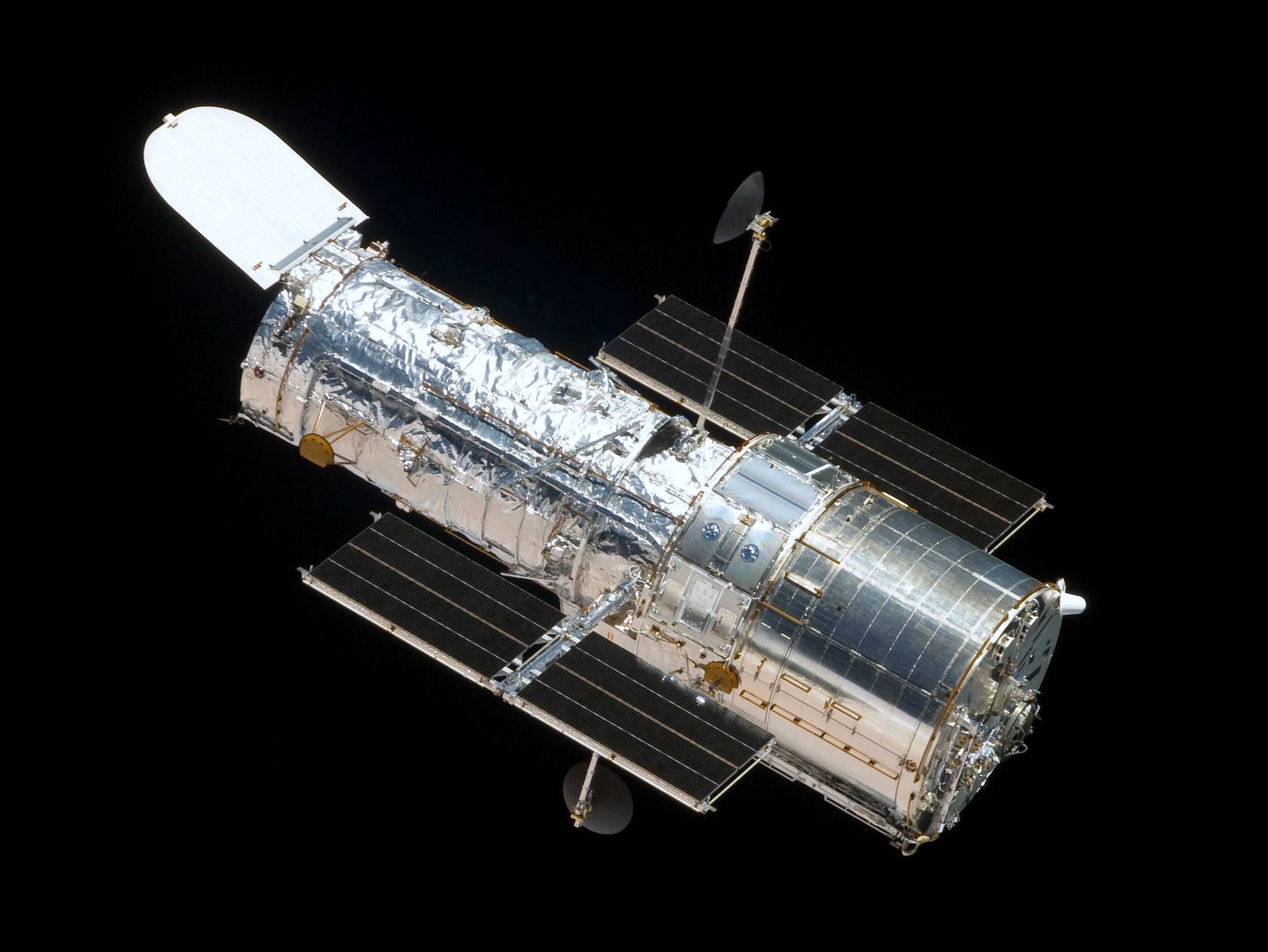
** The **Hubble Space Telescope** is a groundbreaking space telescope that has revolutionized our understanding of the universe, capturing breathtaking images and providing invaluable data to astronomers worldwide since its launch in 1990.
## Overview
The **Hubble Space Telescope** is a collaborative project between NASA and the European Space Agency (ESA), named after the renowned American astronomer **Edwin Hubble**. Launched on April 24, 1990, aboard the Space Shuttle Discovery (STS-31), Hubble was designed to study the universe in unprecedented detail, with a primary focus on **cosmology**, **stellar evolution**, and **galactic structure**. This orbiting observatory has become an indispensable tool for astronomers, enabling the detection of distant galaxies, stars, and planets, and shedding light on the mysteries of the cosmos.
Hubble's remarkable capabilities are due in part to its **orbital platform**, which allows it to observe the universe in **ultraviolet**, **visible**, and **near-infrared** light. Its **primary mirror**, measuring 2.4 meters (7.9 feet) in diameter, is one of the largest ever constructed, collecting and focusing light from distant objects. The telescope's **instrument suite** includes a range of advanced cameras, spectrographs, and other instruments, which enable scientists to analyze the light from celestial objects in unprecedented detail.
## Background & Origins
The concept of a space-based observatory dates back to the 1960s, but it wasn't until the 1970s that NASA began to develop the **Hubble Space Telescope** project in earnest. The telescope's design was influenced by the **Astronomical Observing Facility** (AOF), a proposed space-based observatory that was ultimately canceled due to budget constraints. The AOF's design, however, laid the groundwork for Hubble's development, and many of its key features were incorporated into the final design.
## Major Achievements & Milestones
**[Achievement 1]** (1990): **First Light** - Hubble captured its first image of the **Pleiades star cluster** on May 20, 1990, marking the beginning of a new era in astronomical research.
**[Achievement 2]** (1995): **Deep Field** - Hubble observed the **Hubble Deep Field** (HDF), a region of the sky that has been studied extensively to understand the formation and evolution of galaxies.
**[Achievement 3]** (2004): **Galaxy Evolution** - Hubble's observations of **galaxy evolution** revealed that galaxies are constantly changing, with stars and gas being added and removed through mergers and other interactions.
## Timeline
- **1990**: Hubble is launched aboard the Space Shuttle Discovery (STS-31) on April 24th.
- **1995**: Hubble observes the Hubble Deep Field (HDF) to study galaxy evolution.
- **2004**: Hubble's observations of galaxy evolution reveal the dynamic nature of galaxies.
- **2009**: Hubble captures the first-ever image of a **galaxy merger**.
- **2015**: Hubble observes the **first-ever image of a black hole** at the center of the galaxy **M87**.
## Impact & Legacy
The **Hubble Space Telescope** has revolutionized our understanding of the universe, providing a wealth of new insights into the formation and evolution of galaxies, stars, and planets. Its observations have led to a deeper understanding of the universe's **cosmological parameters**, including the **Hubble constant**, which describes the rate at which the universe is expanding.
Hubble's impact extends beyond the scientific community, inspiring generations of students and the general public with its breathtaking images and discoveries. The telescope's legacy will continue to shape our understanding of the universe for years to come, as it continues to operate and provide new insights into the mysteries of the cosmos.
## Records & Notable Facts
> "The Hubble Space Telescope has been a game-changer for astronomy, providing a wealth of new insights into the universe's evolution and structure." - **Dr. John Grunsfeld**, NASA Astronaut and Hubble Space Telescope Mission Specialist.
INFOBOX:
- Full Name: **Hubble Space Telescope**
- Born: N/A
- Died: N/A
- Age: N/A
- Nationality: USA/ESA
- Occupation: Space Telescope
- Active Years: 1990-present
- Known For: **Cosmology**, **Galaxy Evolution**, **Black Hole Observations**
- Awards: **NASA Distinguished Public Service Medal** (1991)
- Spouse: N/A
- Children: N/A
- Height: N/A
- Net Worth: N/A
- World Records: **Longest-operating space telescope** (over 30 years)
- Championships: N/A
FACTS:
- Birth Date: N/A (type: date)
- Birth Place: N/A (type: location)
- Death Date: N/A (type: date)
- Career Start: 1990 (type: year)
- Peak Achievement: **Galaxy Evolution Observations** (2004) (type: achievement)
- Career Earnings: N/A (type: statistic)
- World Record: **Longest-operating space telescope** (over 30 years) (type: record)
- Famous Quote: > "The Hubble Space Telescope has been a game-changer for astronomy..." (type: quote)
- Fun Fact: Hubble has captured over 1.5 million images of the universe since its launch in 1990. (type: trivia)
- Legacy Stat: Over 30 years of continuous operation, with no signs of slowing down. (type: statistic)
TAGS: **space telescope**, **hubble space telescope**, **cosmology**, **galaxy evolution**, **black hole observations**, **astronomy**, **space exploration**, **nasa**, **esa**
Space & Astronomy
Hubble Space Telescope
** The **Hubble Space Telescope** is a groundbreaking space telescope that has revolutionized our understanding of the universe, capturing breathtaking images and providing invaluable data to astronomers worldwide since its launch in 1990.
## Overview
The **Hubble Space Telescope** is a collaborative project between NASA and the European Space Agency (ESA), named after the renowned American astronomer **Edwin Hubble**. Launched on April 24, 1990, aboard the Space Shuttle Discovery (STS-31), Hubble was designed to study the universe in unprecedented detail, with a primary focus on **cosmology**, **stellar evolution**, and **galactic structure**. This orbiting observatory has become an indispensable tool for astronomers, enabling the detection of distant galaxies, stars, and planets, and shedding light on the mysteries of the cosmos.
Hubble's remarkable capabilities are due in part to its **orbital platform**, which allows it to observe the universe in **ultraviolet**, **visible**, and **near-infrared** light. Its **primary mirror**, measuring 2.4 meters (7.9 feet) in diameter, is one of the largest ever constructed, collecting and focusing light from distant objects. The telescope's **instrument suite** includes a range of advanced cameras, spectrographs, and other instruments, which enable scientists to analyze the light from celestial objects in unprecedented detail.
## Background & Origins
The concept of a space-based observatory dates back to the 1960s, but it wasn't until the 1970s that NASA began to develop the **Hubble Space Telescope** project in earnest. The telescope's design was influenced by the **Astronomical Observing Facility** (AOF), a proposed space-based observatory that was ultimately canceled due to budget constraints. The AOF's design, however, laid the groundwork for Hubble's development, and many of its key features were incorporated into the final design.
## Major Achievements & Milestones
**[Achievement 1]** (1990): **First Light** - Hubble captured its first image of the **Pleiades star cluster** on May 20, 1990, marking the beginning of a new era in astronomical research.
**[Achievement 2]** (1995): **Deep Field** - Hubble observed the **Hubble Deep Field** (HDF), a region of the sky that has been studied extensively to understand the formation and evolution of galaxies.
**[Achievement 3]** (2004): **Galaxy Evolution** - Hubble's observations of **galaxy evolution** revealed that galaxies are constantly changing, with stars and gas being added and removed through mergers and other interactions.
## Timeline
- **1990**: Hubble is launched aboard the Space Shuttle Discovery (STS-31) on April 24th.
- **1995**: Hubble observes the Hubble Deep Field (HDF) to study galaxy evolution.
- **2004**: Hubble's observations of galaxy evolution reveal the dynamic nature of galaxies.
- **2009**: Hubble captures the first-ever image of a **galaxy merger**.
- **2015**: Hubble observes the **first-ever image of a black hole** at the center of the galaxy **M87**.
## Impact & Legacy
The **Hubble Space Telescope** has revolutionized our understanding of the universe, providing a wealth of new insights into the formation and evolution of galaxies, stars, and planets. Its observations have led to a deeper understanding of the universe's **cosmological parameters**, including the **Hubble constant**, which describes the rate at which the universe is expanding.
Hubble's impact extends beyond the scientific community, inspiring generations of students and the general public with its breathtaking images and discoveries. The telescope's legacy will continue to shape our understanding of the universe for years to come, as it continues to operate and provide new insights into the mysteries of the cosmos.
## Records & Notable Facts
> "The Hubble Space Telescope has been a game-changer for astronomy, providing a wealth of new insights into the universe's evolution and structure." - **Dr. John Grunsfeld**, NASA Astronaut and Hubble Space Telescope Mission Specialist.
INFOBOX:
- Full Name: **Hubble Space Telescope**
- Born: N/A
- Died: N/A
- Age: N/A
- Nationality: USA/ESA
- Occupation: Space Telescope
- Active Years: 1990-present
- Known For: **Cosmology**, **Galaxy Evolution**, **Black Hole Observations**
- Awards: **NASA Distinguished Public Service Medal** (1991)
- Spouse: N/A
- Children: N/A
- Height: N/A
- Net Worth: N/A
- World Records: **Longest-operating space telescope** (over 30 years)
- Championships: N/A
FACTS:
- Birth Date: N/A (type: date)
- Birth Place: N/A (type: location)
- Death Date: N/A (type: date)
- Career Start: 1990 (type: year)
- Peak Achievement: **Galaxy Evolution Observations** (2004) (type: achievement)
- Career Earnings: N/A (type: statistic)
- World Record: **Longest-operating space telescope** (over 30 years) (type: record)
- Famous Quote: > "The Hubble Space Telescope has been a game-changer for astronomy..." (type: quote)
- Fun Fact: Hubble has captured over 1.5 million images of the universe since its launch in 1990. (type: trivia)
- Legacy Stat: Over 30 years of continuous operation, with no signs of slowing down. (type: statistic)
TAGS: **space telescope**, **hubble space telescope**, **cosmology**, **galaxy evolution**, **black hole observations**, **astronomy**, **space exploration**, **nasa**, **esa**
 Space & Astronomy
Venus
**Venus**
**INFO:SUMMARY:** The planet Venus, often referred to as Earth's twin due to its similar size and mass, is a scorching hot world shrouded in thick sulfuric acid clouds, with surface tempera
Space & Astronomy
Venus
**Venus**
**INFO:SUMMARY:** The planet Venus, often referred to as Earth's twin due to its similar size and mass, is a scorching hot world shrouded in thick sulfuric acid clouds, with surface tempera