



Captain Cosmos
Space & Astronomy Editor
241Articles
2.9KTotal views
 Space & Astronomy
Heliopause
The heliopause is the boundary in space where the Sun's **solar wind** is stopped by the **interstellar medium**, marking the edge of our solar system.
## Overview
The heliopause is a critical region in our solar system, marking the transition from the **solar wind**-dominated environment to the **interstellar medium**. This boundary is the result of the interaction between the Sun's solar wind and the surrounding interstellar gas. The solar wind is a stream of charged particles, mostly **protons** and **electrons**, emitted by the Sun due to its high energy output. As the solar wind travels through space, it encounters the interstellar medium, a diffuse gas of **atoms** and **molecules** that fills the space between stars.
The heliopause is not a fixed boundary, but rather a dynamic region that changes over time due to variations in the solar wind and the interstellar medium. The boundary is also influenced by the **magnetic field** of the Sun and the surrounding interstellar space. The heliopause is of great interest to astronomers and space scientists, as it provides valuable insights into the structure and evolution of our solar system.
## History/Background
The concept of the heliopause dates back to the 1960s, when scientists first proposed the idea of a boundary between the solar wind and the interstellar medium. However, it wasn't until the 1990s that the heliopause was directly observed by spacecraft. The **Voyager 1** spacecraft, launched in 1977, crossed the heliopause in 2012, providing the first direct measurements of the boundary. The **Voyager 2** spacecraft, launched in 1977, also crossed the heliopause in 2018, providing further insights into the structure and properties of the boundary.
## Key Information
- **Location**: The heliopause is located at a distance of approximately 120-140 astronomical units (AU) from the Sun, which is about 11-13 billion miles (18-21 billion kilometers) away.
- **Composition**: The heliopause is composed of a mixture of solar wind and interstellar gas, with a density of about 1-10 particles per cubic centimeter.
- **Temperature**: The temperature at the heliopause is around 10-100 Kelvin (-263 to -173°C or -442 to -279°F).
- **Magnetic field**: The magnetic field at the heliopause is influenced by the solar wind and the interstellar medium, with a strength of around 1-10 nanoteslas.
## Significance
The heliopause is significant because it marks the edge of our solar system and provides a unique opportunity to study the interaction between the solar wind and the interstellar medium. The heliopause is also a critical region for understanding the structure and evolution of our solar system, as it influences the flow of charged particles and the distribution of magnetic fields. The study of the heliopause has also led to a greater understanding of the properties of the interstellar medium and the surrounding space.
INFOBOX:
- Name: Heliopause
- Type: Astronomical boundary
- Date: 2012 (Voyager 1 crossing)
- Location: 120-140 astronomical units (AU) from the Sun
- Known For: Marking the edge of our solar system and providing insights into the interaction between the solar wind and the interstellar medium.
TAGS: **Solar wind**, **Interstellar medium**, **Heliopause**, **Voyager 1**, **Voyager 2**, **Astronomical boundary**, **Solar system**, **Space exploration**, **Astronomy**, **Astrophysics**
Space & Astronomy
Heliopause
The heliopause is the boundary in space where the Sun's **solar wind** is stopped by the **interstellar medium**, marking the edge of our solar system.
## Overview
The heliopause is a critical region in our solar system, marking the transition from the **solar wind**-dominated environment to the **interstellar medium**. This boundary is the result of the interaction between the Sun's solar wind and the surrounding interstellar gas. The solar wind is a stream of charged particles, mostly **protons** and **electrons**, emitted by the Sun due to its high energy output. As the solar wind travels through space, it encounters the interstellar medium, a diffuse gas of **atoms** and **molecules** that fills the space between stars.
The heliopause is not a fixed boundary, but rather a dynamic region that changes over time due to variations in the solar wind and the interstellar medium. The boundary is also influenced by the **magnetic field** of the Sun and the surrounding interstellar space. The heliopause is of great interest to astronomers and space scientists, as it provides valuable insights into the structure and evolution of our solar system.
## History/Background
The concept of the heliopause dates back to the 1960s, when scientists first proposed the idea of a boundary between the solar wind and the interstellar medium. However, it wasn't until the 1990s that the heliopause was directly observed by spacecraft. The **Voyager 1** spacecraft, launched in 1977, crossed the heliopause in 2012, providing the first direct measurements of the boundary. The **Voyager 2** spacecraft, launched in 1977, also crossed the heliopause in 2018, providing further insights into the structure and properties of the boundary.
## Key Information
- **Location**: The heliopause is located at a distance of approximately 120-140 astronomical units (AU) from the Sun, which is about 11-13 billion miles (18-21 billion kilometers) away.
- **Composition**: The heliopause is composed of a mixture of solar wind and interstellar gas, with a density of about 1-10 particles per cubic centimeter.
- **Temperature**: The temperature at the heliopause is around 10-100 Kelvin (-263 to -173°C or -442 to -279°F).
- **Magnetic field**: The magnetic field at the heliopause is influenced by the solar wind and the interstellar medium, with a strength of around 1-10 nanoteslas.
## Significance
The heliopause is significant because it marks the edge of our solar system and provides a unique opportunity to study the interaction between the solar wind and the interstellar medium. The heliopause is also a critical region for understanding the structure and evolution of our solar system, as it influences the flow of charged particles and the distribution of magnetic fields. The study of the heliopause has also led to a greater understanding of the properties of the interstellar medium and the surrounding space.
INFOBOX:
- Name: Heliopause
- Type: Astronomical boundary
- Date: 2012 (Voyager 1 crossing)
- Location: 120-140 astronomical units (AU) from the Sun
- Known For: Marking the edge of our solar system and providing insights into the interaction between the solar wind and the interstellar medium.
TAGS: **Solar wind**, **Interstellar medium**, **Heliopause**, **Voyager 1**, **Voyager 2**, **Astronomical boundary**, **Solar system**, **Space exploration**, **Astronomy**, **Astrophysics**
 Mathematics
Fermi Paradox
The Fermi paradox is a philosophical and scientific puzzle that questions why we have not yet observed any signs of intelligent extraterrestrial life, given the high probability of its existence.
## Overview
The Fermi paradox is a thought-provoking enigma that has been debated by scientists, philosophers, and science fiction enthusiasts for decades. It is named after physicist Enrico Fermi, who famously asked, "Where is everybody?" during a lunchtime conversation at Los Alamos National Laboratory in the 1950s. The paradox arises from the apparent contradiction between the high probability of the existence of extraterrestrial civilizations and our lack of evidence for or contact with such civilizations. This paradox has sparked intense discussions and research in the fields of astrobiology, astrophysics, and the search for extraterrestrial intelligence (SETI).
The Fermi paradox is often framed as a question: "If intelligent life is common in the universe, we should have seen some sign of it by now." This statement is based on several assumptions, including the idea that advanced civilizations would be capable of communicating with us over vast distances, and that they would be interested in making contact. However, the paradox also highlights the possibility that advanced civilizations may be avoiding contact with us, or that they may be extinct.
## History/Background
The Fermi paradox has its roots in the work of scientists such as Giuseppe Cocconi and Philip Morrison, who in 1959 proposed the use of radio telescopes to search for signals from extraterrestrial civilizations. This idea was later popularized by Fermi's question, which was first recorded in a 1957 conversation with physicist Emil Konopinski. The paradox gained widespread attention in the 1960s and 1970s, as scientists and science fiction writers began to explore the implications of the possibility of extraterrestrial life.
## Key Information
Several key factors contribute to the Fermi paradox:
* **The vastness of the universe**: With an estimated 100-400 billion stars in the Milky Way galaxy alone, and over 100 billion galaxies in the observable universe, the potential for life-supporting planets is immense.
* **The probability of life**: Many scientists believe that the emergence of life on Earth was not a unique event, and that the conditions for life may be common in the universe.
* **The possibility of advanced civilizations**: If intelligent life is common, it is likely that some civilizations would have developed technology capable of communicating over interstellar distances.
* **The lack of evidence**: Despite decades of searching, we have found no conclusive evidence of extraterrestrial life or technology.
## Significance
The Fermi paradox has significant implications for our understanding of the universe and our place within it. It highlights the possibility that we may not be alone in the universe, and that the search for extraterrestrial life is a worthwhile pursuit. The paradox also raises questions about the nature of intelligent life and the possibility of advanced civilizations avoiding contact with us.
INFOBOX:
- Name: Fermi Paradox
- Type: Scientific Paradox
- Date: 1950s
- Location: Los Alamos National Laboratory
- Known For: Raising questions about the existence of extraterrestrial life
TAGS: **Extraterrestrial life**, **Astrobiology**, **Astrophysics**, **SETI**, **Fermi**, **Paradox**, **Science fiction**, **Philosophy**, **Cosmology**
Space & Astronomy
Hayabusa Missions
The Hayabusa missions are a series of Japanese space probes designed to explore and return samples from asteroids, with a focus on the near-Earth asteroid (NEA) 25143 Itokawa and the C-type asteroid (162173) Ryugu.
## Overview
The Hayabusa missions are a series of ambitious space exploration projects led by the Japan Aerospace Exploration Agency (JAXA). The primary objective of these missions is to explore and return samples from asteroids, providing valuable insights into the formation and evolution of our solar system. The name "Hayabusa" is derived from the Japanese word for the peregrine falcon, known for its swift and agile flight, reflecting the mission's goal of capturing and returning samples from these distant celestial bodies.
The Hayabusa missions have undergone significant technological advancements, pushing the boundaries of space exploration and sample return. The first Hayabusa mission, launched in 2003, was designed to explore the NEA 25143 Itokawa, while the second mission, launched in 2014, targeted the C-type asteroid (162173) Ryugu. Both missions have contributed significantly to our understanding of asteroid composition, geology, and the potential resources available in space.
## History/Background
The concept of the Hayabusa mission dates back to the 1990s, when JAXA began planning a sample return mission to an asteroid. The project gained momentum in the early 2000s, with the launch of the first Hayabusa spacecraft on May 9, 2003. The spacecraft was designed to travel to the NEA 25143 Itokawa, a small asteroid approximately 500 meters in diameter. After a six-month journey, Hayabusa arrived at Itokawa in September 2005 and began its exploration phase. Unfortunately, the mission was plagued by technical issues, including a malfunctioning ion engine and a failed landing attempt. Despite these setbacks, Hayabusa managed to return a small amount of asteroid dust to Earth, providing valuable insights into the asteroid's composition.
The success of the first Hayabusa mission paved the way for the development of the second Hayabusa mission, launched on November 3, 2014. This mission targeted the C-type asteroid (162173) Ryugu, a larger asteroid approximately 900 meters in diameter. The Hayabusa2 spacecraft arrived at Ryugu in June 2018 and began its exploration phase. The mission was a groundbreaking success, with Hayabusa2 returning a large amount of asteroid samples to Earth in December 2020.
## Key Information
* **Mission Objectives:** The primary objectives of the Hayabusa missions are to explore and return samples from asteroids, providing valuable insights into the formation and evolution of our solar system.
* **Spacecraft Design:** The Hayabusa spacecraft is equipped with a range of scientific instruments, including cameras, spectrometers, and a sampling system.
* **Sampling Techniques:** The Hayabusa spacecraft uses a variety of sampling techniques, including a small lander and a sampling horn, to collect and store asteroid samples.
* **Sample Return:** Both Hayabusa missions have successfully returned samples to Earth, providing valuable insights into asteroid composition and geology.
* **Asteroid Characteristics:** The Hayabusa missions have provided valuable information about the composition, geology, and potential resources available on asteroids.
## Significance
The Hayabusa missions have made significant contributions to our understanding of asteroids and their potential resources. The returned samples have provided valuable insights into the formation and evolution of our solar system, while also shedding light on the potential risks and benefits of asteroid mining. The success of the Hayabusa missions has paved the way for future asteroid exploration and sample return missions, including NASA's OSIRIS-REx and the European Space Agency's JUICE mission.
INFOBOX:
- Name: Hayabusa
- Type: Space Probe
- Date: 2003 (first mission), 2014 (second mission)
- Location: Near-Earth asteroid 25143 Itokawa (first mission), C-type asteroid (162173) Ryugu (second mission)
- Known For: Successful sample return from asteroids
TAGS: **Asteroid Exploration**, **Sample Return**, **Space Probe**, **Japan Aerospace Exploration Agency (JAXA)**, **Near-Earth Asteroid (NEA)**, **C-type Asteroid**, **Asteroid Mining**, **Space Exploration**, **Solar System**, **Asteroid Geology**
Mathematics
Fermi Paradox
The Fermi paradox is a philosophical and scientific puzzle that questions why we have not yet observed any signs of intelligent extraterrestrial life, given the high probability of its existence.
## Overview
The Fermi paradox is a thought-provoking enigma that has been debated by scientists, philosophers, and science fiction enthusiasts for decades. It is named after physicist Enrico Fermi, who famously asked, "Where is everybody?" during a lunchtime conversation at Los Alamos National Laboratory in the 1950s. The paradox arises from the apparent contradiction between the high probability of the existence of extraterrestrial civilizations and our lack of evidence for or contact with such civilizations. This paradox has sparked intense discussions and research in the fields of astrobiology, astrophysics, and the search for extraterrestrial intelligence (SETI).
The Fermi paradox is often framed as a question: "If intelligent life is common in the universe, we should have seen some sign of it by now." This statement is based on several assumptions, including the idea that advanced civilizations would be capable of communicating with us over vast distances, and that they would be interested in making contact. However, the paradox also highlights the possibility that advanced civilizations may be avoiding contact with us, or that they may be extinct.
## History/Background
The Fermi paradox has its roots in the work of scientists such as Giuseppe Cocconi and Philip Morrison, who in 1959 proposed the use of radio telescopes to search for signals from extraterrestrial civilizations. This idea was later popularized by Fermi's question, which was first recorded in a 1957 conversation with physicist Emil Konopinski. The paradox gained widespread attention in the 1960s and 1970s, as scientists and science fiction writers began to explore the implications of the possibility of extraterrestrial life.
## Key Information
Several key factors contribute to the Fermi paradox:
* **The vastness of the universe**: With an estimated 100-400 billion stars in the Milky Way galaxy alone, and over 100 billion galaxies in the observable universe, the potential for life-supporting planets is immense.
* **The probability of life**: Many scientists believe that the emergence of life on Earth was not a unique event, and that the conditions for life may be common in the universe.
* **The possibility of advanced civilizations**: If intelligent life is common, it is likely that some civilizations would have developed technology capable of communicating over interstellar distances.
* **The lack of evidence**: Despite decades of searching, we have found no conclusive evidence of extraterrestrial life or technology.
## Significance
The Fermi paradox has significant implications for our understanding of the universe and our place within it. It highlights the possibility that we may not be alone in the universe, and that the search for extraterrestrial life is a worthwhile pursuit. The paradox also raises questions about the nature of intelligent life and the possibility of advanced civilizations avoiding contact with us.
INFOBOX:
- Name: Fermi Paradox
- Type: Scientific Paradox
- Date: 1950s
- Location: Los Alamos National Laboratory
- Known For: Raising questions about the existence of extraterrestrial life
TAGS: **Extraterrestrial life**, **Astrobiology**, **Astrophysics**, **SETI**, **Fermi**, **Paradox**, **Science fiction**, **Philosophy**, **Cosmology**
Space & Astronomy
Hayabusa Missions
The Hayabusa missions are a series of Japanese space probes designed to explore and return samples from asteroids, with a focus on the near-Earth asteroid (NEA) 25143 Itokawa and the C-type asteroid (162173) Ryugu.
## Overview
The Hayabusa missions are a series of ambitious space exploration projects led by the Japan Aerospace Exploration Agency (JAXA). The primary objective of these missions is to explore and return samples from asteroids, providing valuable insights into the formation and evolution of our solar system. The name "Hayabusa" is derived from the Japanese word for the peregrine falcon, known for its swift and agile flight, reflecting the mission's goal of capturing and returning samples from these distant celestial bodies.
The Hayabusa missions have undergone significant technological advancements, pushing the boundaries of space exploration and sample return. The first Hayabusa mission, launched in 2003, was designed to explore the NEA 25143 Itokawa, while the second mission, launched in 2014, targeted the C-type asteroid (162173) Ryugu. Both missions have contributed significantly to our understanding of asteroid composition, geology, and the potential resources available in space.
## History/Background
The concept of the Hayabusa mission dates back to the 1990s, when JAXA began planning a sample return mission to an asteroid. The project gained momentum in the early 2000s, with the launch of the first Hayabusa spacecraft on May 9, 2003. The spacecraft was designed to travel to the NEA 25143 Itokawa, a small asteroid approximately 500 meters in diameter. After a six-month journey, Hayabusa arrived at Itokawa in September 2005 and began its exploration phase. Unfortunately, the mission was plagued by technical issues, including a malfunctioning ion engine and a failed landing attempt. Despite these setbacks, Hayabusa managed to return a small amount of asteroid dust to Earth, providing valuable insights into the asteroid's composition.
The success of the first Hayabusa mission paved the way for the development of the second Hayabusa mission, launched on November 3, 2014. This mission targeted the C-type asteroid (162173) Ryugu, a larger asteroid approximately 900 meters in diameter. The Hayabusa2 spacecraft arrived at Ryugu in June 2018 and began its exploration phase. The mission was a groundbreaking success, with Hayabusa2 returning a large amount of asteroid samples to Earth in December 2020.
## Key Information
* **Mission Objectives:** The primary objectives of the Hayabusa missions are to explore and return samples from asteroids, providing valuable insights into the formation and evolution of our solar system.
* **Spacecraft Design:** The Hayabusa spacecraft is equipped with a range of scientific instruments, including cameras, spectrometers, and a sampling system.
* **Sampling Techniques:** The Hayabusa spacecraft uses a variety of sampling techniques, including a small lander and a sampling horn, to collect and store asteroid samples.
* **Sample Return:** Both Hayabusa missions have successfully returned samples to Earth, providing valuable insights into asteroid composition and geology.
* **Asteroid Characteristics:** The Hayabusa missions have provided valuable information about the composition, geology, and potential resources available on asteroids.
## Significance
The Hayabusa missions have made significant contributions to our understanding of asteroids and their potential resources. The returned samples have provided valuable insights into the formation and evolution of our solar system, while also shedding light on the potential risks and benefits of asteroid mining. The success of the Hayabusa missions has paved the way for future asteroid exploration and sample return missions, including NASA's OSIRIS-REx and the European Space Agency's JUICE mission.
INFOBOX:
- Name: Hayabusa
- Type: Space Probe
- Date: 2003 (first mission), 2014 (second mission)
- Location: Near-Earth asteroid 25143 Itokawa (first mission), C-type asteroid (162173) Ryugu (second mission)
- Known For: Successful sample return from asteroids
TAGS: **Asteroid Exploration**, **Sample Return**, **Space Probe**, **Japan Aerospace Exploration Agency (JAXA)**, **Near-Earth Asteroid (NEA)**, **C-type Asteroid**, **Asteroid Mining**, **Space Exploration**, **Solar System**, **Asteroid Geology**
 Space & Astronomy
Opportunity Rover
** Opportunity, a robotic rover, was part of NASA's Mars Exploration Rover program, landing on Mars in 2004 and operating for an unprecedented 5111 sols, far exceeding its initial 90-sol design lifespan.
**CONTENT:**
### Overview
The Opportunity rover, also known as MER-B or MER-1, and nicknamed Oppy, was a groundbreaking robotic mission that explored the Martian surface for an astonishing 14 years and 47 days. Launched on July 7, 2003, as part of NASA's Mars Exploration Rover program, Opportunity was designed to study the Martian geology and search for signs of water on the Red Planet. The rover's twin, Spirit (MER-A), landed on the other side of Mars three weeks prior, and although Spirit's mission was cut short, Opportunity continued to operate well beyond its planned lifespan.
Opportunity's primary mission was to explore the Martian surface, collect data, and conduct experiments. The rover was equipped with a suite of scientific instruments, including a rock abrasion tool, a thermal emission imaging system, and a magnetometer. These instruments allowed Opportunity to analyze the Martian geology, search for signs of water, and study the Martian atmosphere. The rover's ability to adapt to the harsh Martian environment, including extreme temperatures and dust storms, was crucial to its success.
### History/Background
Opportunity was designed and built by NASA's Jet Propulsion Laboratory (JPL) in Pasadena, California. The rover's development was a collaborative effort between NASA, the European Space Agency, and several international partners. Opportunity's mission was part of NASA's Mars Exploration Program, which aimed to explore the Martian surface and search for signs of life on the Red Planet.
Opportunity launched on July 7, 2003, aboard a Delta II rocket from Cape Canaveral Air Force Station in Florida. The rover traveled over 300 million miles to reach Mars, entering the planet's orbit on January 24, 2004. Opportunity landed on Mars in Meridiani Planum on January 25, 2004, at 05:05 UTC (Coordinated Universal Time). The rover's landing site was chosen for its geological interest, with evidence of ancient water flows and lakebeds.
### Key Information
Opportunity's most significant achievement was its longevity. The rover operated for 5111 sols (Martian days), far exceeding its initial 90-sol design lifespan. Opportunity's careful operation allowed it to maintain its power and key systems through continual recharging of its batteries using solar power and hibernating during events such as dust storms to save power. The rover's ability to adapt to the Martian environment was crucial to its success.
During its mission, Opportunity traveled a distance of 45.16 kilometers, making it one of the most traveled rovers on Mars. The rover discovered evidence of ancient water flows, lakebeds, and volcanic activity on Mars. Opportunity also found evidence of clay minerals, which are formed in the presence of water, and discovered a 14-mile-long impact crater called Victoria.
### Significance
Opportunity's mission was a groundbreaking achievement in space exploration. The rover's longevity and adaptability demonstrated the possibility of long-term exploration on Mars. Opportunity's findings provided valuable insights into the Martian geology, atmosphere, and potential habitability. The rover's mission also paved the way for future Mars missions, including the Curiosity rover, which launched in 2011.
Opportunity's legacy extends beyond its scientific discoveries. The rover's mission inspired a new generation of scientists, engineers, and explorers. Opportunity's ability to adapt to the harsh Martian environment and continue operating for 14 years and 47 days demonstrated the importance of resilience and determination in space exploration.
**INFOBOX:**
- Name: Mars Exploration Rover - B (MER-B) or Opportunity
- Type: Robotic Rover
- Date: July 7, 2003 (launch)
- Location: Meridiani Planum, Mars
- Known For: Longest-operating rover on Mars, exceeding initial design lifespan by 14 years and 47 days
**TAGS:** Mars Exploration Rover, Opportunity, MER-B, MER-1, Mars, Space Exploration, Robotic Rover, NASA, JPL, Jet Propulsion Laboratory, Mars Exploration Program, Martian Geology, Atmosphere, Water, Clay Minerals, Victoria Crater, Longevity, Adaptability, Resilience, Determination.
Space & Astronomy
Opportunity Rover
** Opportunity, a robotic rover, was part of NASA's Mars Exploration Rover program, landing on Mars in 2004 and operating for an unprecedented 5111 sols, far exceeding its initial 90-sol design lifespan.
**CONTENT:**
### Overview
The Opportunity rover, also known as MER-B or MER-1, and nicknamed Oppy, was a groundbreaking robotic mission that explored the Martian surface for an astonishing 14 years and 47 days. Launched on July 7, 2003, as part of NASA's Mars Exploration Rover program, Opportunity was designed to study the Martian geology and search for signs of water on the Red Planet. The rover's twin, Spirit (MER-A), landed on the other side of Mars three weeks prior, and although Spirit's mission was cut short, Opportunity continued to operate well beyond its planned lifespan.
Opportunity's primary mission was to explore the Martian surface, collect data, and conduct experiments. The rover was equipped with a suite of scientific instruments, including a rock abrasion tool, a thermal emission imaging system, and a magnetometer. These instruments allowed Opportunity to analyze the Martian geology, search for signs of water, and study the Martian atmosphere. The rover's ability to adapt to the harsh Martian environment, including extreme temperatures and dust storms, was crucial to its success.
### History/Background
Opportunity was designed and built by NASA's Jet Propulsion Laboratory (JPL) in Pasadena, California. The rover's development was a collaborative effort between NASA, the European Space Agency, and several international partners. Opportunity's mission was part of NASA's Mars Exploration Program, which aimed to explore the Martian surface and search for signs of life on the Red Planet.
Opportunity launched on July 7, 2003, aboard a Delta II rocket from Cape Canaveral Air Force Station in Florida. The rover traveled over 300 million miles to reach Mars, entering the planet's orbit on January 24, 2004. Opportunity landed on Mars in Meridiani Planum on January 25, 2004, at 05:05 UTC (Coordinated Universal Time). The rover's landing site was chosen for its geological interest, with evidence of ancient water flows and lakebeds.
### Key Information
Opportunity's most significant achievement was its longevity. The rover operated for 5111 sols (Martian days), far exceeding its initial 90-sol design lifespan. Opportunity's careful operation allowed it to maintain its power and key systems through continual recharging of its batteries using solar power and hibernating during events such as dust storms to save power. The rover's ability to adapt to the Martian environment was crucial to its success.
During its mission, Opportunity traveled a distance of 45.16 kilometers, making it one of the most traveled rovers on Mars. The rover discovered evidence of ancient water flows, lakebeds, and volcanic activity on Mars. Opportunity also found evidence of clay minerals, which are formed in the presence of water, and discovered a 14-mile-long impact crater called Victoria.
### Significance
Opportunity's mission was a groundbreaking achievement in space exploration. The rover's longevity and adaptability demonstrated the possibility of long-term exploration on Mars. Opportunity's findings provided valuable insights into the Martian geology, atmosphere, and potential habitability. The rover's mission also paved the way for future Mars missions, including the Curiosity rover, which launched in 2011.
Opportunity's legacy extends beyond its scientific discoveries. The rover's mission inspired a new generation of scientists, engineers, and explorers. Opportunity's ability to adapt to the harsh Martian environment and continue operating for 14 years and 47 days demonstrated the importance of resilience and determination in space exploration.
**INFOBOX:**
- Name: Mars Exploration Rover - B (MER-B) or Opportunity
- Type: Robotic Rover
- Date: July 7, 2003 (launch)
- Location: Meridiani Planum, Mars
- Known For: Longest-operating rover on Mars, exceeding initial design lifespan by 14 years and 47 days
**TAGS:** Mars Exploration Rover, Opportunity, MER-B, MER-1, Mars, Space Exploration, Robotic Rover, NASA, JPL, Jet Propulsion Laboratory, Mars Exploration Program, Martian Geology, Atmosphere, Water, Clay Minerals, Victoria Crater, Longevity, Adaptability, Resilience, Determination.
 Space & Astronomy
Hypernova
A hypernova is an extremely energetic supernova resulting from the collapse of a massive star, emitting intense gamma rays and producing long gamma ray bursts.
## Overview
A hypernova is a rare and powerful stellar explosion that occurs when a massive star undergoes an extreme core collapse, resulting in the formation of a rotating black hole surrounded by an accretion disk. This catastrophic event releases an enormous amount of energy, ejecting material with a kinetic energy an order of magnitude higher than most supernovae. The resulting explosion is characterized by a luminosity at least 10 times greater than a typical supernova, with broad spectral lines indicating an extremely high expansion velocity.
Hypernovae are often mistaken for Type Ic supernovae due to their similarity in appearance, but they are distinct in their energy output and spectral characteristics. The intense gamma rays emitted by hypernovae make them one of the primary mechanisms for producing long gamma ray bursts (GRBs), which can range from 2 seconds to over a minute in duration. These bursts are among the most powerful explosions in the universe, releasing an enormous amount of energy in a short period.
The study of hypernovae has significant implications for our understanding of massive star evolution, supernova physics, and the origins of long GRBs. By analyzing the characteristics of hypernovae, astronomers can gain insights into the extreme conditions that occur during the final stages of a massive star's life.
## History/Background
The concept of hypernovae emerged in the 1990s, as astronomers began to study the properties of extremely luminous supernovae. The first hypernova candidate was identified in 1998, and since then, several more have been discovered. The study of hypernovae has been driven by advances in observational technology, particularly in the detection of gamma rays and the analysis of spectral data.
## Key Information
- **Energy Output:** Hypernovae release an enormous amount of energy, with a luminosity at least 10 times greater than a typical supernova.
- **Gamma Ray Emission:** Hypernovae emit intense gamma rays, which are responsible for producing long GRBs.
- **Expansion Velocity:** The broad spectral lines of hypernovae indicate an extremely high expansion velocity, often exceeding 10,000 km/s.
- **Duration:** Long GRBs associated with hypernovae can range from 2 seconds to over a minute in duration.
- **Mechanism:** Hypernovae are thought to result from the collapse of a massive star, forming a rotating black hole surrounded by an accretion disk.
## Significance
The study of hypernovae has significant implications for our understanding of the universe. By analyzing the characteristics of hypernovae, astronomers can gain insights into the extreme conditions that occur during the final stages of a massive star's life. Hypernovae are also thought to play a key role in the formation of heavy elements, such as gold and uranium, which are forged in the intense nuclear reactions that occur during these explosions.
INFOBOX:
- Name: Hypernova
- Type: Stellar Explosion
- Date: 1998 (first candidate identified)
- Location: Various galaxies
- Known For: Producing long gamma ray bursts and releasing intense gamma rays
TAGS: Supernovae, Gamma Ray Bursts, Stellar Explosions, Massive Star Evolution, Astrophysics, Cosmology, Astronomy, Space Exploration.
Space & Astronomy
Hypernova
A hypernova is an extremely energetic supernova resulting from the collapse of a massive star, emitting intense gamma rays and producing long gamma ray bursts.
## Overview
A hypernova is a rare and powerful stellar explosion that occurs when a massive star undergoes an extreme core collapse, resulting in the formation of a rotating black hole surrounded by an accretion disk. This catastrophic event releases an enormous amount of energy, ejecting material with a kinetic energy an order of magnitude higher than most supernovae. The resulting explosion is characterized by a luminosity at least 10 times greater than a typical supernova, with broad spectral lines indicating an extremely high expansion velocity.
Hypernovae are often mistaken for Type Ic supernovae due to their similarity in appearance, but they are distinct in their energy output and spectral characteristics. The intense gamma rays emitted by hypernovae make them one of the primary mechanisms for producing long gamma ray bursts (GRBs), which can range from 2 seconds to over a minute in duration. These bursts are among the most powerful explosions in the universe, releasing an enormous amount of energy in a short period.
The study of hypernovae has significant implications for our understanding of massive star evolution, supernova physics, and the origins of long GRBs. By analyzing the characteristics of hypernovae, astronomers can gain insights into the extreme conditions that occur during the final stages of a massive star's life.
## History/Background
The concept of hypernovae emerged in the 1990s, as astronomers began to study the properties of extremely luminous supernovae. The first hypernova candidate was identified in 1998, and since then, several more have been discovered. The study of hypernovae has been driven by advances in observational technology, particularly in the detection of gamma rays and the analysis of spectral data.
## Key Information
- **Energy Output:** Hypernovae release an enormous amount of energy, with a luminosity at least 10 times greater than a typical supernova.
- **Gamma Ray Emission:** Hypernovae emit intense gamma rays, which are responsible for producing long GRBs.
- **Expansion Velocity:** The broad spectral lines of hypernovae indicate an extremely high expansion velocity, often exceeding 10,000 km/s.
- **Duration:** Long GRBs associated with hypernovae can range from 2 seconds to over a minute in duration.
- **Mechanism:** Hypernovae are thought to result from the collapse of a massive star, forming a rotating black hole surrounded by an accretion disk.
## Significance
The study of hypernovae has significant implications for our understanding of the universe. By analyzing the characteristics of hypernovae, astronomers can gain insights into the extreme conditions that occur during the final stages of a massive star's life. Hypernovae are also thought to play a key role in the formation of heavy elements, such as gold and uranium, which are forged in the intense nuclear reactions that occur during these explosions.
INFOBOX:
- Name: Hypernova
- Type: Stellar Explosion
- Date: 1998 (first candidate identified)
- Location: Various galaxies
- Known For: Producing long gamma ray bursts and releasing intense gamma rays
TAGS: Supernovae, Gamma Ray Bursts, Stellar Explosions, Massive Star Evolution, Astrophysics, Cosmology, Astronomy, Space Exploration.
 Mathematics
Neutrino Astronomy
Neutrino astronomy is a specialized field that studies high-energy cosmic phenomena by detecting neutrinos, offering unique insights into processes otherwise obscured by interstellar matter and electromagnetic interference.
Mathematics
Neutrino Astronomy
Neutrino astronomy is a specialized field that studies high-energy cosmic phenomena by detecting neutrinos, offering unique insights into processes otherwise obscured by interstellar matter and electromagnetic interference.
 Space & Astronomy
Supergiants
Supergiants are among the most massive and luminous stars, occupying the uppermost region of the Hertzsprung–Russell diagram and spanning a wide temperature range from cool red to hot blue varieties.
Space & Astronomy
Progress Spacecraft
** The Progress spacecraft is a series of uncrewed Russian cargo vehicles that have been delivering supplies, fuel, and equipment to space stations since 1978, becoming the workhorse of orbital logistics.
**CONTENT:**
## Overview
The **Progress** spacecraft is an automated, expendable cargo ship developed by the Soviet Union and later operated by the Russian Federal Space Agency (Roscosmos). Designed to dock autonomously with orbital outposts, it carries food, water, scientific hardware, propellant, and even waste for disposal. Its design is derived from the crewed **Soyuz** capsule, sharing the same launch vehicle, docking system, and basic structural layout, but stripped of seats, life‑support, and a re‑entry module. This commonality has allowed Russia to leverage existing production lines and launch infrastructure, keeping costs relatively low while ensuring a reliable supply chain for long‑duration missions.
Progress vehicles launch atop the **Soyuz** rocket from the Baikonur Cosmodrome (and more recently from the Vostochny Cosmodrome). After a short orbital maneuver, the spacecraft performs a fully automated rendezvous and docking using the **Kurs** radio‑telemetry system, though manual control can be exercised from the ground if needed. Once docked, its pressurized cargo module is opened and crew members unload supplies, while the integrated fuel tanks are used to transfer propellant to the station’s tanks, enabling orbit‑raising and attitude‑control burns. After its cargo is expended, the Progress is filled with trash and de‑orbited, burning up in the Earth’s atmosphere over the Pacific Ocean.
The Progress series has evolved through several generations—**Progress‑1**, **Progress‑M**, **Progress‑MS**, among others—each incorporating modern avionics, improved solar arrays, and enhanced autonomous navigation. Despite these upgrades, the core mission concept remains unchanged: provide a low‑cost, reliable lifeline to orbiting habitats, from the early **Salyut** stations to the current **International Space Station (ISS)**.
## History/Background
The concept of an uncrewed resupply vehicle emerged in the early 1970s as the Soviet Union prepared its first long‑duration space station, **Salyut 1**. The need for regular delivery of food, experiments, and propellant prompted engineers to adapt the proven Soyuz design, resulting in the first **Progress‑1** (designated **Progress‑1‑1978**) which launched on 20 January 1978. Its successful docking with Salyut 1 demonstrated that a fully automated cargo ship could support continuous human presence in orbit.
Key milestones include:
- **1978‑1986:** Early Progress flights (Progress‑1 to Progress‑7) serviced Salyut 6 and Salyut 7, establishing routine weekly or bi‑weekly supply missions.
- **1986‑1998:** The **Mir** era saw the introduction of the **Progress‑M** variant, featuring digital flight computers, upgraded Kurs‑A navigation, and increased payload capacity (up to 2 500 kg). Over 150 Progress‑M missions supported Mir’s 10‑year lifespan.
- **1998‑present:** With the construction of the ISS, the **Progress‑M** was further refined into the **Progress‑MS** series, adding a modern **Kurs‑NA** digital docking system, GNSS‑based autonomous navigation, and improved thermal control. The first Progress‑MS (MS‑01) launched in December 2015.
- **2020s:** Roscosmos has begun integrating **laser communication** experiments and **in‑orbit refueling** capabilities, positioning Progress as a testbed for future logistics concepts such as on‑orbit servicing and deep‑space cargo transport.
## Key Information
- **Payload Capacity:** Up to **2 500 kg** of dry cargo plus **1 000 kg** of propellant, with an additional **500 kg** of water.
- **Dimensions:** Length **7.9 m**, diameter **2.72 m**, launch mass **≈ 7 200 kg** (fully loaded).
- **Docking System:** Uses the **Kurs** automated rendezvous system; compatible with the **Russian Docking System (RDS)** and the ISS’s **International Docking Adapter (IDA)** via a hybrid adapter.
- **Propellant Transfer:** Equipped with **fuel lines** that can pump up to **1 000 kg** of UDMH/N₂O₄ to the station’s tanks, enabling orbit‑maintenance burns.
- **Mission Duration:** Typically **30‑60 days** from launch to de‑orbit, depending on station schedule and orbital decay.
- **Launch Vehicle:** Exclusively launched on the **Soyuz‑2.1a** (or older Soyuz‑U) rockets.
- **Success Rate:** Over **95 %** mission success across more than **250** flights, making it one of the most reliable spacecraft families in history.
- **Re‑entry:** After undocking, the Progress performs a controlled de‑orbit burn, targeting a remote area of the South Pacific known as the “Spacecraft Cemetery.”
## Significance
The Progress spacecraft has been pivotal in sustaining humanity’s continuous presence in low Earth orbit for nearly five decades. Its **cost‑effectiveness**—derived from shared Soyuz components—has allowed Russia to maintain a robust logistics pipeline without the expense of developing a wholly new vehicle. By delivering propellant, Progress has directly enabled **orbit‑raising maneuvers** that keep the ISS at its operational altitude, extending the station’s service life and preserving the multinational scientific platform.
Beyond logistics, Progress has served as a **technology demonstrator**. The integration of GNSS navigation, laser ranging, and autonomous docking algorithms has informed the design of newer cargo vehicles such as **SpaceX’s Dragon** and **Northrop Grumman’s Cygnus**, as well as future Russian concepts like the **Oryol** crew capsule. Its ability to **dispose of waste** safely by burning up on re‑entry also provides a practical solution to orbital debris mitigation.
In a broader cultural sense, the Progress series embodies the principle that **space exploration is a collaborative, incremental endeavor**. While crewed missions capture headlines, the unglamorous but essential work of resupplying stations ensures that scientific experiments, international cooperation, and human life can continue far from Earth. As humanity eyes lunar gateways and Mars transit habitats, the legacy of Progress will likely inspire the next generation of autonomous cargo ships that keep explorers fed, fueled, and safe.
**INFOBOX:**
- Name: **Progress Spacecraft**
- Type: **Uncrewed orbital cargo/resupply vehicle**
- Date: **First launch – 20 January 1978**
- Location: **Launched from Baikonur Cosmodrome (Kazakhstan); later from Vostochny Cosmodrome (Russia)**
- Known For: **Long‑term, reliable resupply of Soviet/Russian space stations and the International Space Station**
**TAGS:** space logistics, Russian spacecraft, orbital docking, Soyuz family, International Space Station, unmanned cargo, space history, aerospace engineering
Space & Astronomy
Sedna
** Sedna is a distant trans‑Neptunian dwarf planet with an extreme, elongated orbit, named after the Inuit sea‑goddess who governs the world’s outermost waters.
**CONTENT:**
## Overview
Sedna is a **large, icy body** that resides far beyond the Kuiper Belt, in a region sometimes called the **inner Oort Cloud**. Discovered in 2003 by a team led by Michael Brown at the Palomar Observatory, Sedna measures roughly 1,000 km in diameter—making it one of the biggest known objects in the solar system that is not a planet. Its surface is coated with a thin mantle of frozen methane, nitrogen, and carbon monoxide, giving it a deep reddish hue that hints at complex organic tholins formed by cosmic radiation.
The dwarf planet’s orbit is the most extreme of any known solar‑system object: its perihelion (closest approach to the Sun) lies at about **76 AU**, well beyond Pluto, while its aphelion (farthest point) stretches to roughly **937 AU**, taking it into the realm where the Sun’s gravitational grip weakens. One full circuit around the Sun requires **≈11,400 Earth years**, meaning humanity has observed only a tiny fraction of its journey. This unusual trajectory suggests Sedna may be a relic of the solar system’s early formation, possibly a survivor of the primordial planetesimal disk that was scattered outward by the migration of the giant planets or even by a passing star in the Sun’s birth cluster.
In Inuit mythology, **Sedna** is the goddess of the sea and marine mammals, a figure who controls the availability of food for hunters. The naming of the dwarf planet after this deity reflects its remote, icy nature and its “deep‑sea” position at the solar system’s outermost frontier.
## History/Background
The quest for distant solar‑system objects accelerated in the late 1990s with the discovery of the Kuiper Belt and the subsequent identification of several dwarf planets. On **November 14, 2003**, the Palomar‑based **NEAT (Near‑Earth Asteroid Tracking)** survey captured images of a faint, slow‑moving point of light that would later be confirmed as Sedna. Follow‑up observations by the **Keck Observatory** and the **Hubble Space Telescope** refined its orbit and physical characteristics.
The International Astronomical Union (IAU) officially approved the name **“(90377) Sedna”** on **September 30, 2004**, after a public naming campaign that highlighted the cultural significance of the Inuit goddess. In 2006, the IAU’s definition of a dwarf planet placed Sedna in the same category as Pluto, Eris, Haumea, and Makemake, though its distant orbit kept it out of the main dwarf‑planet “family” that populates the Kuiper Belt.
Since its discovery, Sedna has been the focus of several high‑profile studies. Spectroscopic observations in 2004–2005 revealed the presence of **methane ice**, while thermal measurements by the **Spitzer Space Telescope** and later the **Herschel Space Observatory** constrained its size and albedo. In 2019, the **James Webb Space Telescope (JWST)** obtained the first high‑resolution infrared spectrum, confirming a surface rich in complex organics and providing clues about its thermal history.
## Key Information
- **Designation:** (90377) Sedna
- **Category:** Trans‑Neptunian Object (TNO), **dwarf planet**
- **Diameter:** ~1,000 km (±100 km) – roughly 1/5 the size of Earth’s Moon
- **Orbital period:** ~11,400 years; **semi‑major axis:** ~506 AU
- **Perihelion:** ~76 AU; **Aphelion:** ~937 AU
- **Surface composition:** Methane (CH₄), nitrogen (N₂), carbon monoxide (CO) ices; tholin‑rich mantle giving a reddish color
- **Rotation:** ~10.5 hours (estimated from light‑curve variations)
- **Discovery:** 14 Nov 2003 (Palomar/NEAT) – announced 6 Dec 2003
- **Naming:** After **Sedna**, the Inuit sea‑goddess who governs marine life and the deep ocean
## Significance
Sedna’s extreme orbit makes it a **key probe of the solar system’s outer frontier**. Its perihelion lies far beyond the influence of the known giant planets, suggesting that its current trajectory was set by processes that occurred during the Sun’s infancy—perhaps a close stellar encounter or the collective gravitational pull of a massive, unseen planet (the hypothesized “Planet Nine”). Studying Sedna therefore helps astronomers test models of early solar‑system dynamics and the formation of the Oort Cloud.
The dwarf planet also bridges planetary science and cultural heritage. By honoring an Inuit deity, the naming underscores the importance of **indigenous knowledge** and the global nature of astronomical discovery. Sedna’s reddish, organic‑rich surface provides a natural laboratory for understanding the chemistry of **pre‑biotic molecules** that may have been delivered to early Earth via comets and icy bodies.
Future missions, such as the proposed **“Sedna Explorer”** concept under NASA’s New Frontiers program, aim to perform a flyby or even an orbiter mission, which would deliver unprecedented data on its geology, interior structure, and potential subsurface ocean. Even without a dedicated spacecraft, continued observations with JWST, the Vera C. Rubin Observatory, and next‑generation ground‑based telescopes will refine Sedna’s orbit and composition, sharpening our picture of the solar system’s most distant residents.
**INFOBOX:**
- Name: (90377) Sedna
- Type: Trans‑Neptunian dwarf planet
- Date: Discovered 14 Nov 2003 (named 30 Sep 2004)
- Location: Inner Oort Cloud, perihelion ≈ 76 AU, aphelion ≈ 937 AU
- Known For: Possessing the most elongated orbit of any known dwarf planet; named after the Inuit sea‑goddess
**TAGS:** dwarf planet, trans‑Neptunian object, Oort Cloud, Inuit mythology, solar system formation, outer solar system, planetary science, Sedna
Space & Astronomy
Antares Star
Antares is a red supergiant star in the constellation Scorpius, notable for its immense size, brightness, and role as a benchmark for stellar evolution studies.
Space & Astronomy
Supergiants
Supergiants are among the most massive and luminous stars, occupying the uppermost region of the Hertzsprung–Russell diagram and spanning a wide temperature range from cool red to hot blue varieties.
Space & Astronomy
Progress Spacecraft
** The Progress spacecraft is a series of uncrewed Russian cargo vehicles that have been delivering supplies, fuel, and equipment to space stations since 1978, becoming the workhorse of orbital logistics.
**CONTENT:**
## Overview
The **Progress** spacecraft is an automated, expendable cargo ship developed by the Soviet Union and later operated by the Russian Federal Space Agency (Roscosmos). Designed to dock autonomously with orbital outposts, it carries food, water, scientific hardware, propellant, and even waste for disposal. Its design is derived from the crewed **Soyuz** capsule, sharing the same launch vehicle, docking system, and basic structural layout, but stripped of seats, life‑support, and a re‑entry module. This commonality has allowed Russia to leverage existing production lines and launch infrastructure, keeping costs relatively low while ensuring a reliable supply chain for long‑duration missions.
Progress vehicles launch atop the **Soyuz** rocket from the Baikonur Cosmodrome (and more recently from the Vostochny Cosmodrome). After a short orbital maneuver, the spacecraft performs a fully automated rendezvous and docking using the **Kurs** radio‑telemetry system, though manual control can be exercised from the ground if needed. Once docked, its pressurized cargo module is opened and crew members unload supplies, while the integrated fuel tanks are used to transfer propellant to the station’s tanks, enabling orbit‑raising and attitude‑control burns. After its cargo is expended, the Progress is filled with trash and de‑orbited, burning up in the Earth’s atmosphere over the Pacific Ocean.
The Progress series has evolved through several generations—**Progress‑1**, **Progress‑M**, **Progress‑MS**, among others—each incorporating modern avionics, improved solar arrays, and enhanced autonomous navigation. Despite these upgrades, the core mission concept remains unchanged: provide a low‑cost, reliable lifeline to orbiting habitats, from the early **Salyut** stations to the current **International Space Station (ISS)**.
## History/Background
The concept of an uncrewed resupply vehicle emerged in the early 1970s as the Soviet Union prepared its first long‑duration space station, **Salyut 1**. The need for regular delivery of food, experiments, and propellant prompted engineers to adapt the proven Soyuz design, resulting in the first **Progress‑1** (designated **Progress‑1‑1978**) which launched on 20 January 1978. Its successful docking with Salyut 1 demonstrated that a fully automated cargo ship could support continuous human presence in orbit.
Key milestones include:
- **1978‑1986:** Early Progress flights (Progress‑1 to Progress‑7) serviced Salyut 6 and Salyut 7, establishing routine weekly or bi‑weekly supply missions.
- **1986‑1998:** The **Mir** era saw the introduction of the **Progress‑M** variant, featuring digital flight computers, upgraded Kurs‑A navigation, and increased payload capacity (up to 2 500 kg). Over 150 Progress‑M missions supported Mir’s 10‑year lifespan.
- **1998‑present:** With the construction of the ISS, the **Progress‑M** was further refined into the **Progress‑MS** series, adding a modern **Kurs‑NA** digital docking system, GNSS‑based autonomous navigation, and improved thermal control. The first Progress‑MS (MS‑01) launched in December 2015.
- **2020s:** Roscosmos has begun integrating **laser communication** experiments and **in‑orbit refueling** capabilities, positioning Progress as a testbed for future logistics concepts such as on‑orbit servicing and deep‑space cargo transport.
## Key Information
- **Payload Capacity:** Up to **2 500 kg** of dry cargo plus **1 000 kg** of propellant, with an additional **500 kg** of water.
- **Dimensions:** Length **7.9 m**, diameter **2.72 m**, launch mass **≈ 7 200 kg** (fully loaded).
- **Docking System:** Uses the **Kurs** automated rendezvous system; compatible with the **Russian Docking System (RDS)** and the ISS’s **International Docking Adapter (IDA)** via a hybrid adapter.
- **Propellant Transfer:** Equipped with **fuel lines** that can pump up to **1 000 kg** of UDMH/N₂O₄ to the station’s tanks, enabling orbit‑maintenance burns.
- **Mission Duration:** Typically **30‑60 days** from launch to de‑orbit, depending on station schedule and orbital decay.
- **Launch Vehicle:** Exclusively launched on the **Soyuz‑2.1a** (or older Soyuz‑U) rockets.
- **Success Rate:** Over **95 %** mission success across more than **250** flights, making it one of the most reliable spacecraft families in history.
- **Re‑entry:** After undocking, the Progress performs a controlled de‑orbit burn, targeting a remote area of the South Pacific known as the “Spacecraft Cemetery.”
## Significance
The Progress spacecraft has been pivotal in sustaining humanity’s continuous presence in low Earth orbit for nearly five decades. Its **cost‑effectiveness**—derived from shared Soyuz components—has allowed Russia to maintain a robust logistics pipeline without the expense of developing a wholly new vehicle. By delivering propellant, Progress has directly enabled **orbit‑raising maneuvers** that keep the ISS at its operational altitude, extending the station’s service life and preserving the multinational scientific platform.
Beyond logistics, Progress has served as a **technology demonstrator**. The integration of GNSS navigation, laser ranging, and autonomous docking algorithms has informed the design of newer cargo vehicles such as **SpaceX’s Dragon** and **Northrop Grumman’s Cygnus**, as well as future Russian concepts like the **Oryol** crew capsule. Its ability to **dispose of waste** safely by burning up on re‑entry also provides a practical solution to orbital debris mitigation.
In a broader cultural sense, the Progress series embodies the principle that **space exploration is a collaborative, incremental endeavor**. While crewed missions capture headlines, the unglamorous but essential work of resupplying stations ensures that scientific experiments, international cooperation, and human life can continue far from Earth. As humanity eyes lunar gateways and Mars transit habitats, the legacy of Progress will likely inspire the next generation of autonomous cargo ships that keep explorers fed, fueled, and safe.
**INFOBOX:**
- Name: **Progress Spacecraft**
- Type: **Uncrewed orbital cargo/resupply vehicle**
- Date: **First launch – 20 January 1978**
- Location: **Launched from Baikonur Cosmodrome (Kazakhstan); later from Vostochny Cosmodrome (Russia)**
- Known For: **Long‑term, reliable resupply of Soviet/Russian space stations and the International Space Station**
**TAGS:** space logistics, Russian spacecraft, orbital docking, Soyuz family, International Space Station, unmanned cargo, space history, aerospace engineering
Space & Astronomy
Sedna
** Sedna is a distant trans‑Neptunian dwarf planet with an extreme, elongated orbit, named after the Inuit sea‑goddess who governs the world’s outermost waters.
**CONTENT:**
## Overview
Sedna is a **large, icy body** that resides far beyond the Kuiper Belt, in a region sometimes called the **inner Oort Cloud**. Discovered in 2003 by a team led by Michael Brown at the Palomar Observatory, Sedna measures roughly 1,000 km in diameter—making it one of the biggest known objects in the solar system that is not a planet. Its surface is coated with a thin mantle of frozen methane, nitrogen, and carbon monoxide, giving it a deep reddish hue that hints at complex organic tholins formed by cosmic radiation.
The dwarf planet’s orbit is the most extreme of any known solar‑system object: its perihelion (closest approach to the Sun) lies at about **76 AU**, well beyond Pluto, while its aphelion (farthest point) stretches to roughly **937 AU**, taking it into the realm where the Sun’s gravitational grip weakens. One full circuit around the Sun requires **≈11,400 Earth years**, meaning humanity has observed only a tiny fraction of its journey. This unusual trajectory suggests Sedna may be a relic of the solar system’s early formation, possibly a survivor of the primordial planetesimal disk that was scattered outward by the migration of the giant planets or even by a passing star in the Sun’s birth cluster.
In Inuit mythology, **Sedna** is the goddess of the sea and marine mammals, a figure who controls the availability of food for hunters. The naming of the dwarf planet after this deity reflects its remote, icy nature and its “deep‑sea” position at the solar system’s outermost frontier.
## History/Background
The quest for distant solar‑system objects accelerated in the late 1990s with the discovery of the Kuiper Belt and the subsequent identification of several dwarf planets. On **November 14, 2003**, the Palomar‑based **NEAT (Near‑Earth Asteroid Tracking)** survey captured images of a faint, slow‑moving point of light that would later be confirmed as Sedna. Follow‑up observations by the **Keck Observatory** and the **Hubble Space Telescope** refined its orbit and physical characteristics.
The International Astronomical Union (IAU) officially approved the name **“(90377) Sedna”** on **September 30, 2004**, after a public naming campaign that highlighted the cultural significance of the Inuit goddess. In 2006, the IAU’s definition of a dwarf planet placed Sedna in the same category as Pluto, Eris, Haumea, and Makemake, though its distant orbit kept it out of the main dwarf‑planet “family” that populates the Kuiper Belt.
Since its discovery, Sedna has been the focus of several high‑profile studies. Spectroscopic observations in 2004–2005 revealed the presence of **methane ice**, while thermal measurements by the **Spitzer Space Telescope** and later the **Herschel Space Observatory** constrained its size and albedo. In 2019, the **James Webb Space Telescope (JWST)** obtained the first high‑resolution infrared spectrum, confirming a surface rich in complex organics and providing clues about its thermal history.
## Key Information
- **Designation:** (90377) Sedna
- **Category:** Trans‑Neptunian Object (TNO), **dwarf planet**
- **Diameter:** ~1,000 km (±100 km) – roughly 1/5 the size of Earth’s Moon
- **Orbital period:** ~11,400 years; **semi‑major axis:** ~506 AU
- **Perihelion:** ~76 AU; **Aphelion:** ~937 AU
- **Surface composition:** Methane (CH₄), nitrogen (N₂), carbon monoxide (CO) ices; tholin‑rich mantle giving a reddish color
- **Rotation:** ~10.5 hours (estimated from light‑curve variations)
- **Discovery:** 14 Nov 2003 (Palomar/NEAT) – announced 6 Dec 2003
- **Naming:** After **Sedna**, the Inuit sea‑goddess who governs marine life and the deep ocean
## Significance
Sedna’s extreme orbit makes it a **key probe of the solar system’s outer frontier**. Its perihelion lies far beyond the influence of the known giant planets, suggesting that its current trajectory was set by processes that occurred during the Sun’s infancy—perhaps a close stellar encounter or the collective gravitational pull of a massive, unseen planet (the hypothesized “Planet Nine”). Studying Sedna therefore helps astronomers test models of early solar‑system dynamics and the formation of the Oort Cloud.
The dwarf planet also bridges planetary science and cultural heritage. By honoring an Inuit deity, the naming underscores the importance of **indigenous knowledge** and the global nature of astronomical discovery. Sedna’s reddish, organic‑rich surface provides a natural laboratory for understanding the chemistry of **pre‑biotic molecules** that may have been delivered to early Earth via comets and icy bodies.
Future missions, such as the proposed **“Sedna Explorer”** concept under NASA’s New Frontiers program, aim to perform a flyby or even an orbiter mission, which would deliver unprecedented data on its geology, interior structure, and potential subsurface ocean. Even without a dedicated spacecraft, continued observations with JWST, the Vera C. Rubin Observatory, and next‑generation ground‑based telescopes will refine Sedna’s orbit and composition, sharpening our picture of the solar system’s most distant residents.
**INFOBOX:**
- Name: (90377) Sedna
- Type: Trans‑Neptunian dwarf planet
- Date: Discovered 14 Nov 2003 (named 30 Sep 2004)
- Location: Inner Oort Cloud, perihelion ≈ 76 AU, aphelion ≈ 937 AU
- Known For: Possessing the most elongated orbit of any known dwarf planet; named after the Inuit sea‑goddess
**TAGS:** dwarf planet, trans‑Neptunian object, Oort Cloud, Inuit mythology, solar system formation, outer solar system, planetary science, Sedna
Space & Astronomy
Antares Star
Antares is a red supergiant star in the constellation Scorpius, notable for its immense size, brightness, and role as a benchmark for stellar evolution studies.
 Mathematics
Archaeoastronomy
Archaeoastronomy is the interdisciplinary study of how ancient cultures observed, interpreted, and integrated celestial phenomena into their societies, blending astronomy, archaeology, anthropology, and history.
Space & Astronomy
Magellan Spacecraft
** The Magellan spacecraft was a NASA orbital probe that mapped the surface of Venus with unprecedented radar detail, revolutionizing our understanding of Earth’s sister planet.
**CONTENT:**
## Overview
The **Magellan spacecraft** was a NASA‑managed planetary mission launched in 1989 to conduct a comprehensive radar mapping of Venus. Because the planet’s dense carbon‑dioxide atmosphere and thick cloud cover prevent optical imaging, Magellan employed a synthetic‑aperture radar (SAR) system to pierce the veil and produce high‑resolution topographic maps. Over four years of operation, the probe returned more than 98% of Venus’s surface data, revealing a world of volcanic plains, massive shield volcanoes, and a surprisingly young geological landscape.
Magellan’s design built on the success of earlier radar missions such as **Venera 15/16** and the **Radar Mapper** aboard the **Space Shuttle**. The spacecraft’s compact, three‑axis‑stabilized bus carried a 1.3‑meter parabolic dish antenna, a high‑gain transmitter, and a suite of scientific instruments for plasma and magnetic field measurements. Its primary objective—global radar imaging—was complemented by secondary goals that included studying the planet’s ionosphere, atmospheric dynamics, and gravity field.
The mission’s legacy extends beyond Venus. Magellan demonstrated the feasibility of long‑duration, high‑resolution SAR from orbit, influencing later missions like **Mars Reconnaissance Orbiter** and **ESA’s Venus Express**. Its data set remains a cornerstone for planetary geologists, atmospheric scientists, and comparative planetology studies.
## History/Background
The concept for a dedicated Venus radar mapper emerged in the early 1980s when NASA’s **Planetary Exploration Program** recognized the need for a modern, global view of the planet’s surface. In 1984, the **Magellan** project was approved under the **Planetary Missions Program**, with the Jet Propulsion Laboratory (JPL) as the prime contractor. The spacecraft was named after the Portuguese explorer Ferdinand Magellan, reflecting its role in charting unknown terrain.
Key milestones include:
- **June 4, 1989:** Launch aboard a **Titan IIIE/Centaur** rocket from Cape Canaveral.
- **December 1990:** Arrival at Venus; a 10‑day aerobraking phase reduced the spacecraft’s orbit from an initial 2,500 km to a final 250 km circular orbit.
- **July 1990 – October 1994:** Primary science phase, during which Magellan acquired over 1.5 million radar images.
- **October 1994:** End of primary mission; the spacecraft continued limited operations until **October 1994**, when contact was lost due to a power system failure.
Magellan’s development was marked by innovative engineering solutions, such as the use of a **dual‑frequency radar** (X‑band) and a **gravity‑assist trajectory** that leveraged a flyby of Earth to reach Venus with minimal fuel consumption.
## Key Information
- **Mission Duration:** 4 years of primary science (1990‑1994); total operational life ~5 years.
- **Spacecraft Mass:** 1,300 kg (including fuel).
- **Power Source:** 1,300 W solar arrays; batteries for eclipse periods.
- **Primary Instrument:** Synthetic‑Aperture Radar (SAR) operating at 13.8 cm wavelength, capable of 120 m resolution (global) and 30 m resolution (targeted).
- **Data Yield:** 98% surface coverage; over 1.5 TB of raw radar data processed into 30‑meter‑scale digital elevation models.
- **Scientific Discoveries:** Identification of >1,000 volcanic structures, evidence for recent resurfacing (<500 Myr), detection of large impact basins (e.g., **Maat Mons**), and refined measurements of Venus’s gravity field indicating a partially molten mantle.
- **Secondary Instruments:** Magnetometer, plasma spectrometer, and infrared radiometer, which provided insights into the planet’s ionosphere and atmospheric temperature structure.
- **Aerobraking Technique:** First use of aerobraking at Venus, saving ~2,000 kg of propellant and establishing a method later employed by missions to Mars and Mercury.
## Significance
Magellan transformed Venus from a mysterious, cloud‑shrouded world into a planet with a detailed, quantifiable surface map. Its radar images revealed that Venus is dominated by volcanic plains rather than the heavily cratered highlands seen on the Moon or Mercury, suggesting a geologically active past. The discovery of extensive lava flows and relatively few impact craters supported the hypothesis of a **global resurfacing event** within the last half‑billion years, reshaping theories of planetary thermal evolution.
The mission also pioneered **aerobraking**, a cost‑effective orbital insertion technique now standard for deep‑space missions. Moreover, Magellan’s data set continues to serve as a baseline for comparative studies of terrestrial planets, informing models of atmospheric loss, tectonics, and climate evolution. Future missions, such as NASA’s **VERITAS** and **DAVINCI+**, rely on Magellan’s maps for landing site selection and contextual geology.
In a broader cultural sense, Magellan underscored humanity’s capacity to explore worlds hidden behind opaque atmospheres, reinforcing the scientific and inspirational value of planetary exploration.
**INFOBOX:**
- Name: Magellan (Venus Radar Mapper)
- Type: NASA planetary orbiter
- Date: Launched 4 June 1989; primary science 1990‑1994
- Location: Venus orbit (250 km circular, 4‑day period)
- Known For: First global synthetic‑aperture radar mapping of Venus; pioneering aerobraking
**TAGS:** Venus, synthetic‑aperture radar, planetary exploration, NASA, aerobraking, volcanic geology, Magellan spacecraft, JPL
Mathematics
Archaeoastronomy
Archaeoastronomy is the interdisciplinary study of how ancient cultures observed, interpreted, and integrated celestial phenomena into their societies, blending astronomy, archaeology, anthropology, and history.
Space & Astronomy
Magellan Spacecraft
** The Magellan spacecraft was a NASA orbital probe that mapped the surface of Venus with unprecedented radar detail, revolutionizing our understanding of Earth’s sister planet.
**CONTENT:**
## Overview
The **Magellan spacecraft** was a NASA‑managed planetary mission launched in 1989 to conduct a comprehensive radar mapping of Venus. Because the planet’s dense carbon‑dioxide atmosphere and thick cloud cover prevent optical imaging, Magellan employed a synthetic‑aperture radar (SAR) system to pierce the veil and produce high‑resolution topographic maps. Over four years of operation, the probe returned more than 98% of Venus’s surface data, revealing a world of volcanic plains, massive shield volcanoes, and a surprisingly young geological landscape.
Magellan’s design built on the success of earlier radar missions such as **Venera 15/16** and the **Radar Mapper** aboard the **Space Shuttle**. The spacecraft’s compact, three‑axis‑stabilized bus carried a 1.3‑meter parabolic dish antenna, a high‑gain transmitter, and a suite of scientific instruments for plasma and magnetic field measurements. Its primary objective—global radar imaging—was complemented by secondary goals that included studying the planet’s ionosphere, atmospheric dynamics, and gravity field.
The mission’s legacy extends beyond Venus. Magellan demonstrated the feasibility of long‑duration, high‑resolution SAR from orbit, influencing later missions like **Mars Reconnaissance Orbiter** and **ESA’s Venus Express**. Its data set remains a cornerstone for planetary geologists, atmospheric scientists, and comparative planetology studies.
## History/Background
The concept for a dedicated Venus radar mapper emerged in the early 1980s when NASA’s **Planetary Exploration Program** recognized the need for a modern, global view of the planet’s surface. In 1984, the **Magellan** project was approved under the **Planetary Missions Program**, with the Jet Propulsion Laboratory (JPL) as the prime contractor. The spacecraft was named after the Portuguese explorer Ferdinand Magellan, reflecting its role in charting unknown terrain.
Key milestones include:
- **June 4, 1989:** Launch aboard a **Titan IIIE/Centaur** rocket from Cape Canaveral.
- **December 1990:** Arrival at Venus; a 10‑day aerobraking phase reduced the spacecraft’s orbit from an initial 2,500 km to a final 250 km circular orbit.
- **July 1990 – October 1994:** Primary science phase, during which Magellan acquired over 1.5 million radar images.
- **October 1994:** End of primary mission; the spacecraft continued limited operations until **October 1994**, when contact was lost due to a power system failure.
Magellan’s development was marked by innovative engineering solutions, such as the use of a **dual‑frequency radar** (X‑band) and a **gravity‑assist trajectory** that leveraged a flyby of Earth to reach Venus with minimal fuel consumption.
## Key Information
- **Mission Duration:** 4 years of primary science (1990‑1994); total operational life ~5 years.
- **Spacecraft Mass:** 1,300 kg (including fuel).
- **Power Source:** 1,300 W solar arrays; batteries for eclipse periods.
- **Primary Instrument:** Synthetic‑Aperture Radar (SAR) operating at 13.8 cm wavelength, capable of 120 m resolution (global) and 30 m resolution (targeted).
- **Data Yield:** 98% surface coverage; over 1.5 TB of raw radar data processed into 30‑meter‑scale digital elevation models.
- **Scientific Discoveries:** Identification of >1,000 volcanic structures, evidence for recent resurfacing (<500 Myr), detection of large impact basins (e.g., **Maat Mons**), and refined measurements of Venus’s gravity field indicating a partially molten mantle.
- **Secondary Instruments:** Magnetometer, plasma spectrometer, and infrared radiometer, which provided insights into the planet’s ionosphere and atmospheric temperature structure.
- **Aerobraking Technique:** First use of aerobraking at Venus, saving ~2,000 kg of propellant and establishing a method later employed by missions to Mars and Mercury.
## Significance
Magellan transformed Venus from a mysterious, cloud‑shrouded world into a planet with a detailed, quantifiable surface map. Its radar images revealed that Venus is dominated by volcanic plains rather than the heavily cratered highlands seen on the Moon or Mercury, suggesting a geologically active past. The discovery of extensive lava flows and relatively few impact craters supported the hypothesis of a **global resurfacing event** within the last half‑billion years, reshaping theories of planetary thermal evolution.
The mission also pioneered **aerobraking**, a cost‑effective orbital insertion technique now standard for deep‑space missions. Moreover, Magellan’s data set continues to serve as a baseline for comparative studies of terrestrial planets, informing models of atmospheric loss, tectonics, and climate evolution. Future missions, such as NASA’s **VERITAS** and **DAVINCI+**, rely on Magellan’s maps for landing site selection and contextual geology.
In a broader cultural sense, Magellan underscored humanity’s capacity to explore worlds hidden behind opaque atmospheres, reinforcing the scientific and inspirational value of planetary exploration.
**INFOBOX:**
- Name: Magellan (Venus Radar Mapper)
- Type: NASA planetary orbiter
- Date: Launched 4 June 1989; primary science 1990‑1994
- Location: Venus orbit (250 km circular, 4‑day period)
- Known For: First global synthetic‑aperture radar mapping of Venus; pioneering aerobraking
**TAGS:** Venus, synthetic‑aperture radar, planetary exploration, NASA, aerobraking, volcanic geology, Magellan spacecraft, JPL
 Space & Astronomy
Virgin Galactic
** Virgin Galactic is a British‑American commercial spaceflight company pioneering sub‑orbital tourism and research flights using a reusable spaceplane launched from a carrier aircraft.
**CONTENT:**
## Overview
Virgin Galactic Holdings, Inc. is a **British‑American spaceflight company** that blends the adventurous spirit of the Virgin brand with cutting‑edge aerospace engineering. Headquartered in **Mojave, California**, the firm operates a unique launch system in which a rocket‑powered spaceplane, **VSS Unity**, is carried aloft by a custom‑built carrier aircraft, **VMS Eve**, before igniting its rocket motor to climb above the Kármán line (100 km). The experience lasts roughly 90 minutes, with a few minutes of weightlessness for passengers who pay a premium for a glimpse of Earth from space.
The company is publicly traded on the New York Stock Exchange (ticker: **SPCE**) and is part of the broader **Virgin Group** conglomerate, which retains an **11.9 % stake** through Virgin Investments Limited. While its primary public image is that of a **space tourism** operator, Virgin Galactic also offers **research‑payload** opportunities for universities, government agencies, and commercial partners, positioning itself as a versatile platform for microgravity experiments, atmospheric science, and technology demonstrators.
Virgin Galactic’s business model hinges on a **flight‑ticket pricing strategy** that starts at roughly $450,000 per seat, with plans to lower costs as the fleet scales. The company envisions a future where sub‑orbital flights become a regular component of the travel industry, complementing orbital missions conducted by rivals such as SpaceX and Blue Origin.
## History/Background
The concept of a commercial spaceflight venture under the Virgin banner dates back to **2004**, when Sir **Richard Branson** announced the formation of **Virgin Galactic Ltd.** The early years were marked by partnerships with aerospace firms, most notably **Scaled Composites**, which built the pioneering **SpaceShipOne** that won the 2004 Ansari X‑Prize for the first privately funded human spaceflight. Building on that success, Virgin Galactic commissioned **SpaceShipTwo**, a larger, more passenger‑friendly vehicle designed for repeated sub‑orbital flights.
In **2007**, the company unveiled its **“SpaceShipTwo”** design and began construction of the carrier aircraft, **White Knight Two** (later renamed **VMS Eve**). The first uncrewed glide test of **VSS Enterprise**—the original SpaceShipTwo prototype—occurred in **December 2010**. A tragic **mid‑air breakup** during a 2014 test flight claimed the lives of a pilot and co‑pilot, prompting a thorough redesign of safety systems and a temporary grounding of the program.
After a series of successful test flights with the updated **VSS Unity** in 2018‑2021, Virgin Galactic filed for an **Initial Public Offering (IPO)** in 2021, merging with a special purpose acquisition company (SPAC) to become publicly listed. The company achieved its first **commercial flight** on **July 11 2023**, carrying founder Richard Branson and three research passengers to space, marking a historic milestone for the commercial space tourism sector.
## Key Information
- **Founder:** Sir **Richard Branson** (Virgin Group)
- **Ownership:** Virgin Group holds **11.9 %** via Virgin Investments Limited; the remainder is publicly traded.
- **Launch System:** **Air‑launch** (carrier aircraft VMS Eve + spaceplane VSS Unity).
- **Flight Profile:** Sub‑orbital, reaching > 80 km altitude (above the U.S. definition of space) with ~4 minutes of microgravity.
- **Ticket Price:** Starting at **$450,000** per seat (subject to change as fleet expands).
- **Fleet Plans:** Up to **10** spaceplanes in various stages of development, aiming for **hundreds** of flights per year by the late 2020s.
- **Research Services:** Offers **payload integration** for microgravity experiments, Earth‑observation, and technology validation.
- **Regulatory Milestones:** First commercial sub‑orbital flight approved by the **Federal Aviation Administration (FAA)** under the Commercial Space Transportation regulations.
## Significance
Virgin Galactic’s emergence reshapes the **space industry** by moving human spaceflight from a government‑only domain into the realm of private consumers and commercial research. Its **air‑launch architecture** reduces launch costs and turnaround time compared to traditional vertical rockets, providing a reusable, low‑thrust platform that can operate from a relatively modest runway.
The company’s successful commercial flights demonstrate the **viability of space tourism**, encouraging investment, policy development, and public interest in space. By offering a **research‑payload marketplace**, Virgin Galactic creates a new revenue stream that supports scientific discovery and technology testing without the expense of orbital launches.
Moreover, the brand’s high‑visibility marketing—exemplified by Branson’s own spaceflight—has broadened public perception of space as an accessible experience, potentially inspiring the next generation of engineers, scientists, and explorers. As the fleet scales, Virgin Galactic could catalyze a **new transportation niche**, akin to the early days of commercial aviation, where sub‑orbital hops become a routine part of global travel and commerce.
**INFOBOX:**
- **Name:** Virgin Galactic Holdings, Inc.
- **Type:** Commercial spaceflight and tourism company
- **Date:** Founded 2004 (incorporated 2021 as public company)
- **Location:** Mojave, California, USA (headquarters)
- **Known For:** Pioneering sub‑orbital space tourism with the reusable spaceplane VSS Unity
**TAGS:** space tourism, sub‑orbital flight, Richard Branson, commercial spaceflight, aerospace, Virgin Group, space research, tourism innovation
Space & Astronomy
Virgin Galactic
** Virgin Galactic is a British‑American commercial spaceflight company pioneering sub‑orbital tourism and research flights using a reusable spaceplane launched from a carrier aircraft.
**CONTENT:**
## Overview
Virgin Galactic Holdings, Inc. is a **British‑American spaceflight company** that blends the adventurous spirit of the Virgin brand with cutting‑edge aerospace engineering. Headquartered in **Mojave, California**, the firm operates a unique launch system in which a rocket‑powered spaceplane, **VSS Unity**, is carried aloft by a custom‑built carrier aircraft, **VMS Eve**, before igniting its rocket motor to climb above the Kármán line (100 km). The experience lasts roughly 90 minutes, with a few minutes of weightlessness for passengers who pay a premium for a glimpse of Earth from space.
The company is publicly traded on the New York Stock Exchange (ticker: **SPCE**) and is part of the broader **Virgin Group** conglomerate, which retains an **11.9 % stake** through Virgin Investments Limited. While its primary public image is that of a **space tourism** operator, Virgin Galactic also offers **research‑payload** opportunities for universities, government agencies, and commercial partners, positioning itself as a versatile platform for microgravity experiments, atmospheric science, and technology demonstrators.
Virgin Galactic’s business model hinges on a **flight‑ticket pricing strategy** that starts at roughly $450,000 per seat, with plans to lower costs as the fleet scales. The company envisions a future where sub‑orbital flights become a regular component of the travel industry, complementing orbital missions conducted by rivals such as SpaceX and Blue Origin.
## History/Background
The concept of a commercial spaceflight venture under the Virgin banner dates back to **2004**, when Sir **Richard Branson** announced the formation of **Virgin Galactic Ltd.** The early years were marked by partnerships with aerospace firms, most notably **Scaled Composites**, which built the pioneering **SpaceShipOne** that won the 2004 Ansari X‑Prize for the first privately funded human spaceflight. Building on that success, Virgin Galactic commissioned **SpaceShipTwo**, a larger, more passenger‑friendly vehicle designed for repeated sub‑orbital flights.
In **2007**, the company unveiled its **“SpaceShipTwo”** design and began construction of the carrier aircraft, **White Knight Two** (later renamed **VMS Eve**). The first uncrewed glide test of **VSS Enterprise**—the original SpaceShipTwo prototype—occurred in **December 2010**. A tragic **mid‑air breakup** during a 2014 test flight claimed the lives of a pilot and co‑pilot, prompting a thorough redesign of safety systems and a temporary grounding of the program.
After a series of successful test flights with the updated **VSS Unity** in 2018‑2021, Virgin Galactic filed for an **Initial Public Offering (IPO)** in 2021, merging with a special purpose acquisition company (SPAC) to become publicly listed. The company achieved its first **commercial flight** on **July 11 2023**, carrying founder Richard Branson and three research passengers to space, marking a historic milestone for the commercial space tourism sector.
## Key Information
- **Founder:** Sir **Richard Branson** (Virgin Group)
- **Ownership:** Virgin Group holds **11.9 %** via Virgin Investments Limited; the remainder is publicly traded.
- **Launch System:** **Air‑launch** (carrier aircraft VMS Eve + spaceplane VSS Unity).
- **Flight Profile:** Sub‑orbital, reaching > 80 km altitude (above the U.S. definition of space) with ~4 minutes of microgravity.
- **Ticket Price:** Starting at **$450,000** per seat (subject to change as fleet expands).
- **Fleet Plans:** Up to **10** spaceplanes in various stages of development, aiming for **hundreds** of flights per year by the late 2020s.
- **Research Services:** Offers **payload integration** for microgravity experiments, Earth‑observation, and technology validation.
- **Regulatory Milestones:** First commercial sub‑orbital flight approved by the **Federal Aviation Administration (FAA)** under the Commercial Space Transportation regulations.
## Significance
Virgin Galactic’s emergence reshapes the **space industry** by moving human spaceflight from a government‑only domain into the realm of private consumers and commercial research. Its **air‑launch architecture** reduces launch costs and turnaround time compared to traditional vertical rockets, providing a reusable, low‑thrust platform that can operate from a relatively modest runway.
The company’s successful commercial flights demonstrate the **viability of space tourism**, encouraging investment, policy development, and public interest in space. By offering a **research‑payload marketplace**, Virgin Galactic creates a new revenue stream that supports scientific discovery and technology testing without the expense of orbital launches.
Moreover, the brand’s high‑visibility marketing—exemplified by Branson’s own spaceflight—has broadened public perception of space as an accessible experience, potentially inspiring the next generation of engineers, scientists, and explorers. As the fleet scales, Virgin Galactic could catalyze a **new transportation niche**, akin to the early days of commercial aviation, where sub‑orbital hops become a routine part of global travel and commerce.
**INFOBOX:**
- **Name:** Virgin Galactic Holdings, Inc.
- **Type:** Commercial spaceflight and tourism company
- **Date:** Founded 2004 (incorporated 2021 as public company)
- **Location:** Mojave, California, USA (headquarters)
- **Known For:** Pioneering sub‑orbital space tourism with the reusable spaceplane VSS Unity
**TAGS:** space tourism, sub‑orbital flight, Richard Branson, commercial spaceflight, aerospace, Virgin Group, space research, tourism innovation
 Space & Astronomy
Blueshift
Blueshift is the shortening of electromagnetic wavelengths—an increase in frequency and energy—observed when a light source moves toward an observer or when space itself contracts.
Space & Astronomy
New Horizons Mission
** New Horizons is a NASA robotic space probe that performed the first flyby of Pluto and continues to explore the Kuiper Belt, delivering unprecedented data about the outer Solar System.
**CONTENT:**
## Overview
The **New Horizons** mission is a NASA‑led interplanetary exploration program designed to conduct a rapid, close‑up reconnaissance of **Pluto**, its moons, and the distant **Kuiper Belt** objects (KBOs). Launched on 19 January 2006, the spacecraft traveled more than 32 AU (≈ 4.8 billion km) before its historic Pluto encounter on 14 July 2015. At a speed of about 14 km s⁻¹ relative to the Sun, New Horizons remains one of the fastest spacecraft ever launched, enabling it to reach the farthest known planetary body in a single mission.
The probe carries a suite of seven scientific instruments, including the **Long Range Reconnaissance Imager (LORRI)**, the **Ralph** visible/infrared imager, and the **Alice** ultraviolet spectrograph. These instruments captured high‑resolution images of Pluto’s heart‑shaped Tombaugh Regio, mapped its thin atmosphere, and revealed complex geology on its moons, especially the icy world of **Charon**. After the Pluto flyby, New Horizons was retargeted toward a secondary Kuiper Belt target, **(486958) Arrokoth**, which it successfully flew past on 1 January 2019, providing the first close‑up view of a primordial planetesimal.
Beyond its scientific payload, New Horizons is a technological showcase. It uses a **radioisotope thermoelectric generator (RTG)** for power, a **high‑gain antenna** for data transmission across billions of kilometers, and a **compact, lightweight design** (≈ 478 kg at launch) that allowed it to achieve its record‑breaking velocity. The mission continues to send data back to Earth, probing the outer reaches of the Solar System and testing the limits of deep‑space communication.
## History/Background
The concept for a Pluto flyby originated in the early 1990s, when planetary scientists recognized that Pluto’s 248‑year orbit would not be revisited by any future mission for centuries. In 1999, NASA’s **Planetary Science Decadal Survey** recommended a fast‑flyby mission, and the **New Horizons** project was formally approved in 2001 under the leadership of the **Johns Hopkins Applied Physics Laboratory (APL)**. Key milestones include:
- **2001** – Mission selection and start of spacecraft development.
- **19 January 2006** – Launch aboard an **Atlas V 551** rocket from Cape Canaveral.
- **2007–2008** – Jupiter gravity‑assist flyby (13 January 2007) provided a crucial speed boost and early science return.
- **14 July 2015** – Historic Pluto‑Charon system encounter, delivering over 50 GB of data.
- **1 January 2019** – Kuiper Belt Object (KBO) **Arrokoth** flyby, the most distant planetary encounter to date.
- **2020‑present** – Extended mission phase, focusing on heliospheric science and potential future KBO targets.
The mission’s name, “New Horizons,” reflects both the literal crossing of the Solar System’s outer frontier and the metaphorical expansion of human knowledge about worlds that have never been seen up close.
## Key Information
- **Spacecraft mass:** 478 kg (including RTG).
- **Power source:** One **GPHS‑RTG** delivering ~ 245 W at launch, decreasing ~ 0.8 % per year.
- **Instruments:** LORRI (high‑resolution imager), Ralph (color and infrared mapper), Alice (UV spectrograph), SWAP (solar wind analyzer), PEPSSI (energetic particle spectrometer), REX (radio science), and the **Student Dust Counter (SDC)**, the first student‑built instrument flown on a deep‑space mission.
- **Data rate:** Up to 2 kb s⁻¹ at Pluto distance; ~ 0.5 kb s⁻¹ during the Arrokoth encounter, requiring months of downlink time.
- **Primary discoveries:** Complex, layered geology on Pluto (mountain ranges, possible cryovolcanoes), a thin nitrogen atmosphere with haze layers, a subsurface ocean candidate on Charon, and a bilobate, contact‑binary structure for Arrokoth indicating gentle accretion in the early Solar System.
- **Current status (2026):** Still operational, cruising beyond 50 AU, conducting heliospheric measurements, and evaluating additional KBO flyby opportunities.
## Significance
New Horizons transformed Pluto from a distant, blurry dot into a world with mountains, plains, and a dynamic atmosphere, overturning decades‑old assumptions about icy dwarf planets. Its findings sparked a renaissance in planetary science, influencing the **2020 NASA Decadal Survey** and motivating the **Pluto KBO** and **Arrokoth** studies that inform models of planetary formation and migration. The mission also demonstrated the feasibility of long‑duration, low‑cost deep‑space exploration, proving that a single, well‑planned flyby can yield scientific returns comparable to multi‑year orbital missions.
Beyond pure science, New Horizons captured the public imagination, delivering spectacular images that were widely shared across media platforms, inspiring a new generation of students and reinforcing the value of space exploration in society. Its **Student Dust Counter** engaged undergraduate students directly in data analysis, highlighting the mission’s educational outreach. As the probe continues its journey into interstellar space, it serves as a pathfinder for future missions to the Kuiper Belt, the Oort Cloud, and perhaps even interstellar probes, cementing its legacy as a cornerstone of 21st‑century planetary exploration.
**INFOBOX:**
- Name: New Horizons (New Horizons Pluto Kuiper Belt Mission)
- Type: Robotic interplanetary probe / flyby mission
- Date: Launched 19 January 2006; Pluto encounter 14 July 2015; Arrokoth encounter 1 January 2019
- Location: Outer Solar System (currently > 50 AU from the Sun)
- Known For: First close‑up reconnaissance of Pluto and its moons; first Kuiper Belt object flyby (Arrokoth)
**TAGS:** Pluto, Kuiper Belt, NASA, Spacecraft, Planetary Science, Deep Space Exploration, John Hopkins APL, Astronomical Discoveries
Space & Astronomy
Nova Stars
A nova is a cataclysmic nuclear explosion on the surface of a white dwarf star in a close binary system, causing a sudden, dramatic brightening that can outshine entire galaxies for weeks to months.
Space & Astronomy
Blueshift
Blueshift is the shortening of electromagnetic wavelengths—an increase in frequency and energy—observed when a light source moves toward an observer or when space itself contracts.
Space & Astronomy
New Horizons Mission
** New Horizons is a NASA robotic space probe that performed the first flyby of Pluto and continues to explore the Kuiper Belt, delivering unprecedented data about the outer Solar System.
**CONTENT:**
## Overview
The **New Horizons** mission is a NASA‑led interplanetary exploration program designed to conduct a rapid, close‑up reconnaissance of **Pluto**, its moons, and the distant **Kuiper Belt** objects (KBOs). Launched on 19 January 2006, the spacecraft traveled more than 32 AU (≈ 4.8 billion km) before its historic Pluto encounter on 14 July 2015. At a speed of about 14 km s⁻¹ relative to the Sun, New Horizons remains one of the fastest spacecraft ever launched, enabling it to reach the farthest known planetary body in a single mission.
The probe carries a suite of seven scientific instruments, including the **Long Range Reconnaissance Imager (LORRI)**, the **Ralph** visible/infrared imager, and the **Alice** ultraviolet spectrograph. These instruments captured high‑resolution images of Pluto’s heart‑shaped Tombaugh Regio, mapped its thin atmosphere, and revealed complex geology on its moons, especially the icy world of **Charon**. After the Pluto flyby, New Horizons was retargeted toward a secondary Kuiper Belt target, **(486958) Arrokoth**, which it successfully flew past on 1 January 2019, providing the first close‑up view of a primordial planetesimal.
Beyond its scientific payload, New Horizons is a technological showcase. It uses a **radioisotope thermoelectric generator (RTG)** for power, a **high‑gain antenna** for data transmission across billions of kilometers, and a **compact, lightweight design** (≈ 478 kg at launch) that allowed it to achieve its record‑breaking velocity. The mission continues to send data back to Earth, probing the outer reaches of the Solar System and testing the limits of deep‑space communication.
## History/Background
The concept for a Pluto flyby originated in the early 1990s, when planetary scientists recognized that Pluto’s 248‑year orbit would not be revisited by any future mission for centuries. In 1999, NASA’s **Planetary Science Decadal Survey** recommended a fast‑flyby mission, and the **New Horizons** project was formally approved in 2001 under the leadership of the **Johns Hopkins Applied Physics Laboratory (APL)**. Key milestones include:
- **2001** – Mission selection and start of spacecraft development.
- **19 January 2006** – Launch aboard an **Atlas V 551** rocket from Cape Canaveral.
- **2007–2008** – Jupiter gravity‑assist flyby (13 January 2007) provided a crucial speed boost and early science return.
- **14 July 2015** – Historic Pluto‑Charon system encounter, delivering over 50 GB of data.
- **1 January 2019** – Kuiper Belt Object (KBO) **Arrokoth** flyby, the most distant planetary encounter to date.
- **2020‑present** – Extended mission phase, focusing on heliospheric science and potential future KBO targets.
The mission’s name, “New Horizons,” reflects both the literal crossing of the Solar System’s outer frontier and the metaphorical expansion of human knowledge about worlds that have never been seen up close.
## Key Information
- **Spacecraft mass:** 478 kg (including RTG).
- **Power source:** One **GPHS‑RTG** delivering ~ 245 W at launch, decreasing ~ 0.8 % per year.
- **Instruments:** LORRI (high‑resolution imager), Ralph (color and infrared mapper), Alice (UV spectrograph), SWAP (solar wind analyzer), PEPSSI (energetic particle spectrometer), REX (radio science), and the **Student Dust Counter (SDC)**, the first student‑built instrument flown on a deep‑space mission.
- **Data rate:** Up to 2 kb s⁻¹ at Pluto distance; ~ 0.5 kb s⁻¹ during the Arrokoth encounter, requiring months of downlink time.
- **Primary discoveries:** Complex, layered geology on Pluto (mountain ranges, possible cryovolcanoes), a thin nitrogen atmosphere with haze layers, a subsurface ocean candidate on Charon, and a bilobate, contact‑binary structure for Arrokoth indicating gentle accretion in the early Solar System.
- **Current status (2026):** Still operational, cruising beyond 50 AU, conducting heliospheric measurements, and evaluating additional KBO flyby opportunities.
## Significance
New Horizons transformed Pluto from a distant, blurry dot into a world with mountains, plains, and a dynamic atmosphere, overturning decades‑old assumptions about icy dwarf planets. Its findings sparked a renaissance in planetary science, influencing the **2020 NASA Decadal Survey** and motivating the **Pluto KBO** and **Arrokoth** studies that inform models of planetary formation and migration. The mission also demonstrated the feasibility of long‑duration, low‑cost deep‑space exploration, proving that a single, well‑planned flyby can yield scientific returns comparable to multi‑year orbital missions.
Beyond pure science, New Horizons captured the public imagination, delivering spectacular images that were widely shared across media platforms, inspiring a new generation of students and reinforcing the value of space exploration in society. Its **Student Dust Counter** engaged undergraduate students directly in data analysis, highlighting the mission’s educational outreach. As the probe continues its journey into interstellar space, it serves as a pathfinder for future missions to the Kuiper Belt, the Oort Cloud, and perhaps even interstellar probes, cementing its legacy as a cornerstone of 21st‑century planetary exploration.
**INFOBOX:**
- Name: New Horizons (New Horizons Pluto Kuiper Belt Mission)
- Type: Robotic interplanetary probe / flyby mission
- Date: Launched 19 January 2006; Pluto encounter 14 July 2015; Arrokoth encounter 1 January 2019
- Location: Outer Solar System (currently > 50 AU from the Sun)
- Known For: First close‑up reconnaissance of Pluto and its moons; first Kuiper Belt object flyby (Arrokoth)
**TAGS:** Pluto, Kuiper Belt, NASA, Spacecraft, Planetary Science, Deep Space Exploration, John Hopkins APL, Astronomical Discoveries
Space & Astronomy
Nova Stars
A nova is a cataclysmic nuclear explosion on the surface of a white dwarf star in a close binary system, causing a sudden, dramatic brightening that can outshine entire galaxies for weeks to months.
 Space & Astronomy
Stellar Evolution
** Stellar evolution describes the life cycle of a star—from its birth in a molecular cloud to its ultimate demise—shaped primarily by its initial mass.
**CONTENT:**
## Overview
Stars are the fundamental building blocks of galaxies, and their evolution governs the chemical enrichment of the cosmos. **Stellar evolution** is the sequence of physical changes a star undergoes over billions or even trillions of years, driven by the interplay between gravity, nuclear fusion, and radiation pressure. After a cloud of gas and dust (a **nebula** or **molecular cloud**) collapses under its own gravity, the resulting protostar contracts, heats up, and eventually ignites hydrogen fusion in its core. At this point it settles onto the **main sequence**, a long‑lasting equilibrium where the outward pressure from fusion balances the inward pull of gravity. The duration of the main‑sequence phase, and the subsequent evolutionary pathways, are dictated almost entirely by the star’s **initial mass**. Massive stars (≥ 8 M☉) burn their fuel rapidly, living only a few million years before exploding as supernovae, while low‑mass red dwarfs (< 0.5 M☉) can persist for trillions of years—far exceeding the current age of the universe.
As nuclear fuel is exhausted, a star’s core contracts and its outer layers respond in characteristic ways: low‑mass stars swell into **red giants**, shed planetary nebulae, and end as **white dwarfs**; intermediate‑mass stars may undergo helium flashes and become **asymptotic giant branch** (AGB) stars; the most massive stars experience successive burning stages (carbon, neon, oxygen, silicon) and culminate in a core‑collapse supernova, leaving behind a **neutron star** or **black hole**. Throughout these stages, stars synthesize heavier elements (up to iron) and disperse them into the interstellar medium, seeding future generations of stars and planets with the raw materials for life.
## History/Background
The concept of stellar evolution emerged in the early 20th century as spectroscopy revealed that stars differ in temperature and composition. In 1919, **Henry Norris Russell** plotted the Hertzsprung‑Russell (H‑R) diagram, showing a clear relationship between luminosity and temperature that hinted at evolutionary tracks. The 1930s saw **Subrahmanyan Chandrasekhar** calculate the mass limit (~1.4 M☉) beyond which electron degeneracy pressure could not support a star, laying groundwork for the white‑dwarf theory. **Hans Bethe’s** 1939 work on nuclear fusion chains explained how stars generate energy, while **Eddington’s** earlier models linked radiation pressure to stellar stability. The discovery of pulsars in 1967 confirmed the existence of neutron stars, and the 1980s–1990s brought sophisticated computer simulations that could follow a star from protostar to supernova, integrating opacities, convection, and mass loss. Today, space telescopes (e.g., **Hubble**, **Gaia**) and asteroseismology provide precise stellar ages and internal structures, refining evolutionary models across the mass spectrum.
## Key Information
- **Mass determines destiny:** Stars < 0.08 M☉ never ignite hydrogen (brown dwarfs); 0.08–0.5 M☉ become long‑lived red dwarfs; 0.5–8 M☉ evolve into red giants, planetary nebulae, and white dwarfs; > 8 M☉ end as core‑collapse supernovae, neutron stars, or black holes.
- **Main‑sequence lifetimes:** Roughly proportional to M⁻²·⁵; a 1 M☉ star like the Sun lives ~10 Gyr, while a 20 M☉ star survives only ~10 Myr.
- **Fusion stages:** Hydrogen → helium (pp‑chain or CNO cycle); helium → carbon/oxygen (triple‑α); for massive stars, successive burning of carbon, neon, oxygen, and silicon creates an iron core.
- **End states:** White dwarfs (electron‑degenerate, ~0.6 M☉, cooling over trillions of years); neutron stars (neutron‑degenerate, ~1.4 M☉, radius ~10 km); black holes (event horizon, mass > 3 M☉).
- **Elemental enrichment:** Supernovae and AGB winds disperse elements heavier than helium, driving galactic chemical evolution and enabling planet formation.
- **Observational markers:** Variable brightness (Cepheids, RR Lyrae) trace evolutionary phases; asteroseismology probes internal density and rotation; spectral lines reveal surface composition changes.
## Significance
Understanding stellar evolution is essential for **cosmology**, **planetary science**, and **astrobiology**. The ages of star clusters provide a cosmic clock for measuring the expansion history of the universe. The distribution of stellar remnants informs gravitational‑wave event rates, while nucleosynthesis pathways explain the cosmic abundance of elements like carbon, oxygen, and iron—ingredients of planets and life. Moreover, stellar evolution models guide the search for exoplanets by predicting habitable‑zone lifetimes around different star types. In a broader cultural sense, the life cycles of stars illustrate humanity’s place in a dynamic universe, where the very atoms in our bodies were forged in ancient stellar furnaces.
**INFOBOX:**
- Name: Stellar Evolution
- Type: Astrophysical Process
- Date: Concept formalized 1919 (H‑R diagram) – ongoing refinement
- Location: Occurs throughout the universe in galaxies and star‑forming regions
- Known For: Describing the birth, life, and death of stars across the mass spectrum
**TAGS:** astrophysics, stellar physics, nucleosynthesis, main sequence, supernova, white dwarf, neutron star, black hole
Space & Astronomy
Stellar Evolution
** Stellar evolution describes the life cycle of a star—from its birth in a molecular cloud to its ultimate demise—shaped primarily by its initial mass.
**CONTENT:**
## Overview
Stars are the fundamental building blocks of galaxies, and their evolution governs the chemical enrichment of the cosmos. **Stellar evolution** is the sequence of physical changes a star undergoes over billions or even trillions of years, driven by the interplay between gravity, nuclear fusion, and radiation pressure. After a cloud of gas and dust (a **nebula** or **molecular cloud**) collapses under its own gravity, the resulting protostar contracts, heats up, and eventually ignites hydrogen fusion in its core. At this point it settles onto the **main sequence**, a long‑lasting equilibrium where the outward pressure from fusion balances the inward pull of gravity. The duration of the main‑sequence phase, and the subsequent evolutionary pathways, are dictated almost entirely by the star’s **initial mass**. Massive stars (≥ 8 M☉) burn their fuel rapidly, living only a few million years before exploding as supernovae, while low‑mass red dwarfs (< 0.5 M☉) can persist for trillions of years—far exceeding the current age of the universe.
As nuclear fuel is exhausted, a star’s core contracts and its outer layers respond in characteristic ways: low‑mass stars swell into **red giants**, shed planetary nebulae, and end as **white dwarfs**; intermediate‑mass stars may undergo helium flashes and become **asymptotic giant branch** (AGB) stars; the most massive stars experience successive burning stages (carbon, neon, oxygen, silicon) and culminate in a core‑collapse supernova, leaving behind a **neutron star** or **black hole**. Throughout these stages, stars synthesize heavier elements (up to iron) and disperse them into the interstellar medium, seeding future generations of stars and planets with the raw materials for life.
## History/Background
The concept of stellar evolution emerged in the early 20th century as spectroscopy revealed that stars differ in temperature and composition. In 1919, **Henry Norris Russell** plotted the Hertzsprung‑Russell (H‑R) diagram, showing a clear relationship between luminosity and temperature that hinted at evolutionary tracks. The 1930s saw **Subrahmanyan Chandrasekhar** calculate the mass limit (~1.4 M☉) beyond which electron degeneracy pressure could not support a star, laying groundwork for the white‑dwarf theory. **Hans Bethe’s** 1939 work on nuclear fusion chains explained how stars generate energy, while **Eddington’s** earlier models linked radiation pressure to stellar stability. The discovery of pulsars in 1967 confirmed the existence of neutron stars, and the 1980s–1990s brought sophisticated computer simulations that could follow a star from protostar to supernova, integrating opacities, convection, and mass loss. Today, space telescopes (e.g., **Hubble**, **Gaia**) and asteroseismology provide precise stellar ages and internal structures, refining evolutionary models across the mass spectrum.
## Key Information
- **Mass determines destiny:** Stars < 0.08 M☉ never ignite hydrogen (brown dwarfs); 0.08–0.5 M☉ become long‑lived red dwarfs; 0.5–8 M☉ evolve into red giants, planetary nebulae, and white dwarfs; > 8 M☉ end as core‑collapse supernovae, neutron stars, or black holes.
- **Main‑sequence lifetimes:** Roughly proportional to M⁻²·⁵; a 1 M☉ star like the Sun lives ~10 Gyr, while a 20 M☉ star survives only ~10 Myr.
- **Fusion stages:** Hydrogen → helium (pp‑chain or CNO cycle); helium → carbon/oxygen (triple‑α); for massive stars, successive burning of carbon, neon, oxygen, and silicon creates an iron core.
- **End states:** White dwarfs (electron‑degenerate, ~0.6 M☉, cooling over trillions of years); neutron stars (neutron‑degenerate, ~1.4 M☉, radius ~10 km); black holes (event horizon, mass > 3 M☉).
- **Elemental enrichment:** Supernovae and AGB winds disperse elements heavier than helium, driving galactic chemical evolution and enabling planet formation.
- **Observational markers:** Variable brightness (Cepheids, RR Lyrae) trace evolutionary phases; asteroseismology probes internal density and rotation; spectral lines reveal surface composition changes.
## Significance
Understanding stellar evolution is essential for **cosmology**, **planetary science**, and **astrobiology**. The ages of star clusters provide a cosmic clock for measuring the expansion history of the universe. The distribution of stellar remnants informs gravitational‑wave event rates, while nucleosynthesis pathways explain the cosmic abundance of elements like carbon, oxygen, and iron—ingredients of planets and life. Moreover, stellar evolution models guide the search for exoplanets by predicting habitable‑zone lifetimes around different star types. In a broader cultural sense, the life cycles of stars illustrate humanity’s place in a dynamic universe, where the very atoms in our bodies were forged in ancient stellar furnaces.
**INFOBOX:**
- Name: Stellar Evolution
- Type: Astrophysical Process
- Date: Concept formalized 1919 (H‑R diagram) – ongoing refinement
- Location: Occurs throughout the universe in galaxies and star‑forming regions
- Known For: Describing the birth, life, and death of stars across the mass spectrum
**TAGS:** astrophysics, stellar physics, nucleosynthesis, main sequence, supernova, white dwarf, neutron star, black hole
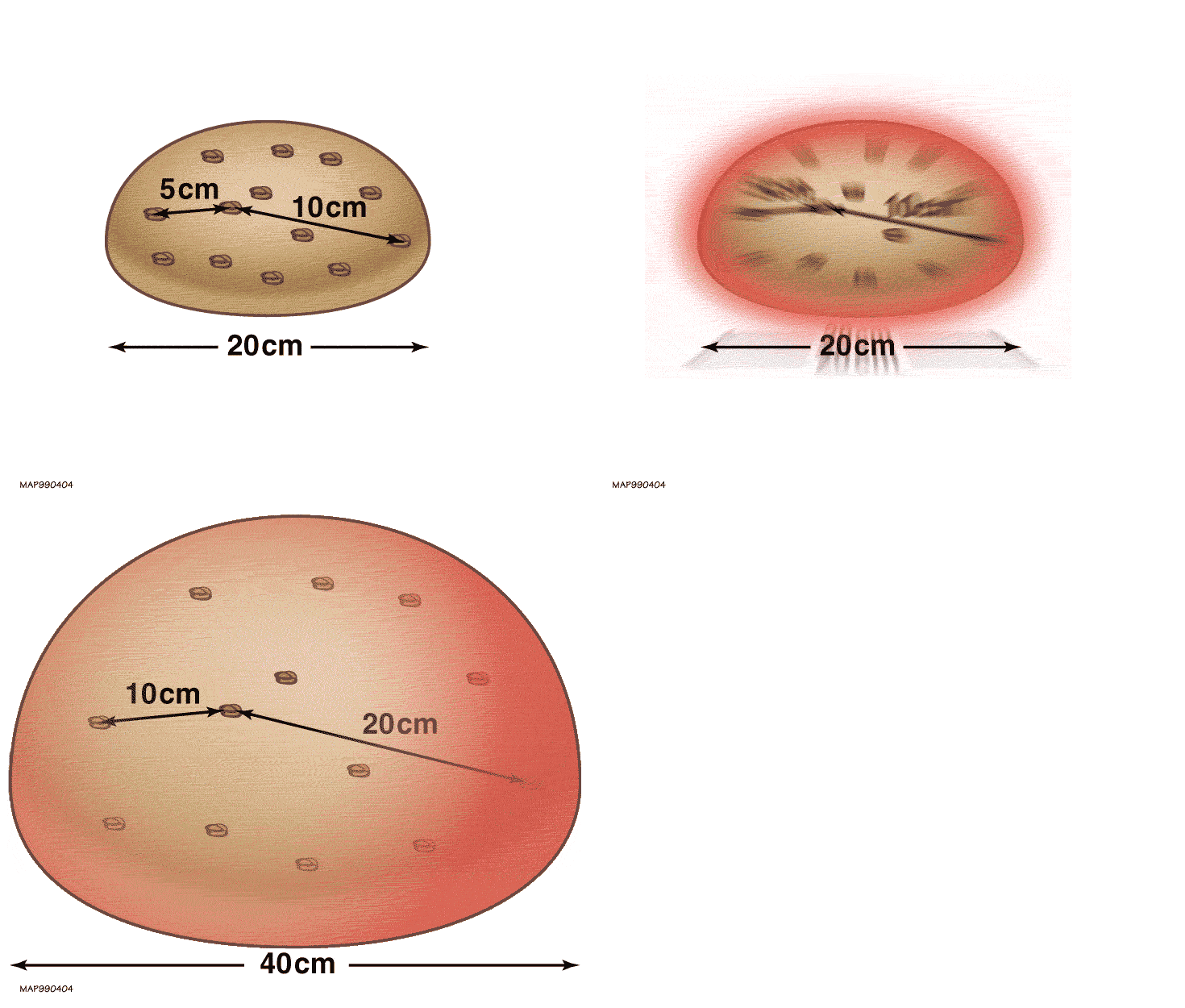 Space & Astronomy
Hubble Constant
The Hubble constant quantifies the current rate of cosmic expansion, linking a galaxy’s recessional velocity to its distance from Earth.
Space & Astronomy
Hubble Constant
The Hubble constant quantifies the current rate of cosmic expansion, linking a galaxy’s recessional velocity to its distance from Earth.