



Captain Cosmos
Space & Astronomy Editor
241Articles
2.9KTotal views
 Space & Astronomy
Stellar Wind
Stellar Wind was a secret, warrantless electronic surveillance program launched by the NSA under President George W. Bush after 9/11, later expanded under subsequent administrations.
Space & Astronomy
Stellar Wind
Stellar Wind was a secret, warrantless electronic surveillance program launched by the NSA under President George W. Bush after 9/11, later expanded under subsequent administrations.
 Space & Astronomy
Sagittarius A Black Hole
Sagittarius A* (Sgr A*) is a supermassive **black hole** located at the center of the Milky Way galaxy, a region of intense astronomical interest due to its proximity to Earth and the wealth of data collected about it.
## Overview
Sagittarius A* is a supermassive **black hole** located in the heart of the Milky Way galaxy, approximately 26,000 light-years from Earth. This **black hole** is a region in space where the gravitational pull is so strong that nothing, including light, can escape once it falls within a certain distance, known as the **event horizon**. The study of Sgr A* has provided valuable insights into the behavior of **black holes**, their role in the evolution of galaxies, and the fundamental laws of gravity.
The discovery of Sgr A* dates back to 1933, when American astronomer Karl Jansky first detected radio waves emanating from the direction of the Sagittarius constellation. Over the years, astronomers have continued to study Sgr A*, using a variety of observational techniques, including radio and infrared astronomy, to gather more information about this enigmatic object.
## History/Background
The study of Sgr A* has a rich history, with numerous milestones and discoveries contributing to our understanding of this **black hole**. In the 1970s, astronomers began to suspect that the center of the Milky Way might harbor a **black hole**, based on observations of the motion of stars near the galactic center. However, it wasn't until the 1990s that the existence of Sgr A* was confirmed, using a combination of radio and infrared observations.
In 2002, a team of astronomers led by Andrea Ghez made a groundbreaking discovery, using the Keck Observatory in Hawaii to observe the motion of stars near Sgr A*. Their findings provided strong evidence for the presence of a massive, unseen object at the center of the Milky Way, which was later confirmed to be a **black hole**. Since then, numerous studies have continued to refine our understanding of Sgr A*, including observations of its **event horizon** and the detection of **gravitational waves** produced by the **black hole**.
## Key Information
Sgr A* is a supermassive **black hole** with a mass of approximately 4 million times that of the Sun. Its **event horizon** has a diameter of about 12 million kilometers (7.5 million miles), making it one of the largest **black holes** in the Milky Way galaxy. The **black hole** is surrounded by a disk of hot, dense gas, which is thought to be the result of the accretion of material from the surrounding interstellar medium.
Sgr A* has been observed to produce a range of phenomena, including **X-rays**, **gamma rays**, and **gravitational waves**. The **X-ray** emission from Sgr A* is thought to be produced by the hot gas swirling around the **black hole**, while the **gamma rays** are likely the result of the acceleration of high-energy particles near the **event horizon**. The detection of **gravitational waves** from Sgr A* has provided a new window into the behavior of **black holes**, allowing astronomers to study their dynamics and evolution in unprecedented detail.
## Significance
The study of Sgr A* has significant implications for our understanding of the universe, from the behavior of **black holes** to the evolution of galaxies. The detection of **gravitational waves** from Sgr A* has provided a new tool for astronomers to study the behavior of **black holes**, allowing us to probe the strong-field gravity of these enigmatic objects. Additionally, the study of Sgr A* has provided insights into the role of **black holes** in the evolution of galaxies, including their impact on star formation and the distribution of gas and dust.
INFOBOX:
- Name: Sagittarius A*
- Type: Supermassive **black hole**
- Date: 1933 (first detection of radio waves)
- Location: Center of the Milky Way galaxy
- Known For: First confirmed supermassive **black hole** in the Milky Way galaxy
TAGS: **Black hole**, Sagittarius A*, Milky Way galaxy, Supermassive **black hole**, Event horizon, Gravitational waves, X-rays, Gamma rays, Galaxy evolution, Strong-field gravity.
Space & Astronomy
Sagittarius A Black Hole
Sagittarius A* (Sgr A*) is a supermassive **black hole** located at the center of the Milky Way galaxy, a region of intense astronomical interest due to its proximity to Earth and the wealth of data collected about it.
## Overview
Sagittarius A* is a supermassive **black hole** located in the heart of the Milky Way galaxy, approximately 26,000 light-years from Earth. This **black hole** is a region in space where the gravitational pull is so strong that nothing, including light, can escape once it falls within a certain distance, known as the **event horizon**. The study of Sgr A* has provided valuable insights into the behavior of **black holes**, their role in the evolution of galaxies, and the fundamental laws of gravity.
The discovery of Sgr A* dates back to 1933, when American astronomer Karl Jansky first detected radio waves emanating from the direction of the Sagittarius constellation. Over the years, astronomers have continued to study Sgr A*, using a variety of observational techniques, including radio and infrared astronomy, to gather more information about this enigmatic object.
## History/Background
The study of Sgr A* has a rich history, with numerous milestones and discoveries contributing to our understanding of this **black hole**. In the 1970s, astronomers began to suspect that the center of the Milky Way might harbor a **black hole**, based on observations of the motion of stars near the galactic center. However, it wasn't until the 1990s that the existence of Sgr A* was confirmed, using a combination of radio and infrared observations.
In 2002, a team of astronomers led by Andrea Ghez made a groundbreaking discovery, using the Keck Observatory in Hawaii to observe the motion of stars near Sgr A*. Their findings provided strong evidence for the presence of a massive, unseen object at the center of the Milky Way, which was later confirmed to be a **black hole**. Since then, numerous studies have continued to refine our understanding of Sgr A*, including observations of its **event horizon** and the detection of **gravitational waves** produced by the **black hole**.
## Key Information
Sgr A* is a supermassive **black hole** with a mass of approximately 4 million times that of the Sun. Its **event horizon** has a diameter of about 12 million kilometers (7.5 million miles), making it one of the largest **black holes** in the Milky Way galaxy. The **black hole** is surrounded by a disk of hot, dense gas, which is thought to be the result of the accretion of material from the surrounding interstellar medium.
Sgr A* has been observed to produce a range of phenomena, including **X-rays**, **gamma rays**, and **gravitational waves**. The **X-ray** emission from Sgr A* is thought to be produced by the hot gas swirling around the **black hole**, while the **gamma rays** are likely the result of the acceleration of high-energy particles near the **event horizon**. The detection of **gravitational waves** from Sgr A* has provided a new window into the behavior of **black holes**, allowing astronomers to study their dynamics and evolution in unprecedented detail.
## Significance
The study of Sgr A* has significant implications for our understanding of the universe, from the behavior of **black holes** to the evolution of galaxies. The detection of **gravitational waves** from Sgr A* has provided a new tool for astronomers to study the behavior of **black holes**, allowing us to probe the strong-field gravity of these enigmatic objects. Additionally, the study of Sgr A* has provided insights into the role of **black holes** in the evolution of galaxies, including their impact on star formation and the distribution of gas and dust.
INFOBOX:
- Name: Sagittarius A*
- Type: Supermassive **black hole**
- Date: 1933 (first detection of radio waves)
- Location: Center of the Milky Way galaxy
- Known For: First confirmed supermassive **black hole** in the Milky Way galaxy
TAGS: **Black hole**, Sagittarius A*, Milky Way galaxy, Supermassive **black hole**, Event horizon, Gravitational waves, X-rays, Gamma rays, Galaxy evolution, Strong-field gravity.
 Space & Astronomy
SpaceX Falcon 9
The SpaceX Falcon 9 is a partially reusable, two-stage-to-orbit, medium-lift launch vehicle that has revolutionized the space industry with its reliability, high launch cadence, and historic achievements.
## Overview
The SpaceX Falcon 9 is a game-changing launch vehicle designed and manufactured by SpaceX, a private aerospace manufacturer and space transport services company founded by Elon Musk. The Falcon 9 is a significant milestone in the history of space exploration, marking a new era of commercial spaceflight and reusability. This medium-lift launch vehicle has consistently demonstrated its reliability and efficiency, with a remarkable success rate of 617 successful launches out of 620 attempts. The Falcon 9's versatility has enabled it to carry a wide range of payloads, from small satellites to large crew vehicles, making it a crucial component of modern space missions.
The Falcon 9's innovative design features a reusable first stage, which can return to Earth and be refurbished for future launches. This reusability has significantly reduced the cost of access to space, making it more accessible to governments, private companies, and individuals. The second stage of the Falcon 9 is also designed for reusability, although it is not currently recovered after launch. The rocket's high thrust-to-weight ratio and efficient engine design contribute to its impressive performance and payload capacity.
## History/Background
The development of the Falcon 9 began in 2005, with the first launch taking place on June 4, 2010. The initial launch was a test flight, carrying a dummy payload to an altitude of 100 km. The first commercial resupply mission to the International Space Station (ISS) launched on October 8, 2012, marking a significant milestone in the history of commercial spaceflight. Since then, the Falcon 9 has undergone numerous upgrades and improvements, including the introduction of the Block 5 configuration, which features a more efficient engine and improved reusability.
## Key Information
- **Launch History**: The Falcon 9 has launched 617 times, with a success rate of 99.7%.
- **Payload Capacity**: The Falcon 9 can carry a maximum payload of 22,800 kg (50,300 lb) to Low Earth Orbit (LEO).
- **Reusability**: The first stage of the Falcon 9 is reusable, with over 100 successful recoveries.
- **First Commercial Resupply Mission**: The Falcon 9 launched the first commercial resupply mission to the ISS on October 8, 2012.
- **First Commercial Crew Mission**: The Falcon 9 launched the first commercial crew mission, Demo-2, on May 30, 2020, carrying astronauts Doug Hurley and Bob Behnken to the ISS.
- **First Commercial Rocket to Launch Humans to Orbit**: The Falcon 9 became the first commercial rocket to launch humans to orbit on May 30, 2020.
## Significance
The SpaceX Falcon 9 has revolutionized the space industry, making it more accessible and affordable for governments, private companies, and individuals. The rocket's reusability has significantly reduced the cost of access to space, enabling more frequent and ambitious space missions. The Falcon 9's reliability and high launch cadence have also made it a crucial component of modern space missions, including satellite launches, space station resupply, and crewed missions to the ISS.
INFOBOX:
- Name: SpaceX Falcon 9
- Type: Medium-lift launch vehicle
- Date: First launch on June 4, 2010
- Location: Cape Canaveral Air Force Station, Florida
- Known For: First commercial rocket to launch humans to orbit, first commercial resupply mission to the ISS, and high launch cadence.
TAGS: SpaceX, Falcon 9, Reusability, Commercial Spaceflight, Launch Vehicle, Space Exploration, Space Industry, Satellite Launch, Space Station Resupply, Crewed Missions, Medium-lift Launch Vehicle.
Space & Astronomy
SpaceX Falcon 9
The SpaceX Falcon 9 is a partially reusable, two-stage-to-orbit, medium-lift launch vehicle that has revolutionized the space industry with its reliability, high launch cadence, and historic achievements.
## Overview
The SpaceX Falcon 9 is a game-changing launch vehicle designed and manufactured by SpaceX, a private aerospace manufacturer and space transport services company founded by Elon Musk. The Falcon 9 is a significant milestone in the history of space exploration, marking a new era of commercial spaceflight and reusability. This medium-lift launch vehicle has consistently demonstrated its reliability and efficiency, with a remarkable success rate of 617 successful launches out of 620 attempts. The Falcon 9's versatility has enabled it to carry a wide range of payloads, from small satellites to large crew vehicles, making it a crucial component of modern space missions.
The Falcon 9's innovative design features a reusable first stage, which can return to Earth and be refurbished for future launches. This reusability has significantly reduced the cost of access to space, making it more accessible to governments, private companies, and individuals. The second stage of the Falcon 9 is also designed for reusability, although it is not currently recovered after launch. The rocket's high thrust-to-weight ratio and efficient engine design contribute to its impressive performance and payload capacity.
## History/Background
The development of the Falcon 9 began in 2005, with the first launch taking place on June 4, 2010. The initial launch was a test flight, carrying a dummy payload to an altitude of 100 km. The first commercial resupply mission to the International Space Station (ISS) launched on October 8, 2012, marking a significant milestone in the history of commercial spaceflight. Since then, the Falcon 9 has undergone numerous upgrades and improvements, including the introduction of the Block 5 configuration, which features a more efficient engine and improved reusability.
## Key Information
- **Launch History**: The Falcon 9 has launched 617 times, with a success rate of 99.7%.
- **Payload Capacity**: The Falcon 9 can carry a maximum payload of 22,800 kg (50,300 lb) to Low Earth Orbit (LEO).
- **Reusability**: The first stage of the Falcon 9 is reusable, with over 100 successful recoveries.
- **First Commercial Resupply Mission**: The Falcon 9 launched the first commercial resupply mission to the ISS on October 8, 2012.
- **First Commercial Crew Mission**: The Falcon 9 launched the first commercial crew mission, Demo-2, on May 30, 2020, carrying astronauts Doug Hurley and Bob Behnken to the ISS.
- **First Commercial Rocket to Launch Humans to Orbit**: The Falcon 9 became the first commercial rocket to launch humans to orbit on May 30, 2020.
## Significance
The SpaceX Falcon 9 has revolutionized the space industry, making it more accessible and affordable for governments, private companies, and individuals. The rocket's reusability has significantly reduced the cost of access to space, enabling more frequent and ambitious space missions. The Falcon 9's reliability and high launch cadence have also made it a crucial component of modern space missions, including satellite launches, space station resupply, and crewed missions to the ISS.
INFOBOX:
- Name: SpaceX Falcon 9
- Type: Medium-lift launch vehicle
- Date: First launch on June 4, 2010
- Location: Cape Canaveral Air Force Station, Florida
- Known For: First commercial rocket to launch humans to orbit, first commercial resupply mission to the ISS, and high launch cadence.
TAGS: SpaceX, Falcon 9, Reusability, Commercial Spaceflight, Launch Vehicle, Space Exploration, Space Industry, Satellite Launch, Space Station Resupply, Crewed Missions, Medium-lift Launch Vehicle.
 Space & Astronomy
Mars Pathfinder
The Mars Pathfinder was a groundbreaking American robotic spacecraft that successfully landed a base station and a roving probe on Mars in 1997, marking a significant milestone in interplanetary exploration.
## Overview
The Mars Pathfinder was a joint NASA mission designed to explore the surface of Mars, providing insights into the planet's geology, atmosphere, and potential habitability. Launched on December 4, 1996, the mission aimed to demonstrate the feasibility of landing a small, lightweight rover on the Martian surface. The spacecraft consisted of two primary components: the **lander**, renamed the **Carl Sagan Memorial Station**, and a 10.6 kg (23 lb) **rover**, called **Sojourner**.
During the journey to Mars, the Mars Pathfinder traveled over 480 million kilometers, entering Martian orbit on July 4, 1997. After a series of precision landings, the spacecraft touched down on the Martian surface on July 4, 1997, at 20:00 UTC. The landing site, near the Martian equator, was chosen for its relatively smooth terrain and low elevation. Upon landing, the Carl Sagan Memorial Station deployed a **bounce test** device, known as the **Airborne Terminal Velocity Sensor (ATVS)**, to measure the Martian atmosphere's properties.
## History/Background
The Mars Pathfinder mission was conceptualized in the early 1990s, with the primary objective of deploying a rover on the Martian surface to study the planet's geology and search for signs of life. The project faced significant challenges, including the need for a lightweight, high-efficiency propulsion system and a robust communication link with Earth. The NASA Jet Propulsion Laboratory (JPL) was responsible for designing, building, and operating the Mars Pathfinder spacecraft.
Key dates:
- December 4, 1996: Launch of the Mars Pathfinder spacecraft from Cape Canaveral's Space Shuttle Atlantis launchpad (STS-74).
- July 4, 1997: Mars Pathfinder enters Martian orbit.
- July 4, 1997: Successful landing of the Carl Sagan Memorial Station on the Martian surface.
- September 1997: First deployment of the Sojourner rover on the Martian surface.
## Key Information
- **Landing Site**: The Mars Pathfinder landed near the Martian equator, within the **Ares Vallis** region.
- **Rover Design**: Sojourner was a 10.6 kg (23 lb) wheeled rover, powered by a **nickel-hydrogen battery** pack.
- **Mission Duration**: The Mars Pathfinder mission lasted for 83 sols (Martian days) on the Martian surface, with the rover operating for 26 sols.
- **Key Discoveries**: The mission provided valuable insights into Martian geology, atmospheric properties, and potential habitability.
- **First Roving Probe**: Sojourner became the first rover to operate outside the Earth-Moon system, paving the way for future Mars rover missions.
## Significance
The Mars Pathfinder mission marked a significant milestone in interplanetary exploration, demonstrating the feasibility of landing a small, lightweight rover on the Martian surface. The mission's success paved the way for future Mars rover missions, including the highly successful **Spirit** and **Opportunity** rovers, which far exceeded their planned mission duration. The Mars Pathfinder mission also laid the groundwork for the **Curiosity Rover**, which has been exploring Mars since 2012.
INFOBOX:
- Name: Mars Pathfinder
- Type: Robotic Spacecraft
- Date: July 4, 1997
- Location: Ares Vallis, Mars
- Known For: First rover to operate outside the Earth-Moon system
TAGS: Mars Exploration, Robotic Spacecraft, Interplanetary Exploration, Mars Rover, NASA, Carl Sagan Memorial Station, Sojourner Rover, Ares Vallis, Mars Geology, Atmospheric Properties, Potential Habitability.
Space & Astronomy
Mars Pathfinder
The Mars Pathfinder was a groundbreaking American robotic spacecraft that successfully landed a base station and a roving probe on Mars in 1997, marking a significant milestone in interplanetary exploration.
## Overview
The Mars Pathfinder was a joint NASA mission designed to explore the surface of Mars, providing insights into the planet's geology, atmosphere, and potential habitability. Launched on December 4, 1996, the mission aimed to demonstrate the feasibility of landing a small, lightweight rover on the Martian surface. The spacecraft consisted of two primary components: the **lander**, renamed the **Carl Sagan Memorial Station**, and a 10.6 kg (23 lb) **rover**, called **Sojourner**.
During the journey to Mars, the Mars Pathfinder traveled over 480 million kilometers, entering Martian orbit on July 4, 1997. After a series of precision landings, the spacecraft touched down on the Martian surface on July 4, 1997, at 20:00 UTC. The landing site, near the Martian equator, was chosen for its relatively smooth terrain and low elevation. Upon landing, the Carl Sagan Memorial Station deployed a **bounce test** device, known as the **Airborne Terminal Velocity Sensor (ATVS)**, to measure the Martian atmosphere's properties.
## History/Background
The Mars Pathfinder mission was conceptualized in the early 1990s, with the primary objective of deploying a rover on the Martian surface to study the planet's geology and search for signs of life. The project faced significant challenges, including the need for a lightweight, high-efficiency propulsion system and a robust communication link with Earth. The NASA Jet Propulsion Laboratory (JPL) was responsible for designing, building, and operating the Mars Pathfinder spacecraft.
Key dates:
- December 4, 1996: Launch of the Mars Pathfinder spacecraft from Cape Canaveral's Space Shuttle Atlantis launchpad (STS-74).
- July 4, 1997: Mars Pathfinder enters Martian orbit.
- July 4, 1997: Successful landing of the Carl Sagan Memorial Station on the Martian surface.
- September 1997: First deployment of the Sojourner rover on the Martian surface.
## Key Information
- **Landing Site**: The Mars Pathfinder landed near the Martian equator, within the **Ares Vallis** region.
- **Rover Design**: Sojourner was a 10.6 kg (23 lb) wheeled rover, powered by a **nickel-hydrogen battery** pack.
- **Mission Duration**: The Mars Pathfinder mission lasted for 83 sols (Martian days) on the Martian surface, with the rover operating for 26 sols.
- **Key Discoveries**: The mission provided valuable insights into Martian geology, atmospheric properties, and potential habitability.
- **First Roving Probe**: Sojourner became the first rover to operate outside the Earth-Moon system, paving the way for future Mars rover missions.
## Significance
The Mars Pathfinder mission marked a significant milestone in interplanetary exploration, demonstrating the feasibility of landing a small, lightweight rover on the Martian surface. The mission's success paved the way for future Mars rover missions, including the highly successful **Spirit** and **Opportunity** rovers, which far exceeded their planned mission duration. The Mars Pathfinder mission also laid the groundwork for the **Curiosity Rover**, which has been exploring Mars since 2012.
INFOBOX:
- Name: Mars Pathfinder
- Type: Robotic Spacecraft
- Date: July 4, 1997
- Location: Ares Vallis, Mars
- Known For: First rover to operate outside the Earth-Moon system
TAGS: Mars Exploration, Robotic Spacecraft, Interplanetary Exploration, Mars Rover, NASA, Carl Sagan Memorial Station, Sojourner Rover, Ares Vallis, Mars Geology, Atmospheric Properties, Potential Habitability.
 Space & Astronomy
Star Formation
** Star formation is the gravitational collapse of dense pockets within molecular clouds that gives rise to protostars, young stellar objects, and ultimately the diverse stellar populations observed throughout the universe.
**CONTENT:**
## Overview
Star formation begins deep inside **giant molecular clouds (GMCs)**—cold, massive agglomerations of gas and dust that pervade the **interstellar medium (ISM)**. Within these clouds, turbulence, magnetic fields, and external triggers (such as supernova shocks or spiral‑arm compression) create **over‑dense clumps**. When a clump’s self‑gravity overwhelms internal pressure, it collapses, forming a **protostar** surrounded by an accretion disk. Over tens of thousands to a few million years, the protostar contracts, heats up, and eventually ignites hydrogen fusion in its core, becoming a main‑sequence star.
The process does not occur in isolation. Most newborn stars emerge in **clusters** or **stellar associations**, sharing a common natal cloud. Their evolution is intertwined with the formation of **planetary systems**, as the same accretion disks that feed the star also provide the raw material for planets, comets, and asteroids. Consequently, star formation sits at the crossroads of many astrophysical disciplines, linking the physics of the ISM, the statistics of binary and multiple systems, and the **initial mass function (IMF)** that describes the distribution of stellar masses at birth.
## History/Background
The notion that stars could form from interstellar gas dates back to the early 20th century, when **E. E. Salpeter (1955)** first quantified the IMF, hinting at a universal star‑birth recipe. In the 1960s, **Lyman Spitzer** championed the existence of cold, dense clouds, coining the term “**molecular cloud**” and proposing that they were the cradles of star formation. The launch of radio telescopes in the 1970s enabled the detection of **CO emission**, providing the first large‑scale maps of GMCs and confirming their role as stellar nurseries.
The 1980s and 1990s saw the rise of **infrared astronomy** (IRAS, ISO, Spitzer), which could pierce the dust that hides protostars, revealing **Class 0–III** evolutionary stages. Simultaneously, numerical simulations incorporating **magnetohydrodynamics (MHD)** and radiative feedback began reproducing realistic collapse scenarios, bridging theory and observation. The 21st century has been dominated by high‑resolution facilities such as **ALMA** and the **James Webb Space Telescope (JWST)**, which resolve disks and outflows on astronomical‑unit scales, refining our understanding of how stars and planets co‑evolve.
## Key Information
- **Molecular Cloud Conditions:** Temperatures ≈ 10–20 K, densities > 10³ cm⁻³, masses up to 10⁶ M☉.
- **Trigger Mechanisms:** Supernova blast waves, expanding H II regions, cloud‑cloud collisions, spiral‑arm density waves.
- **Collapse Phases:** *Pre‑stellar core* → *Class 0 protostar* (deeply embedded, strong outflows) → *Class I* (emerging, still accreting) → *Class II* (classical T Tauri star with prominent disk) → *Class III* (weak‑line T Tauri, disk dispersal).
- **Timescales:** Core collapse ≈ 10⁵ yr; protostellar accretion ≈ 10⁵–10⁶ yr; disk lifetimes ≈ 1–10 Myr.
- **Initial Mass Function:** Empirically described by a power‑law (Salpeter) for > 1 M☉ and a log‑normal turnover near 0.3 M☉, indicating that low‑mass stars dominate numerically.
- **Binary & Multiple Systems:** Roughly 50 % of solar‑type stars are in binaries; fragmentation of collapsing cores and dynamical interactions in clusters produce the observed multiplicity distribution.
- **Feedback Processes:** Protostellar jets, radiation pressure, stellar winds, and eventual supernovae inject energy, regulating further star formation and shaping the surrounding ISM.
## Significance
Understanding star formation is pivotal for **cosmic evolution**. Stars synthesize the heavy elements that seed planets and life, while their radiation and explosions drive galaxy‑scale cycles of gas cooling, heating, and enrichment. The IMF directly influences **galaxy luminosity functions**, chemical evolution models, and predictions of gravitational‑wave event rates from binary black holes and neutron stars. Moreover, the intimate link between stellar and planetary birth informs the search for **habitable worlds**, guiding where to look for exoplanets in young, nearby clusters. Finally, star‑formation studies test fundamental physics—gravity, turbulence, magnetic fields, and radiative transfer—under extreme conditions unattainable on Earth, making the field a crucible for advancing both astrophysics and computational science.
**INFOBOX:**
- Name: Star Formation
- Type: Astrophysical Process
- Date: Ongoing (primary observational breakthroughs 1960 – present)
- Location: Giant Molecular Clouds throughout galaxies
- Known For: Transforming interstellar gas into stars, establishing the initial mass function, and spawning planetary systems
**TAGS:** star formation, molecular clouds, protostars, initial mass function, stellar clusters, interstellar medium, planet formation, astrophysics
Space & Astronomy
Star Formation
** Star formation is the gravitational collapse of dense pockets within molecular clouds that gives rise to protostars, young stellar objects, and ultimately the diverse stellar populations observed throughout the universe.
**CONTENT:**
## Overview
Star formation begins deep inside **giant molecular clouds (GMCs)**—cold, massive agglomerations of gas and dust that pervade the **interstellar medium (ISM)**. Within these clouds, turbulence, magnetic fields, and external triggers (such as supernova shocks or spiral‑arm compression) create **over‑dense clumps**. When a clump’s self‑gravity overwhelms internal pressure, it collapses, forming a **protostar** surrounded by an accretion disk. Over tens of thousands to a few million years, the protostar contracts, heats up, and eventually ignites hydrogen fusion in its core, becoming a main‑sequence star.
The process does not occur in isolation. Most newborn stars emerge in **clusters** or **stellar associations**, sharing a common natal cloud. Their evolution is intertwined with the formation of **planetary systems**, as the same accretion disks that feed the star also provide the raw material for planets, comets, and asteroids. Consequently, star formation sits at the crossroads of many astrophysical disciplines, linking the physics of the ISM, the statistics of binary and multiple systems, and the **initial mass function (IMF)** that describes the distribution of stellar masses at birth.
## History/Background
The notion that stars could form from interstellar gas dates back to the early 20th century, when **E. E. Salpeter (1955)** first quantified the IMF, hinting at a universal star‑birth recipe. In the 1960s, **Lyman Spitzer** championed the existence of cold, dense clouds, coining the term “**molecular cloud**” and proposing that they were the cradles of star formation. The launch of radio telescopes in the 1970s enabled the detection of **CO emission**, providing the first large‑scale maps of GMCs and confirming their role as stellar nurseries.
The 1980s and 1990s saw the rise of **infrared astronomy** (IRAS, ISO, Spitzer), which could pierce the dust that hides protostars, revealing **Class 0–III** evolutionary stages. Simultaneously, numerical simulations incorporating **magnetohydrodynamics (MHD)** and radiative feedback began reproducing realistic collapse scenarios, bridging theory and observation. The 21st century has been dominated by high‑resolution facilities such as **ALMA** and the **James Webb Space Telescope (JWST)**, which resolve disks and outflows on astronomical‑unit scales, refining our understanding of how stars and planets co‑evolve.
## Key Information
- **Molecular Cloud Conditions:** Temperatures ≈ 10–20 K, densities > 10³ cm⁻³, masses up to 10⁶ M☉.
- **Trigger Mechanisms:** Supernova blast waves, expanding H II regions, cloud‑cloud collisions, spiral‑arm density waves.
- **Collapse Phases:** *Pre‑stellar core* → *Class 0 protostar* (deeply embedded, strong outflows) → *Class I* (emerging, still accreting) → *Class II* (classical T Tauri star with prominent disk) → *Class III* (weak‑line T Tauri, disk dispersal).
- **Timescales:** Core collapse ≈ 10⁵ yr; protostellar accretion ≈ 10⁵–10⁶ yr; disk lifetimes ≈ 1–10 Myr.
- **Initial Mass Function:** Empirically described by a power‑law (Salpeter) for > 1 M☉ and a log‑normal turnover near 0.3 M☉, indicating that low‑mass stars dominate numerically.
- **Binary & Multiple Systems:** Roughly 50 % of solar‑type stars are in binaries; fragmentation of collapsing cores and dynamical interactions in clusters produce the observed multiplicity distribution.
- **Feedback Processes:** Protostellar jets, radiation pressure, stellar winds, and eventual supernovae inject energy, regulating further star formation and shaping the surrounding ISM.
## Significance
Understanding star formation is pivotal for **cosmic evolution**. Stars synthesize the heavy elements that seed planets and life, while their radiation and explosions drive galaxy‑scale cycles of gas cooling, heating, and enrichment. The IMF directly influences **galaxy luminosity functions**, chemical evolution models, and predictions of gravitational‑wave event rates from binary black holes and neutron stars. Moreover, the intimate link between stellar and planetary birth informs the search for **habitable worlds**, guiding where to look for exoplanets in young, nearby clusters. Finally, star‑formation studies test fundamental physics—gravity, turbulence, magnetic fields, and radiative transfer—under extreme conditions unattainable on Earth, making the field a crucible for advancing both astrophysics and computational science.
**INFOBOX:**
- Name: Star Formation
- Type: Astrophysical Process
- Date: Ongoing (primary observational breakthroughs 1960 – present)
- Location: Giant Molecular Clouds throughout galaxies
- Known For: Transforming interstellar gas into stars, establishing the initial mass function, and spawning planetary systems
**TAGS:** star formation, molecular clouds, protostars, initial mass function, stellar clusters, interstellar medium, planet formation, astrophysics
 Mathematics
Spacesuit Technology
Spacesuits are specialized garments designed to protect astronauts from the harsh environment of space while enabling mobility and functionality during extravehicular activities (EVAs).
Mathematics
Spacesuit Technology
Spacesuits are specialized garments designed to protect astronauts from the harsh environment of space while enabling mobility and functionality during extravehicular activities (EVAs).
 Space & Astronomy
Sombrero Galaxy
** The Sombrero Galaxy (M 104) is a massive, dust‑enshrouded galaxy in Virgo/Corvus, notable for its bright central bulge, prominent dust lane, and a supermassive black hole, lying about 9.55 Mpc from the Milky Way.
**CONTENT:**
## Overview
The **Sombrero Galaxy**, catalogued as **Messier 104 (M 104)**, presents a striking visual that resembles a wide‑brimmed sombrero hat—hence its popular name. It resides near the border of the constellations **Virgo** and **Corvus**, at a distance of roughly **9.55 megaparsecs** (≈31 million light‑years). Its **isophotal diameter** spans **29.1–32.3 kiloparsecs**, making it marginally larger than our own Milky Way. The galaxy’s most conspicuous features are a luminous, spheroidal bulge and a dark, edge‑on dust lane that bisects the central region, giving the appearance of a hat’s brim.
Classifying the Sombrero Galaxy has proved challenging. Its dominant bulge and tightly wound dust lane suggest a **lenticular (S0)** morphology, yet the presence of faint spiral arms and a substantial halo of globular clusters hint at a **spiral (Sa)** nature. Modern surveys often label it as an **SA(s) a** or **S0** galaxy, reflecting its hybrid characteristics. The galaxy is a member of the **Virgo II Groups**, a filament of galaxies extending from the southern edge of the **Virgo Supercluster**, linking it dynamically to the larger cosmic web.
## History/Background
The Sombrero Galaxy was first recorded by French astronomer **Pierre Méchain** on **May 12, 1781**, during his systematic sweep of the northern sky. Méchain noted it as a “nebula” and subsequently reported it to **Charles Messier**, who added it to his famous catalogue as **M 104** later that year. For much of the 19th and early 20th centuries, the object was treated as a nebular curiosity, its true nature hidden by the limited resolving power of ground‑based telescopes.
The advent of **photographic plates** in the early 1900s revealed the dark lane, prompting speculation that the galaxy might be an edge‑on spiral. In the 1970s, **radio observations** detected a substantial amount of neutral hydrogen (HI) and molecular gas, supporting the spiral hypothesis. The decisive breakthrough arrived with the **Hubble Space Telescope (HST)** in the 1990s, whose high‑resolution imaging resolved the central bulge, the dust lane, and a rich system of **~2,000 globular clusters**—far more than the Milky Way’s ~150. Spectroscopic studies using HST and ground‑based observatories measured the velocity dispersion of stars near the core, leading to the discovery of a **supermassive black hole** of roughly **10⁹ M☉**, one of the most massive known in a nearby galaxy.
## Key Information
- **Distance:** ~9.55 Mpc (≈31 million ly)
- **Morphology:** Lenticular (S0) / early‑type spiral (Sa) – hybrid classification
- **Diameter:** 29.1–32.3 kpc (≈95,000–105,000 ly)
- **Apparent magnitude:** 8.0 (visible with modest amateur telescopes)
- **Central bulge:** Dominant, bright, composed of old, metal‑rich stars
- **Dust lane:** Prominent, edge‑on, composed of cold interstellar medium; blocks light from the bulge, creating the “brim” effect
- **Supermassive black hole:** ~1 billion M☉, inferred from stellar dynamics and gas kinematics
- **Globular cluster system:** ~2,000 clusters, indicating a massive halo and an active early formation epoch
- **Group membership:** Part of the **Virgo II Groups**, linking it to the Virgo Supercluster’s southern filament.
## Significance
The Sombrero Galaxy serves as a **benchmark object** for studying the interplay between galactic bulges, dust lanes, and central black holes. Its relatively face‑on dust lane allows astronomers to probe the **vertical structure of interstellar dust** and assess how such a feature influences star formation—observations show that, despite abundant gas, the galaxy’s star‑forming activity is modest, offering clues about quenching mechanisms in early‑type systems. The massive black hole provides a nearby laboratory for testing **black‑hole scaling relations** (e.g., the M‑σ relation) in a galaxy where the bulge dominates the mass budget.
Moreover, the unusually rich **globular cluster system** challenges models of cluster formation, suggesting that the Sombrero experienced a **vigorous early merger history** or sustained periods of intense star formation. Its location within the **Virgo II filament** makes it a key tracer of the **large‑scale structure** of the local universe, helping map the gravitational flow of matter toward the Virgo Supercluster. For amateur astronomers, the galaxy’s striking visual—easily captured with modest equipment—has become an iconic target, bridging public fascination with cutting‑edge research.
**INFOBOX:**
- Name: Sombrero Galaxy (Messier 104)
- Type: Lenticular/Early‑type spiral galaxy (S0/a)
- Date: Discovered 1781 (catalogued by Messier)
- Location: Constellation Virgo (bordering Corvus)
- Known For: Prominent dust lane, massive central bulge, ~10⁹ M☉ supermassive black hole, rich globular‑cluster system
**TAGS:** galaxy, Sombrero Galaxy, Messier 104, lenticular galaxy, dust lane, supermassive black hole, Virgo Supercluster, astronomy
Space & Astronomy
Vega Star
** Vega (Alpha Lyrae) is a bright, nearby A‑type main‑sequence star that serves as a cornerstone for stellar astrophysics, photometric calibration, and the search for exoplanets.
**CONTENT:**
## Overview
Vega, designated **α Lyrae**, shines at a visual magnitude of 0.03, making it the fifth‑brightest star in the night sky and the brightest star in the constellation Lyra. Located roughly **25.04 light‑years** (7.68 pc) from the Sun, Vega is an **A0 V** main‑sequence star whose intense blue‑white light has been a reference point for astronomers since the early 20th century. Its rapid rotation—about **274 km s⁻¹** at the equator—causes an oblate shape, with the equatorial radius roughly **19 %** larger than the polar radius, and produces a temperature gradient that makes the poles hotter and brighter than the equator.
Beyond its visual brilliance, Vega is a **benchmark star** for calibrating photometric systems, defining the zero point of the Johnson‑Cousins UBV system, and anchoring the infrared magnitude scale used by space‑based observatories such as **IRAS**, **Spitzer**, and **WISE**. Its proximity and relative isolation also make it an ideal laboratory for studying stellar atmospheres, debris disks, and the early stages of planetary system formation.
## History/Background
The name “Vega” derives from the Arabic *al‑waqi‘* (“the falling” or “the landing”), reflecting its position in the ancient asterism of the **Summer Triangle**. Human observers have recorded Vega’s brilliance for millennia, with references appearing in Chinese, Greek, and Arabic star catalogues. In **1850**, the German astronomer **Friedrich Bessel** measured Vega’s parallax, obtaining the first reliable distance estimate for a star other than the Sun, a breakthrough that cemented the concept of a three‑dimensional universe.
In **1905**, **Ejnar Hertzsprung** and **Henry Norris Russell** placed Vega on the **Hertzsprung–Russell diagram**, establishing it as a prototype for A‑type main‑sequence stars. The **1930s** saw the discovery of a **circumstellar dust disk** around Vega via infrared excess detected by the **IRAS** satellite, marking the first identification of a debris disk and sparking the modern field of exoplanetary debris studies. Subsequent high‑resolution imaging (e.g., with the **Hubble Space Telescope** and **ALMA**) has revealed a complex, multi‑ringed disk that likely harbors unseen planetary bodies shaping its structure.
## Key Information
- **Spectral Type:** A0 V (hydrogen‑rich, blue‑white)
- **Mass:** ≈ 2.1 M☉ (solar masses)
- **Radius:** ≈ 2.4 R☉ (solar radii)
- **Luminosity:** ≈ 40 L☉ (solar luminosities)
- **Effective Temperature:** ≈ 9,600 K (polar) to 8,200 K (equator) due to rotational flattening
- **Rotation Period:** ≈ 0.5 days (near‑critical velocity)
- **Age:** ≈ 455 Myr, younger than the Sun but past the zero‑age main sequence
- **Debris Disk:** Extends from ~ 14 AU to > 100 AU, composed of silicate and carbonaceous grains; shows asymmetries suggestive of planetary perturbations.
Vega’s **metallicity** is slightly sub‑solar ([Fe/H] ≈ −0.5), indicating it formed from a region of the Galaxy with modest heavy‑element enrichment. Its **space motion** (U, V, W ≈ −14, −15, −7 km s⁻¹) places it in the **thin disk** population, moving roughly parallel to the Sun’s orbit around the Milky Way.
## Significance
Vega’s role as a **photometric standard** cannot be overstated; virtually every modern optical and infrared survey ties its magnitude scale to Vega’s flux, ensuring uniformity across decades of data. The star’s **rapid rotation** provides a natural laboratory for testing models of stellar interior dynamics, gravity darkening, and angular momentum loss. Its **debris disk** was the first of its kind discovered, prompting the paradigm that planetary systems are a common outcome of star formation; today, over a thousand debris disks are known, many of which echo Vega’s architecture.
In the realm of **exoplanet research**, Vega is a prime target for high‑contrast imaging and radial‑velocity campaigns seeking massive, wide‑orbit planets that could sculpt its dust rings. Although no confirmed planets have yet been detected, the disk’s clumpy structure hints at unseen companions, making Vega a focal point for next‑generation instruments such as the **James Webb Space Telescope** and the upcoming **Extremely Large Telescopes**.
Finally, Vega’s cultural imprint—appearing in poetry, music, and navigation lore—bridges science and humanity, reminding us that the same point of light that guides sailors also guides astrophysicists toward deeper understanding of our cosmic neighborhood.
**INFOBOX:**
- Name: Vega (Alpha Lyrae)
- Type: A‑type main‑sequence star with circumstellar debris disk
- Date: First measured parallax 1850; modern photometric standard 1905‑present
- Location: Constellation Lyra, ~ 25 light‑years from the Sun
- Known For: Photometric zero point, first identified debris disk, rapid rotation
**TAGS:** astronomy, stellar astrophysics, photometric standards, debris disks, exoplanetary systems, A-type stars, Vega, Lyra
Space & Astronomy
Sombrero Galaxy
** The Sombrero Galaxy (M 104) is a massive, dust‑enshrouded galaxy in Virgo/Corvus, notable for its bright central bulge, prominent dust lane, and a supermassive black hole, lying about 9.55 Mpc from the Milky Way.
**CONTENT:**
## Overview
The **Sombrero Galaxy**, catalogued as **Messier 104 (M 104)**, presents a striking visual that resembles a wide‑brimmed sombrero hat—hence its popular name. It resides near the border of the constellations **Virgo** and **Corvus**, at a distance of roughly **9.55 megaparsecs** (≈31 million light‑years). Its **isophotal diameter** spans **29.1–32.3 kiloparsecs**, making it marginally larger than our own Milky Way. The galaxy’s most conspicuous features are a luminous, spheroidal bulge and a dark, edge‑on dust lane that bisects the central region, giving the appearance of a hat’s brim.
Classifying the Sombrero Galaxy has proved challenging. Its dominant bulge and tightly wound dust lane suggest a **lenticular (S0)** morphology, yet the presence of faint spiral arms and a substantial halo of globular clusters hint at a **spiral (Sa)** nature. Modern surveys often label it as an **SA(s) a** or **S0** galaxy, reflecting its hybrid characteristics. The galaxy is a member of the **Virgo II Groups**, a filament of galaxies extending from the southern edge of the **Virgo Supercluster**, linking it dynamically to the larger cosmic web.
## History/Background
The Sombrero Galaxy was first recorded by French astronomer **Pierre Méchain** on **May 12, 1781**, during his systematic sweep of the northern sky. Méchain noted it as a “nebula” and subsequently reported it to **Charles Messier**, who added it to his famous catalogue as **M 104** later that year. For much of the 19th and early 20th centuries, the object was treated as a nebular curiosity, its true nature hidden by the limited resolving power of ground‑based telescopes.
The advent of **photographic plates** in the early 1900s revealed the dark lane, prompting speculation that the galaxy might be an edge‑on spiral. In the 1970s, **radio observations** detected a substantial amount of neutral hydrogen (HI) and molecular gas, supporting the spiral hypothesis. The decisive breakthrough arrived with the **Hubble Space Telescope (HST)** in the 1990s, whose high‑resolution imaging resolved the central bulge, the dust lane, and a rich system of **~2,000 globular clusters**—far more than the Milky Way’s ~150. Spectroscopic studies using HST and ground‑based observatories measured the velocity dispersion of stars near the core, leading to the discovery of a **supermassive black hole** of roughly **10⁹ M☉**, one of the most massive known in a nearby galaxy.
## Key Information
- **Distance:** ~9.55 Mpc (≈31 million ly)
- **Morphology:** Lenticular (S0) / early‑type spiral (Sa) – hybrid classification
- **Diameter:** 29.1–32.3 kpc (≈95,000–105,000 ly)
- **Apparent magnitude:** 8.0 (visible with modest amateur telescopes)
- **Central bulge:** Dominant, bright, composed of old, metal‑rich stars
- **Dust lane:** Prominent, edge‑on, composed of cold interstellar medium; blocks light from the bulge, creating the “brim” effect
- **Supermassive black hole:** ~1 billion M☉, inferred from stellar dynamics and gas kinematics
- **Globular cluster system:** ~2,000 clusters, indicating a massive halo and an active early formation epoch
- **Group membership:** Part of the **Virgo II Groups**, linking it to the Virgo Supercluster’s southern filament.
## Significance
The Sombrero Galaxy serves as a **benchmark object** for studying the interplay between galactic bulges, dust lanes, and central black holes. Its relatively face‑on dust lane allows astronomers to probe the **vertical structure of interstellar dust** and assess how such a feature influences star formation—observations show that, despite abundant gas, the galaxy’s star‑forming activity is modest, offering clues about quenching mechanisms in early‑type systems. The massive black hole provides a nearby laboratory for testing **black‑hole scaling relations** (e.g., the M‑σ relation) in a galaxy where the bulge dominates the mass budget.
Moreover, the unusually rich **globular cluster system** challenges models of cluster formation, suggesting that the Sombrero experienced a **vigorous early merger history** or sustained periods of intense star formation. Its location within the **Virgo II filament** makes it a key tracer of the **large‑scale structure** of the local universe, helping map the gravitational flow of matter toward the Virgo Supercluster. For amateur astronomers, the galaxy’s striking visual—easily captured with modest equipment—has become an iconic target, bridging public fascination with cutting‑edge research.
**INFOBOX:**
- Name: Sombrero Galaxy (Messier 104)
- Type: Lenticular/Early‑type spiral galaxy (S0/a)
- Date: Discovered 1781 (catalogued by Messier)
- Location: Constellation Virgo (bordering Corvus)
- Known For: Prominent dust lane, massive central bulge, ~10⁹ M☉ supermassive black hole, rich globular‑cluster system
**TAGS:** galaxy, Sombrero Galaxy, Messier 104, lenticular galaxy, dust lane, supermassive black hole, Virgo Supercluster, astronomy
Space & Astronomy
Vega Star
** Vega (Alpha Lyrae) is a bright, nearby A‑type main‑sequence star that serves as a cornerstone for stellar astrophysics, photometric calibration, and the search for exoplanets.
**CONTENT:**
## Overview
Vega, designated **α Lyrae**, shines at a visual magnitude of 0.03, making it the fifth‑brightest star in the night sky and the brightest star in the constellation Lyra. Located roughly **25.04 light‑years** (7.68 pc) from the Sun, Vega is an **A0 V** main‑sequence star whose intense blue‑white light has been a reference point for astronomers since the early 20th century. Its rapid rotation—about **274 km s⁻¹** at the equator—causes an oblate shape, with the equatorial radius roughly **19 %** larger than the polar radius, and produces a temperature gradient that makes the poles hotter and brighter than the equator.
Beyond its visual brilliance, Vega is a **benchmark star** for calibrating photometric systems, defining the zero point of the Johnson‑Cousins UBV system, and anchoring the infrared magnitude scale used by space‑based observatories such as **IRAS**, **Spitzer**, and **WISE**. Its proximity and relative isolation also make it an ideal laboratory for studying stellar atmospheres, debris disks, and the early stages of planetary system formation.
## History/Background
The name “Vega” derives from the Arabic *al‑waqi‘* (“the falling” or “the landing”), reflecting its position in the ancient asterism of the **Summer Triangle**. Human observers have recorded Vega’s brilliance for millennia, with references appearing in Chinese, Greek, and Arabic star catalogues. In **1850**, the German astronomer **Friedrich Bessel** measured Vega’s parallax, obtaining the first reliable distance estimate for a star other than the Sun, a breakthrough that cemented the concept of a three‑dimensional universe.
In **1905**, **Ejnar Hertzsprung** and **Henry Norris Russell** placed Vega on the **Hertzsprung–Russell diagram**, establishing it as a prototype for A‑type main‑sequence stars. The **1930s** saw the discovery of a **circumstellar dust disk** around Vega via infrared excess detected by the **IRAS** satellite, marking the first identification of a debris disk and sparking the modern field of exoplanetary debris studies. Subsequent high‑resolution imaging (e.g., with the **Hubble Space Telescope** and **ALMA**) has revealed a complex, multi‑ringed disk that likely harbors unseen planetary bodies shaping its structure.
## Key Information
- **Spectral Type:** A0 V (hydrogen‑rich, blue‑white)
- **Mass:** ≈ 2.1 M☉ (solar masses)
- **Radius:** ≈ 2.4 R☉ (solar radii)
- **Luminosity:** ≈ 40 L☉ (solar luminosities)
- **Effective Temperature:** ≈ 9,600 K (polar) to 8,200 K (equator) due to rotational flattening
- **Rotation Period:** ≈ 0.5 days (near‑critical velocity)
- **Age:** ≈ 455 Myr, younger than the Sun but past the zero‑age main sequence
- **Debris Disk:** Extends from ~ 14 AU to > 100 AU, composed of silicate and carbonaceous grains; shows asymmetries suggestive of planetary perturbations.
Vega’s **metallicity** is slightly sub‑solar ([Fe/H] ≈ −0.5), indicating it formed from a region of the Galaxy with modest heavy‑element enrichment. Its **space motion** (U, V, W ≈ −14, −15, −7 km s⁻¹) places it in the **thin disk** population, moving roughly parallel to the Sun’s orbit around the Milky Way.
## Significance
Vega’s role as a **photometric standard** cannot be overstated; virtually every modern optical and infrared survey ties its magnitude scale to Vega’s flux, ensuring uniformity across decades of data. The star’s **rapid rotation** provides a natural laboratory for testing models of stellar interior dynamics, gravity darkening, and angular momentum loss. Its **debris disk** was the first of its kind discovered, prompting the paradigm that planetary systems are a common outcome of star formation; today, over a thousand debris disks are known, many of which echo Vega’s architecture.
In the realm of **exoplanet research**, Vega is a prime target for high‑contrast imaging and radial‑velocity campaigns seeking massive, wide‑orbit planets that could sculpt its dust rings. Although no confirmed planets have yet been detected, the disk’s clumpy structure hints at unseen companions, making Vega a focal point for next‑generation instruments such as the **James Webb Space Telescope** and the upcoming **Extremely Large Telescopes**.
Finally, Vega’s cultural imprint—appearing in poetry, music, and navigation lore—bridges science and humanity, reminding us that the same point of light that guides sailors also guides astrophysicists toward deeper understanding of our cosmic neighborhood.
**INFOBOX:**
- Name: Vega (Alpha Lyrae)
- Type: A‑type main‑sequence star with circumstellar debris disk
- Date: First measured parallax 1850; modern photometric standard 1905‑present
- Location: Constellation Lyra, ~ 25 light‑years from the Sun
- Known For: Photometric zero point, first identified debris disk, rapid rotation
**TAGS:** astronomy, stellar astrophysics, photometric standards, debris disks, exoplanetary systems, A-type stars, Vega, Lyra
 Space & Astronomy
Juno Mission
Juno is a NASA‑led spacecraft that entered a polar orbit around Jupiter in 2016 to probe the planet’s deep interior, magnetic environment, and auroras, delivering unprecedented data on the giant world.
Space & Astronomy
Blue Giants
** Blue giants are massive, luminous stars of spectral types O and early B that burn hot, burn fast, and end their lives in spectacular supernovae or direct collapse to black holes.
**CONTENT:**
## Overview
Blue giants occupy the upper‑left corner of the Hertzsprung–Russell diagram, radiating **10⁴–10⁶ times** the luminosity of the Sun at surface temperatures between **15,000 K and 40,000 K**. Despite their name, they are not “giants” in the sense of low‑mass red giants; rather, they are **high‑mass main‑sequence or slightly evolved stars** whose cores fuse hydrogen (and later helium) at prodigious rates. Their intense ultraviolet output ionizes surrounding gas, creating the spectacular H II regions seen in nebulae such as the Orion Nebula and the Carina Nebula.
Because of their extreme mass—typically **8–30 M☉** (solar masses) and occasionally exceeding **50 M☉**—blue giants live brief, turbulent lives. Stellar winds driven by radiation pressure strip away their outer layers at rates up to **10⁻⁵ M☉ yr⁻¹**, shaping the interstellar medium and seeding it with heavy elements. When nuclear fuel finally runs out, these stars explode as **core‑collapse supernovae** (Type II or stripped‑envelope Type Ib/Ic) or collapse directly into **stellar‑mass black holes**, leaving behind some of the most energetic events in the universe.
Observationally, blue giants are identified by their **strong helium and ionized metal absorption lines** and by their **blue‑white hue** in optical images. Their rapid rotation—often exceeding **200 km s⁻¹**—can lead to oblateness, gravity darkening, and mixing of interior material, which in turn influences their evolutionary pathways and nucleosynthetic yields.
## History/Background
The concept of “blue giants” emerged in the early 20th century as astronomers began classifying stellar spectra. **Ejnar Hertzsprung (1905)** and **Henry Norris Russell (1910)** plotted the first H‑R diagrams, revealing a distinct group of hot, luminous stars that did not fit the then‑known main‑sequence trend. By the 1920s, **Walter Adams** and **Edwin Hubble** recognized that these objects were **massive, short‑lived** and often associated with nebular emission.
The term “giant” was solidified after **Subrahmanyan Chandrasekhar’s** work on stellar structure (1930s), which showed that stars above ~1.4 M☉ could not be supported by electron degeneracy alone, leading to larger radii and higher luminosities. In the 1950s, **M. Schwarzschild** and **R. E. L. H.** demonstrated that massive stars evolve off the zero‑age main sequence into a blue‑giant phase before possibly becoming red supergiants, depending on mass loss and metallicity.
Key milestones include the discovery of **Rigel (β Orionis)** and **Deneb (α Cygni)** as prototype blue giants in the 1930s, the identification of **Wolf–Rayet** stars (a stripped‑envelope subclass) in the 1940s, and the 1995 detection of **gamma‑ray bursts** linked to the collapse of very massive blue giants, confirming their role as progenitors of some of the most energetic explosions.
## Key Information
- **Spectral Types:** O I–III, B0–B3 I–III (luminosity classes I–III).
- **Mass Range:** ~8 M☉ – > 50 M☉; the most extreme blue giants exceed 100 M☉ (e.g., **R136a1**).
- **Luminosity:** 10⁴ – 10⁶ L☉; scales roughly as **L ∝ M³·⁵** for massive stars.
- **Lifespan:** 3–30 Myr, a blink compared with the Sun’s 10 Gyr.
- **Stellar Winds:** Mass‑loss rates 10⁻⁸ – 10⁻⁴ M☉ yr⁻¹; wind speeds 1,000–3,000 km s⁻¹.
- **End States:** Core‑collapse supernova (Type II, Ib, Ic) or direct black‑hole formation; some become **Wolf–Rayet** stars before explosion.
- **Chemical Enrichment:** Produce **α‑elements** (O, Ne, Mg, Si) and, via supernova nucleosynthesis, iron‑peak elements, enriching the galactic medium.
- **Notable Examples:** **Rigel (β Ori)**, **Deneb (α Cyg)**, **Zeta Puppis**, **Eta Carinae** (a luminous blue variable on the brink of the blue‑giant phase).
## Significance
Blue giants are linchpins of galactic ecology. Their **intense radiation fields** sculpt surrounding molecular clouds, triggering or suppressing star formation in a process known as **feedback**. Their **stellar winds** and eventual supernovae inject momentum, heat, and freshly forged heavy elements into the interstellar medium, driving the chemical evolution that ultimately enables planet formation and life.
In cosmology, the first generation of stars—**Population III**—were likely massive, metal‑poor blue giants whose ultraviolet photons re‑ionized the early universe. Understanding modern blue giants therefore offers a window into the **epoch of reionization** and the formation of the first galaxies.
From an observational standpoint, blue giants serve as **standard candles** in extragalactic distance work. Their predictable luminosities, especially for the subclass of **blue supergiants**, allow astronomers to calibrate the **expansion rate of the universe** (the Hubble constant) with independent methods.
Finally, blue giants are progenitors of **compact object binaries** (neutron star–neutron star, black hole–neutron star) that generate **gravitational‑wave** events detected by LIGO/Virgo. Tracing their evolution helps predict merger rates and informs models of heavy‑element synthesis via kilonovae.
**INFOBOX:**
- Name: Blue Giant Star
- Type: Massive, luminous, hot star (spectral types O–B)
- Date: First classified early 1900s; evolutionary models refined 1930s–present
- Location: Throughout the Milky Way and other galaxies; often found in OB associations and star‑forming regions
- Known For: Extreme luminosity, short lifespans, powerful stellar winds, and role as supernova/black‑hole progenitors
**TAGS:** stellar evolution, massive stars, O‑type stars, B‑type stars, supernova progenitors, star formation feedback, Wolf–Rayet, gravitational waves
Space & Astronomy
Interstellar Clouds
** Interstellar clouds are vast accumulations of gas, dust, and plasma within galaxies that serve as the birthplaces of stars and the laboratories of cosmic chemistry.
**CONTENT:**
## Overview
Interstellar clouds, also known as **nebulae**, are diffuse structures composed primarily of hydrogen (both atomic H I and molecular H₂), helium, trace amounts of heavier elements, and microscopic solid particles called **interstellar dust**. They range dramatically in size—from a few light‑years across in dense **molecular clouds** to hundreds of light‑years for tenuous **diffuse clouds**—and in density, spanning from less than one particle per cubic centimeter in the warm ionized medium to over a million particles per cubic centimeter in the cores of star‑forming regions.
These clouds are not static; they are shaped by a tug‑of‑war between gravity, thermal pressure, magnetic fields, and turbulence. In regions where gravity wins, the gas collapses, fragmenting into **protostellar cores** that eventually ignite nuclear fusion, giving rise to new stars. Conversely, energetic events such as supernova explosions, stellar winds, and intense ultraviolet radiation can erode or compress clouds, influencing the cycle of star birth and death throughout a galaxy.
Interstellar clouds also host a rich chemistry. On the surfaces of dust grains, simple molecules like water (H₂O), carbon monoxide (CO), and methanol (CH₃OH) form, while gas‑phase reactions produce more complex organics, including amino‑acid precursors. This chemistry sets the stage for the material that later becomes incorporated into planetary systems, linking interstellar clouds directly to the origins of life‑bearing compounds.
## History/Background
The concept of interstellar clouds emerged in the early 20th century when **Vesto Slipher** (1912) detected absorption lines in stellar spectra that could not be attributed to the stars themselves, hinting at intervening material. In 1927, **Cecilia Payne‑Gaposchkin** identified the first **dark nebula**—the “Coalsack”—as a region of obscuring dust blocking starlight. The term “nebula” was popularized by **William Herschel** and later refined by **Henrietta Swan** (1930s) who cataloged dark patches in the Milky Way.
The breakthrough came with the discovery of the **21‑cm hydrogen line** by **Ewen and Purcell** (1951), which allowed astronomers to map neutral hydrogen across the Galaxy, revealing the extensive, filamentary nature of interstellar clouds. The 1970s saw the launch of **IRAS** and later **CO** surveys, which identified cold molecular clouds and quantified their masses. The **Hubble Space Telescope** (1990s) and modern facilities such as **ALMA** and **JWST** have since provided high‑resolution images and spectra, exposing the intricate substructure and chemistry of clouds in unprecedented detail.
## Key Information
- **Composition:** ~70 % hydrogen, ~28 % helium, ~2 % heavier elements (“metals”), plus dust grains (0.1 % of mass).
- **Types:**
- *Diffuse atomic clouds* (warm neutral medium, T ≈ 6000 K, n ≈ 0.5 cm⁻³).
- *Diffuse ionized clouds* (H II regions, T ≈ 10⁴ K, n ≈ 1 cm⁻³).
- *Molecular clouds* (cold, T ≈ 10–30 K, n ≥ 10³ cm⁻³).
- *Dark nebulae* (high dust opacity, visible as silhouettes).
- **Mass range:** From a few solar masses (Bok globules) to several million solar masses (giant molecular complexes like the Orion A cloud).
- **Lifetimes:** Typically 10–30 Myr for molecular clouds; diffuse clouds can persist for >100 Myr.
- **Star formation efficiency:** Only ~1–5 % of a cloud’s mass converts into stars before feedback disperses the remainder.
- **Observational tracers:** 21‑cm H I line, CO rotational transitions (J=1→0 at 115 GHz), dust thermal emission (far‑IR/sub‑mm), and various molecular lines (NH₃, HCN).
## Significance
Interstellar clouds are the **engine rooms of galactic evolution**. By regulating the rate at which gas turns into stars, they control a galaxy’s luminosity, chemical enrichment, and dynamical structure. The feedback loop—where newborn massive stars inject energy and momentum back into the surrounding cloud—shapes subsequent generations of star formation, influencing the morphology of spiral arms and the formation of stellar clusters.
Beyond astrophysics, the chemistry occurring on dust grain surfaces provides a natural laboratory for **prebiotic molecules**, linking interstellar processes to the inventory of organics delivered to nascent planetary systems. Studies of isotopic ratios in cloud material also inform models of the early Solar System, offering clues about the provenance of Earth’s water and carbon.
Finally, interstellar clouds serve as **cosmic distance markers**. The distribution of H I and CO emission across the Milky Way enables the construction of rotation curves, which underpin our understanding of dark matter. In extragalactic contexts, the presence and properties of nebular emission lines are essential tools for measuring star‑formation rates and metallicities in distant galaxies, thereby extending the relevance of interstellar cloud physics to the broader universe.
**INFOBOX:**
- Name: Interstellar Clouds (Nebulae)
- Type: Astrophysical Structure / Interstellar Medium Component
- Date: Recognized as distinct entities in early 20th century (≈1912–1930)
- Location: Distributed throughout galactic disks, halos, and intergalactic filaments
- Known For: Sites of star formation, reservoirs of galactic gas, and laboratories of complex chemistry
**TAGS:** interstellar medium, nebulae, molecular clouds, star formation, astrophysics, cosmic chemistry, galactic evolution, astronomical spectroscopy
Space & Astronomy
Juno Mission
Juno is a NASA‑led spacecraft that entered a polar orbit around Jupiter in 2016 to probe the planet’s deep interior, magnetic environment, and auroras, delivering unprecedented data on the giant world.
Space & Astronomy
Blue Giants
** Blue giants are massive, luminous stars of spectral types O and early B that burn hot, burn fast, and end their lives in spectacular supernovae or direct collapse to black holes.
**CONTENT:**
## Overview
Blue giants occupy the upper‑left corner of the Hertzsprung–Russell diagram, radiating **10⁴–10⁶ times** the luminosity of the Sun at surface temperatures between **15,000 K and 40,000 K**. Despite their name, they are not “giants” in the sense of low‑mass red giants; rather, they are **high‑mass main‑sequence or slightly evolved stars** whose cores fuse hydrogen (and later helium) at prodigious rates. Their intense ultraviolet output ionizes surrounding gas, creating the spectacular H II regions seen in nebulae such as the Orion Nebula and the Carina Nebula.
Because of their extreme mass—typically **8–30 M☉** (solar masses) and occasionally exceeding **50 M☉**—blue giants live brief, turbulent lives. Stellar winds driven by radiation pressure strip away their outer layers at rates up to **10⁻⁵ M☉ yr⁻¹**, shaping the interstellar medium and seeding it with heavy elements. When nuclear fuel finally runs out, these stars explode as **core‑collapse supernovae** (Type II or stripped‑envelope Type Ib/Ic) or collapse directly into **stellar‑mass black holes**, leaving behind some of the most energetic events in the universe.
Observationally, blue giants are identified by their **strong helium and ionized metal absorption lines** and by their **blue‑white hue** in optical images. Their rapid rotation—often exceeding **200 km s⁻¹**—can lead to oblateness, gravity darkening, and mixing of interior material, which in turn influences their evolutionary pathways and nucleosynthetic yields.
## History/Background
The concept of “blue giants” emerged in the early 20th century as astronomers began classifying stellar spectra. **Ejnar Hertzsprung (1905)** and **Henry Norris Russell (1910)** plotted the first H‑R diagrams, revealing a distinct group of hot, luminous stars that did not fit the then‑known main‑sequence trend. By the 1920s, **Walter Adams** and **Edwin Hubble** recognized that these objects were **massive, short‑lived** and often associated with nebular emission.
The term “giant” was solidified after **Subrahmanyan Chandrasekhar’s** work on stellar structure (1930s), which showed that stars above ~1.4 M☉ could not be supported by electron degeneracy alone, leading to larger radii and higher luminosities. In the 1950s, **M. Schwarzschild** and **R. E. L. H.** demonstrated that massive stars evolve off the zero‑age main sequence into a blue‑giant phase before possibly becoming red supergiants, depending on mass loss and metallicity.
Key milestones include the discovery of **Rigel (β Orionis)** and **Deneb (α Cygni)** as prototype blue giants in the 1930s, the identification of **Wolf–Rayet** stars (a stripped‑envelope subclass) in the 1940s, and the 1995 detection of **gamma‑ray bursts** linked to the collapse of very massive blue giants, confirming their role as progenitors of some of the most energetic explosions.
## Key Information
- **Spectral Types:** O I–III, B0–B3 I–III (luminosity classes I–III).
- **Mass Range:** ~8 M☉ – > 50 M☉; the most extreme blue giants exceed 100 M☉ (e.g., **R136a1**).
- **Luminosity:** 10⁴ – 10⁶ L☉; scales roughly as **L ∝ M³·⁵** for massive stars.
- **Lifespan:** 3–30 Myr, a blink compared with the Sun’s 10 Gyr.
- **Stellar Winds:** Mass‑loss rates 10⁻⁸ – 10⁻⁴ M☉ yr⁻¹; wind speeds 1,000–3,000 km s⁻¹.
- **End States:** Core‑collapse supernova (Type II, Ib, Ic) or direct black‑hole formation; some become **Wolf–Rayet** stars before explosion.
- **Chemical Enrichment:** Produce **α‑elements** (O, Ne, Mg, Si) and, via supernova nucleosynthesis, iron‑peak elements, enriching the galactic medium.
- **Notable Examples:** **Rigel (β Ori)**, **Deneb (α Cyg)**, **Zeta Puppis**, **Eta Carinae** (a luminous blue variable on the brink of the blue‑giant phase).
## Significance
Blue giants are linchpins of galactic ecology. Their **intense radiation fields** sculpt surrounding molecular clouds, triggering or suppressing star formation in a process known as **feedback**. Their **stellar winds** and eventual supernovae inject momentum, heat, and freshly forged heavy elements into the interstellar medium, driving the chemical evolution that ultimately enables planet formation and life.
In cosmology, the first generation of stars—**Population III**—were likely massive, metal‑poor blue giants whose ultraviolet photons re‑ionized the early universe. Understanding modern blue giants therefore offers a window into the **epoch of reionization** and the formation of the first galaxies.
From an observational standpoint, blue giants serve as **standard candles** in extragalactic distance work. Their predictable luminosities, especially for the subclass of **blue supergiants**, allow astronomers to calibrate the **expansion rate of the universe** (the Hubble constant) with independent methods.
Finally, blue giants are progenitors of **compact object binaries** (neutron star–neutron star, black hole–neutron star) that generate **gravitational‑wave** events detected by LIGO/Virgo. Tracing their evolution helps predict merger rates and informs models of heavy‑element synthesis via kilonovae.
**INFOBOX:**
- Name: Blue Giant Star
- Type: Massive, luminous, hot star (spectral types O–B)
- Date: First classified early 1900s; evolutionary models refined 1930s–present
- Location: Throughout the Milky Way and other galaxies; often found in OB associations and star‑forming regions
- Known For: Extreme luminosity, short lifespans, powerful stellar winds, and role as supernova/black‑hole progenitors
**TAGS:** stellar evolution, massive stars, O‑type stars, B‑type stars, supernova progenitors, star formation feedback, Wolf–Rayet, gravitational waves
Space & Astronomy
Interstellar Clouds
** Interstellar clouds are vast accumulations of gas, dust, and plasma within galaxies that serve as the birthplaces of stars and the laboratories of cosmic chemistry.
**CONTENT:**
## Overview
Interstellar clouds, also known as **nebulae**, are diffuse structures composed primarily of hydrogen (both atomic H I and molecular H₂), helium, trace amounts of heavier elements, and microscopic solid particles called **interstellar dust**. They range dramatically in size—from a few light‑years across in dense **molecular clouds** to hundreds of light‑years for tenuous **diffuse clouds**—and in density, spanning from less than one particle per cubic centimeter in the warm ionized medium to over a million particles per cubic centimeter in the cores of star‑forming regions.
These clouds are not static; they are shaped by a tug‑of‑war between gravity, thermal pressure, magnetic fields, and turbulence. In regions where gravity wins, the gas collapses, fragmenting into **protostellar cores** that eventually ignite nuclear fusion, giving rise to new stars. Conversely, energetic events such as supernova explosions, stellar winds, and intense ultraviolet radiation can erode or compress clouds, influencing the cycle of star birth and death throughout a galaxy.
Interstellar clouds also host a rich chemistry. On the surfaces of dust grains, simple molecules like water (H₂O), carbon monoxide (CO), and methanol (CH₃OH) form, while gas‑phase reactions produce more complex organics, including amino‑acid precursors. This chemistry sets the stage for the material that later becomes incorporated into planetary systems, linking interstellar clouds directly to the origins of life‑bearing compounds.
## History/Background
The concept of interstellar clouds emerged in the early 20th century when **Vesto Slipher** (1912) detected absorption lines in stellar spectra that could not be attributed to the stars themselves, hinting at intervening material. In 1927, **Cecilia Payne‑Gaposchkin** identified the first **dark nebula**—the “Coalsack”—as a region of obscuring dust blocking starlight. The term “nebula” was popularized by **William Herschel** and later refined by **Henrietta Swan** (1930s) who cataloged dark patches in the Milky Way.
The breakthrough came with the discovery of the **21‑cm hydrogen line** by **Ewen and Purcell** (1951), which allowed astronomers to map neutral hydrogen across the Galaxy, revealing the extensive, filamentary nature of interstellar clouds. The 1970s saw the launch of **IRAS** and later **CO** surveys, which identified cold molecular clouds and quantified their masses. The **Hubble Space Telescope** (1990s) and modern facilities such as **ALMA** and **JWST** have since provided high‑resolution images and spectra, exposing the intricate substructure and chemistry of clouds in unprecedented detail.
## Key Information
- **Composition:** ~70 % hydrogen, ~28 % helium, ~2 % heavier elements (“metals”), plus dust grains (0.1 % of mass).
- **Types:**
- *Diffuse atomic clouds* (warm neutral medium, T ≈ 6000 K, n ≈ 0.5 cm⁻³).
- *Diffuse ionized clouds* (H II regions, T ≈ 10⁴ K, n ≈ 1 cm⁻³).
- *Molecular clouds* (cold, T ≈ 10–30 K, n ≥ 10³ cm⁻³).
- *Dark nebulae* (high dust opacity, visible as silhouettes).
- **Mass range:** From a few solar masses (Bok globules) to several million solar masses (giant molecular complexes like the Orion A cloud).
- **Lifetimes:** Typically 10–30 Myr for molecular clouds; diffuse clouds can persist for >100 Myr.
- **Star formation efficiency:** Only ~1–5 % of a cloud’s mass converts into stars before feedback disperses the remainder.
- **Observational tracers:** 21‑cm H I line, CO rotational transitions (J=1→0 at 115 GHz), dust thermal emission (far‑IR/sub‑mm), and various molecular lines (NH₃, HCN).
## Significance
Interstellar clouds are the **engine rooms of galactic evolution**. By regulating the rate at which gas turns into stars, they control a galaxy’s luminosity, chemical enrichment, and dynamical structure. The feedback loop—where newborn massive stars inject energy and momentum back into the surrounding cloud—shapes subsequent generations of star formation, influencing the morphology of spiral arms and the formation of stellar clusters.
Beyond astrophysics, the chemistry occurring on dust grain surfaces provides a natural laboratory for **prebiotic molecules**, linking interstellar processes to the inventory of organics delivered to nascent planetary systems. Studies of isotopic ratios in cloud material also inform models of the early Solar System, offering clues about the provenance of Earth’s water and carbon.
Finally, interstellar clouds serve as **cosmic distance markers**. The distribution of H I and CO emission across the Milky Way enables the construction of rotation curves, which underpin our understanding of dark matter. In extragalactic contexts, the presence and properties of nebular emission lines are essential tools for measuring star‑formation rates and metallicities in distant galaxies, thereby extending the relevance of interstellar cloud physics to the broader universe.
**INFOBOX:**
- Name: Interstellar Clouds (Nebulae)
- Type: Astrophysical Structure / Interstellar Medium Component
- Date: Recognized as distinct entities in early 20th century (≈1912–1930)
- Location: Distributed throughout galactic disks, halos, and intergalactic filaments
- Known For: Sites of star formation, reservoirs of galactic gas, and laboratories of complex chemistry
**TAGS:** interstellar medium, nebulae, molecular clouds, star formation, astrophysics, cosmic chemistry, galactic evolution, astronomical spectroscopy
 Mathematics
Solar Sails
Solar sails are a propulsion method for spacecraft that harness sunlight's radiation pressure to generate thrust, enabling long-duration missions without fuel.
Mathematics
Spectral Type
Spectral type is a classification system for stars based on their spectral characteristics, temperature, and other physical properties.
Mathematics
Solar Sails
Solar sails are a propulsion method for spacecraft that harness sunlight's radiation pressure to generate thrust, enabling long-duration missions without fuel.
Mathematics
Spectral Type
Spectral type is a classification system for stars based on their spectral characteristics, temperature, and other physical properties.
 Space & Astronomy
Exoplanets
** Exoplanets are planets that orbit stars beyond our Sun, revealing a vast and diverse menagerie of worlds throughout the Milky Way.
**CONTENT:**
## Overview
Exoplanets, also called **extrasolar planets**, are celestial bodies that orbit stars other than the Sun. Their discovery has transformed our view of planetary systems, showing that the Solar System is just one of countless configurations. From scorching hot Jupiters skimming their host stars to icy super‑Earths drifting in distant habitable zones, the known exoplanet population displays an astonishing range of masses, compositions, and orbital architectures. Modern detection techniques—most notably the **radial‑velocity** method, **transit photometry**, **direct imaging**, and **microlensing**—allow astronomers to infer a planet’s size, mass, density, and even atmospheric chemistry, turning distant points of light into detailed worlds.
The study of exoplanets bridges multiple disciplines: astrophysics, planetary science, chemistry, and even biology. By cataloguing these worlds, scientists test theories of planet formation, migration, and evolution, while also hunting for **biosignatures** that could hint at life beyond Earth. As of 19 March 2026, more than 6,150 exoplanets have been confirmed across 4,575 planetary systems, with over a thousand systems hosting multiple planets. This rapid growth reflects both technological advances and the collaborative spirit of the global astronomical community.
## History/Background
The first confirmed detection of an exoplanet occurred in 1992 when Aleksander Wolszczan and Dale Frail identified two Earth‑mass bodies orbiting the pulsar PSR 1257+12. This breakthrough demonstrated that planets could survive the violent death of a star. Three years later, in 1995, Michel Mayor and Didier Queloz announced the discovery of 51 Pegasi b, the first planet found around a Sun‑like, main‑sequence star, using the radial‑velocity technique. Their work sparked a flood of subsequent detections and earned them the 2019 Nobel Prize in Physics.
A separate claim emerged in 1988 when the planet orbiting the star **Gamma Cephei** was reported, but it remained controversial until a definitive confirmation in 2003. In a fascinating historical footnote, a 1917 spectroscopic study by **Julius M. M. B. Schmidt** was re‑examined in 2016 and recognized as the earliest possible evidence of an exoplanet, predating modern techniques by a century.
The launch of NASA’s **Kepler** space telescope in 2009 marked a paradigm shift, delivering a statistical census of planetary occurrence rates and revealing that small, rocky planets are common. Kepler’s successor, **TESS** (Transiting Exoplanet Survey Satellite), continues to scan the sky, focusing on bright, nearby stars. Ground‑based facilities such as the HARPS spectrograph and the upcoming **Extremely Large Telescope (ELT)** further refine mass measurements and enable atmospheric characterization.
## Key Information
- **Confirmed count (19 Mar 2026):** 6,150 exoplanets in 4,575 systems; 1,043 multi‑planet systems.
- **Detection methods:** Radial velocity (≈30 % of detections), transit photometry (≈70 %), direct imaging, microlensing, astrometry.
- **Planet classes:** Hot Jupiters, super‑Earths, mini‑Neptunes, Earth analogs, circumbinary planets, rogue planets.
- **Notable milestones:** 1992 pulsar planets; 1995 51 Pegasi b; 2009 Kepler’s first statistical sample; 2017 discovery of the Earth‑size planet **Proxima Centauri b** in the habitable zone of the nearest star; 2022 detection of phosphine in the atmosphere of **Venus‑like exoplanet K2‑18b**, sparking debate over potential biosignatures.
- **Atmospheric studies:** Transmission spectroscopy with Hubble and JWST has identified water vapor, sodium, potassium, and carbon‑bearing molecules, opening the path toward assessing habitability.
- **Future prospects:** The **James Webb Space Telescope** (JWST) and the **Ariel** mission aim to characterize dozens of atmospheres, while the **Roman Space Telescope** will expand microlensing surveys to uncover cold, distant worlds.
## Significance
Exoplanet research reshapes fundamental questions about our place in the cosmos. By demonstrating that planetary systems are the rule rather than the exception, it challenges the notion of a unique Solar System and informs models of planetary formation, migration, and dynamical stability. The diversity of exoplanet environments provides natural laboratories for testing atmospheric chemistry under conditions unattainable on Earth, refining our understanding of climate physics and potential habitability.
The search for life‑bearing worlds drives technological innovation, from ultra‑stable spectrographs to high‑contrast coronagraphs capable of directly imaging Earth‑size planets. Public fascination with alien worlds fuels STEM outreach and inspires the next generation of scientists. Moreover, exoplanet catalogs guide target selection for future interstellar probes and inform long‑term strategies for humanity’s expansion beyond the Solar System.
**INFOBOX:**
- Name: Exoplanet (Extrasolar Planet)
- Type: Astronomical object – planet outside the Solar System
- Date: First confirmed detection 1992 (pulsar), first around main‑sequence star 1995
- Location: Orbiting stars throughout the Milky Way galaxy
- Known For: Revealing the vast diversity of planetary systems and enabling the search for extraterrestrial life
**TAGS:** exoplanets, planetary systems, astronomy, astrophysics, space exploration, habitability, detection methods, Kepler mission
Space & Astronomy
Hyades Cluster
The Hyades is the nearest open star cluster to Earth, serving as a benchmark for stellar astrophysics and Galactic dynamics.
Space & Astronomy
Exoplanets
** Exoplanets are planets that orbit stars beyond our Sun, revealing a vast and diverse menagerie of worlds throughout the Milky Way.
**CONTENT:**
## Overview
Exoplanets, also called **extrasolar planets**, are celestial bodies that orbit stars other than the Sun. Their discovery has transformed our view of planetary systems, showing that the Solar System is just one of countless configurations. From scorching hot Jupiters skimming their host stars to icy super‑Earths drifting in distant habitable zones, the known exoplanet population displays an astonishing range of masses, compositions, and orbital architectures. Modern detection techniques—most notably the **radial‑velocity** method, **transit photometry**, **direct imaging**, and **microlensing**—allow astronomers to infer a planet’s size, mass, density, and even atmospheric chemistry, turning distant points of light into detailed worlds.
The study of exoplanets bridges multiple disciplines: astrophysics, planetary science, chemistry, and even biology. By cataloguing these worlds, scientists test theories of planet formation, migration, and evolution, while also hunting for **biosignatures** that could hint at life beyond Earth. As of 19 March 2026, more than 6,150 exoplanets have been confirmed across 4,575 planetary systems, with over a thousand systems hosting multiple planets. This rapid growth reflects both technological advances and the collaborative spirit of the global astronomical community.
## History/Background
The first confirmed detection of an exoplanet occurred in 1992 when Aleksander Wolszczan and Dale Frail identified two Earth‑mass bodies orbiting the pulsar PSR 1257+12. This breakthrough demonstrated that planets could survive the violent death of a star. Three years later, in 1995, Michel Mayor and Didier Queloz announced the discovery of 51 Pegasi b, the first planet found around a Sun‑like, main‑sequence star, using the radial‑velocity technique. Their work sparked a flood of subsequent detections and earned them the 2019 Nobel Prize in Physics.
A separate claim emerged in 1988 when the planet orbiting the star **Gamma Cephei** was reported, but it remained controversial until a definitive confirmation in 2003. In a fascinating historical footnote, a 1917 spectroscopic study by **Julius M. M. B. Schmidt** was re‑examined in 2016 and recognized as the earliest possible evidence of an exoplanet, predating modern techniques by a century.
The launch of NASA’s **Kepler** space telescope in 2009 marked a paradigm shift, delivering a statistical census of planetary occurrence rates and revealing that small, rocky planets are common. Kepler’s successor, **TESS** (Transiting Exoplanet Survey Satellite), continues to scan the sky, focusing on bright, nearby stars. Ground‑based facilities such as the HARPS spectrograph and the upcoming **Extremely Large Telescope (ELT)** further refine mass measurements and enable atmospheric characterization.
## Key Information
- **Confirmed count (19 Mar 2026):** 6,150 exoplanets in 4,575 systems; 1,043 multi‑planet systems.
- **Detection methods:** Radial velocity (≈30 % of detections), transit photometry (≈70 %), direct imaging, microlensing, astrometry.
- **Planet classes:** Hot Jupiters, super‑Earths, mini‑Neptunes, Earth analogs, circumbinary planets, rogue planets.
- **Notable milestones:** 1992 pulsar planets; 1995 51 Pegasi b; 2009 Kepler’s first statistical sample; 2017 discovery of the Earth‑size planet **Proxima Centauri b** in the habitable zone of the nearest star; 2022 detection of phosphine in the atmosphere of **Venus‑like exoplanet K2‑18b**, sparking debate over potential biosignatures.
- **Atmospheric studies:** Transmission spectroscopy with Hubble and JWST has identified water vapor, sodium, potassium, and carbon‑bearing molecules, opening the path toward assessing habitability.
- **Future prospects:** The **James Webb Space Telescope** (JWST) and the **Ariel** mission aim to characterize dozens of atmospheres, while the **Roman Space Telescope** will expand microlensing surveys to uncover cold, distant worlds.
## Significance
Exoplanet research reshapes fundamental questions about our place in the cosmos. By demonstrating that planetary systems are the rule rather than the exception, it challenges the notion of a unique Solar System and informs models of planetary formation, migration, and dynamical stability. The diversity of exoplanet environments provides natural laboratories for testing atmospheric chemistry under conditions unattainable on Earth, refining our understanding of climate physics and potential habitability.
The search for life‑bearing worlds drives technological innovation, from ultra‑stable spectrographs to high‑contrast coronagraphs capable of directly imaging Earth‑size planets. Public fascination with alien worlds fuels STEM outreach and inspires the next generation of scientists. Moreover, exoplanet catalogs guide target selection for future interstellar probes and inform long‑term strategies for humanity’s expansion beyond the Solar System.
**INFOBOX:**
- Name: Exoplanet (Extrasolar Planet)
- Type: Astronomical object – planet outside the Solar System
- Date: First confirmed detection 1992 (pulsar), first around main‑sequence star 1995
- Location: Orbiting stars throughout the Milky Way galaxy
- Known For: Revealing the vast diversity of planetary systems and enabling the search for extraterrestrial life
**TAGS:** exoplanets, planetary systems, astronomy, astrophysics, space exploration, habitability, detection methods, Kepler mission
Space & Astronomy
Hyades Cluster
The Hyades is the nearest open star cluster to Earth, serving as a benchmark for stellar astrophysics and Galactic dynamics.
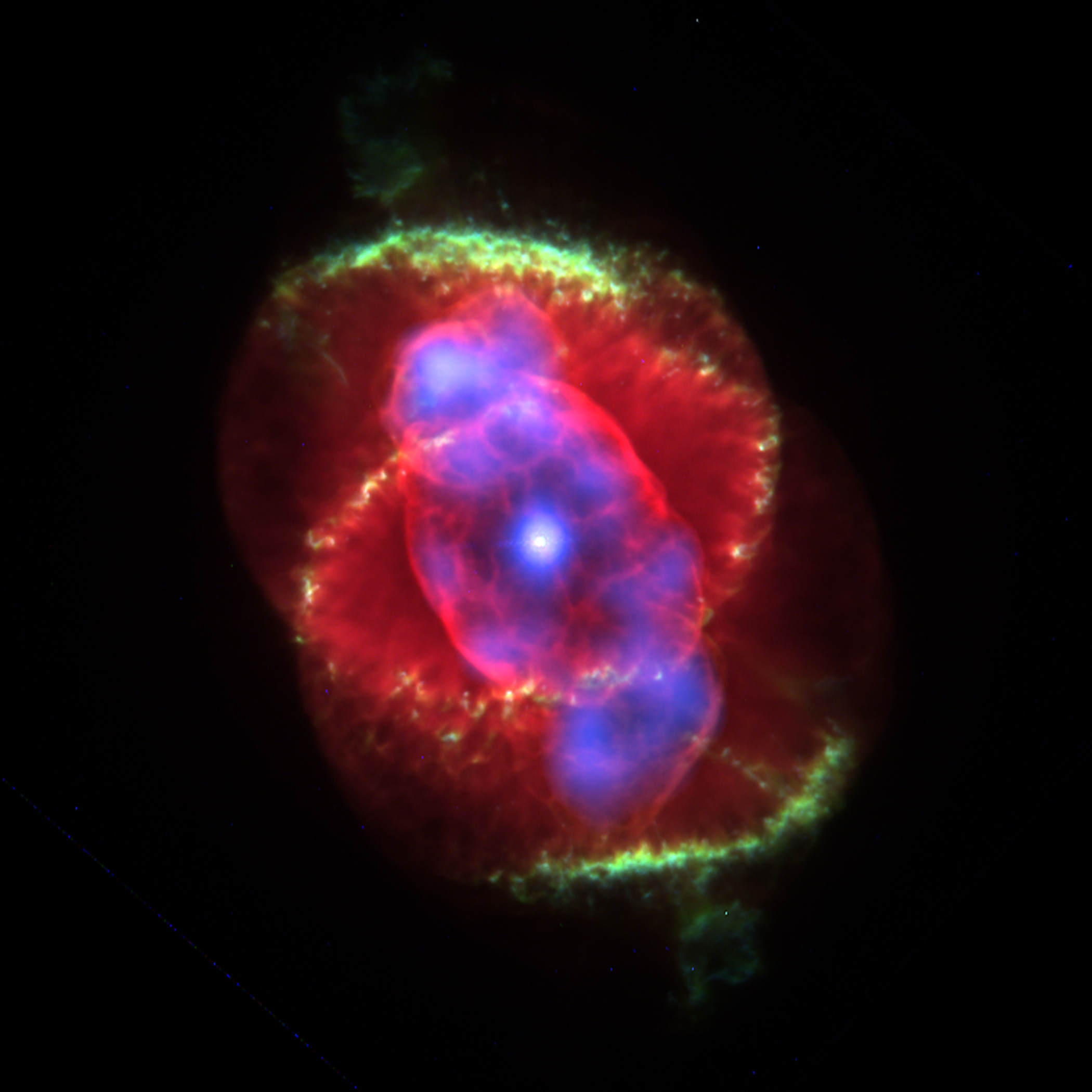 Space & Astronomy
Cats Eye Nebula
** The Cat’s Eye Nebula (NGC 6543) is a striking planetary nebula in Draco, famed for its intricate, multi‑layered structure and the hot Wolf‑Rayet central star that illuminates its dazzling knots, jets, and concentric rings.
**CONTENT:**
## Overview
The **Cat’s Eye Nebula**, catalogued as **NGC 6543**, is a planetary nebula residing in the northern constellation **Draco**, roughly 3,300 light‑years from Earth. Its nickname derives from the eye‑shaped appearance of its bright inner core, surrounded by a series of concentric, almost dart‑board‑like rings that expand outward for nearly one light‑year. High‑resolution imaging—most famously from the **Hubble Space Telescope (HST)**—has revealed an astonishingly complex morphology: dense **knots**, high‑speed **jets**, filamentary **bubbles**, and delicate **arcs** that together trace the violent final breaths of a dying star. The nebula glows across the electromagnetic spectrum, from **radio** waves that map cool molecular gas to **X‑ray** emission that highlights shock‑heated plasma near the central star.
At the heart of NGC 6543 lies a **Wolf–Rayet (WR) central star**, a rare, massive, and extremely hot remnant that has shed its outer layers at speeds exceeding 1,500 km s⁻¹. With an apparent magnitude of **+11.4**, the star is invisible to the naked eye but dominates the nebula’s ionization budget, bathing the surrounding gas in ultraviolet photons that cause it to fluoresce in vivid greens, reds, and blues. The nebular spectrum is dominated by emission lines of **oxygen**, **nitrogen**, **helium**, and **hydrogen**, a signature first identified in the 19th century and pivotal in establishing planetary nebulae as gaseous, not stellar, objects.
## History/Background
The Cat’s Eye Nebula was first recorded by **William Herschel** on **15 February 1786**, during his systematic sweep of the northern sky. Herschel noted its “planetary” appearance—a term that persisted despite the object’s true nature being far removed from planets. The nebula entered a new scientific era in 1864 when **William Huggins**, an English amateur astronomer, obtained its spectrum. Huggins’ analysis revealed bright emission lines, confirming that the nebula consisted of hot, low‑density gas rather than a collection of unresolved stars. This breakthrough helped cement the concept of planetary nebulae as a distinct evolutionary phase of low‑ to intermediate‑mass stars.
The 20th century brought increasingly detailed observations. Early photographic plates hinted at a complex structure, but it was not until the **Hubble Space Telescope** captured images in the 1990s that the nebula’s full intricacy was unveiled. Subsequent observations with the **Chandra X‑ray Observatory**, **Spitzer Space Telescope**, and ground‑based radio interferometers have provided a multi‑wavelength portrait, allowing astronomers to map temperature gradients, chemical abundances, and dynamical motions within the nebula.
## Key Information
- **Designation:** NGC 6543, also known as **Cat’s Eye Nebula** or **PK 278+02 1**.
- **Central Star:** A **Wolf–Rayet (WC‑type)** star, temperature ≈ 80,000 K, mass ≈ 0.6 M☉, magnitude +11.4.
- **Distance:** Approximately **3,300 light‑years** (≈ 1 kpc).
- **Size:** The bright inner shell spans ~ 0.3 light‑years; the outer halo extends to ~ 1 light‑year.
- **Morphology:** Concentric rings, bipolar jets, filamentary knots, and a faint outer halo shaped by episodic mass‑loss events.
- **Spectral Range:** Detected from **radio (≈ 1 GHz)** to **X‑ray (≈ 2 keV)**; X‑ray emission traces hot gas at ~ 1 million K.
- **Discovery & Spectroscopy:** Discovered 1786 (Herschel); first nebular spectrum 1864 (Huggins).
- **Research Highlights:** Studies of shock fronts, chemical enrichment (enhanced nitrogen and carbon), and the role of binary interaction in shaping the nebula’s asymmetries.
## Significance
The Cat’s Eye Nebula serves as a benchmark for planetary‑nebula physics. Its **well‑resolved structure** provides a natural laboratory for testing models of **stellar mass loss**, **wind‑wind interactions**, and **magnetohydrodynamic shaping**. The presence of a **Wolf–Rayet central star** links the nebula to the broader class of massive‑star evolution, offering clues about how such stars shed their envelopes before ending as supernovae or white dwarfs. Moreover, the nebula’s **multi‑wavelength data set** has driven advances in instrumentation calibration, from HST’s optical cameras to Chandra’s X‑ray detectors.
Historically, the nebula’s early spectroscopic study helped overturn the misconception that planetary nebulae were unresolved star clusters, paving the way for modern astrophysics to recognize them as **transient, gaseous shells** ejected by dying stars. Its iconic Hubble images have also captured public imagination, illustrating how complex and beautiful the death throes of stars can be, and inspiring generations of amateur and professional astronomers alike.
**INFOBOX:**
- Name: Cat’s Eye Nebula (NGC 6543)
- Type: Planetary Nebula
- Date: Discovered 15 February 1786 (spectroscopy 1864)
- Location: Constellation Draco, ~ 3,300 light‑years from Earth
- Known For: Intricate concentric rings, first planetary nebula with a gaseous spectrum, illuminated by a Wolf‑Rayet central star
**TAGS:** planetary nebula, Wolf‑Rayet star, Hubble Space Telescope, spectroscopy, Draco constellation, stellar evolution, nebular morphology, multi‑wavelength astronomy
Space & Astronomy
Cats Eye Nebula
** The Cat’s Eye Nebula (NGC 6543) is a striking planetary nebula in Draco, famed for its intricate, multi‑layered structure and the hot Wolf‑Rayet central star that illuminates its dazzling knots, jets, and concentric rings.
**CONTENT:**
## Overview
The **Cat’s Eye Nebula**, catalogued as **NGC 6543**, is a planetary nebula residing in the northern constellation **Draco**, roughly 3,300 light‑years from Earth. Its nickname derives from the eye‑shaped appearance of its bright inner core, surrounded by a series of concentric, almost dart‑board‑like rings that expand outward for nearly one light‑year. High‑resolution imaging—most famously from the **Hubble Space Telescope (HST)**—has revealed an astonishingly complex morphology: dense **knots**, high‑speed **jets**, filamentary **bubbles**, and delicate **arcs** that together trace the violent final breaths of a dying star. The nebula glows across the electromagnetic spectrum, from **radio** waves that map cool molecular gas to **X‑ray** emission that highlights shock‑heated plasma near the central star.
At the heart of NGC 6543 lies a **Wolf–Rayet (WR) central star**, a rare, massive, and extremely hot remnant that has shed its outer layers at speeds exceeding 1,500 km s⁻¹. With an apparent magnitude of **+11.4**, the star is invisible to the naked eye but dominates the nebula’s ionization budget, bathing the surrounding gas in ultraviolet photons that cause it to fluoresce in vivid greens, reds, and blues. The nebular spectrum is dominated by emission lines of **oxygen**, **nitrogen**, **helium**, and **hydrogen**, a signature first identified in the 19th century and pivotal in establishing planetary nebulae as gaseous, not stellar, objects.
## History/Background
The Cat’s Eye Nebula was first recorded by **William Herschel** on **15 February 1786**, during his systematic sweep of the northern sky. Herschel noted its “planetary” appearance—a term that persisted despite the object’s true nature being far removed from planets. The nebula entered a new scientific era in 1864 when **William Huggins**, an English amateur astronomer, obtained its spectrum. Huggins’ analysis revealed bright emission lines, confirming that the nebula consisted of hot, low‑density gas rather than a collection of unresolved stars. This breakthrough helped cement the concept of planetary nebulae as a distinct evolutionary phase of low‑ to intermediate‑mass stars.
The 20th century brought increasingly detailed observations. Early photographic plates hinted at a complex structure, but it was not until the **Hubble Space Telescope** captured images in the 1990s that the nebula’s full intricacy was unveiled. Subsequent observations with the **Chandra X‑ray Observatory**, **Spitzer Space Telescope**, and ground‑based radio interferometers have provided a multi‑wavelength portrait, allowing astronomers to map temperature gradients, chemical abundances, and dynamical motions within the nebula.
## Key Information
- **Designation:** NGC 6543, also known as **Cat’s Eye Nebula** or **PK 278+02 1**.
- **Central Star:** A **Wolf–Rayet (WC‑type)** star, temperature ≈ 80,000 K, mass ≈ 0.6 M☉, magnitude +11.4.
- **Distance:** Approximately **3,300 light‑years** (≈ 1 kpc).
- **Size:** The bright inner shell spans ~ 0.3 light‑years; the outer halo extends to ~ 1 light‑year.
- **Morphology:** Concentric rings, bipolar jets, filamentary knots, and a faint outer halo shaped by episodic mass‑loss events.
- **Spectral Range:** Detected from **radio (≈ 1 GHz)** to **X‑ray (≈ 2 keV)**; X‑ray emission traces hot gas at ~ 1 million K.
- **Discovery & Spectroscopy:** Discovered 1786 (Herschel); first nebular spectrum 1864 (Huggins).
- **Research Highlights:** Studies of shock fronts, chemical enrichment (enhanced nitrogen and carbon), and the role of binary interaction in shaping the nebula’s asymmetries.
## Significance
The Cat’s Eye Nebula serves as a benchmark for planetary‑nebula physics. Its **well‑resolved structure** provides a natural laboratory for testing models of **stellar mass loss**, **wind‑wind interactions**, and **magnetohydrodynamic shaping**. The presence of a **Wolf–Rayet central star** links the nebula to the broader class of massive‑star evolution, offering clues about how such stars shed their envelopes before ending as supernovae or white dwarfs. Moreover, the nebula’s **multi‑wavelength data set** has driven advances in instrumentation calibration, from HST’s optical cameras to Chandra’s X‑ray detectors.
Historically, the nebula’s early spectroscopic study helped overturn the misconception that planetary nebulae were unresolved star clusters, paving the way for modern astrophysics to recognize them as **transient, gaseous shells** ejected by dying stars. Its iconic Hubble images have also captured public imagination, illustrating how complex and beautiful the death throes of stars can be, and inspiring generations of amateur and professional astronomers alike.
**INFOBOX:**
- Name: Cat’s Eye Nebula (NGC 6543)
- Type: Planetary Nebula
- Date: Discovered 15 February 1786 (spectroscopy 1864)
- Location: Constellation Draco, ~ 3,300 light‑years from Earth
- Known For: Intricate concentric rings, first planetary nebula with a gaseous spectrum, illuminated by a Wolf‑Rayet central star
**TAGS:** planetary nebula, Wolf‑Rayet star, Hubble Space Telescope, spectroscopy, Draco constellation, stellar evolution, nebular morphology, multi‑wavelength astronomy
 Space & Astronomy
Mir Space Station
** Mir was the world’s first modular space station, orbiting Earth from 1986 to 2001 and pioneering long‑duration human spaceflight and international cooperation.
**CONTENT:**
## Overview
The **Mir** space station was a groundbreaking orbital laboratory that demonstrated humanity’s ability to build, expand, and live in a permanent outpost beyond Earth. Launched by the Soviet Union and later operated by the Russian Federation, Mir served as a microgravity research platform where crews of up to six astronauts and cosmonauts conducted experiments in **biology**, **human physiology**, **physics**, **astronomy**, **meteorology**, and **spacecraft systems**. Its modular design allowed new components to be added in orbit, creating a flexible architecture that could evolve with scientific needs and technological advances.
Mir’s mass—peaking at roughly **130 metric tons**—made it the heaviest artificial object ever placed in low Earth orbit at the time. The station’s orbital altitude varied between 350 km and 420 km, with an inclination of 51.6°, a trajectory that facilitated launches from Baikonur and later enabled visits by U.S. Space Shuttles. Over its 15‑year lifespan, Mir hosted more than **100 crew members**, logged over **10,000 days** of human presence in space, and accumulated a wealth of data that directly informed the design and operation of the International Space Station (ISS).
## History/Background
The concept of a long‑duration orbital outpost emerged in the 1970s as the Soviet space program sought to extend the achievements of the **Salyut** series. In 1979, the Soviet leadership approved the **Mir** program, envisioning a station that could be assembled piece‑by‑piece in orbit. The first core module, **Mir‑Core**, launched on 19 February 1986 aboard a Proton rocket. Over the next decade, additional modules—**Kvant‑1**, **Kvant‑2**, **Kristall**, **Spektr**, **Priroda**, and the **Docking Module**—were added, completing the station’s modular architecture by 1996.
Following the dissolution of the Soviet Union in 1991, the Russian Federation inherited Mir and faced severe budget constraints. To keep the station operational, Russia entered a series of **international cooperation agreements**, most notably the **NASA‑Russia Shuttle‑Mir Program** (1995‑1998). This partnership allowed American astronauts to live aboard Mir, conduct joint experiments, and test procedures that would later be essential for the ISS. Mir’s final crew departed in March 2001, and the station was deliberately deorbited on 23 March 2001, with most of its structure burning up over the Pacific Ocean.
## Key Information
- **Mass:** ~130 t at full configuration, the heaviest spacecraft of its era.
- **Dimensions:** Approximately 31 m long and 4.5 m in diameter; internal habitable volume ~350 m³.
- **Modules:** Six primary pressurized modules (Core, Kvant‑1, Kvant‑2, Kristall, Spektr, Priroda) plus a Docking Module.
- **Crew Capacity:** Typically 2–6 occupants; longest continuous crew stay was 365 days (Valeri Polyakov, 1994‑1995).
- **Scientific Output:** Over 1,400 experiments conducted, including studies on bone density loss, plant growth, fluid dynamics, and cosmic ray detection.
- **Milestones:** First long‑duration mission exceeding one year; first permanent international crew exchange; first use of a **re‑entry capsule** (Soyuz TM) for emergency evacuation.
- **Deorbit:** Controlled re‑entry on 23 March 2001, with debris largely falling into the South Pacific Uninhabited Area.
## Significance
Mir’s legacy is multifaceted. Technologically, it proved that a **modular architecture** could be assembled and serviced in orbit, a concept that underpins the ISS and future deep‑space habitats. Scientifically, the station’s extensive microgravity research clarified the physiological challenges of long‑term spaceflight, informing counter‑measure strategies such as exercise regimens and nutritional protocols now standard on the ISS. Politically, Mir became a symbol of post‑Cold‑War collaboration; the Shuttle‑Mir program built trust between former rivals and demonstrated that complex joint missions were feasible.
Moreover, Mir served as a real‑world testbed for **spacecraft docking**, **life‑support system redundancy**, and **on‑orbit repair**, all critical competencies for future missions to the Moon, Mars, and beyond. Its deorbit, while dramatic, provided valuable data on controlled re‑entry of large structures, influencing modern guidelines for end‑of‑life disposal of orbital assets. In sum, Mir was not merely a station; it was a stepping stone that transformed space exploration from short‑term visits to sustained human presence in orbit.
**INFOBOX:**
- Name: Mir (Russian for “Peace”)
- Type: Modular orbital space station
- Date: Operated 19 February 1986 – 23 March 2001
- Location: Low Earth orbit, 350–420 km altitude, 51.6° inclination
- Known For: First modular space station; longest continuous human presence in space at its time; pioneering international cooperation
**TAGS:** space station, Mir, modular architecture, microgravity research, Russian space program, International cooperation, long‑duration flight, orbital engineering
Space & Astronomy
Mars Rovers Overview
A concise survey of NASA’s robotic explorers that have traversed the Martian surface, detailing their development, missions, achievements, and lasting impact on planetary science.
Space & Astronomy
Mir Space Station
** Mir was the world’s first modular space station, orbiting Earth from 1986 to 2001 and pioneering long‑duration human spaceflight and international cooperation.
**CONTENT:**
## Overview
The **Mir** space station was a groundbreaking orbital laboratory that demonstrated humanity’s ability to build, expand, and live in a permanent outpost beyond Earth. Launched by the Soviet Union and later operated by the Russian Federation, Mir served as a microgravity research platform where crews of up to six astronauts and cosmonauts conducted experiments in **biology**, **human physiology**, **physics**, **astronomy**, **meteorology**, and **spacecraft systems**. Its modular design allowed new components to be added in orbit, creating a flexible architecture that could evolve with scientific needs and technological advances.
Mir’s mass—peaking at roughly **130 metric tons**—made it the heaviest artificial object ever placed in low Earth orbit at the time. The station’s orbital altitude varied between 350 km and 420 km, with an inclination of 51.6°, a trajectory that facilitated launches from Baikonur and later enabled visits by U.S. Space Shuttles. Over its 15‑year lifespan, Mir hosted more than **100 crew members**, logged over **10,000 days** of human presence in space, and accumulated a wealth of data that directly informed the design and operation of the International Space Station (ISS).
## History/Background
The concept of a long‑duration orbital outpost emerged in the 1970s as the Soviet space program sought to extend the achievements of the **Salyut** series. In 1979, the Soviet leadership approved the **Mir** program, envisioning a station that could be assembled piece‑by‑piece in orbit. The first core module, **Mir‑Core**, launched on 19 February 1986 aboard a Proton rocket. Over the next decade, additional modules—**Kvant‑1**, **Kvant‑2**, **Kristall**, **Spektr**, **Priroda**, and the **Docking Module**—were added, completing the station’s modular architecture by 1996.
Following the dissolution of the Soviet Union in 1991, the Russian Federation inherited Mir and faced severe budget constraints. To keep the station operational, Russia entered a series of **international cooperation agreements**, most notably the **NASA‑Russia Shuttle‑Mir Program** (1995‑1998). This partnership allowed American astronauts to live aboard Mir, conduct joint experiments, and test procedures that would later be essential for the ISS. Mir’s final crew departed in March 2001, and the station was deliberately deorbited on 23 March 2001, with most of its structure burning up over the Pacific Ocean.
## Key Information
- **Mass:** ~130 t at full configuration, the heaviest spacecraft of its era.
- **Dimensions:** Approximately 31 m long and 4.5 m in diameter; internal habitable volume ~350 m³.
- **Modules:** Six primary pressurized modules (Core, Kvant‑1, Kvant‑2, Kristall, Spektr, Priroda) plus a Docking Module.
- **Crew Capacity:** Typically 2–6 occupants; longest continuous crew stay was 365 days (Valeri Polyakov, 1994‑1995).
- **Scientific Output:** Over 1,400 experiments conducted, including studies on bone density loss, plant growth, fluid dynamics, and cosmic ray detection.
- **Milestones:** First long‑duration mission exceeding one year; first permanent international crew exchange; first use of a **re‑entry capsule** (Soyuz TM) for emergency evacuation.
- **Deorbit:** Controlled re‑entry on 23 March 2001, with debris largely falling into the South Pacific Uninhabited Area.
## Significance
Mir’s legacy is multifaceted. Technologically, it proved that a **modular architecture** could be assembled and serviced in orbit, a concept that underpins the ISS and future deep‑space habitats. Scientifically, the station’s extensive microgravity research clarified the physiological challenges of long‑term spaceflight, informing counter‑measure strategies such as exercise regimens and nutritional protocols now standard on the ISS. Politically, Mir became a symbol of post‑Cold‑War collaboration; the Shuttle‑Mir program built trust between former rivals and demonstrated that complex joint missions were feasible.
Moreover, Mir served as a real‑world testbed for **spacecraft docking**, **life‑support system redundancy**, and **on‑orbit repair**, all critical competencies for future missions to the Moon, Mars, and beyond. Its deorbit, while dramatic, provided valuable data on controlled re‑entry of large structures, influencing modern guidelines for end‑of‑life disposal of orbital assets. In sum, Mir was not merely a station; it was a stepping stone that transformed space exploration from short‑term visits to sustained human presence in orbit.
**INFOBOX:**
- Name: Mir (Russian for “Peace”)
- Type: Modular orbital space station
- Date: Operated 19 February 1986 – 23 March 2001
- Location: Low Earth orbit, 350–420 km altitude, 51.6° inclination
- Known For: First modular space station; longest continuous human presence in space at its time; pioneering international cooperation
**TAGS:** space station, Mir, modular architecture, microgravity research, Russian space program, International cooperation, long‑duration flight, orbital engineering
Space & Astronomy
Mars Rovers Overview
A concise survey of NASA’s robotic explorers that have traversed the Martian surface, detailing their development, missions, achievements, and lasting impact on planetary science.