



Felix Numbers
Mathematics Editor
160Articles
2.5KTotal views
 Mathematics
Extradition Law
Extradition law governs the legal process by which one jurisdiction transfers a fugitive to another jurisdiction where they are wanted for prosecution or sentencing.
Mathematics
Extradition Law
Extradition law governs the legal process by which one jurisdiction transfers a fugitive to another jurisdiction where they are wanted for prosecution or sentencing.
 Mathematics
Fermats Last Theorem
Fermat's Last Theorem is a fundamental statement in number theory, asserting that no three positive integers satisfy the equation an + bn = cn for any integer n greater than 2.
## Overview
Fermat's Last Theorem is a mathematical conjecture initially proposed by Pierre de Fermat in the 17th century. The statement appears simple at first glance, but its implications are profound and far-reaching, challenging mathematicians for centuries. Fermat's claim was that there are no integer solutions for the equation an + bn = cn when n > 2. This theorem has garnered immense attention, sparking intense mathematical debates and collaborations across the centuries.
The theorem's core idea lies in the examination of the properties of numbers and their relationships. The equation an + bn = cn represents an equation of the form a^m + b^m = c^m, where n = m in this context. This form suggests the existence of a deep connection between the magnitudes of the numbers involved, as the theorem implies no such relationship can exist when n > 2.
The concept of numbers, especially prime numbers, plays a crucial role in the proof of Fermat's Last Theorem. Andrew Wiles, the mathematician who finally solved this long-standing problem, employed modular forms and elliptic curves to demonstrate the impossibility of a non-trivial solution for n > 2. This proof is built upon advanced mathematical theories and showcases the beauty of abstract concepts.
## History/Background
Pierre de Fermat, a French mathematician, initially stated his famous theorem in a footnote in his book "Arithmetica" in 1637. However, he failed to provide a proof for this statement. After his death in 1665, Fermat's work was largely forgotten, and the problem remained unsolved for centuries.
The 18th and 19th centuries witnessed a rise in mathematical research, with notable mathematicians like Leonhard Euler and Carl Friedrich Gauss contributing to the field but without resolving Fermat's Last Theorem. It wasn't until the 20th century that mathematicians began to make significant progress, with the development of modern number theory.
## Key Information
- **Modular Forms**: Modular forms are mathematical functions that are periodic in their arguments and possess certain symmetries. They have been extensively used to prove Fermat's Last Theorem.
- **Elliptic Curves**: Elliptic curves are geometric objects used in number theory to study Diophantine equations. Andrew Wiles employed elliptic curves in his proof of Fermat's Last Theorem.
- **Modular Equation**: The modular equation is a diophantine equation of the form x^n + y^n = z^n, with n > 2. Fermat's Last Theorem asserts that there are no integer solutions to this equation.
- **Kummer's Theorem**: Ernst Kummer's theorem provides a partial solution to Fermat's Last Theorem for certain prime numbers, excluding many potential counterexamples.
- **Taniyama-Shimura Conjecture**: The Taniyama-Shimura conjecture, proposed in the 1950s, has a deep connection with Fermat's Last Theorem. Andrew Wiles' proof is based on the relationship between this conjecture and the modularity theorem.
## Significance
Fermat's Last Theorem holds immense significance in the realm of mathematics, marking a major breakthrough in number theory. The theorem's proof involves intricate mathematical concepts and techniques, such as elliptic curves, modular forms, and Galois theory. This achievement has expanded our understanding of the properties of numbers and paved the way for significant advancements in mathematics.
However, the journey to proving Fermat's Last Theorem involved a century-long collaboration between mathematicians across the globe. Andrew Wiles' proof, which spanned over seven years, highlights the power of teamwork and perseverance in mathematics.
INFOBOX:
- Name: **Fermat's Last Theorem**
- Type: Number Theory
- Date: 1637 (initial statement), 1994 (proof)
- Location: France, United Kingdom
- Known For: Proving the impossibility of integer solutions to the equation an + bn = cn for n > 2
TAGS: **Fermat's Last Theorem**, **Number Theory**, **Modular Forms**, **Elliptic Curves**, **Modular Equation**, **Kummer's Theorem**, **Taniyama-Shimura Conjecture**, **Andrew Wiles**, **Pierre de Fermat**
Mathematics
Fermats Last Theorem
Fermat's Last Theorem is a fundamental statement in number theory, asserting that no three positive integers satisfy the equation an + bn = cn for any integer n greater than 2.
## Overview
Fermat's Last Theorem is a mathematical conjecture initially proposed by Pierre de Fermat in the 17th century. The statement appears simple at first glance, but its implications are profound and far-reaching, challenging mathematicians for centuries. Fermat's claim was that there are no integer solutions for the equation an + bn = cn when n > 2. This theorem has garnered immense attention, sparking intense mathematical debates and collaborations across the centuries.
The theorem's core idea lies in the examination of the properties of numbers and their relationships. The equation an + bn = cn represents an equation of the form a^m + b^m = c^m, where n = m in this context. This form suggests the existence of a deep connection between the magnitudes of the numbers involved, as the theorem implies no such relationship can exist when n > 2.
The concept of numbers, especially prime numbers, plays a crucial role in the proof of Fermat's Last Theorem. Andrew Wiles, the mathematician who finally solved this long-standing problem, employed modular forms and elliptic curves to demonstrate the impossibility of a non-trivial solution for n > 2. This proof is built upon advanced mathematical theories and showcases the beauty of abstract concepts.
## History/Background
Pierre de Fermat, a French mathematician, initially stated his famous theorem in a footnote in his book "Arithmetica" in 1637. However, he failed to provide a proof for this statement. After his death in 1665, Fermat's work was largely forgotten, and the problem remained unsolved for centuries.
The 18th and 19th centuries witnessed a rise in mathematical research, with notable mathematicians like Leonhard Euler and Carl Friedrich Gauss contributing to the field but without resolving Fermat's Last Theorem. It wasn't until the 20th century that mathematicians began to make significant progress, with the development of modern number theory.
## Key Information
- **Modular Forms**: Modular forms are mathematical functions that are periodic in their arguments and possess certain symmetries. They have been extensively used to prove Fermat's Last Theorem.
- **Elliptic Curves**: Elliptic curves are geometric objects used in number theory to study Diophantine equations. Andrew Wiles employed elliptic curves in his proof of Fermat's Last Theorem.
- **Modular Equation**: The modular equation is a diophantine equation of the form x^n + y^n = z^n, with n > 2. Fermat's Last Theorem asserts that there are no integer solutions to this equation.
- **Kummer's Theorem**: Ernst Kummer's theorem provides a partial solution to Fermat's Last Theorem for certain prime numbers, excluding many potential counterexamples.
- **Taniyama-Shimura Conjecture**: The Taniyama-Shimura conjecture, proposed in the 1950s, has a deep connection with Fermat's Last Theorem. Andrew Wiles' proof is based on the relationship between this conjecture and the modularity theorem.
## Significance
Fermat's Last Theorem holds immense significance in the realm of mathematics, marking a major breakthrough in number theory. The theorem's proof involves intricate mathematical concepts and techniques, such as elliptic curves, modular forms, and Galois theory. This achievement has expanded our understanding of the properties of numbers and paved the way for significant advancements in mathematics.
However, the journey to proving Fermat's Last Theorem involved a century-long collaboration between mathematicians across the globe. Andrew Wiles' proof, which spanned over seven years, highlights the power of teamwork and perseverance in mathematics.
INFOBOX:
- Name: **Fermat's Last Theorem**
- Type: Number Theory
- Date: 1637 (initial statement), 1994 (proof)
- Location: France, United Kingdom
- Known For: Proving the impossibility of integer solutions to the equation an + bn = cn for n > 2
TAGS: **Fermat's Last Theorem**, **Number Theory**, **Modular Forms**, **Elliptic Curves**, **Modular Equation**, **Kummer's Theorem**, **Taniyama-Shimura Conjecture**, **Andrew Wiles**, **Pierre de Fermat**
 People
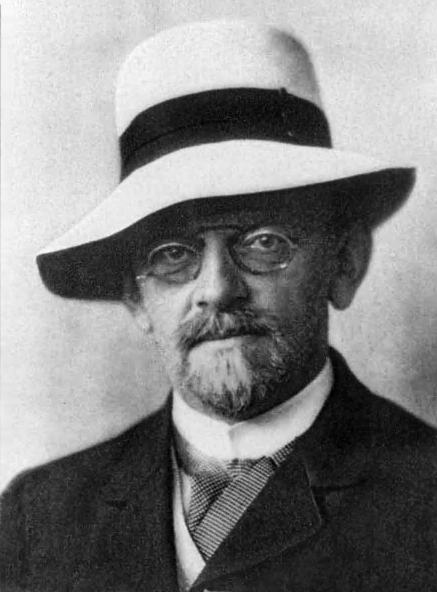
David Hilbert
David Hilbert (1862-1943) was a German mathematician whose visionary program to axiomatize all of mathematics shaped 20th-century logic, algebra, analysis and physics.
Mathematics
Statistics In Science
Statistics in science is the systematic application of data collection, analysis, and inference to uncover patterns, test hypotheses, and drive discovery across all scientific disciplines.
People
David Hilbert
David Hilbert (1862-1943) was a German mathematician whose visionary program to axiomatize all of mathematics shaped 20th-century logic, algebra, analysis and physics.
Mathematics
Statistics In Science
Statistics in science is the systematic application of data collection, analysis, and inference to uncover patterns, test hypotheses, and drive discovery across all scientific disciplines.
 People
Jean-Pierre Serre
Jean-Pierre Serre is a towering figure in 20th-century mathematics whose revolutionary work in algebraic topology, algebraic geometry, and number theory earned him the Fields Medal at 27 and, half a century later, the inaugural Abel Prize.
People
Jean-Pierre Serre
Jean-Pierre Serre is a towering figure in 20th-century mathematics whose revolutionary work in algebraic topology, algebraic geometry, and number theory earned him the Fields Medal at 27 and, half a century later, the inaugural Abel Prize.
 Mathematics
Intermediate Value Theorem
The Intermediate Value Theorem guarantees that a continuous function on an interval [a, b] attains every value between f(a) and f(b) at some point within the interval.
Mathematics
Financial Mathematics
Financial mathematics applies advanced mathematical methods to financial markets, enabling the modeling of complex instruments, risk assessment, and optimization of investment strategies.
Mathematics
Intermediate Value Theorem
The Intermediate Value Theorem guarantees that a continuous function on an interval [a, b] attains every value between f(a) and f(b) at some point within the interval.
Mathematics
Financial Mathematics
Financial mathematics applies advanced mathematical methods to financial markets, enabling the modeling of complex instruments, risk assessment, and optimization of investment strategies.
 Mathematics
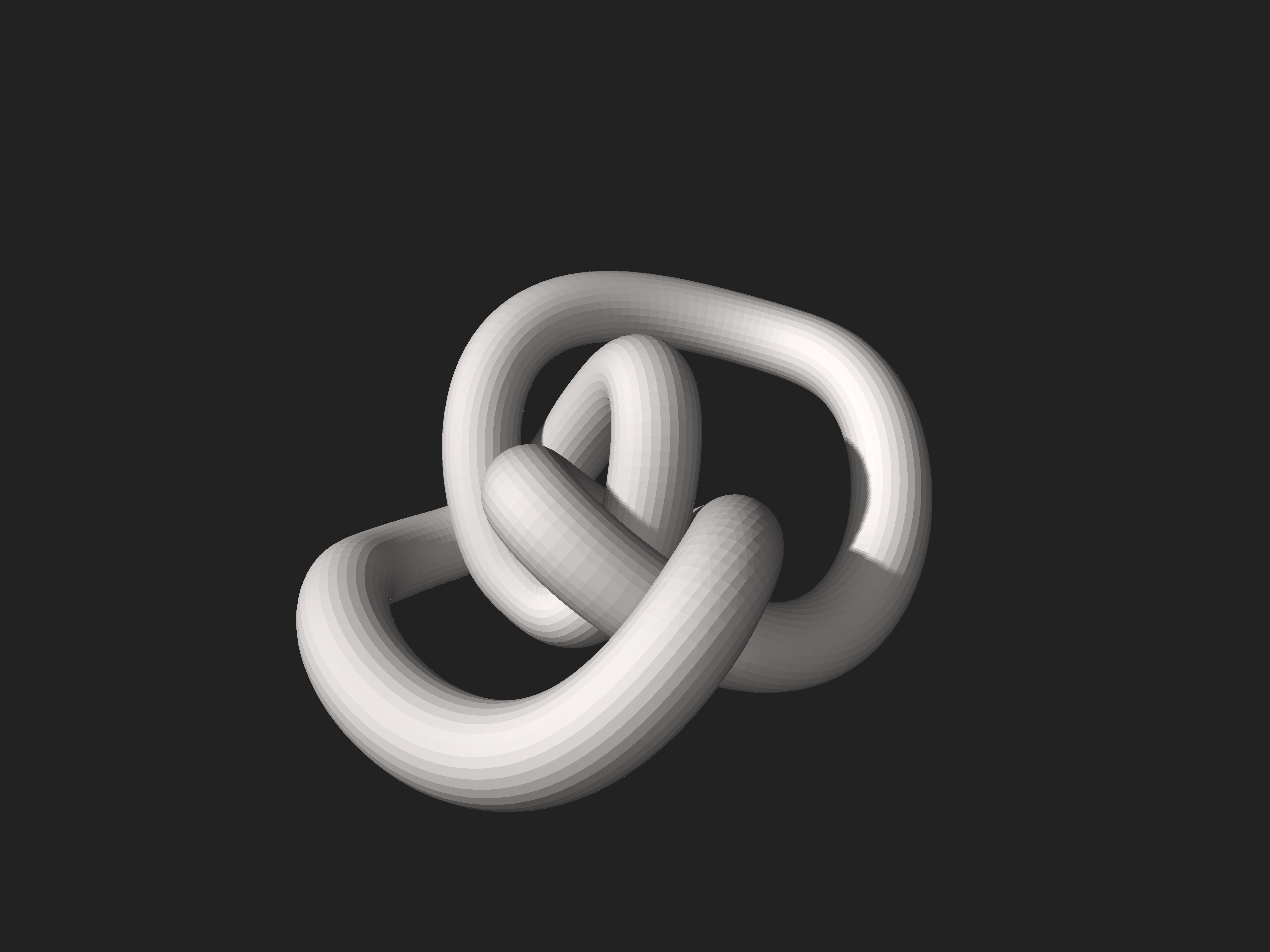
Topology
Topology is the branch of mathematics that studies properties of space preserved under continuous deformations, such as connectivity and continuity, without tearing or gluing.
Mathematics
Topology
Topology is the branch of mathematics that studies properties of space preserved under continuous deformations, such as connectivity and continuity, without tearing or gluing.
 People
Bertrand Russell
Bertrand Russell was a towering figure who fused mathematics and philosophy, demolishing naive set theory with his paradox and rebuilding foundations through Principia Mathematica—while also reshaping 20th-century thought on war, peace, and human nature.
People
Bertrand Russell
Bertrand Russell was a towering figure who fused mathematics and philosophy, demolishing naive set theory with his paradox and rebuilding foundations through Principia Mathematica—while also reshaping 20th-century thought on war, peace, and human nature.
 Mathematics
Category Theory
Category theory is a unifying mathematical framework that studies structures and relationships through abstract concepts like categories, functors, and natural transformations.
Mathematics
Geometry In Architecture
Geometry in architecture is the disciplined use of mathematical forms, proportions, and spatial relationships to create functional, aesthetic, and culturally resonant built environments.
Mathematics
Probability In Gambling
Probability in gambling studies how mathematical chance governs games of chance, informing both player strategy and casino design.
Mathematics
Twin Prime Conjecture
The Twin Prime Conjecture posits that there are infinitely many pairs of prime numbers that differ by 2.
Mathematics
Category Theory
Category theory is a unifying mathematical framework that studies structures and relationships through abstract concepts like categories, functors, and natural transformations.
Mathematics
Geometry In Architecture
Geometry in architecture is the disciplined use of mathematical forms, proportions, and spatial relationships to create functional, aesthetic, and culturally resonant built environments.
Mathematics
Probability In Gambling
Probability in gambling studies how mathematical chance governs games of chance, informing both player strategy and casino design.
Mathematics
Twin Prime Conjecture
The Twin Prime Conjecture posits that there are infinitely many pairs of prime numbers that differ by 2.
 Mathematics
Abstract Algebra
Abstract algebra is a branch of mathematics that studies algebraic structures such as groups, rings, and fields, focusing on their properties and relationships.
Mathematics
Eulers Identity
Euler's identity is a celebrated mathematical equation that elegantly links five fundamental constants—e, i, π, 1, and 0—through exponentiation, multiplication, and addition.
Mathematics
Financial Derivatives Mathematics
Financial derivatives mathematics studies the quantitative models and analytical tools used to price, hedge, and manage contracts whose value derives from underlying assets.
Mathematics
Abstract Algebra
Abstract algebra is a branch of mathematics that studies algebraic structures such as groups, rings, and fields, focusing on their properties and relationships.
Mathematics
Eulers Identity
Euler's identity is a celebrated mathematical equation that elegantly links five fundamental constants—e, i, π, 1, and 0—through exponentiation, multiplication, and addition.
Mathematics
Financial Derivatives Mathematics
Financial derivatives mathematics studies the quantitative models and analytical tools used to price, hedge, and manage contracts whose value derives from underlying assets.
 People
René Descartes
René Descartes fused geometry with algebra to create analytic geometry, revolutionizing mathematics while laying philosophical groundwork for modern science.
Mathematics
Calculus In Physics
** Calculus provides the mathematical language that translates continuous change into precise predictions, making it the cornerstone of modern physics.
**CONTENT:**
## Overview
Calculus, the branch of mathematics dealing with limits, derivatives, integrals, and infinite series, is the engine that drives virtually every quantitative theory in physics. **Derivatives** quantify instantaneous rates of change—how a particle’s position evolves into velocity, how velocity becomes acceleration, and how fields vary in space and time. **Integrals** accumulate infinitesimal contributions, turning a force distribution into total work, a charge density into total charge, or a probability density into a measurable likelihood. By converting physical intuition about motion, fields, and energy into exact equations, calculus transforms qualitative descriptions into testable predictions.
In practice, the **Newton–Leibniz formulation** of calculus supplies two complementary tools: the differential ( \( \frac{d}{dt} \) ) and the integral ( \( \int \) ). The **Fundamental Theorem of Calculus** bridges them, stating that differentiation and integration are inverse operations:
\[
\frac{d}{dx}\!\left(\int_{a}^{x} f(t)\,dt\right)=f(x).
\]
This theorem underlies the derivation of conservation laws from symmetry principles via Noether’s theorem, and it justifies the use of potential energy functions whose gradients yield forces. Whether describing the orbit of a planet, the propagation of an electromagnetic wave, or the quantum probability amplitude of an electron, calculus supplies the precise language that links cause and effect across scales.
## History/Background
The roots of calculus trace back to ancient attempts at measuring areas and speeds, but its formal birth occurred independently in the late 17th century. **Isaac Newton** (1642‑1727) introduced “fluxions” to describe motion, while **Gottfried Wilhelm Leibniz** (1646‑1716) developed the notation \( \frac{dy}{dx} \) and the integral sign \( \int \) that we still use. Their rivalry sparked the famous calculus priority dispute, yet both contributions merged into a unified framework by the early 18th century.
In physics, Newton’s *Principia* (1687) applied calculus implicitly to celestial mechanics, establishing the law of universal gravitation. The 19th century saw **Joseph Fourier**’s series expansion of heat flow, **James Clerk Maxwell**’s equations of electromagnetism (1861‑1865), and **Lord Kelvin**’s thermodynamic formulations—all relying heavily on partial differential equations (PDEs). The 20th century’s quantum revolution demanded even more sophisticated calculus: **Schrödinger’s** wave equation (1926) and **Dirac’s** relativistic formalism (1928) are PDEs whose solutions describe the probabilistic nature of matter. Throughout, the development of rigorous limit definitions by **Cauchy**, **Weierstrass**, and others fortified calculus as a solid logical foundation for physics.
## Key Information
- **Differential equations**: Most physical laws are expressed as ordinary or partial differential equations (ODEs/PDEs). Newton’s second law, \( \mathbf{F}=m\mathbf{a}=m\frac{d^{2}\mathbf{r}}{dt^{2}} \), is an ODE; Maxwell’s equations are a set of PDEs.
- **Variational principles**: The **principle of least action** states that the actual path of a system extremizes the action functional \( S=\int L\,dt \), where \( L \) is the Lagrangian. Calculus of variations, a branch of calculus, yields the Euler‑Lagrange equation, \( \frac{d}{dt}\!\left(\frac{\partial L}{\partial \dot{q}}\right)-\frac{\partial L}{\partial q}=0 \).
- **Fourier and Laplace transforms**: These integral transforms convert differential equations in the time domain into algebraic equations in the frequency domain, simplifying the analysis of circuits, heat flow, and quantum scattering.
- **Green’s functions**: By integrating a source term against a Green’s function, physicists solve inhomogeneous linear PDEs, a technique central to electrodynamics and quantum field theory.
- **Renormalization**: In quantum field theory, divergent integrals are regularized and renormalized, a process that relies on sophisticated calculus (dimensional regularization, contour integration).
## Significance
Calculus is not merely a computational tool; it reshapes how physicists *conceptualize* nature. By expressing laws as differential relationships, it reveals hidden symmetries, conservations, and invariants that would otherwise remain obscure. The ability to model continuous change enables the design of technologies ranging from satellite navigation (orbital mechanics) to semiconductor devices (quantum tunneling). Moreover, calculus has fostered interdisciplinary bridges: fluid dynamics informs meteorology, statistical mechanics underpins information theory, and differential geometry—calculus on manifolds—drives general relativity’s description of spacetime curvature.
The legacy of calculus in physics is evident in contemporary research frontiers. **Gravitational wave astronomy** uses numerical relativity, solving Einstein’s field equations (non‑linear PDEs) with high‑precision calculus algorithms. **Quantum computing** leverages unitary evolution described by Schrödinger’s equation, while **topological insulators** are understood through Berry curvature, a differential geometric construct. In each case, the language of calculus translates abstract theoretical ideas into experimentally testable predictions, cementing its role as the universal dialect of physical law.
**INFOBOX:**
- Name: Calculus in Physics
- Type: Mathematical Framework / Physical Methodology
- Date: Formalized 1660‑1687 (Newton & Leibniz) – continuously expanded to present
- Location: Global (applied across all branches of physics)
- Known For: Providing the differential and integral tools that express and solve physical laws
**TAGS:** calculus, physics, differential equations, integral calculus, mathematical physics, Newtonian mechanics, quantum mechanics, relativity
People
René Descartes
René Descartes fused geometry with algebra to create analytic geometry, revolutionizing mathematics while laying philosophical groundwork for modern science.
Mathematics
Calculus In Physics
** Calculus provides the mathematical language that translates continuous change into precise predictions, making it the cornerstone of modern physics.
**CONTENT:**
## Overview
Calculus, the branch of mathematics dealing with limits, derivatives, integrals, and infinite series, is the engine that drives virtually every quantitative theory in physics. **Derivatives** quantify instantaneous rates of change—how a particle’s position evolves into velocity, how velocity becomes acceleration, and how fields vary in space and time. **Integrals** accumulate infinitesimal contributions, turning a force distribution into total work, a charge density into total charge, or a probability density into a measurable likelihood. By converting physical intuition about motion, fields, and energy into exact equations, calculus transforms qualitative descriptions into testable predictions.
In practice, the **Newton–Leibniz formulation** of calculus supplies two complementary tools: the differential ( \( \frac{d}{dt} \) ) and the integral ( \( \int \) ). The **Fundamental Theorem of Calculus** bridges them, stating that differentiation and integration are inverse operations:
\[
\frac{d}{dx}\!\left(\int_{a}^{x} f(t)\,dt\right)=f(x).
\]
This theorem underlies the derivation of conservation laws from symmetry principles via Noether’s theorem, and it justifies the use of potential energy functions whose gradients yield forces. Whether describing the orbit of a planet, the propagation of an electromagnetic wave, or the quantum probability amplitude of an electron, calculus supplies the precise language that links cause and effect across scales.
## History/Background
The roots of calculus trace back to ancient attempts at measuring areas and speeds, but its formal birth occurred independently in the late 17th century. **Isaac Newton** (1642‑1727) introduced “fluxions” to describe motion, while **Gottfried Wilhelm Leibniz** (1646‑1716) developed the notation \( \frac{dy}{dx} \) and the integral sign \( \int \) that we still use. Their rivalry sparked the famous calculus priority dispute, yet both contributions merged into a unified framework by the early 18th century.
In physics, Newton’s *Principia* (1687) applied calculus implicitly to celestial mechanics, establishing the law of universal gravitation. The 19th century saw **Joseph Fourier**’s series expansion of heat flow, **James Clerk Maxwell**’s equations of electromagnetism (1861‑1865), and **Lord Kelvin**’s thermodynamic formulations—all relying heavily on partial differential equations (PDEs). The 20th century’s quantum revolution demanded even more sophisticated calculus: **Schrödinger’s** wave equation (1926) and **Dirac’s** relativistic formalism (1928) are PDEs whose solutions describe the probabilistic nature of matter. Throughout, the development of rigorous limit definitions by **Cauchy**, **Weierstrass**, and others fortified calculus as a solid logical foundation for physics.
## Key Information
- **Differential equations**: Most physical laws are expressed as ordinary or partial differential equations (ODEs/PDEs). Newton’s second law, \( \mathbf{F}=m\mathbf{a}=m\frac{d^{2}\mathbf{r}}{dt^{2}} \), is an ODE; Maxwell’s equations are a set of PDEs.
- **Variational principles**: The **principle of least action** states that the actual path of a system extremizes the action functional \( S=\int L\,dt \), where \( L \) is the Lagrangian. Calculus of variations, a branch of calculus, yields the Euler‑Lagrange equation, \( \frac{d}{dt}\!\left(\frac{\partial L}{\partial \dot{q}}\right)-\frac{\partial L}{\partial q}=0 \).
- **Fourier and Laplace transforms**: These integral transforms convert differential equations in the time domain into algebraic equations in the frequency domain, simplifying the analysis of circuits, heat flow, and quantum scattering.
- **Green’s functions**: By integrating a source term against a Green’s function, physicists solve inhomogeneous linear PDEs, a technique central to electrodynamics and quantum field theory.
- **Renormalization**: In quantum field theory, divergent integrals are regularized and renormalized, a process that relies on sophisticated calculus (dimensional regularization, contour integration).
## Significance
Calculus is not merely a computational tool; it reshapes how physicists *conceptualize* nature. By expressing laws as differential relationships, it reveals hidden symmetries, conservations, and invariants that would otherwise remain obscure. The ability to model continuous change enables the design of technologies ranging from satellite navigation (orbital mechanics) to semiconductor devices (quantum tunneling). Moreover, calculus has fostered interdisciplinary bridges: fluid dynamics informs meteorology, statistical mechanics underpins information theory, and differential geometry—calculus on manifolds—drives general relativity’s description of spacetime curvature.
The legacy of calculus in physics is evident in contemporary research frontiers. **Gravitational wave astronomy** uses numerical relativity, solving Einstein’s field equations (non‑linear PDEs) with high‑precision calculus algorithms. **Quantum computing** leverages unitary evolution described by Schrödinger’s equation, while **topological insulators** are understood through Berry curvature, a differential geometric construct. In each case, the language of calculus translates abstract theoretical ideas into experimentally testable predictions, cementing its role as the universal dialect of physical law.
**INFOBOX:**
- Name: Calculus in Physics
- Type: Mathematical Framework / Physical Methodology
- Date: Formalized 1660‑1687 (Newton & Leibniz) – continuously expanded to present
- Location: Global (applied across all branches of physics)
- Known For: Providing the differential and integral tools that express and solve physical laws
**TAGS:** calculus, physics, differential equations, integral calculus, mathematical physics, Newtonian mechanics, quantum mechanics, relativity