




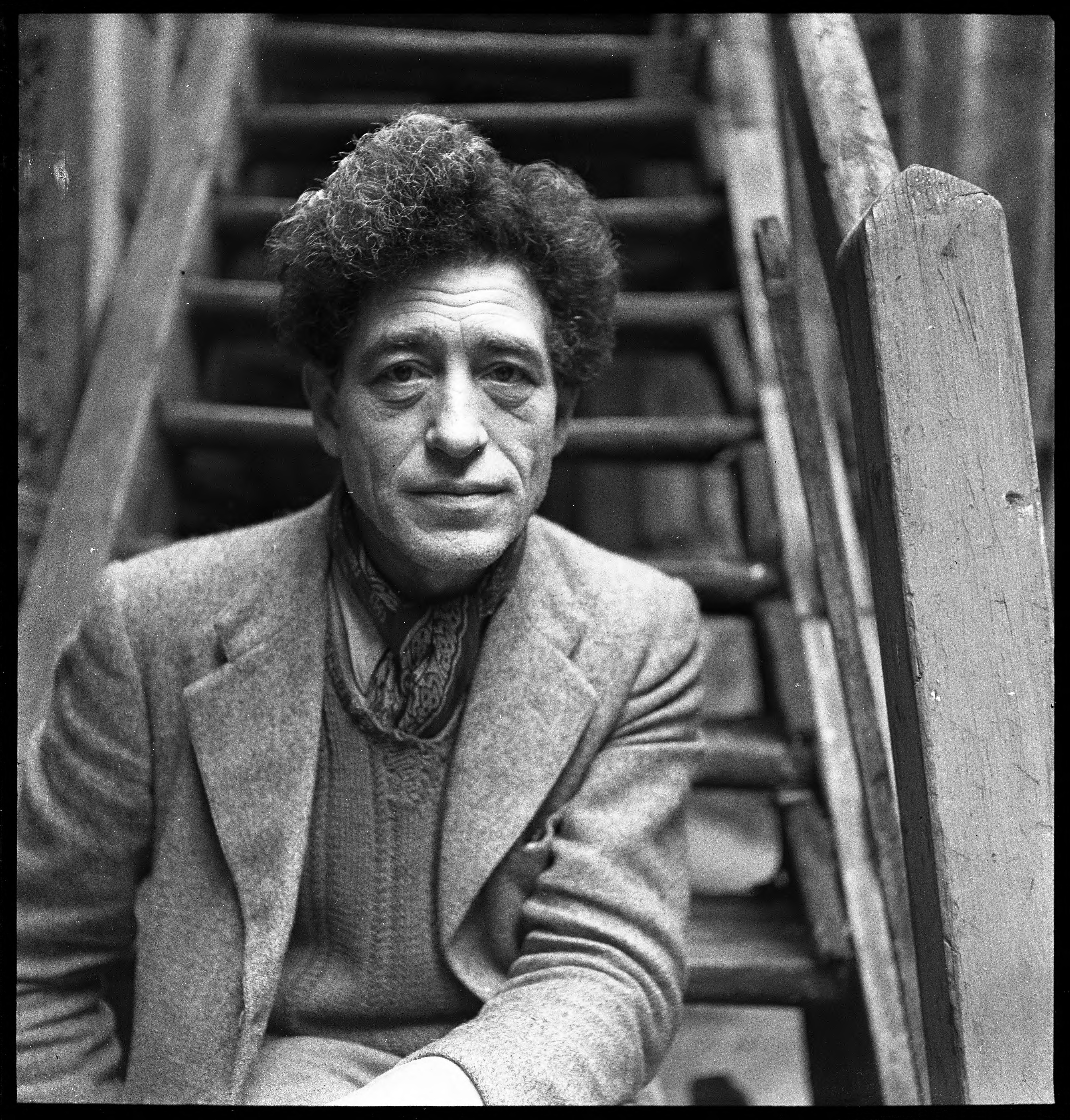
Overview
Alberto Giacometti (1901‑1966) stands as one of the most influential sculptors of the 20th century, celebrated for his thin, textured bronze figures that seem to capture the very act of existing. Born in Borgonovo, Switzerland, Giacometti trained in Paris during the interwar years, absorbing the avant‑garde currents of Cubism and Surrealism while forging a personal visual language that interrogated the human condition. His work is instantly recognizable: gaunt, elongated forms that appear both fragile and monumental, evoking the tension between presence and absence.Beyond sculpture, Giacumenti was a prolific painter, draftsman, and printmaker, constantly shifting between media to explore the same existential questions. His art reflects a deep engagement with phenomenology, especially the ideas of Maurice Merleau‑Ponty, and with the post‑World War II existential crisis that haunted European intellectuals. The result is a body of work that feels simultaneously intimate and universal—a visual meditation on loneliness, alienation, and the stubborn persistence of the human spirit.
History/Background
Alberto Giacometti was born on October 10, 1901 in the small Swiss village of Borgonovo, in the canton of Graubünden. He was the second of four children in a family that prized artistic talent; his older brother Diego Giacometti would become a noted designer, and his sister Sofia a respected painter. In 1919, the family moved to Paris, where the young Alberto enrolled at the Académie Julian and later the École des Beaux‑Arts. The vibrant Parisian scene exposed him to Cubist pioneers like Picasso and Braque, whose fragmented forms sparked Giacometti’s early experiments with abstraction.The 1920s saw Giacometti gravitate toward Surrealism, joining the circle around André Breton and participating in the 1925 Exposition Internationale des Arts Décoratifs. His surrealist period produced dream‑like drawings and sculptures that emphasized the unconscious. By the early 1930s, Giacometti began to strip away decorative excess, focusing on the human figure as a vessel for existential inquiry. The outbreak of World War II forced him to return to Switzerland, where he produced a series of “Walking Man” studies that would become his signature motif. After the war, Giacometti’s reputation exploded; his 1947 solo exhibition at Galerie Maeght in Paris cemented his status as a leading voice of post‑war modernism. He continued to work until his death in January 1966 in Chur, Switzerland.







